

The biosocial theory explains that BPD develops from the interaction between biological factors and invalidating environments. You may have innate neural sensitivities, like an overactive amygdala and underactive prefrontal regions, which make emotional responses intense. When childhood experiences include invalidation or trauma, it worsens emotional dysregulation. Understanding how these biological and environmental influences combine can shed light on BPD’s roots and guide effective healing approaches—if you keep exploring, you’ll uncover even more details.

Turn your wind-down time into listening time
- Thousands of audiobooks, podcasts and originals
- Listen on your phone, tablet or Echo — also offline
- Cancel anytime
Key Takeaways
- The biosocial theory posits that BPD results from biological emotional sensitivity combined with invalidating environments.
- Innate neural factors, like amygdala overactivity and prefrontal underactivity, heighten emotional reactivity and impair regulation.
- Childhood trauma and invalidation disrupt neurodevelopment and weaken emotional resilience.
- Environmental invalidation reinforces biological vulnerabilities, increasing impulsivity and emotional dysregulation.
- The interaction of genetic predispositions and adverse experiences creates the complex foundation of BPD.
BPD emotional regulation therapy tools
As an affiliate, we earn on qualifying purchases.
As an affiliate, we earn on qualifying purchases.
Biological Foundations of Emotional Sensitivity in BPD

Understanding the biological foundations of emotional sensitivity in BPD reveals how innate neural factors contribute to intense emotional reactions. You’re born with a heightened responsiveness in brain systems involved in processing emotions, making you more reactive to stressors. Research shows that regions like the anterior cingulate cortex, which helps regulate emotions, tend to be underactive or smaller in individuals with BPD. This neurological difference means your brain struggles to modulate strong feelings, causing emotions to feel overwhelming and slowly subside. These biological vulnerabilities set the stage for emotional dysregulation, making it harder to return to a calm state after an emotional surge. While not the sole cause, these innate neural traits profoundly influence your emotional experiences and responses.
The Role of Impulsivity and Brain Structures
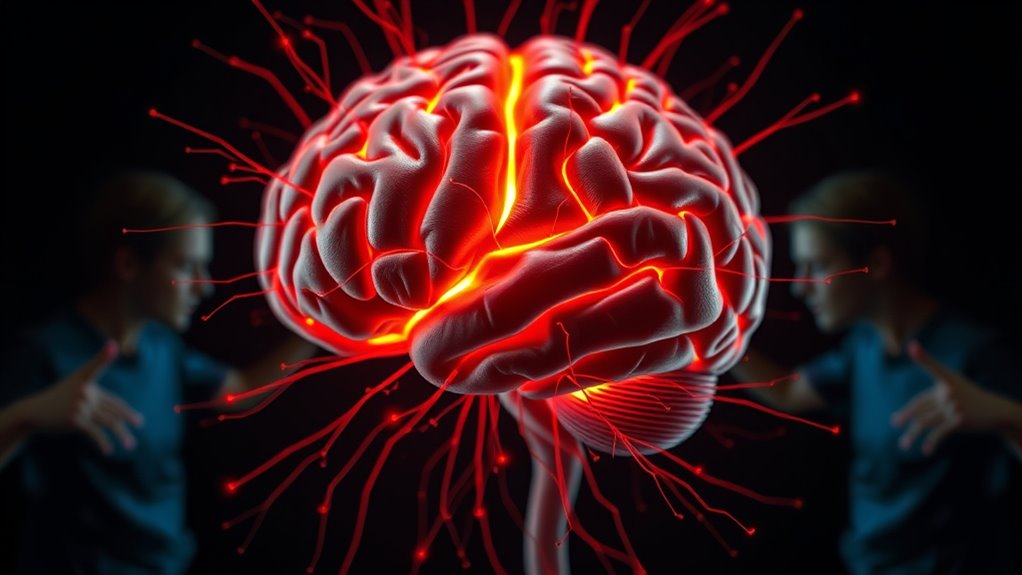
Impulsivity plays a significant role in the development and maintenance of BPD, often interacting with underlying brain structures to influence behavior. You may find it difficult to pause before acting, especially during emotional storms. Brain regions like the prefrontal cortex, responsible for self-control, are often underactive, while areas like the amygdala, involved in emotional responses, are overactive. This imbalance heightens impulsive reactions and emotional reactivity.
| Brain Region | Function in BPD |
|---|---|
| Prefrontal Cortex | Impaired regulation of impulses and emotions |
| Amygdala | Increased emotional reactivity and sensitivity |
| Anterior Cingulate | Challenges in conflict monitoring and regulation |
This interaction makes impulsivity a core feature, reinforcing emotional dysregulation and risky behaviors.
How Invalidation Shapes Emotional Development

Invalidation from caregivers can profoundly disrupt a child’s emotional development by dismissing or punishing their feelings and inner experiences. When your emotions are ignored, belittled, or blamed, you learn to distrust your own feelings and question their validity. Over time, this fosters confusion about what you truly feel and hampers your ability to recognize and regulate emotions. Instead of learning healthy ways to process emotions, you may develop patterns of suppressing or misinterpreting them. Repeated invalidation weakens your emotional resilience, making it harder to tolerate distress or express feelings appropriately. This environment hampers the development of self-awareness and emotional understanding, setting the stage for difficulties in managing intense emotions later in life. You may grow up feeling misunderstood, disconnected from your own inner experiences.
The Impact of Childhood Trauma and Adverse Experiences

Childhood trauma, especially abuse and neglect, profoundly increases your risk of developing BPD by disrupting emotional development. These adverse experiences can reinforce emotional sensitivity and make it harder to regulate intense feelings. Recognizing this connection helps you understand how early environments shape emotional vulnerabilities.
Childhood Abuse Connection
Research shows that traumatic experiences during childhood substantially increase the risk of developing Borderline Personality Disorder (BPD). If you’ve experienced sexual, physical, or emotional abuse, you’re more likely to face challenges with emotional regulation and impulsivity. Many individuals with BPD report a history of abuse—around 75% cite sexual abuse—highlighting the strong connection. These adverse experiences often involve caregiver neglect, emotional withdrawal, or inconsistent parenting, which can leave lasting scars. Such trauma disrupts normal neurodevelopment, heightening emotional sensitivity and vulnerability. When combined with biological predispositions, these traumatic events create a perfect storm that shapes your emotional responses and coping mechanisms. Recognizing this link helps explain why early trauma plays a significant role in the development of BPD, emphasizing the importance of addressing past abuse in treatment.
Impact of Neglect
Neglect during childhood can deeply affect emotional development, especially when caregivers fail to provide consistent support and protection. Without attentive caregiving, you may struggle to learn how to identify, understand, and regulate your emotions. This lack of validation can lead to feelings of emptiness, confusion, and distrust in your own emotional experiences. Over time, neglect can create a sense of instability, making it harder to form secure attachments and develop healthy coping mechanisms. These adverse experiences often heighten your biological sensitivity to emotional stimuli, causing reactions that feel overwhelming or uncontrollable. When your environment consistently dismisses or ignores your feelings, you learn to doubt your internal signals, which reinforces emotional dysregulation and impulsivity characteristic of BPD.
Interplay Between Biological Traits and Environmental Factors

Your biological traits, like emotional sensitivity and impulsivity, create a foundation that makes you more reactive to stress. When your environment invalidates or dismisses these feelings, it reinforces your emotional struggles and shapes how you cope. Together, these biological and environmental factors form a complex cycle that influences the development and persistence of BPD symptoms.
Genetic and Neurobiological Influences
The development of BPD results from a complex interplay between genetic predispositions and neurobiological factors that influence emotional regulation. You might inherit traits like impulsivity or heightened emotional sensitivity, which make you more reactive to stress. Neurobiologically, certain brain regions, such as the anterior cingulate cortex, may be underactive or smaller, impairing your ability to regulate emotions effectively. These biological vulnerabilities don’t cause BPD alone but set the stage for heightened emotional responses and impulsivity. When combined with environmental factors, like invalidation or trauma, these biological traits become more pronounced. Your brain’s wiring influences how you process feelings, but it’s the ongoing interaction with your environment that shapes your emotional responses and coping mechanisms, contributing to BPD’s development.
Environmental Reinforcement and Validation
Environmental reinforcement plays a critical role in shaping how biological vulnerabilities manifest in individuals with BPD. When your emotional sensitivity and impulsivity are met with invalidation, it worsens your ability to regulate emotions. If caregivers dismiss or punish your feelings, you learn to distrust your inner experiences, making emotional responses more intense. Repeated invalidation reinforces patterns of emotional dysregulation and impulsivity, creating a cycle that deepens BPD traits. Childhood trauma, neglect, or unstable attachments further heighten this effect by undermining emotional security. Over time, your brain adapts to these environments, strengthening dysregulated responses. Recognizing this interplay highlights that BPD isn’t caused solely by biology or environment but results from ongoing transactional influences that shape your emotional landscape.
Emotional Dysregulation as a Core Feature of BPD

Emotional dysregulation is at the heart of Borderline Personality Disorder (BPD), manifesting as intense, rapidly shifting feelings that are difficult to control. You experience emotions so strongly that they can overwhelm your thoughts and actions. This core feature includes:
- Sudden mood swings that shift rapidly, often without clear triggers.
- An inability to calm yourself once emotions intensify, leading to impulsive behaviors.
- Persistent feelings of emptiness and emotional instability that affect relationships and self-image.
These intense emotional responses are rooted in biological sensitivities combined with environmental invalidation. As a result, you may struggle to regulate your feelings, which impacts your interactions, decision-making, and sense of self. Recognizing emotional dysregulation as a central feature helps in understanding BPD’s complexity.
Therapeutic Approaches Grounded in Biosocial Understanding

Understanding the biosocial model of BPD guides effective therapeutic approaches by addressing both innate vulnerabilities and environmental influences. You’ll find that treatments like Dialectical Behavior Therapy (DBT) focus on teaching skills to regulate intense emotions and tolerate distress, directly targeting emotional dysregulation rooted in biological sensitivity. At the same time, therapy emphasizes validating your feelings and experiences, counteracting invalidating environments that may have hindered your emotional development. By combining skill-building with validation, these approaches help you develop healthier ways to manage impulses, improve relationships, and foster self-awareness. Recognizing the interplay of biology and environment allows you to approach your treatment holistically, addressing core vulnerabilities while healing past invalidation. This integrated focus enhances your capacity for emotional stability and resilience over time.
Moving Toward Healing: Addressing Both Nature and Nurture

Healing from BPD requires addressing both your biological sensitivities and the environmental factors that have shaped your experience. To do this effectively, you can focus on three key steps:
- Develop emotional regulation skills through therapies like Dialectical Behavior Therapy (DBT), which teach mindfulness, distress tolerance, and interpersonal effectiveness.
- Create a validating environment by building trusting relationships with supportive, nonjudgmental people who acknowledge and respect your feelings.
- Address past trauma with trauma-informed therapies that help process and integrate difficult memories, reducing their emotional charge.
Frequently Asked Questions
Can Biological Vulnerabilities Alone Cause BPD Without Environmental Factors?
No, biological vulnerabilities alone can’t cause BPD without environmental factors. Your genetic and neurological traits, like emotional sensitivity and impulsivity, increase risk but don’t fully determine the disorder. Environmental influences, such as invalidating caregiving or trauma, play a vital role in shaping how these vulnerabilities develop into BPD. The interaction between biology and environment creates the emotional dysregulation characteristic of BPD, so both are essential for its development.
How Does Genetic Inheritance Influence Emotional Sensitivity in BPD?
Genetic inheritance influences your emotional sensitivity by passing down traits like impulsivity and heightened emotional reactivity. These inherited characteristics make you more prone to reacting strongly and having a slow return to emotional baseline. You might notice that emotional responses feel intense and overwhelming, partly because your brain regions responsible for regulation, like the anterior cingulate cortex, tend to be underactive or smaller. This genetic predisposition shapes how you experience and manage emotions.
What Specific Parenting Behaviors Lead to Emotional Invalidation?
You might unknowingly cast shadows over your child’s feelings by dismissing, ridiculing, or punishing their emotions. When you tell them their distress is wrong or ignore their inner world, you build walls around their trust in themselves. Belittling their fears or blaming them for their pain acts like a storm that erodes emotional safety, making it harder for them to learn healthy regulation and feel truly understood.
Are There Neurobiological Markers That Predict BPD Development?
You should know that certain neurobiological markers can predict BPD development. For example, reduced activity or smaller size of the anterior cingulate cortex, which helps regulate emotions, signals vulnerability. Additionally, heightened amygdala response to emotional stimuli indicates increased emotional sensitivity. These markers, combined with genetic factors like impulsivity, can help identify individuals at higher risk, though they don’t guarantee BPD will develop.
How Do Treatment Strategies Address Both Biological and Environmental Contributors?
Imagine your emotional landscape as a fragile garden, needing careful tending. Treatment strategies, like Dialectical Behavior Therapy, act as gentle gardeners, nurturing biological vulnerabilities with skills for emotional regulation, while also creating a safe environment by validating your feelings. They teach you to manage impulsivity and intense emotions, helping your inner garden flourish despite past storms. This dual approach fosters resilience, guiding you toward healthier relationships and a more stable emotional life.
Conclusion
Imagine your mind as a delicate garden, where both seeds of biology and storms of invalidation shape its growth. By understanding how these forces intertwine, you can nurture resilience like tending to fragile blooms. With awareness and support, you can clear away the weeds of trauma and cultivate emotional strength. Embrace this journey as tending your garden—transforming it into a vibrant, thriving space where healing blossoms into your new reality.
Halloween Picks
halloween
As an affiliate, we earn on qualifying purchases.