Students coping with academic pressure need anxiety tools that fit into real routines — between classes, during study sessions, or in a dorm room. After comparing seven popular options, the 24-Card CBT Toolkit stands out as the best overall pick for its therapist-grounded coping strategies and portability, while the Carson Dellosa Calming Corner Tool Kit is the strongest choice for younger students who benefit from visual, tactile emotion regulation. For high school and college students wanting a low-cost daily habit, the 45PCS Calming Sensory Stickers offer discreet fidget-based relief for the price of a coffee. The main tradeoff in this category is depth versus convenience: structured CBT card decks teach lasting skills but require active engagement, while sensory stickers and calming strips deliver instant relief without teaching new coping techniques. Keep reading for the full breakdown, including who each tool suits best and which ones fall short.
Key Takeaways
- Structured CBT card decks (the 24-Card CBT Toolkit and CBT Coping Skills Cards) ranked highest because they teach transferable coping skills, not just momentary distraction — the key differentiator in this lineup.
- Four of the seven products rely on nearly identical formats (card decks or sticker strips), so age labeling and clinical grounding became the deciding factors between them rather than format alone.
- The Tinlade 630-piece set offers the lowest per-piece cost by far, but its classroom-bulk design makes it a poor fit for a single student — value here depends on buying context, not price.
- Sensory sticker products scored well for discretion and instant relief but weakest for skill-building; they work best as supplements to a card-based system rather than standalone tools.
- The Grounding Cards & Anxiety Stickers Set is the only option addressing trauma-specific needs (PTSD, BPD), making it the clear pick for students whose anxiety extends beyond academic stress.


More Details on Our Top Picks
Carson Dellosa Calming Corner Tool Kit, Classroom Emotion Wheel Sensory Set
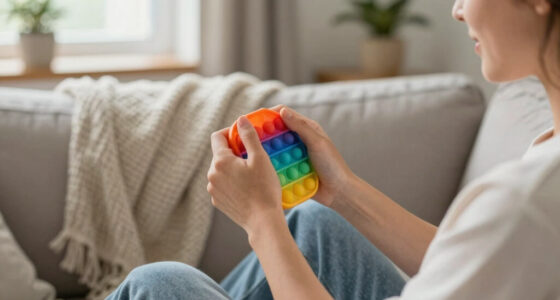
Carson Dellosa’s kit is the only option in this lineup built specifically for elementary-age learners, and that focus shows. The spinning emotion wheel turns identifying feelings into a game rather than a chore, which matters when a anxious kindergartener can’t yet articulate “I’m overwhelmed.” Compared with the CBT flashcard sets, this kit trades clinical technique for visual, tactile learning — the stretchy string fidget and tactile strip give restless hands something to do mid-meltdown. The ten-piece bundle is genuinely portable, fitting easily into a classroom calming corner or a backpack. The tradeoff is ceiling: middle and high schoolers will find the charts babyish, and it teaches recognition more than coping strategy. Where the 24-card CBT Toolkit offers structured thought-reframing, this builds the foundational vocabulary of emotions first.
Pros:- Emotion wheel makes feeling identification interactive and age-appropriate
- Combines visual aids with physical fidgets for multi-sensory calming
- Compact ten-piece set travels between classroom, home, and counselor’s office
- Develops social-emotional vocabulary, not just distraction
Cons:- Too basic for older children or teens needing advanced coping strategies
- Requires adult guidance to get real value from the charts
Best for: Teachers and parents of K-5 students setting up a calming corner or helping young kids name and regulate emotions
Not ideal for: Middle school and older students — the manipulatives and charts are pitched far below their level and will feel childish
- Includes:Spin wheel, stretchy string fidget, tactile strip fidget, reference sticker, 6 double-sided charts
- Total Pieces:10
- Suitable Age:Kindergarten and up
- Format:Physical manipulatives and visual charts
- Focus:Emotion identification, meditation, social-emotional learning
- Portability:Portable set for home, classroom, or travel
Our verdict“If you’re supporting a young child who needs help naming feelings before managing them, this is the most age-appropriate pick here.”
24-Card CBT Toolkit for Adults & Teens – Anxiety, Depression & Stress Relief Coping Skills Flashcards
This is the pick I’d point most students toward first, because it balances clinical substance with genuine portability. Each of the 24 double-sided cards includes a definition, a real-life example, and application tips — meaning a stressed student can actually use a technique during a pre-exam spiral without reading a workbook first. The color-coded categories make navigation fast under pressure, and the hole-punched metal ring clips to a backpack strap. Compared with the Carson Dellosa kit, this skews much older and more evidence-based; compared with the sensory stickers, it teaches skills rather than just providing tactile distraction. The instruction guide is a real differentiator for students new to CBT who would otherwise stare at jargon. The tradeoff: 24 cards covers the essentials, not the full CBT landscape, and students wanting depth will outgrow it.
Pros:- Definitions plus real-life examples make CBT accessible without prior knowledge
- Color-coded categories enable fast lookup during acute stress
- Metal ring and card format survive backpack life better than a book
- Included instruction guide lowers the barrier for CBT beginners
Cons:- Only 24 techniques — not a replacement for therapy or a full workbook
- No material specs provided, so card durability is uncertain
Best for: High school and college students who want structured, evidence-based coping techniques they can carry and use between classes or before exams
Not ideal for: Students wanting a deep CBT curriculum or digital/app-based tools — 24 physical cards will feel limited
- Number of Cards:24 double-sided
- Intended Age:Teens and adults
- Color-Coded Categories:Yes
- Instruction Guide:Included
- Portability:Hole-punched cards on metal ring
- Focus:Anxiety, depression, and stress coping skills
- Category:Mental health & wellness
Our verdict“The best all-around choice for a student who wants practical anxiety tools that fit in a pocket and work without a therapist in the room.”
45PCS Calming Sensory Stickers for Anxiety and Focus
For the price of one card deck, this set delivers 45 tactile stickers a student can distribute everywhere — laptop trackpad, water bottle, phone case, planner. That distributed design is the point: unlike the CBT flashcards, which require deliberately pulling out a deck, these work as ambient, always-available fidget surfaces during lectures or study sessions. The PEVA construction is waterproof and tear-proof, and the material suits sensitive skin, a real plus over cheaper vinyl fidgets. Where the 48-piece Boho sticker set leans decorative with affirmations, this pack prioritizes variety of texture and shape — hearts, stars, triangles, geometric patterns — which matters more for tactile seekers. The tradeoff is that stickers are a supplement, not a system: there’s no technique being taught, and adhesive longevity over months of daily rubbing is unverified.
Pros:- 45 stickers cover far more surfaces per dollar than any other option here
- Waterproof, tear-proof PEVA holds up on water bottles and laptops
- Sensitive-skin-friendly material
- Wide mix of shapes and patterns suits different tactile preferences
Cons:- No coping technique or guidance — purely a sensory tool
- Adhesive strength over long-term daily use is not documented
Best for: Students on a budget who want discreet tactile fidget options spread across multiple devices and surfaces
Not ideal for: Anyone seeking actual coping strategies or emotional skills — these provide sensory relief only, with no instructional content
- Number of Pieces:45 stickers
- Material:PEVA
- Dimensions:8.5 x 4.8 x 0.6 inches (packaged)
- Shapes:Heart, star, triangle
- Patterns:Animal print, floral, geometric, polka dot, striped
- Features:Reusable, waterproof, tear-proof
- Suitable For:Kids, adults, sensitive skin
Our verdict“The cheapest way to blanket a student’s environment with fidget-friendly surfaces, as long as it’s paired with a real coping-skills tool.”
CBT Coping Skills Cards for Adults & Teens – 24 Cognitive Behavioral Therapy Cards for Anxiety Relief, Emotional Regulation, Stress Management
This deck covers similar ground to the 24-Card CBT Toolkit — 24 cards, color-coded categories, teen-and-up audience — but two details push it toward a different buyer. First, it’s organized around three named domains: anxiety, stress management, and emotional regulation, which maps neatly onto how school counselors and therapists actually structure sessions. Second, it ships with a soft storage pouch and binder ring, a small upgrade that matters if the deck lives in a bag alongside keys and chargers. The cards focus on recognizing thought patterns, making this a strong companion for a student already in counseling who wants homework between sessions. The tradeoff is the flip side: it assumes some CBT familiarity, so a complete beginner gets more on-ramp from the other deck’s instruction guide, and there’s no digital component for students who live in apps.
Pros:- Three clearly separated categories mirror how therapy is actually structured
- Storage pouch plus binder ring protects cards in a crowded backpack
- Evidence-based techniques suitable for personal, classroom, or clinical use
- Pocketable 4.7 x 2.8 inch cards work discreetly during class
Cons:- Presumes prior CBT familiarity for full benefit
- Same 24-card ceiling as competitors — advanced users will want more depth
- No digital or app integration
Best for: Students already working with a counselor or familiar with CBT who want structured between-session practice
Not ideal for: Complete beginners to cognitive behavioral concepts — without baseline familiarity, the cards assume knowledge they don’t have
- Number of Cards:24
- Card Dimensions:4.7″ x 2.8″
- Categories:Anxiety, stress management, emotional regulation
- Included Accessories:Binder ring, soft storage pouch
- Intended Users:Adults, teens, professionals
- Reference System:Color-coded categories
- Approach:Cognitive behavioral therapy techniques
Our verdict“The stronger pick for a student in therapy who wants a durable, counselor-friendly deck for practicing skills between sessions.”
48 Pcs Anxiety Sensory Stickers Fidgets Mindfulness Textured Calm Strips Boho Mood Calming Stickers for Adults & Teens
What separates this set from the 45PCS Calming Sensory Stickers is the affirmation layer: each textured strip pairs tactile stimulation with an encouraging message, so a quick thumb-rub on a phone case also delivers a grounding cue. The boho-styled designs read as decoration rather than therapy equipment, which is the whole point for self-conscious students — nobody in a lecture hall clocks a floral sticker as an anxiety tool. At 48 pieces across 12 styles, there’s enough to share with a dorm floor or swap when textures wear thin. The EVA material sticks securely without residue, an upgrade over generic fidget stickers. Be honest about the limits, though: the reviewer-noted issue of texture dulling over time is real with repeated use, and like the other sticker set, this is a complement to — never a substitute for — the skill-building the CBT decks provide.
Pros:- Affirmations add a cognitive grounding cue on top of tactile relief
- Boho designs pass as decor, removing stigma in public settings
- 48 stickers across 12 styles allow rotation and sharing
- Adhesive holds securely without leaving residue on devices
Cons:- Textured surface loses effectiveness with repeated rubbing over time
- Boho-only aesthetic limits appeal; no alternative design lines
- Surface-application only — useless as a standalone coping tool
Best for: Teens and college students who want stress relief that looks like personal style and works invisibly on phones, laptops, and water bottles
Not ideal for: Students who dislike boho aesthetics or need substantive anxiety-management techniques — this is tactile comfort only
- Number of Pieces:48 stickers
- Styles:12 designs
- Material:Ethylene Vinyl Acetate (EVA)
- Dimensions:5.9 x 5.9 x 0.3 inches (packaged)
- Shape:Rectangular
- Patterns:Floral, star, heart, geometric
- Theme:Boho with encouraging affirmations
- Intended Users:Adults and teens
Our verdict“The most socially invisible anxiety tool in this lineup — ideal as a stylish supplement, insufficient as a primary strategy.”
Tinlade 30 Sets / 630 Pcs Calming Strategy Cards for Growth Mindset
School counselors and teachers buying for a whole classroom will find the math works in their favor here: 30 identical sets of 20 coping-skill cards means every student can have their own ring without photocopying or sharing germs over one communal deck. Compared with the 24-Card CBT Toolkit, which gives you a single deck of deeper cognitive strategies, this option trades depth for distribution — each card covers one coping skill in bite-size form, which suits younger students with shorter attention spans. The water-resistant coated cardstock and binder rings hold up to backpack abuse better than loose flashcards. The tradeoff is that 630 pieces arriving at once demands real organizational effort upfront, and the strategies themselves are basic — a student needing clinical-grade CBT structure should look at the dedicated therapy card decks instead.
Pros:- 30 complete sets allow every student to own a full deck
- Warm, calming color palette designed for emotion regulation
- Water-resistant 300gsm cardstock survives daily handling by kids
- Binder rings keep each set organized and portable
Cons:- Managing 630 loose pieces requires significant upfront organization
- Coping strategies are basic and repetitive across sets — no progression for advanced needs
- No digital companion or audio guidance
Best for: Teachers, school counselors, and group facilitators who need enough calming cards for an entire class or small-group program
Not ideal for: Individual students or buyers wanting one personal deck — 29 extra sets is wasteful, and the strategies are too basic for solo deep work
- Number of Sets:30
- Total Pieces:630
- Cards per Set:20 unique coping skills
- Card Dimensions:1.57 × 1.38 inches
- Material:300gsm coated art paper
- Binder Rings:PE raw material
- Intended Settings:Classroom, home, counseling
Our verdict“Buy this only if you’re equipping a classroom or counseling caseload — solo buyers get far more value from a single richer deck.”
Grounding Cards & Anxiety Stickers Set – 23 Coping Skills for Stress Relief, Mindfulness Tools for Trauma, PTSD, BPD
Where the Tinlade classroom set keeps things simple for younger kids, this deck treats the reader like an adult: each of the 23 grounding techniques comes with a scientific explanation of why it works, which matters for high school and college students who distrust vague ‘just breathe’ advice. The 7 waterproof reminder stickers add something no other card deck in this lineup offers — a way to stick a coping cue on a laptop, water bottle, or dorm mirror where panic actually strikes. At a 12+ age recommendation, it sits between the classroom-oriented sets and the adult-focused CBT Coping Skills Cards, and it leans more clinical than playful. The main tradeoff is coverage: 23 techniques is a smaller toolkit than the 45-piece sensory sticker packs or the CBT decks, and there’s no interactive component for students who learn better through doing rather than reading.
Pros:- Each technique includes a scientific explanation, building trust in the method
- Wallet-sized cards allow discreet use during class or exams
- Waterproof stickers extend coping cues onto everyday objects
- Rated 4.7/5 with crossover appeal for clinical and personal use
Cons:- Only 23 techniques — a smaller library than competing decks and sticker packs
- Reading-based format may not engage kinesthetic learners
- No digital or interactive companion app
Best for: High school and college students, plus therapists and educators, who want evidence-based explanations behind each anxiety technique
Not ideal for: Younger elementary students who need visual, playful prompts — the text-heavy explanations will lose them
- Number of Cards:23
- Number of Stickers:7 waterproof reminder stickers
- Total Items:29
- Recommended Age:12+
- Brand:UHillMinerva
- Customer Reviews:4.7/5
- Best Sellers Rank:#314 in Special Education School Supplies
Our verdict“The strongest pick for teens and college students who want to understand the science behind calming down — not just follow instructions.”

How We Picked
I evaluated each product against five buyer-relevant criteria. Skill-building depth came first: tools grounded in cognitive behavioral therapy techniques or structured coping frameworks scored higher than passive fidget products, because students benefit most from strategies they can reuse independently. Age appropriateness was second — a tool that works for a third-grader often feels childish to a college student, and vice versa. I also weighed portability and discretion, since anxiety spikes in classrooms, libraries, and exam halls where obvious tools go unused.
The final two criteria were value per use and versatility across situations. Bulk classroom sets scored poorly for individual buyers despite low unit costs, while compact decks usable at a desk, in a backpack, or before bed ranked higher. Products landed in this order: clinically grounded card decks first, hybrid card-and-sticker sets second, bulk classroom kits third, and standalone sticker packs last — reflecting the tradeoff between lasting skill development and instant tactile relief.
Factors to Consider When Choosing Anxiety Management Tools For Students
Choosing an anxiety management tool for a student is less about finding the “best” product and more about matching the tool to the student’s age, schedule, and how their anxiety actually shows up. These are the factors that separated the winners from the also-rans in this comparison.Skill-Building Versus Instant Relief
The single biggest decision is whether you want a tool that teaches coping skills or one that interrupts anxiety in the moment. CBT-based card decks fall into the first camp: they require the student to read, reflect, and practice techniques like cognitive reframing, which builds durable emotional regulation over weeks and months. Sensory stickers and calming strips fall into the second camp — they work in seconds through tactile stimulation but teach nothing transferable. A common mistake is buying only the instant-relief option and expecting long-term improvement; it is like using a painkiller without addressing the cause. Students with exam anxiety often benefit from owning one of each: a card deck for daily practice and stickers for high-pressure moments. Hybrid sets like the Grounding Cards & Anxiety Stickers Set attempt to cover both, usually with some compromise in depth on each side.
Age and Maturity Fit
Age appropriateness quietly determines whether a tool gets used or ends up in a drawer. The Carson Dellosa Calming Corner Tool Kit with its emotion wheel is designed for elementary and middle school classrooms, and teenagers will often reject it as babyish. Meanwhile, card decks labeled for “adults and teens” — the 24-Card CBT Toolkit and the CBT Coping Skills Cards — use language and scenarios that resonate with high school and college pressures like deadlines, social comparison, and perfectionism. Design aesthetics matter more than buyers expect: the boho-styled 48-piece sticker set deliberately avoids childish colors, which is why it appeals to older students despite being a simple product. When in doubt, check the recommended age range and skim the actual card or sticker text before buying. A tool the student feels embarrassed to pull out in public will rarely get used when it is needed most.
Discretion in Classroom Settings
Anxiety frequently peaks in exactly the settings where conspicuous tools are impractical — lectures, exams, group work. This is where sensory stickers gain their main advantage: a textured strip on a laptop, water bottle, or phone case is invisible to classmates and silent to use. Card decks are harder to use covertly, though a student can step into a hallway or restroom between classes without drawing attention. Larger kits like the Tinlade 630-piece classroom set or the Carson Dellosa corner kit assume a dedicated physical space, which works in elementary classrooms but not in a college lecture hall. Buyers should map the tool to where anxiety actually strikes. If it strikes mid-exam, prioritize silent, one-handed options; if it strikes at home or in a dorm, size and visibility matter far less.
Clinical Grounding and Content Quality
Not every product labeled “anxiety relief” is built on evidence-based methods. The strongest performers in this lineup explicitly reference cognitive behavioral therapy frameworks, with exercises drawn from recognized techniques like grounding, cognitive restructuring, and behavioral activation. Products without this grounding tend to offer vague affirmations or pleasant-but-shallow prompts that lose effectiveness quickly. For students working with a school counselor or therapist, a CBT deck can even reinforce techniques from sessions, turning the product into homework support rather than a standalone fix. Check whether the deck names its methodology, cites any professional involvement in development, and shows sample content before purchase. The cheapest card products often cut corners here, and a deck of 24 shallow prompts delivers less value than 12 well-constructed exercises.
Individual Versus Bulk Buying
Several products in this category — especially the Tinlade 630-piece set — are packaged for teachers, counselors, and group settings, not individual students. Bulk sets look like incredible value on a per-piece basis, but a single student uses maybe 5 to 10 cards, and the rest becomes clutter. Buyer type should drive the format: parents buying for one child should favor compact 24-card decks or sticker packs, while teachers and school psychologists get genuine mileage from classroom kits and strategy card bundles. There is also a middle group — student wellness centers, dorm resident advisors, and tutoring programs — where mid-sized sets make sense. A related trap is assuming more cards equal better; a focused deck that a student actually cycles through beats an overwhelming box that never opens. Match quantity to the number of people who will genuinely use it.
When to Step Up to Professional Support
Every product in this roundup is a self-help aid, not a treatment, and knowing that boundary shapes smart buying. If a student’s anxiety involves panic attacks, avoidance of school, sleep disruption, or symptoms of trauma (which the Grounding Cards set acknowledges by addressing PTSD and BPD), a card deck should complement — never replace — a school counselor or licensed therapist. Self-help tools work best for mild to moderate, situational anxiety like test nerves and social stress. A practical approach is to treat any purchase here as a low-cost first step: if the tool helps within a few weeks, great; if anxiety persists or worsens, that signal matters more than any product decision. Buyers should also be wary of marketing that implies a product can treat clinical conditions. Framing the purchase honestly — as a coping aid, not a cure — sets the student up to use it effectively and seek help when needed.
Frequently Asked Questions
Are CBT card decks actually effective for student anxiety, or just a gimmick?
CBT card decks are not a substitute for therapy, but they have real utility because they translate evidence-based techniques into quick, repeatable actions. Cognitive behavioral therapy is one of the most researched approaches for anxiety, and a well-made deck essentially packages its core exercises — grounding, reframing, behavioral activation — into a format a student can use without an appointment. The catch is that effectiveness depends on repetition; a deck used once during a crisis does little, while one used a few times a week builds recognizable coping patterns. In this comparison, decks that named their methodology and included specific, actionable prompts outperformed decks of vague affirmations. Students already in counseling often get the most benefit, since the cards reinforce techniques from sessions.
Which option is best for a college student who feels embarrassed about visible anxiety tools?
Discretion points squarely to the sensory sticker products — the 45PCS Calming Sensory Stickers and the boho-styled 48-piece set. A textured strip on a laptop or water bottle looks like decoration, makes no noise, and can be touched during a lecture or exam without anyone noticing. The 24-Card CBT Toolkit is the next-best option because a small deck can be used privately in a dorm, before class, or during a study break. The products to avoid for this buyer are the classroom-oriented kits like Carson Dellosa and the Tinlade bulk set, which assume a shared physical space and a younger audience. A strong combo is stickers for public moments plus a card deck for private practice.
Is the 630-piece Tinlade set worth it for a single student?
Almost certainly not. The per-card price is the lowest in this lineup, but the set is built for teachers, counselors, and group distribution — 30 separate sets of strategy cards make sense for a classroom, not a backpack. A single student would use a handful of cards while the rest sits unused, which negates the value advantage. For one student, a focused 24-card deck like the CBT Toolkit delivers more relevant content at a lower absolute price. The Tinlade set becomes worthwhile for school psychologists, wellness coordinators, or parents organizing a study group. Matching purchase size to the number of actual users matters more than unit economics here.
What is the difference between the two nearly identical 24-card CBT decks in this comparison?
The 24-Card CBT Toolkit and the CBT Coping Skills Cards share a format, price bracket, and teen-to-adult audience, so the differences come down to content framing and design. The Toolkit leans toward structured exercises with clearer therapeutic progression, which is why it earned the best overall spot — it works well as a daily practice system. The Coping Skills Cards take a slightly broader scope across anxiety, emotional regulation, and stress management, making them better for students whose struggles are less specifically anxious and more generally overwhelming. Neither is a wrong choice, and swapping one for the other will not transform outcomes. If forced to choose, pick based on whether the student wants a focused anxiety protocol (Toolkit) or a general coping toolkit (Coping Skills Cards).
Do grounding and sensory stickers help with test anxiety specifically?
They can, because test anxiety has a strong physiological component that tactile stimulation addresses quickly. Rubbing a textured strip gives the nervous system a competing sensory input, which can interrupt the spiral of racing thoughts during an exam — this is the same logic behind grounding techniques like the 5-4-3-2-1 method. The limitation is duration: stickers manage the moment but do not reduce the underlying fear of tests, which is where CBT-style cognitive work earns its keep. The best-performing approach for chronic test anxiety combines both — stickers in the exam room, card-based reframing in the days before. The Grounding Cards & Anxiety Stickers Set was designed with exactly this pairing in mind, though students with straightforward exam nerves can assemble the same combo from separate products.
Conclusion
After comparing all seven products, here is how I would match them to buyer types. For the best overall pick, the 24-Card CBT Toolkit wins on the balance of clinical grounding, portability, and age-appropriate content for teens and young adults. The best value goes to the 45PCS Calming Sensory Stickers, which deliver discreet relief for pocket change — ideal as a supplement or a first, low-commitment purchase. For buyers wanting the most complete package, the Grounding Cards & Anxiety Stickers Set combines cognitive tools with tactile aids and is the only option built for trauma-related needs like PTSD and BPD. The best for beginners is the Carson Dellosa Calming Corner Tool Kit, whose emotion wheel and visual design make emotional regulation approachable for elementary and middle school students. Finally, the Tinlade 630-piece set earns its place only for teachers and counselors buying at scale — individual students should skip it. Whatever you choose, remember the pattern that ran through this entire comparison: tools that teach skills outperform tools that only soothe, and the best setup pairs one of each.