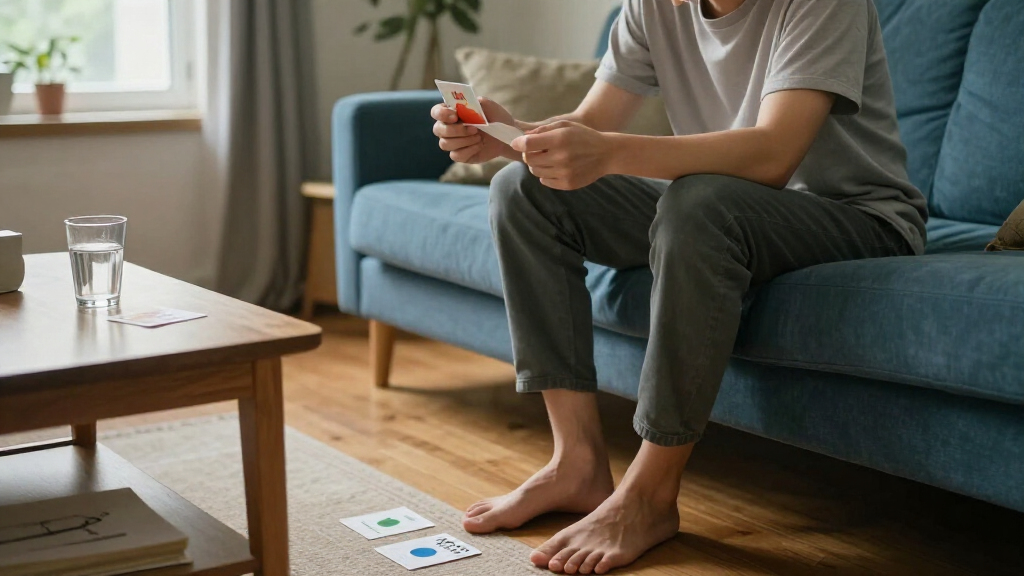
For the best all-around choice, I’d start with Grounding Cards and Worry Stone for Anxiety Relief, which pairs prompts with a tactile aid; Somatic Therapy Cards stand out for body-based exercises, while Marspark DBT Coping Skills Flashcards offer a structured skills format. The main tradeoff is between a small, quick-to-use set and a larger deck with more variety, which may take longer to choose from during acute distress. Card wording, portability, and whether the prompts suit your coping style matter as much as card count. Read on for how all 14 options differ and which type of deck may fit your needs.

Turn your wind-down time into listening time
- Thousands of audiobooks, podcasts and originals
- Listen on your phone, tablet or Echo — also offline
- Cancel anytime
Key Takeaways
- The standout choices serve different moments: the Grounding Cards and Worry Stone pair gives tactile support, while Somatic Therapy Cards center on body-based exercises and Marspark uses DBT-style skills.
- More cards do not automatically mean easier use. The 108-card decks offer breadth, but a smaller set may be simpler to reach for when concentration is limited.
- Format changes the experience: a ring-bound deck such as Marspark keeps cards together, while a set with a worry stone adds a non-reading option.
- Audience fit varies across the lineup. The teen-focused sticker set and the adults-and-teens coping deck may suit shared use better than a deck aimed at a narrower style of practice.
- Exercise approach is the clearest divider: mindfulness, DBT, CBT, somatic regulation, and general grounding prompts are not interchangeable, so buyers should match the method to what feels usable.
| Grounding Cards and Worry Stone for Anxiety Relief |  | Best for Tactile Grounding | Brand: Uflognirz | Card count: 25 grounding technique cards; listing title also says 24 | Card material: Waterproof PVC | VIEW LATEST PRICE | See Our Full Breakdown |
| 108 Mindfulness Cards for Coping Skills and Emotional Insight |  | Best for Guided Practice and Variety | Brand: Blavvennt | Total cards: 108 | Decks: 2 | VIEW LATEST PRICE | See Our Full Breakdown |
| Marspark DBT Coping Skills Flashcards with Ring, 48 Cards |  | Best for Structured DBT Skills | Brand: Marspark | Card count: 48 | Card size: 3.15 × 4.3 inches (80 × 110 mm) | VIEW LATEST PRICE | See Our Full Breakdown |
| AmazingSpark Grounding and Coping Skills Cards for Anxiety, 10 Count |  | Best Compact Starter Set | Brand: AmazingSpark | Card count: 10 | Material: Waterproof PVC | VIEW LATEST PRICE | See Our Full Breakdown |
| Anxiety and Stress Relief & Grounding Cards for Mental Wellness |  | Best for Short, Timed Exercises | Brand: woosian | Exercise count: 20 five-minute exercises | Number of items: 21 | VIEW LATEST PRICE | See Our Full Breakdown |
| The Power Is in You Anxiety Relief Cards, 46-Card Deck |  | Best for a Varied Pocket Toolkit | Brand: ANNA BUDNIKOVA | Author: Anna Budnikova | Number of cards: 46 | VIEW LATEST PRICE | See Our Full Breakdown |
| Coping Skills Cards – Mindfulness & Self-Care Deck for Adults & Teens |  | Best for Shared and Classroom Use | Brand: Deyl cavier | Unit count: 20 cards | Material: Waterproof PVC | VIEW LATEST PRICE | See Our Full Breakdown |
| Somatic Therapy Cards: 40 Grounding and Nervous System Regulation Exercises |  | Best for Body-Based Grounding | Brand: The Counseling Collective Tampa | Number of exercises: 40 | Material: Paper | VIEW LATEST PRICE | See Our Full Breakdown |
| Anxiety Relief Coping Skills Cards: 55 Techniques for Anxiety, Stress, and Overwhelm |  | Best for Detailed Self-Guided Practice | Brand: PocketPlaybook Co | Included components: 55 reference cards | Unit count: 55 | VIEW LATEST PRICE | See Our Full Breakdown |
| Grounding Cards and Anxiety Stickers for Teens and Adults |  | Best for Everyday Reminders | Brand: UHillMinerva | Included components: 23 cards, 7 stickers | Number of items: 1 set | VIEW LATEST PRICE | See Our Full Breakdown |
| Mindful Grounding Card Deck |  | Best for Younger Users and Guided Settings | Brand: Lindsay Braman Studios | Card count: 36 cards | Card dimensions: 2.5 × 3.5 inches | VIEW LATEST PRICE | See Our Full Breakdown |
| Grounding and Coping Skills Cards, 17-Piece Set |  | Best for Portable, All-Purpose Prompts | Brand: ZUMWORGION | Card count: 17 double-sided cards | Grounding techniques: 32 | VIEW LATEST PRICE | See Our Full Breakdown |
| Deyl Cavier Coping Skills Cards for Anxiety and Stress Relief |  | Best for Minimal, Keyring-Carried Reminders | Brand: Deyl Cavier | Card count: 10 cards | Coping skills: More than 20 | VIEW LATEST PRICE | See Our Full Breakdown |
| 108 Coping Skills Cards – Calm Body & Mind (CBT, Mindfulness, Therapy) |  | Best for Broad Skill Selection and Group Use | Brand: ZUMWORGION | Unit count: 108 cards | Number of packs: 2 decks | VIEW LATEST PRICE | See Our Full Breakdown |
| panic attack grounding card | Brand | Material | Included components |
|---|---|---|---|
| Grounding Cards and Worry Ston | Uflognirz | — | — |
| 108 Mindfulness Cards for Copi | Blavvennt | Paper | 54 Coping Skills cards and 54 Emotional Insight cards |
| Marspark DBT Coping Skills Fla | Marspark | Card | DBT cards and metal ring |
| AmazingSpark Grounding and Cop | AmazingSpark | Waterproof PVC | Metal binder ring |
| Anxiety and Stress Relief & Gr | woosian | Waterproof, bend-proof PVC | — |
| The Power Is in You Anxiety Re | ANNA BUDNIKOVA | — | Cards |
| Coping Skills Cards | Deyl cavier | Waterproof PVC | — |
| Somatic Therapy Cards: 40 Grou | The Counseling Collective Tampa | Paper | — |
| Anxiety Relief Coping Skills C | PocketPlaybook Co | — | 55 reference cards |
| Grounding Cards and Anxiety St | UHillMinerva | Cardstock | 23 cards, 7 stickers |
| Mindful Grounding Card Deck | Lindsay Braman Studios | Playing-card grade cardstock | 34 activity cards, instruction card, blank card, reusable box |
| Grounding and Coping Skills Ca | ZUMWORGION | Polyvinyl chloride (PVC) | Binder ring and silicone wrist lanyard |
| Deyl Cavier Coping Skills Card | Deyl Cavier | Waterproof PVC | — |
| 108 Coping Skills Cards | ZUMWORGION | — | — |
More Details on Our Top Picks
Grounding Cards and Worry Stone for Anxiety Relief
This set pairs 25 waterproof grounding cards with a small Blue Aventurine worry stone, giving someone in a panic the choice to follow a prompt or focus on a tactile object. The cards cover sensory and movement-based practices across sight, touch, hearing, smell, and taste, and explain both the technique and why it may help. That extra explanation can make the prompts more approachable than the compact, simpler AmazingSpark Grounding and Coping Skills Cards. The tradeoff is that there are fewer cards than in the 48-card Marspark DBT deck, and the listing gives conflicting counts—24 in the title and 25 in the details. The stone and pouch add portable options, though the stone is an accessory rather than a substitute for a technique that suits the moment.
Pros:- Includes a Blue Aventurine worry stone and velvet pouch alongside the cards.
- Waterproof PVC cards suit use on the go.
- Prompts span sensory and movement-based grounding.
- Explains techniques and why they may help.
Cons:- The listing conflicts on whether the set contains 24 or 25 cards.
- The 25-card set offers less breadth than the 48-card Marspark deck.
- The 0.8-inch stone may feel small for users seeking a larger tactile object.
Best for: People who want a pocketable grounding aid that combines written prompts with a tactile object for sensory focus.
Not ideal for: Buyers who need a clearly verified card count or a broad, structured DBT skills library.
- Brand:Uflognirz
- Card count:25 grounding technique cards; listing title also says 24
- Card material:Waterproof PVC
- Card dimensions:4.75 × 2.7 inches
- Worry stone:Blue Aventurine, 0.8 inches
- Pouch dimensions:2.75 × 2.75 inches
- Item weight:4.5 ounces
- Model number:GC001
Our verdict“Choose this set if pairing explanatory grounding prompts with a small tactile focus object matters more than having a large deck.”
108 Mindfulness Cards for Coping Skills and Emotional Insight
With 108 cards across two decks, this set is the broadest option here for building coping habits beyond a single grounding prompt. One deck focuses on coping skills; the other adds emotional insight activities, with each card organized around an action, an insight, and a practice. That structure can help teens or adults revisit a skill and reflect on what is driving their distress, while the woosian Anxiety and Stress Relief & Grounding Cards are more directly framed around short exercises. The tradeoff is volume: during an acute panic attack, choosing among many paper cards may feel less immediate than reaching for a small ring-bound set. Some activities may also benefit from therapist guidance, and the stated age range starts at 13.
Pros:- Combines coping skills with emotional insight activities.
- Action, insight, and practice format gives each card a clear structure.
- Useful across individual, family, and therapy settings.
- Large card selection supports variety in ongoing practice.
Cons:- The large deck may be harder to scan during acute distress.
- Paper material is less suited to wet or rough handling than waterproof PVC cards.
- Some techniques may be more useful with mental health professional guidance.
Best for: Teens, adults, families, or therapy clients who want a large pool of coping and reflection prompts for ongoing practice.
Not ideal for: Someone seeking a small, quick-selection deck for an acute panic moment, or a resource for children under 13.
- Brand:Blavvennt
- Total cards:108
- Decks:2
- Cards per deck:54
- Included components:54 Coping Skills cards and 54 Emotional Insight cards
- Material:Paper
- Recommended age:13 years and up
- Model:CP01
Our verdict“Pick this two-deck set for ongoing skills practice and reflection, rather than for the quickest prompt during a panic spike.”
Marspark DBT Coping Skills Flashcards with Ring, 48 Cards
The Marspark deck is the most clearly organized choice here for shoppers who want DBT skill areas rather than grounding prompts alone. Its 48 cards cover mindfulness, distress tolerance, emotion regulation, and interpersonal effectiveness, with additional material on cognitive distortions, meditation, and coping strategies. The metal ring keeps the cards together and lets someone flip through them without handling a loose stack—a practical contrast with the larger, paper Blavvennt set. At 3.15 × 4.3 inches, though, each card has limited room, and the product details do not identify the individual prompts. That makes it harder to know whether the deck offers a specific technique that will feel usable during panic. It suits broader skills practice better than a tightly previewed, panic-specific prompt set.
Pros:- Covers several core DBT skill areas.
- Ring keeps the cards organized and easy to flip through.
- Portable card format works for self-guided or therapy settings.
- Includes topics beyond grounding, including emotion regulation and interpersonal effectiveness.
Cons:- Compact dimensions may limit the detail that fits on each card.
- The product description does not identify individual card prompts.
- More focused on broad DBT skills than panic-specific grounding.
Best for: Teens and adults who want a portable, organized introduction to several DBT skill categories for self-guided or therapeutic practice.
Not ideal for: Buyers who need to preview specific grounding exercises or want detailed explanations on each card.
- Brand:Marspark
- Card count:48
- Card size:3.15 × 4.3 inches (80 × 110 mm)
- Material:Card
- Included components:DBT cards and metal ring
- Weight:4.96 ounces
- Recommended age:12 years and up
- Theme:Mental health
Our verdict“Choose Marspark for an organized, multi-area DBT reference, but opt for a more explicitly described grounding set if prompt content is your priority.”
AmazingSpark Grounding and Coping Skills Cards for Anxiety, 10 Count
For someone who wants only a handful of prompts to keep within reach, AmazingSpark’s 10-card set is easier to approach than the 48-card Marspark deck or the 108-card Blavvennt collection. Its colorful cards focus on sensory and movement-based grounding, and a metal binder ring keeps the small set together for quick flipping. Waterproof PVC gives it an everyday portability advantage over paper decks, though the cards measure just 2.56 × 3.94 inches. That compact format may leave little space for detailed instructions, so it is better suited to brief prompts than an explanatory guide. The limited count also means less variety for someone who wants to rotate through skills or find different approaches for different panic symptoms.
Pros:- Small 10-card set is quick to browse.
- Binder ring keeps cards together and accessible.
- Waterproof PVC suits frequent carry and handling.
- Includes sensory and movement-based techniques.
Cons:- Only 10 cards, limiting exercise variety.
- Small card dimensions may restrict instruction detail.
- Provides less breadth than the Marspark DBT deck.
Best for: People who want a small, ring-bound set of sensory and movement prompts to carry or keep close at hand.
Not ideal for: Buyers who want detailed explanations, many exercises to choose from, or a deck for sustained skills practice.
- Brand:AmazingSpark
- Card count:10
- Material:Waterproof PVC
- Size:2.56 × 3.94 inches (65 × 100 mm)
- Included components:Metal binder ring
- Recommended age:6 years and up
Our verdict“Pick AmazingSpark for a simple, portable starter set, not for a wide-ranging or detailed coping resource.”
Anxiety and Stress Relief & Grounding Cards for Mental Wellness
The woosian set is framed around 20 five-minute exercises, a useful distinction for someone who prefers a defined activity over an open-ended prompt. Its waterproof, bend-proof PVC cards attach to a metal ring and are sized for a pocket or bag, making them more travel-ready than the paper Blavvennt deck. The description also presents the exercises as science-backed and suitable for kids, teens, and adults, though the listing’s age range begins at 24 months and the small 3.46 × 2.5-inch cards may be difficult for some people to read. Compared with AmazingSpark’s 10-card set, woosian offers twice as many exercises and a timed format; it still has less variety than the Marspark deck, and the listing’s item count of 21 does not clearly match its 20-card description.
Pros:- Twenty five-minute exercises provide a defined time commitment.
- Waterproof, bend-proof PVC is suited to portable use.
- Metal ring keeps cards organized.
- Described for use by children, teens, and adults.
Cons:- Small card dimensions may be difficult for some users to read.
- The listing says 20 cards but reports 21 items.
- Fewer exercises than the Marspark and Blavvennt decks.
Best for: People who want short, timed grounding or stress-relief exercises in a durable ring-bound format for carrying between home, school, or work.
Not ideal for: Users who need large-print instructions, a clearly reconciled item count, or an extensive selection of techniques.
- Brand:woosian
- Exercise count:20 five-minute exercises
- Number of items:21
- Material:Waterproof, bend-proof PVC
- Dimensions:3.46 × 2.5 inches
- Item weight:3.84 ounces
- Language:English
- Age range:Listed for children, teens, and adults; stated range begins at 24 months
Our verdict“Choose woosian if short, timed exercises and durable portability matter more than large-print cards or a broad skills library.”
The Power Is in You Anxiety Relief Cards, 46-Card Deck
With 46 cards spanning breathing, grounding, mindfulness, and relaxation, this deck gives buyers more ways to find an exercise that feels manageable during anxious moments. The pocket-sized 80 × 120 mm format is easier to carry than the larger Somatic Therapy Cards, which are listed at 8.5 × 11 inches. Instructions and practical advice also make the cards more actionable than a deck that offers only brief prompts. Created by psychology professional Anna Budnikova, it is described as suitable from age eight, giving it broader stated age coverage than the teen-and-adult UHIllMinerva set. The tradeoff is that the listing does not say how many exercises are included or detail their contents, so buyers have less visibility into the deck before purchase. It is a self-help aid, not a fit for everyone or a substitute for individualized support.
Pros:- Combines breathing, grounding, mindfulness, and relaxation approaches
- Pocket-sized 80 × 120 mm cards are convenient to carry
- Cards include instructions and practical advice
- Listed for ages eight and up
Cons:- The listing does not specify the number of exercises or describe them individually
- Self-guided content may not suit every user or level of need
Best for: People who want a portable, mixed-method deck of guided anxiety exercises, including families seeking a product listed for ages eight and up.
Not ideal for: Buyers who need a clearly itemized exercise list before choosing, or anyone seeking personalized clinical guidance rather than a self-help tool.
- Brand:ANNA BUDNIKOVA
- Author:Anna Budnikova
- Number of cards:46
- Card size:80 × 120 mm
- Language:English
- Recommended age:8 years and up
- Included components:Cards
Our verdict“Choose this deck if you want a portable range of guided techniques and can accept limited detail about the individual exercises.”
Coping Skills Cards – Mindfulness & Self-Care Deck for Adults & Teens
Waterproof, tear-resistant PVC is the deciding feature here: these cards suit settings where several people may handle them, from counseling groups to classrooms, as well as personal use. The described prompts cover grounding, breathing, affirmations, and gentle reminders, offering a compact mix rather than the broader, more explicitly structured range of Anxiety Relief Coping Skills Cards from PocketPlaybook Co. That larger deck lists 55 techniques and gives instructions, goals, and practice timers; this option makes a stronger case for durability and shared handling than for detailed coaching. The listing describes the deck as having more than 20 techniques, while its unit count says 20 cards, so the exact card-and-technique count is not fully clear. Buyers seeking a substantial sequence of exercises may find the scope limited.
Pros:- Waterproof, tear-resistant PVC suits frequent handling
- Includes grounding, breathing, mindfulness, and affirmation prompts
- Described for personal use, classrooms, and counseling sessions
- Compact format is suited to carrying
Cons:- The listed unit count is 20 cards, limiting the stated deck size
- The description does not promise the detailed guidance, goals, or timers found in PocketPlaybook Co’s 55-card deck
- The listing’s reference to more than 20 techniques does not clearly resolve the number of cards
Best for: Counselors, teachers, and families looking for durable coping prompts that can be shared or handled in group settings.
Not ideal for: People wanting a large, precisely specified deck with detailed step-by-step instructions for each technique.
- Brand:Deyl cavier
- Unit count:20 cards
- Material:Waterproof PVC
- Age range:3 years and up
- Number of packs:1
- Manufacturer part number:D002
Our verdict“Pick this set for durable, shareable coping prompts, not for an extensive or highly detailed self-guided program.”
Somatic Therapy Cards: 40 Grounding and Nervous System Regulation Exercises
Body-based practice is the focus of this 40-exercise deck, which combines grounding with mindful breathing and gentle movement. That makes it a distinct choice for buyers who prefer doing a physical action over reading an affirmation or thinking through a cognitive prompt. Compared with PocketPlaybook Co’s Anxiety Relief Coping Skills Cards, which spans DBT, CBT, and somatic approaches across five sections, this deck stays centered on somatic exercises and offers guided sequences for combining them. Those sequences may help users who want a route through several practices rather than one isolated prompt. The limitation is that the listing does not explain the individual exercises in detail, leaving buyers unsure which activities are included. Its listed 8.5 × 11-inch size may also be less convenient to carry than the pocket-sized Power Is in You deck.
Pros:- Offers 40 grounding, breathing, and movement exercises
- Individual activities are described as simple and standalone
- Guided sequences help users combine practices
- Listed for personal use and therapy sessions
Cons:- The individual exercises are not described in detail in the listing
- The listed 8.5 × 11-inch size is less portable than pocket-sized alternatives
- Its somatic focus may be less suitable for buyers seeking a broad mix of cognitive and mindset tools
Best for: People who prefer guided breathing, gentle movement, and other body-based grounding practices at home, work, or in therapy sessions.
Not ideal for: Commuters who want a clearly pocketable deck, or buyers who need to preview the specific exercises before purchasing.
- Brand:The Counseling Collective Tampa
- Number of exercises:40
- Material:Paper
- Listed size:8.5 × 11 inches
- Item weight:14.74 g
- Sheet count:50
- Unit count:1
- UPC:199874458533
Our verdict“Choose this deck for guided, body-centered grounding at a fixed location rather than for a highly portable or broadly mixed toolkit.”
Anxiety Relief Coping Skills Cards: 55 Techniques for Anxiety, Stress, and Overwhelm
Detailed instructions set this deck apart: each of its 55 cards covers when to use a technique, how to do it, why it may help, a goal, a tip, and a practice timer. That structure can be useful during anxious moments when a short prompt alone does not make the next step clear. Compared with The Power Is in You Anxiety Relief Cards, which offers a pocket-sized mix of exercises but does not specify the exercise count, this deck gives a defined scope and more information per technique. Its five sections span grounding, breathing, cognitive, physical, and mindset skills, drawing on DBT, CBT, and somatic therapy. The tradeoff is that the extra guidance may take more attention to process, and the cards are self-guided; some users may need support beyond the deck. The stated age range begins at 14.
Pros:- Includes 55 techniques across five skill areas
- Explains when to use each technique and gives step-by-step instructions
- Adds a rationale, goal, tip, and practice timer to each card
- Combines DBT, CBT, and somatic approaches
Cons:- Self-guided content may require added support for some users
- The stated age range excludes children under 14
- The detailed card format may feel like too much information when a very short prompt is preferred
Best for: Teens aged 14 and up and adults who want explicit, structured instructions and a broad range of coping approaches on each card.
Not ideal for: Younger children, people who prefer a very brief prompt during acute distress, or users who need guided support beyond self-help cards.
- Brand:PocketPlaybook Co
- Included components:55 reference cards
- Unit count:55
- Age range:14 years and up
- Techniques:55 across 5 sections
- Approaches:DBT, CBT, and somatic therapy
- Model:Anxiety Relief Coping Skills Cards
- Manufacturer part number:PPB-ANXIETY-001
Our verdict“Choose this deck if you want structured, multi-approach instructions on each card and are comfortable practicing without built-in personal guidance.”
Grounding Cards and Anxiety Stickers for Teens and Adults
Portable prompts plus stickers give this set a distinct role: the 23 cards offer grounding techniques, while seven waterproof stickers can act as visible reminders at home, school, or work. The 5-4-3-2-1 method is specifically named, and the cards explain the psychology behind each technique, giving more context than the brief coping prompts described for Deyl cavier’s PVC deck. It is also more focused on grounding than PocketPlaybook Co’s 55-card set, which covers cognitive, physical, and mindset skills alongside grounding. The smaller card count narrows the range of available exercises, though the compact 3.9 × 2.6-inch format makes these easier to carry than the listed Somatic Therapy Cards size. The age guidance starts at 13, so this is not the pick for younger children.
Pros:- Includes 23 grounding techniques, including the 5-4-3-2-1 method
- Explains the psychology behind each technique
- Pocket-sized cards are suited to carrying
- Seven waterproof stickers provide reminders beyond the deck
Cons:- The stated age range begins at 13
- The 23-card set is narrower than PocketPlaybook Co’s 55-technique deck
- Cardstock is not described as waterproof, unlike the PVC cards in Deyl cavier’s deck
Best for: Teens aged 13 and up and adults who want pocketable grounding prompts plus visual reminders around their everyday spaces.
Not ideal for: Families seeking a grounding product for children under 13, or buyers wanting a large collection of varied coping approaches.
- Brand:UHillMinerva
- Included components:23 cards, 7 stickers
- Number of items:1 set
- Age range:13 years and up
- Card dimensions:3.9 × 2.6 × 0.1 inches
- Material:Cardstock
- Theme:Anxiety relief
- Educational objective:Mental health and wellness
Our verdict“Pick this set if portable grounding cues and visible practice reminders matter more than a large or broadly varied skills library.”
Mindful Grounding Card Deck
For buyers seeking gentle, illustrated activities, this trauma-sensitive deck is a more classroom- and therapy-friendly choice than the portable, adult-focused Grounding and Coping Skills Cards, 17-Piece Set. Its 34 activity cards focus on mindfulness and emotional regulation, while the instruction card gives users a starting point and the blank card lets a caregiver or therapist add a familiar activity. That flexibility may help tailor the deck to a child’s needs, but the prompts are still specific: someone who dislikes a particular mindfulness exercise may not connect with every card. The playing-card-size format and reusable box suit home or group use better than quick reference on a wrist lanyard. I’d choose it for supported practice, not as a complete crisis-response plan.
Pros:- Trauma-sensitive grounding activities designed by therapists
- Blank card allows a familiar or personalized activity
- Playing-card grade cardstock with a protective finish
- Reusable box keeps the deck together between sessions
Cons:- Some users may not connect with the specific mindfulness prompts
- The activity-focused deck is less geared to discreet, on-the-go reference
- Does not replace individualized support during severe or recurring panic
Best for: Caregivers, educators, and therapists looking for illustrated grounding activities to use with children ages five and up in supported settings.
Not ideal for: Adults seeking a broad, portable set of coping prompts for use during panic episodes without guidance; its child-friendly activities and specific mindfulness prompts may not fit.
- Brand:Lindsay Braman Studios
- Card count:36 cards
- Card dimensions:2.5 × 3.5 inches
- Material:Playing-card grade cardstock
- Age range:5 years and up
- Theme:Mindfulness and emotional regulation
- Included components:34 activity cards, instruction card, blank card, reusable box
Our verdict“Choose this deck for supported, child-friendly grounding practice, especially when a caregiver or therapist can adapt activities.”
Grounding and Coping Skills Cards, 17-Piece Set
This set earns its place for people who want several types of grounding in one portable format. Its 17 double-sided PVC cards cover 32 techniques across sensory grounding, breath and body reset, mind reset, and heartspace, giving it wider category coverage than the 10-card Deyl Cavier Coping Skills Cards for Anxiety and Stress Relief. The binder ring and silicone wrist lanyard keep the prompts together and close at hand; waterproof PVC also suits regular carry better than a boxed cardstock deck. The tradeoff is that these are self-guided prompts, not personalized coaching, and a card may be hard to use when concentration is limited during a panic attack. I’d favor this for teens and adults who can identify a prompt that feels manageable, rather than anyone needing step-by-step support from another person.
Pros:- 32 techniques grouped across four grounding and coping categories
- Waterproof PVC is suited to frequent carrying
- Binder ring and wrist lanyard keep cards accessible on the go
- Recommended for both teens and adults
Cons:- Self-guided prompts are not a substitute for professional care
- Small cards may be difficult to read or use when focus is impaired
- The user must choose a technique without personalized direction
Best for: Teens and adults who want a durable, carryable selection of sensory, breathing, body, and mind-reset prompts.
Not ideal for: People who need personalized guidance or detailed coaching during panic episodes; the cards rely on the user to choose and follow a technique.
- Brand:ZUMWORGION
- Card count:17 double-sided cards
- Grounding techniques:32
- Material:Polyvinyl chloride (PVC)
- Card size:6 × 10 cm
- Categories:Sensory grounding, breath and body reset, mind reset, heartspace
- Included components:Binder ring and silicone wrist lanyard
- Recommended age:13 years and up
Our verdict“Pick this set if you want varied, durable grounding prompts that can stay attached to a bag or wrist lanyard.”
Deyl Cavier Coping Skills Cards for Anxiety and Stress Relief
For a small set that can travel on a keyring, Deyl Cavier offers 10 waterproof PVC cards with more than 20 sensory and movement-based techniques. That makes it a leaner carry than the 17-Piece Grounding and Coping Skills Cards set, which offers more categories and includes a wrist lanyard. The smaller card count may appeal to someone who prefers a short prompt selection over a larger toolkit, but the activities are described as brief rather than personalized, so the deck won’t provide much guidance when a person needs another voice to help them through a panic episode. I’d also be cautious about choosing it for a child: the stated minimum age of 18 months conflicts with its adult-and-teen positioning. Its strongest fit is an adult who wants compact, wipeable reminders and is comfortable using self-directed exercises.
Pros:- More than 20 coping techniques across 10 cards
- Waterproof PVC is made for portable use
- Keyring attachment supports quick access while out
- Sensory and movement activities offer alternatives to purely thought-based prompts
Cons:- Brief activities may not give enough direction during an intense panic episode
- The listed minimum age of 18 months conflicts with the adult-and-teen description
- Fewer cards and less category detail than the 17-Piece Grounding and Coping Skills Cards set
Best for: Adults who want a compact set of sensory and movement prompts attached to a keyring for quick access.
Not ideal for: Buyers seeking detailed instructions, personalized support, or a clearly consistent age recommendation for a child.
- Brand:Deyl Cavier
- Card count:10 cards
- Coping skills:More than 20
- Material:Waterproof PVC
- Dimensions:65 × 100 mm
- Attachment:Keyring
- Technique types:Sensory and movement-based
- Manufacturer-recommended age:18 months and up
Our verdict“Choose this for compact, keyring-ready coping reminders if you’re comfortable with brief self-guided activities.”
108 Coping Skills Cards – Calm Body & Mind (CBT, Mindfulness, Therapy)
This is the broadest toolkit in this group, with 108 cards split into color-coded body and mind decks. The clear themes and step-by-step guidance can make it easier to pick an exercise than sorting through the 32 techniques on the smaller Grounding and Coping Skills Cards, 17-Piece Set, especially when a user or facilitator wants options for different emotional needs. Its reach also extends beyond panic grounding: cards address topics such as anger, grief, comparison, and decision-making, which makes the set more useful for therapy sessions, schools, and group activities. That breadth comes with a tradeoff. A large deck can feel like too much choice in an acute panic moment, and the English-only content limits access for some households and groups. I’d choose it for ongoing practice and facilitated use, rather than a pocket-sized emergency prompt set.
Pros:- 108 cards provide a wide choice of coping techniques
- Step-by-step guidance can make activities easier to follow
- Color-coded body and mind decks help organize selection
- Includes topics such as anger, grief, comparison, and decision-making
Cons:- The large selection may feel overwhelming during acute panic
- English-only content limits use for non-English readers
- Not a substitute for professional or emergency mental health care
Best for: Therapists, educators, and adults or teens who want a large, organized range of coping exercises for personal practice or group sessions.
Not ideal for: People who need a small, fast-to-scan deck for acute panic moments, or users who need cards in a language other than English.
- Brand:ZUMWORGION
- Unit count:108 cards
- Number of packs:2 decks
- Deck organization:Color-coded body and mind decks
- Language:English
- Age range:13 years and up
- Methods represented:CBT, DBT, mindfulness, and grounding
- Use settings:Personal use, therapy, schools, and group activities
Our verdict“Choose this set for ongoing, guided coping practice or group use when breadth matters more than pocket-sized simplicity.”

How We Picked
I compared the 14 decks on how directly their stated contents relate to grounding and coping during anxiety or overwhelm, how clearly a buyer can identify the exercise style, and whether the format seems practical to keep nearby. I also looked at card count and included items as usability details rather than automatic signs of better value: a large selection can offer variety, while a smaller deck can reduce choice when someone is already distressed.
The ranking favors options with a clear role in this specific category, such as tactile support, body-based exercises, or a defined skills framework. Broad coping decks remain useful for people who want more prompts, but they rank behind more targeted choices when the goal is quick grounding. Since product titles alone cannot establish clinical effectiveness or suitability for every person, I treat these cards as self-help tools, not a substitute for professional care.
Factors to Consider When Choosing Panic Attack Grounding Cards
Choosing grounding cards is less about finding the deck with the most prompts and more about finding instructions you can use under pressure. I’d judge a set by how it fits your attention, preferred coping methods, and everyday routine—not by its title alone.
Choose an Exercise Style You Can Actually Use
Grounding decks may draw on sensory awareness, mindfulness, CBT, DBT, or body-based regulation, and those approaches can feel quite different in practice. A prompt that asks you to notice sensations may be useful if focusing on the body feels manageable, while a structured coping skill may suit someone who prefers clear steps. Avoid choosing only by a therapy label; check whether the wording sounds approachable and whether the activity is realistic in the settings where you need support. If a particular kind of exercise makes you more uncomfortable, another deck style may be a better match. When possible, discuss unfamiliar techniques with a qualified clinician, especially if you have a history that makes body-focused practices difficult.
Balance Variety Against Decision Fatigue
A large deck can provide options for different moods and situations, but it also asks you to scan more choices. During intense anxiety, even a simple decision can feel like extra work, so a compact set or a short list of favorite cards may be easier to use. A smaller deck may have fewer alternatives when a prompt does not fit, which is its main tradeoff. Think about whether you want a discovery tool for regular practice or a quick-reference aid for difficult moments. One useful approach is to mark a few preferred prompts ahead of time rather than expecting yourself to choose from the entire deck during a panic episode.
Check Portability and How the Cards Stay Together
Grounding cards help only if they are accessible when you want them, so think about where they will live: a bedside table, bag, desk, or shared space. A ring-bound format can keep cards together, while loose cards may be easier to spread out for browsing but simpler to misplace. Added objects such as a worry stone can offer a tactile option, though they add another item to carry. Before choosing, consider whether you need discreet use in public or a larger format that is easier to read at home. Do not assume a deck is pocket-friendly from its title; check the listed dimensions and storage details.
Look for Clear, Low-Effort Instructions
During distress, complicated explanations can be hard to follow, so plain language and one manageable action per prompt may matter more than polished design. Buyers sometimes mistake an attractive affirmation or broad suggestion for a guided exercise; decide whether you want encouragement, step-by-step practice, or both. If the cards will be used by a teen, a family member, or someone new to grounding, readable wording and a nonjudgmental tone deserve extra attention. Consider whether prompts require supplies, privacy, movement, or sustained concentration. A card that fits the situation is more useful than one that sounds sophisticated but is hard to apply.
Decide Who Will Use the Deck
A deck for personal use can be chosen around one person’s preferred language and coping style, while a shared household or counseling setting may benefit from a broader mix of prompts. Teen-oriented packaging or wording can make a set feel more approachable to younger users, but it does not automatically mean every activity fits every teen. For shared use, look for flexible prompts and avoid assuming that the same exercise will work for everyone. If a clinician or support person will introduce the cards, ask whether the format fits the way they plan to use them. A set with many techniques may suit a group, while a focused deck can be less distracting for individual practice.
Set Realistic Expectations for Self-Help Cards
Grounding cards can provide prompts for coping, but they cannot diagnose anxiety or replace a care plan. A common mistake is expecting any deck to stop every panic attack; usefulness can vary by person, moment, and exercise. Consider whether you want cards for practicing skills when calm, for support during distress, or for both purposes. Practicing a few prompts ahead of time can make their instructions feel more familiar later. If panic attacks are recurring, severe, or interfering with daily life, use the cards alongside guidance from a qualified health professional rather than relying on them alone.
Frequently Asked Questions
Should I choose a smaller deck or one with more cards?
I’d choose based on how you expect to use the cards rather than count alone. A smaller set can make it faster to find a prompt when attention is limited, while a larger deck may offer more variety for regular practice or different situations. If you like having options but worry about choice overload, pick a few favorites in advance and keep them easy to reach. The 108-card options in this roundup may appeal to variety-seekers, but their size does not make them automatically easier to use during a panic episode.
Are grounding cards a replacement for therapy or medication?
No. These products are self-help prompts, not a diagnosis or a substitute for treatment recommended by a qualified health professional. They may help someone practice coping skills, but a card deck cannot tailor care to a person’s medical history or respond to a crisis. If you already have a care plan, ask your clinician whether a deck’s exercises fit it. Seek professional support when panic is frequent, severe, or affecting daily activities.
What if focusing on my body makes anxiety feel worse?
Not every grounding method feels comfortable for every person, and body-focused prompts can be unhelpful for some users. You can favor cards that direct attention outward, offer simple actions, or use a different coping framework instead of forcing an exercise that increases distress. The somatic focus of a deck may appeal to one buyer and be a reason for another to choose a more general option. If a prompt consistently worsens symptoms, stop using it and discuss alternatives with a clinician or trusted support person.
Can I use these cards discreetly at work or school?
That depends on the deck’s size, storage format, and the kind of exercise it asks you to do. A small set may be easier to carry, while a ring or extra tactile item can be useful but more noticeable. Some prompts may require a quiet moment, movement, or privacy, so scan the instructions before relying on a deck in a particular setting. You can also select a few brief, low-visibility prompts for work or school and keep the full deck at home. Check listed dimensions rather than assuming a product will fit in a pocket.
How can I tell whether a deck will suit a teen?
Look past labels and check the actual wording, exercise demands, and intended age range where the listing provides one. The teen-focused Grounding Cards and Anxiety Stickers set and the adults-and-teens coping deck signal broader youth use, but those descriptions alone cannot confirm a personal fit. Consider the teen’s preferences: some may like short, concrete prompts, while others may prefer a skills-based format or a tactile aid. Invite them to review the language before buying if possible, and involve a trusted adult or clinician if the exercises raise concerns.
Conclusion
Best overall: Grounding Cards and Worry Stone for Anxiety Relief is the strongest starting point if you want prompts paired with a tactile aid. Best for a defined skills approach: Marspark DBT Coping Skills Flashcards with Ring suit buyers who prefer an organized DBT-style format; best for body-based practice: Somatic Therapy Cards offer a more focused direction. For beginners, I’d favor a smaller, straightforward set over a large deck that can create extra choices. Best value by breadth: one of the 108-card decks may make sense if variety matters more than quick selection, while the best premium choice depends on whether you value a specialized method or added tactile support. Match the deck to the kind of prompt you can imagine using, and treat it as a coping aid rather than a replacement for professional care.
Halloween Picks

Vexalify 11-Inch Halloween Pumpkin Fog Machine with 12-Color Lights

12.5-Foot Lighted Halloween Inflatable Archway

Spirit Halloween 4 ft 6 in Scary Sitting Scarecrow Animatronic
As an affiliate, we earn on qualifying purchases.