TL;DR
Adult coloring books offer a simple, structured activity that some people find absorbing and relaxing. Research on creative activities suggests possible well-being benefits, but evidence specific to adult coloring is limited, so treat it as a leisure activity rather than a mental health treatment. Choose a design, paper, and setting that feel comfortable, and stop whenever the activity stops being enjoyable.
A blank evening can feel oddly loud: the phone lights up, tomorrow’s errands crowd your thoughts, and even relaxing starts to feel like another job. A coloring page offers something smaller. You pick a pencil, follow a line, and watch a patch of color grow beneath your hand.

Turn your wind-down time into listening time
- Thousands of audiobooks, podcasts and originals
- Listen on your phone, tablet or Echo — also offline
- Cancel anytime
Adult coloring books contain designs intended for older readers, from broad garden outlines to intricate mandalas and geometric patterns. This guide explains why the activity can feel absorbing, how to choose pages and supplies that suit you, and what the evidence does—and does not—say about stress relief. You’ll also find a simple way to try coloring without turning it into a performance or a promise of treatment.
Treat adult coloring as an enjoyable break, not a guaranteed way to reduce stress or treat a health condition.
Choose simpler, larger designs when tiny details feel tiring; pick denser patterns when you enjoy focused detail.
Use colored pencils for control and markers for vivid coverage, but test markers because ink may bleed through thin paper.
Set up comfortable light and a supportive surface, and stop if your hand, eyes, or posture become uncomfortable.
Paper offers a tactile screen-free option; digital apps add easy corrections and portability.
What adult coloring books offer when you need a quiet break
Stress relief adult coloring books are leisure books with designs intended for older readers, often featuring nature, animals, mandalas, geometric patterns, or fantasy scenes. They give you a clear, hands-on task: choose a color, fill a space, and decide what comes next. You don’t need drawing skills, special training, or a finished page to take part.
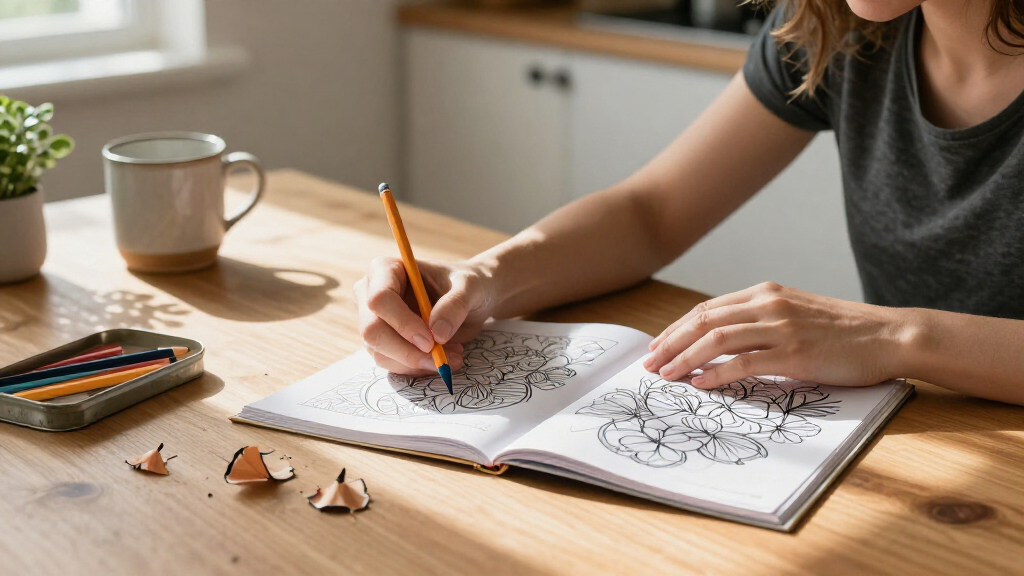
That structure can make coloring an easy screen-free pause. Imagine sitting at the kitchen table after work with a cup of tea and a page of leaves. You might spend ten minutes choosing greens and blues, hearing the kettle click off, and paying attention to the pencil moving across the paper. For some people, that steady focus helps set everyday worries aside for a while.
The page acts like a small path through a busy afternoon: it gives your hands something to do while your attention settles on one choice at a time. Relaxing hobby is a fair description; medical treatment is not. A coloring book can be enjoyable and calming without treating a health condition or working the same way for everyone.
The category grew especially prominent in the mid-2010s, and publishers have since expanded the range of styles. You can find large-print pages, beginner-friendly designs, themed books, and digital options. That variety matters because a page that feels peaceful to one person may feel like a tiny maze to another.
Products Worth Considering

BowFlex Results Series SelectTech Adjustable Dumbbells, Pair

Hyperice Hypervolt Go 3 Portable Percussion Massage Gun

Therabody SleepMask Blackout Eye Mask with Vibration
As an affiliate, we earn on qualifying purchases.
Why a simple coloring task can feel absorbing
Adult coloring books can feel relaxing because they pair a manageable task with choices you control. You choose the colors, set your pace, and work on one section at a time. According to research summaries on arts and crafts, creative activities can support relaxation and well-being, though results vary and the evidence specific to adult coloring remains limited.
Consider a rainy Sunday when your mind keeps hopping between unfinished chores. A page of flowers gives you a modest decision—yellow or orange for the center?—then another. It can be like sorting a handful of buttons: each choice is small enough to handle, and you can pause whenever you want. For some people, that focused attention makes a welcome break from distractions.
Here’s the qualification: attention can also turn into frustration. A dense mandala may feel satisfying when you want detail, but exhausting when your eyes are tired or you’re in a hurry. There is no single design that reliably calms everyone, and a relaxed session does not prove that coloring will reduce stress in a lasting or predictable way.
Think of coloring as an invitation to pause, not a promise that every worry will disappear. If you enjoy the activity, that enjoyment counts; you don’t need a clinical claim to justify it.
When you want to understand what they are and why people use them, start with the practical appeal: the activity has a clear next step, low learning demands, and room to make it your own. That can make it a pleasant option for a short break, alongside other activities you enjoy.
Choose a page that feels inviting, not demanding
The right coloring book is the one whose pages feel interesting and manageable to you. Check the design density, subject, page size, and paper before buying if you can. If intricate lines make you squint, large shapes and clear outlines may suit you better; if you like careful detail, a fine-patterned page may hold your attention.
Picture two pages on the same table: one has a wide, open landscape with broad spaces, and the other is a tightly packed mandala. After a tiring day, the landscape might feel like an easy stroll, while the mandala feels like threading a needle. On a quiet weekend, you might prefer the challenge. Your preference can change with your mood, lighting, or energy.
Paper quality affects the experience, too. Single-sided pages can help prevent colors from marking the design on the reverse, and thicker or perforated pages may be easier to color or share. If you’re shopping online, inspect sample pages and product details; a beautiful cover doesn’t tell you whether the paper suits markers or pencils.
- Choose open designs if tight details feel tiring.
- Look for clear, high-contrast outlines if small lines are hard to see.
- Check page size and binding if you want the book to lie flat.
- Match the theme to your taste, whether that means birds, gardens, patterns, or imaginary worlds.
For example, an older adult who enjoys birds but finds tiny shapes difficult might prefer large bird illustrations with bold outlines. A person who loves repeating patterns might reach for a mandala book instead. You don’t have to finish every page—or even like the book after you try it.
Pick pencils or markers based on the page
Colored pencils offer control and work well for small details, while markers create vivid blocks of color with less pressure. The better tool depends on your page and the feeling you want from the activity. Neither one turns a casual coloring session into a test of artistic skill.
Suppose you’re filling tiny feathers on a bird: a sharpened pencil lets you stay within narrow spaces and layer a few shades. For a broad patch of sunset, markers may give you saturated color quickly. But thin paper can let marker ink bleed through, so check for single-sided pages or test a marker on an inconspicuous area first. Gel pens can add fine accents, though some smear or show through.
Try this simple setup before a longer session:
- Choose one page with a design that looks comfortable, not intimidating.
- Gather two or three colors so you spend less time searching and more time coloring.
- Test a mark near the edge or on scrap paper, especially with markers or gel pens.
- Set up good light and a stable surface, then adjust your chair so your shoulders and wrist feel relaxed.
- Pause when you need to; a few minutes can be enough for a pleasant break.
This setup is flexible. If you have only a pencil and a notepad, you can color a simple shape there. A small kit in a drawer or bag makes it easier to begin, but you don’t need an expensive set or a perfect desk to enjoy the activity.
Make coloring fit your day, alone or with other people
A short coloring session can fit into a break, a quiet evening, or time spent with family. There is no required duration: a few minutes may feel like enough, while someone else may enjoy a longer stretch. Let comfort and interest guide you, and stop if your eyes, hand, or posture start to feel strained.
For instance, you might leave a book and pencils on the dining table, then color one corner while dinner cooks. Another day, you could take a page to a shared lounge and sit with a friend who is working on a puzzle. Coloring can be solitary or social; a group setting may feel companionable for one person and distracting for another.
Your surroundings can make the practical details easier. A supportive surface steadies the page, comfortable lighting helps you see the outlines, and a favorite playlist or quiet room can make the session pleasant. Those details do not guarantee stress relief, but they can prevent avoidable annoyances like a cramped wrist or a page that’s hard to see.
Paper and digital coloring also suit different routines. A tablet app can offer undo buttons, adjustable palettes, and no pencil shavings, which helps when you’re traveling or short on storage. Paper gives you a tactile, screen-free experience. If you’ve already spent the day at a laptop, that difference may matter; if portability matters most, a digital page may be more convenient.
There is no right way to color. You can leave gaps, use unexpected colors, color outside the lines, or stop halfway through. Treat the page like a window you can open for a while, not a project you have to complete.
Keep the health claims—and your expectations—grounded
Adult coloring is a leisure activity, not a proven way to treat anxiety, depression, or another mental health condition. Creative activities may support relaxation and well-being for some people, but evidence specific to adult coloring is limited. A pleasant experience is real and worthwhile; it does not establish a guaranteed health effect.
Imagine you color a page after a demanding shift and feel calmer by bedtime. You can describe that as your experience without assuming the book caused a lasting change or that everyone will feel the same way. If you find coloring frustrating, that also tells you something useful: the page, materials, timing, or activity may not suit you.
Stress relief adult coloring books can sit alongside other everyday ways of taking a break, such as a walk, music, or a conversation with someone you trust. They are not a substitute for professional care. If stress, anxiety, or low mood is affecting your daily life, speak with a qualified health professional about support suited to your needs.
Some clinicians may include art-based activities within a broader care plan. That is different from assuming that an ordinary coloring book is therapy by itself. A clinician can explain whether an activity fits your situation, while you can keep coloring simply because you like the colors and the quiet focus.
Enjoy the activity for what it offers you today: a page, a few colors, and a pause. Leave treatment decisions to conversations with a qualified professional.
This balanced view helps you keep the hobby low pressure. You don’t need to track mood scores, finish a certain number of pages, or turn a relaxing interest into another obligation.
Frequently Asked Questions
Do adult coloring books really reduce stress?
Some people find coloring absorbing and calming, but research specific to adult coloring is limited. Enjoy it as a possible leisure break, not a guaranteed stress remedy or treatment.
How long should I color?
There is no set duration. A few minutes may be enough, and you can continue longer if it stays comfortable and enjoyable. Pause if your hand, eyes, or posture become uncomfortable.
Which supplies work best for adult coloring books?
Colored pencils are versatile and useful for detail. Markers offer vivid coverage but can bleed through thin paper, so test them first; gel pens can add fine accents but may smear or show through.
How do I choose an adult coloring book?
Look at the design density, theme, page size, paper, and whether pages are single-sided. If detailed work feels demanding, choose larger shapes and clear outlines; if you enjoy intricate patterns, a denser page may suit you.
Can coloring help with anxiety or depression?
Coloring may feel comforting for some people, but it is not a replacement for assessment or care from a qualified professional. If anxiety or low mood is affecting your life, talk with a health professional about support that fits your needs.
Are adult coloring books only for artistic people?
No. You don’t need art experience to choose colors and fill spaces. There is no right way to color, and the page does not need to look polished when you finish.
Conclusion
Choose a page that looks inviting, gather a few colors, and give yourself permission to stop whenever you like. Coloring can be a pleasant way to spend a few quiet minutes, even when it does nothing more dramatic than fill a leaf with green.
Let the finished page be a bonus. The small pause—the pencil’s soft scratch, the colors gathering on paper—is enough.