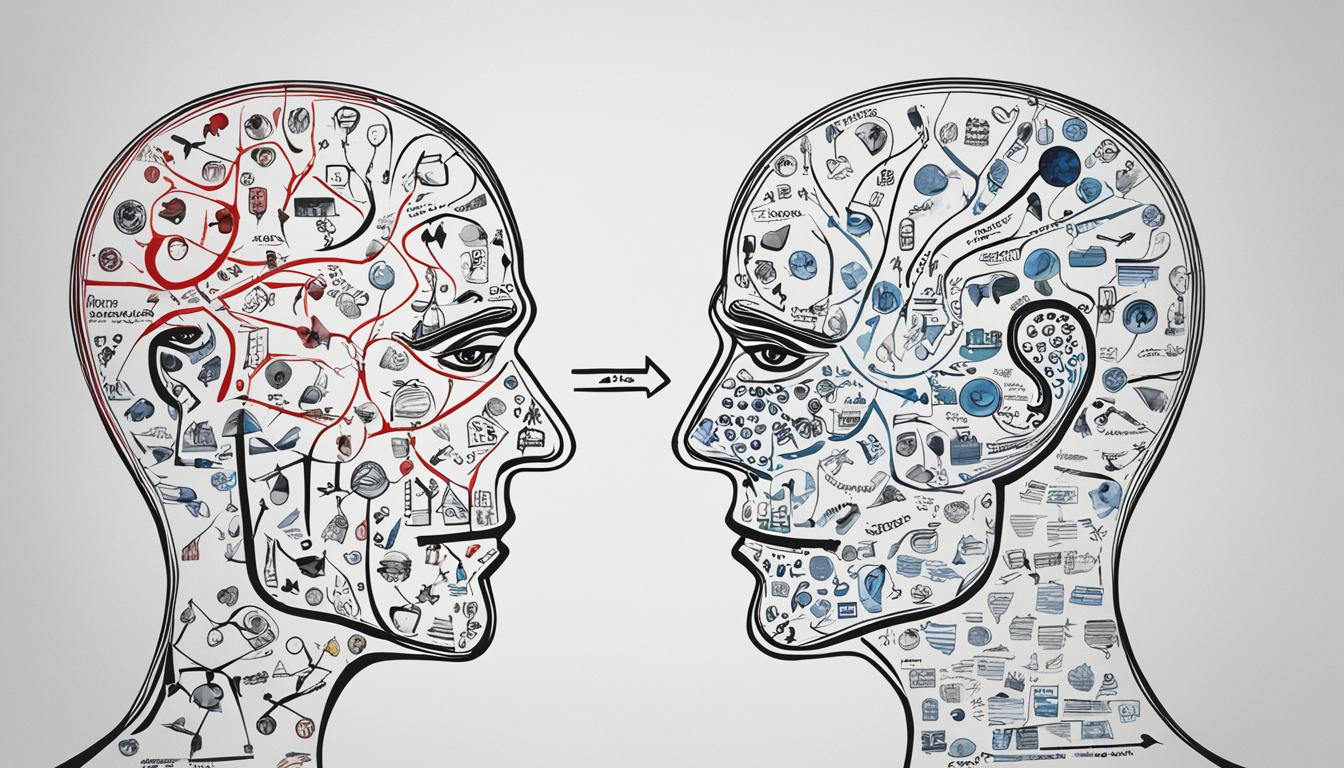

Borderline Personality Disorder (BPD) involves unstable self-image, intense emotions, fear of abandonment, and tumultuous relationships. In contrast, Narcissistic Personality Disorder (NPD) features an inflated self-view, need for admiration, and emotional distance, often hiding vulnerability. BPD reacts strongly to rejection, while NPD responds with anger or contempt. Both struggle with external validation, but their motivations and behaviors differ. Explore further to understand the subtle distinctions shaping their symptoms and actions.
Key Takeaways
- BPD features unstable self-image, intense emotions, and fear of abandonment; NPD involves a grandiose, rigid self-view driven by external validation.
- Emotional regulation differs: BPD experiences rapid mood swings and impulsivity, while NPD suppresses feelings to maintain control.
- Interpersonal behaviors: BPD exhibits fear-driven manipulation and chaos; NPD uses strategic charm, exploitation, and emotional distancing.
- Reactions to criticism: BPD reacts with emotional instability and guilt; NPD responds with anger, shame, or contempt to protect self-image.
- Self-perception: BPD struggles with identity and emptiness; NPD maintains an inflated self-esteem reliant on validation and superiority.
Self-Image and Identity: Contrasting Perspectives

Self-image and identity differ markedly between Borderline Personality Disorder (BPD) and Narcissistic Personality Disorder (NPD). If you have BPD, you often struggle with a shaky sense of who you are, feeling unsure and changing frequently. Past trauma or invalidation may have contributed to this instability, making you feel lost or empty. In contrast, if you have NPD, you typically see yourself as superior or special, maintaining an inflated sense of self-importance. Your identity is rigid but delicate—you’re deeply invested in appearing perfect or exceptional. Both disorders crave external validation, but for different reasons: BPD seeks it to feel secure, while NPD needs it to sustain their grandiosity. This difference profoundly impacts how each disorder influences relationships and self-perception.
Behavioral Motivations and Underlying Drivers

Your behavior is often driven by core emotional needs that shape how you respond to others, whether it’s a fear of abandonment or a desire to be admired. Defense mechanisms like projection or grandiosity help protect your fragile self-image from perceived threats. Recognizing these underlying drivers can reveal why you act the way you do and how you cope with emotional pain.
Core Emotional Needs
What truly drives individuals with Borderline Personality Disorder (BPD) and Narcissistic Personality Disorder (NPD) is a deep need rooted in their core emotional experiences. For someone with BPD, that need is for stability, validation, and connection, driven by a fear of abandonment and emotional chaos. You crave reassurance to feel secure and valued, often seeking closeness to counteract feelings of emptiness. In contrast, NPD individuals seek admiration, power, and a sense of superiority to satisfy their fragile self-esteem. You need to maintain a grandiose self-image to protect against feelings of inadequacy or shame. Both disorders stem from unmet emotional needs, but while BPD seeks connection to soothe inner vulnerability, NPD seeks control and admiration to conceal core insecurities.
Defense Mechanisms
Have you ever wondered how individuals with Borderline Personality Disorder (BPD) and Narcissistic Personality Disorder (NPD) use defense mechanisms to protect their fragile self-structures? You’ll find that BPD individuals often rely on splitting and projection to shield their unstable self-image, perceiving others as all good or all bad to manage emotional chaos. They may also use self-harm or dissociation to escape overwhelming feelings. Conversely, NPD individuals deploy denial and grandiosity as defenses, dismissing criticism and exaggerating their importance to preserve their inflated self-view. They might also manipulate or idealize others to maintain a sense of superiority. Both disorders use these mechanisms unconsciously, but while BPD defenses aim to reduce emotional pain, NPD defenses serve to uphold their fragile sense of grandeur.
Emotional Patterns and Mood Fluctuations

Your emotional experiences differ greatly depending on whether you’re dealing with BPD or NPD. With BPD, mood swings can be intense and rapid, making emotional regulation a constant challenge. NPD individuals often maintain emotional distance, shielding themselves from vulnerability and negative feelings.
Mood Swings Intensity
Mood swings are a hallmark of emotional instability, but their intensity can differ markedly between Borderline Personality Disorder (BPD) and Narcissistic Personality Disorder (NPD). With BPD, your mood shifts rapidly and intensely, often triggered by perceived rejection or abandonment, leading to emotional chaos. These swings can be overwhelming, making it hard to maintain stability. In contrast, NPD individuals typically experience less intense mood fluctuations; their emotional responses tend to be more controlled and strategic. When their sense of superiority is challenged, they may display anger or disdain, but these reactions are usually less volatile than BPD’s rapid mood shifts. Overall, BPD’s mood swings are more extreme and unpredictable, while NPD’s tend to be more restrained and defensive.
Emotional Regulation Challenges
Emotional regulation presents distinct challenges for individuals with Borderline Personality Disorder (BPD) and Narcissistic Personality Disorder (NPD). You might notice BPD individuals swinging rapidly from intense joy to despair, struggling to manage these shifts. Meanwhile, NPD individuals often suppress emotions, maintaining a façade of control. Picture these emotional patterns:
- Sudden, intense mood swings that feel uncontrollable
- A tendency to hide vulnerability behind a mask of confidence
- Rapid shifts between feeling valued and feeling insignificant
- Defensive reactions to criticism or perceived threats
- An inability to process or express feelings healthily
For you, these patterns can create chaos—either overwhelming emotional storms or emotional numbness—making it difficult to stay balanced and respond adaptively.
Emotional Distance Strategies
Both individuals with Borderline Personality Disorder (BPD) and Narcissistic Personality Disorder (NPD) employ distinct strategies to create emotional distance, but their motives and methods differ markedly. With BPD, you might pull away suddenly during emotional crises, using silence or detachment to protect yourself from overwhelming feelings or fear of abandonment. Your mood swings can cause rapid shifts from closeness to withdrawal. Conversely, NPD seeks emotional distance to preserve their sense of superiority. They often maintain a calm, aloof demeanor, suppressing vulnerability and avoiding genuine emotional connection. They might dismiss others’ feelings or disengage to uphold their fragile self-image. While BPD’s distancing stems from fear and emotional chaos, NPD’s distance is a strategic move to sustain control and avoid exposure. Both use distance, but for fundamentally different reasons.
Relationship Dynamics and Interpersonal Challenges

Understanding how individuals with Borderline Personality Disorder (BPD) and Narcissistic Personality Disorder (NPD) navigate relationships reveals key interpersonal challenges. You might notice that BPD individuals cling tightly, desperately seeking reassurance, while NPD individuals maintain emotional distance, prioritizing their needs. Their interactions often involve:
- Intense, unstable attachments in BPD, swinging from love to fear of abandonment
- Emotional coldness or arrogance in NPD, dismissing others’ feelings
- Exploitation or manipulation by NPD to serve their ego
- BPD’s impulsive reactions, driven by emotional distress
- NPD’s lack of empathy, leading to insensitivity and disregard for others
Both struggle with maintaining stable relationships, but for different reasons—BPD’s emotional volatility versus NPD’s self-centeredness. This dynamic complicates connection and trust.
Common Coping Strategies and Defense Mechanisms

You’ll notice that many individuals with these disorders rely on coping strategies like emotional regulation techniques or seeking external validation to manage their feelings. Some may turn to self-harm or dissociation as a way to escape emotional pain or protect their fragile self-image. Understanding these defense mechanisms can help you better grasp how they navigate their internal struggles.
Emotional Regulation Techniques
Emotional regulation techniques are essential tools that individuals with Borderline Personality Disorder (BPD) and Narcissistic Personality Disorder (NPD) use to manage intense feelings and maintain psychological stability. You might turn to different strategies to cope with emotional chaos or protect your fragile self-image. For example, you could:
- Practice deep breathing or mindfulness to calm overwhelming emotions.
- Use distraction techniques like focusing on a hobby or activity.
- Engage in grounding exercises to reconnect with the present moment.
- Rely on positive self-talk to challenge negative thoughts.
- Seek reassurance from trusted others to reinforce self-worth.
These methods help regulate emotions, reduce impulsivity, and maintain a sense of control. While individuals with BPD tend to experience intense emotional swings, those with NPD often suppress feelings to preserve their grandiosity.
External Validation Seekers
Why do individuals with Borderline Personality Disorder (BPD) and Narcissistic Personality Disorder (NPD) seek external validation? You crave it because your self-esteem heavily depends on others’ approval. BPD seeks validation to soothe feelings of emptiness and unstable self-image, fearing abandonment. NPD, on the other hand, craves validation to uphold a grandiose self-image and mask insecurities. You might use various defenses:
| Coping Strategy | How It Manifests | Underlying Motivation |
|---|---|---|
| Flattery and Seeking Praise | Constantly fishing for compliments | Maintain self-worth |
| Manipulation | Using charm or guilt to get validation | Control and affirmation |
| Social Media Validation | Posting for likes and comments | External approval |
| Overachievement | Excelling to gain recognition | Boost fragile ego |
| Denial of Criticism | Dismissing negative feedback | Protect self-image |
Self-Harm and Dissociation
Self-harm and dissociation are common coping mechanisms that individuals with Borderline Personality Disorder (BPD) and Narcissistic Personality Disorder (NPD) use to manage intense emotional distress or protect their fragile self-structures. You might cut or burn yourself as a way to feel control or release emotional pain. Dissociation can cause you to feel detached from reality, numb, or disconnected from yourself.
- Visualize a person numbing their pain by zoning out during a crisis.
- Imagine self-injury as a physical reminder of internal turmoil.
- Picture dissociation as slipping into a fog to escape emotional overwhelm.
- Consider how both mechanisms serve as shields against vulnerability.
- See them as attempts to regain control or avoid emotional collapse.
These strategies temporarily reduce pain but often deepen feelings of isolation or shame.
Approaches to Treatment and Therapy Options
Effective treatment approaches for Borderline Personality Disorder (BPD) and Narcissistic Personality Disorder (NPD) differ markedly because each disorder presents unique challenges. For BPD, Dialectical Behavior Therapy (DBT) is the primary approach, helping you develop emotional regulation skills and manage impulsivity. It also emphasizes mindfulness and distress tolerance. In contrast, NPD often benefits from Cognitive Behavioral Therapy (CBT), which targets distorted self-perceptions and maladaptive behaviors. However, therapy can be difficult for both, as establishing trust may be challenging. Tailoring your treatment plan to your specific needs improves outcomes. Building a strong support system is crucial in both cases, providing stability and encouragement. Remember, progress takes time, and consistent engagement in therapy enhances your chances of recovery.
Impact of Self-Perception on Daily Functioning

Your self-perception considerably shapes how you navigate daily life, influencing your decisions, interactions, and emotional well-being. If you see yourself as unstable or unworthy, you may struggle with consistency and confidence. Conversely, an inflated self-image can lead you to dismiss others’ feelings or needs. This perception affects everything from work performance to relationships.
Your self-view influences your confidence, relationships, and overall well-being—shaping how you handle life’s challenges daily.
- Doubting your abilities despite success
- Overreacting to criticism or failure
- Seeking constant validation to feel worthy
- Avoiding situations that threaten your self-view
- Maintaining emotional distance to protect your ego
These patterns can cause instability, mistrust, or defensiveness, making daily functioning challenging. Your self-perception either anchors you or leaves you vulnerable to emotional upheaval, directly shaping your overall quality of life.
Expression of Emotions and Emotional Regulation

The way individuals with Borderline Personality Disorder (BPD) and Narcissistic Personality Disorder (NPD) express and regulate their emotions differs markedly. With BPD, you experience intense, rapidly shifting emotions that you often express openly, such as crying or anger outbursts, struggling to control these feelings. Your emotional regulation is fragile, leading to impulsive reactions driven by fear of abandonment or rejection. In contrast, NPD individuals tend to suppress or hide their emotions, maintaining a façade of composure and superiority. When emotions surface, they may react defensively or with anger to protect their fragile self-image. You may notice that NPD individuals dismiss or devalue emotional experiences, avoiding vulnerability. Overall, BPD’s emotional expression is overt and turbulent, while NPD’s is controlled and guarded.
Interpersonal Manipulation and Exploitation Tendencies

Interpersonal manipulation and exploitation tendencies differ markedly between Borderline Personality Disorder (BPD) and Narcissistic Personality Disorder (NPD). With BPD, manipulation often comes from fear of abandonment, leading you to cling or push others away to prevent rejection. You might emotionally blackmail or use guilt to keep someone close. In NPD, manipulation is strategic, aimed at maintaining control and boosting your ego. You exploit others by:
BPD manipulation stems from fear and emotional vulnerability; NPD tactics are strategic to maintain control and boost ego.
- Gaslighting to distort perceptions
- Flattering to gain influence
- Guilt-tripping for compliance
- Using charm as a weapon
- Playing the victim to shift blame
While BPD’s manipulation stems from emotional vulnerability, NPD’s is calculated, driven by self-interest and superiority. Recognizing these patterns helps you understand the underlying motives behind your behaviors.
Challenges in Therapy and Personal Growth

Therapy can be particularly challenging for individuals with Borderline Personality Disorder (BPD) and Narcissistic Personality Disorder (NPD) because their core traits often hinder trust and openness. BPD’s emotional instability makes it hard to build consistent rapport, while NPD’s need for validation and grandiosity create resistance to vulnerability. Both struggle with accepting feedback and forming genuine connections, which complicates progress.
| Challenge | BPD | NPD |
|---|---|---|
| Trust | Difficult due to fear of abandonment | Distrust due to fragile self-image |
| Openness to change | Impaired by emotional dysregulation | Defensive, resistant to criticism |
| Maintaining motivation | Fluctuates with emotional states | Dependent on ego reinforcement |
| Relationship with therapist | Fear of abandonment hampers progress | Exploits therapy for validation |
Frequently Asked Questions
How Do BPD and NPD Differ in Their Reactions to Criticism?
When you criticize someone with BPD, they often react with intense emotional pain, anger, or even self-harm, feeling invalidated and abandoned. In contrast, NPD individuals typically respond defensively, dismissing criticism to protect their fragile self-esteem, sometimes becoming angry or dismissive. You’ll notice BPD’s reactions are emotionally driven and unstable, while NPD’s responses aim to maintain their grandiosity and sense of superiority, often ignoring or manipulating feedback.
Can Someone Have Both BPD and NPD Simultaneously?
Yes, you can have both BPD and NPD at the same time, like a storm brewing in a teacup. It’s called comorbidity, where traits from both disorders coexist, creating a complex maze of emotional instability and grandiosity. You might experience intense fears of abandonment alongside a fragile sense of self, all while craving validation and seeking to protect your ego. This duality makes understanding and treating your mental health even more challenging.
What Are Early Warning Signs of Developing BPD or NPD?
You might notice early warning signs like intense fears of abandonment or rejection, which are common in BPD, or a sense of grandiosity and need for admiration seen in NPD. Watch for unstable self-image, impulsive behaviors, emotional swings, or difficulty maintaining relationships. You could also see manipulative tendencies or emotional detachment. Recognizing these signs early helps you seek professional help and develop healthier coping strategies before patterns deepen.
How Do These Disorders Affect Decision-Making Skills?
You might notice that with BPD or NPD, decision-making becomes clouded, with over 75% of individuals reporting impulsivity. In BPD, emotional swings overwhelm logic, leading to impulsive choices driven by fear or hurt. With NPD, decisions are often guided by a need to maintain superiority or avoid exposure. Both struggle to weigh consequences, making their choices unpredictable, often rooted in their intense fears or desire for validation.
What Role Does Childhood Trauma Play in These Disorders?
Childhood trauma profoundly influences both disorders, shaping your self-image and emotional responses. If you’ve experienced invalidation or neglect, it can lead to BPD’s unstable identity and fear of abandonment. For NPD, trauma may foster feelings of inadequacy, prompting grandiosity as a defense. Recognizing these roots helps you understand your behaviors better, allowing for targeted therapy like DBT or CBT to address underlying wounds and promote healing.
Conclusion
So, you’ve got Borderline and NPD, both tricky in their own ways. Ironically, understanding these differences might just help you see yourself—or others—a little clearer. Whether it’s fluctuating emotions or a knack for manipulation, recognizing the patterns can be your secret weapon. After all, if you can’t change how you see yourself, at least you can master the art of pretending you’ve got it all together. Who knew self-awareness could be so entertaining?