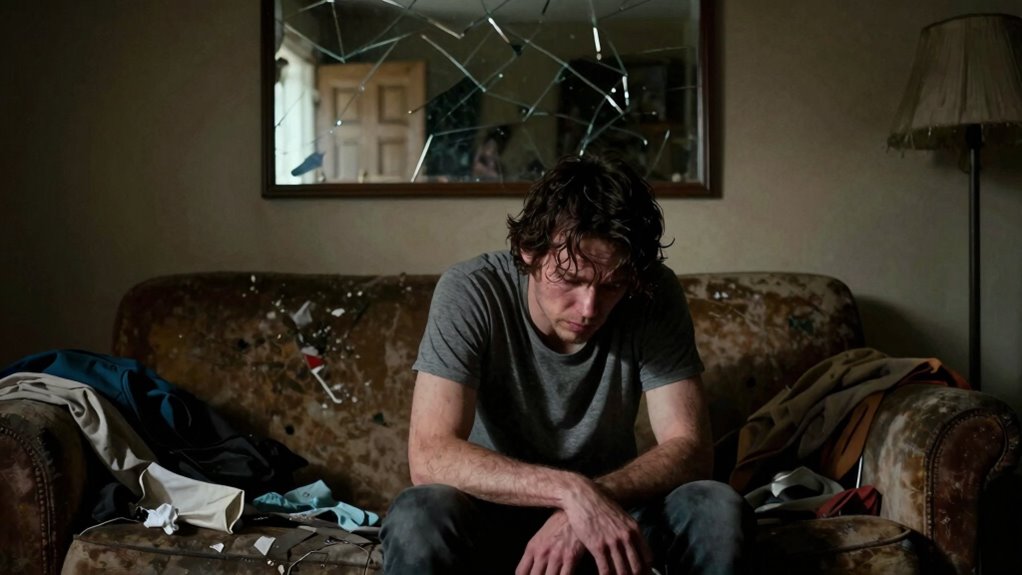

If you’re an adult son of a borderline mother, you might struggle with emotional dependency, constantly seeking her approval and feeling unsure about trusting your own judgment. You may find it hard to develop a clear sense of self, often feeling confused or influenced by her moods. Patterns of needing validation can trap you in cycles of conflict and doubt. Understanding these challenges can help you learn to establish healthier boundaries and regain your independence. Keep exploring to discover ways to heal and grow.

Turn your wind-down time into listening time
- Thousands of audiobooks, podcasts and originals
- Listen on your phone, tablet or Echo — also offline
- Cancel anytime
Key Takeaways
- Difficulty trusting their own judgment due to early emotional dependency on their mother.
- Struggling with establishing a stable, authentic sense of identity.
- Repeating patterns of seeking validation and approval from others.
- Challenges setting healthy boundaries and asserting independence.
- Emotional regulation issues stemming from childhood emotional instability.
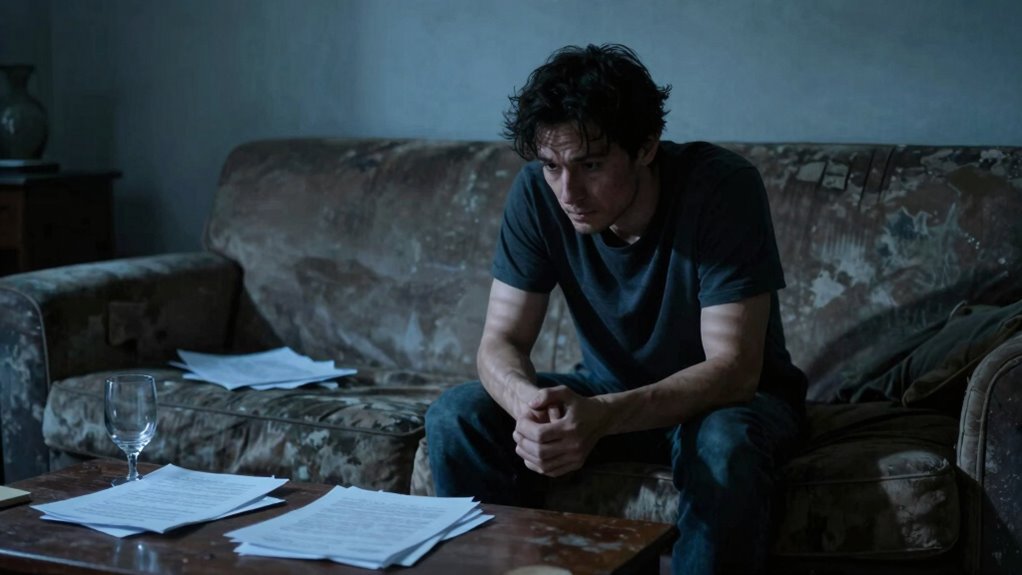
Growing up with a borderline mother can leave lasting scars that shape your adult life in profound ways. One of the most common struggles you might face is emotional dependency. Because your childhood was marked by unpredictable moods and intense emotional swings, you probably learned to rely heavily on your mother’s approval and validation just to feel okay. This dependency can persist into adulthood, making it difficult to trust your own judgment or feel secure when you’re alone. You might find yourself constantly seeking reassurance from others, afraid of losing their support or approval, even when it’s no longer necessary. This pattern keeps you tethered to others’ opinions and feelings, often at the expense of your own emotional well-being.
Growing up with a borderline mother often leads to emotional dependency and difficulty trusting your own judgment.
Alongside emotional dependency, you likely experience a deep sense of identity confusion. Growing up in an environment where your mother’s feelings and needs constantly took center stage, you may have struggled to develop a clear sense of who you are. Your self-image might be tangled with her shifting moods and demands, leaving you uncertain about your preferences, values, or boundaries. You may feel like you’re constantly adapting to fit her expectations or avoiding conflict, which blurs your sense of authentic self. This confusion can make it hard to trust your instincts or make confident decisions, as you’re used to prioritizing her feelings above your own.
These struggles often reinforce each other. When you’re uncertain about who you are, you cling even more tightly to external validation, deepening your emotional dependency. Conversely, your reliance on others’ approval can hinder your ability to explore your true identity, trapping you in a cycle of confusion and neediness. You might also find yourself feeling guilty or ashamed when trying to establish independence because, growing up, any assertion of your needs was met with criticism or emotional backlash. This makes stepping away from the habits formed in childhood feel overwhelming and risky. Recognizing the influence of emotional regulation challenges can help you understand the roots of these difficulties and seek targeted support.
Despite these challenges, awareness is a crucial first step. Recognizing how your past influences your current behaviors allows you to start breaking free from these patterns. Building a stronger sense of self involves learning to trust your own feelings and making choices based on your inner beliefs rather than external validation. It’s a gradual process, but with patience and support, you can develop healthier emotional boundaries, foster independence, and discover a clearer, more confident version of yourself. Remember, healing from these childhood wounds isn’t about erasing your past but about reclaiming your present and future.
emotional regulation therapy tools
As an affiliate, we earn on qualifying purchases.
As an affiliate, we earn on qualifying purchases.
Frequently Asked Questions
How Can I Recognize if My Mother Is Borderline?
You might recognize your mother as borderline if she often engages in emotional manipulation, making you feel guilty or responsible for her feelings. Watch for signs of parentification, where she expects you to meet her emotional needs instead of nurturing your own. If her reactions are unpredictable or she struggles with intense fears of abandonment, these could be key indicators of borderline tendencies affecting your relationship.
What Are the Signs of Emotional Exhaustion From Such a Relationship?
You notice emotional exhaustion creeping in unexpectedly, like a coincidence you can’t ignore. You feel emotionally fatigued, drained after interactions, and your mental energy wanes quickly. Small conflicts become overwhelming, and you struggle to find clarity or peace. This ongoing mental drain leaves you feeling detached, anxious, or irritable. Recognizing these signs helps you understand how the relationship affects your well-being, encouraging you to set boundaries or seek support.
How Does This Childhood Experience Affect Adult Romantic Relationships?
Your childhood experience often leaves you with a deep fear of abandonment and trust issues that carry into adult romantic relationships. You might struggle to feel secure or fully trust your partner, fearing they’ll leave just like your mother did. These unresolved feelings can cause emotional distance, jealousy, or clinginess. Recognizing these patterns is the first step to healing, building healthier relationships, and breaking free from the cycle of insecurity.
Can Therapy Help in Healing From a Borderline Mother’s Influence?
Yes, therapy can help you heal from a borderline mother’s influence by building emotional resilience and mastering boundary setting. Through therapy, you learn to recognize and challenge destructive patterns, develop healthier coping mechanisms, and establish firm boundaries. This process empowers you to reclaim control over your emotional well-being, foster self-awareness, and create a more stable, fulfilling life free from past manipulation and chaos.
Are There Support Groups Specifically for Adult Sons in This Situation?
Yes, there are support groups specifically for adult sons of borderline mothers. Support group benefits include sharing experiences, gaining validation, and learning coping strategies. Many find an online community especially helpful, offering accessible, anonymous support from others who understand their struggles. Joining such groups can help you feel less isolated, foster healing, and provide practical advice to navigate complex emotions and relationship challenges.
Conclusion
Living with a borderline mother leaves lasting scars, shaping how you see yourself and others. You may feel trapped in a cycle of guilt, shame, or self-doubt, questioning your worth and decisions. But remember, you’re not alone in this struggle. Isn’t it time to break free from the shadows of the past and embrace a future where you define your own happiness? Your healing journey starts with acknowledging your pain and choosing to move forward.
Halloween Picks
halloween
As an affiliate, we earn on qualifying purchases.