

Managing co-parenting as a mother with BPD involves creating stable routines, setting clear boundaries, and communicating openly with your co-parent. Focus on understanding your emotional triggers, practicing self-care, and building a support network to help you stay resilient. Educate yourself about BPD symptoms and effective parenting strategies to provide your child with consistency and security. Keep learning how these approaches can positively impact your parenting journey as you move forward.
Key Takeaways
- Establish consistent routines and clear boundaries to provide stability and reduce confusion for children.
- Build a strong support network through friends, family, or support groups to manage emotional fluctuations.
- Communicate with the co-parent respectfully and openly, focusing on facts and stability for the child’s wellbeing.
- Recognize emotional triggers and use grounding or coping techniques to regulate feelings during challenging moments.
- Prioritize self-care and seek professional help to strengthen resilience and ensure a healthier parenting environment.
Understanding the Impact of BPD on Parenting Dynamics

Understanding the impact of BPD on parenting dynamics is essential because it directly influences how mothers respond to their children and shape the parent-child relationship. With BPD, your responses can fluctuate between over-involvement and emotional withdrawal, creating inconsistency in your parenting. You might sometimes be overly controlling or distant, which can confuse your child and impact their sense of security. Emotional swings—ranging from anger to despair—may lead to punitive or cold reactions, even when your intentions are caring. This emotional volatility can make it harder to provide stable support, increasing your child’s vulnerability to emotional difficulties. Recognizing these patterns helps you understand how BPD affects your parenting, which is the first step toward creating a more supportive, predictable environment for your child’s development.
Establishing Consistent Routines and Boundaries
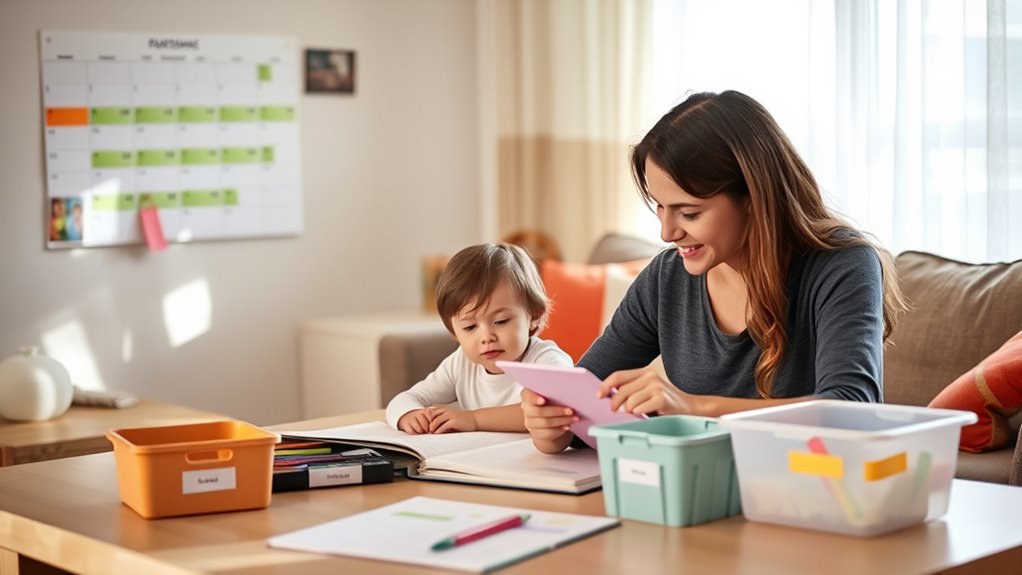
When managing the ups and downs associated with BPD, establishing consistent routines and clear boundaries can help create a sense of stability for both you and your child. Consistency reduces uncertainty and helps your child feel safe. To do this effectively:
- Set regular daily schedules for meals, bedtime, and activities.
- Clearly define roles and limits, like how and when discipline is applied.
- Use simple, predictable language when explaining rules and expectations.
- Follow through consistently, even during emotional fluctuations.
This structure supports your child’s emotional security and reduces confusion. It also helps you maintain control and minimize impulsive reactions. Over time, routines and boundaries foster trust, making co-parenting smoother and more stable for everyone involved.
Communicating Effectively With Your Co-Parent

Effective communication with your co-parent is essential for creating a consistent and supportive environment for your child, especially when maneuvering the challenges of BPD. Clear, respectful dialogue helps reduce misunderstandings and conflict. Use structured conversations to discuss routines, boundaries, and emotional needs. Focus on facts rather than emotions, and avoid blame. To visualize how your communication might look, consider this table:
| Topic | Approach | Outcome |
|---|---|---|
| Routine Changes | Keep updates brief and specific | Less confusion for everyone |
| Emotional Support | Use calm language and validation | Child feels secure |
| Conflict Resolution | Agree on a cooling-off period | Reduced ongoing disagreements |
| Parenting Roles | Clarify responsibilities | Shared accountability |
Consistent, honest communication fosters stability and trust for your child’s wellbeing.
Building a Support System to Share Parenting Responsibilities

Building a strong support system is essential for sharing parenting responsibilities and reducing the burden on any one individual. With the complexities of BPD, you need trusted people to help shoulder daily tasks and emotional challenges. Consider these four steps:
- Reach out to family and friends who understand your situation and can offer practical help or emotional support.
- Connect with parenting groups or online communities focused on mental health and parenting to share experiences and advice.
- Seek professional support, such as therapists or counselors, who can provide guidance and coping strategies.
- Establish clear boundaries and expectations with your support network to guarantee consistent help and prevent misunderstandings.
Creating this network will lighten your load, foster stability, and promote healthier family dynamics.
Managing Emotional Dysregulation During Parenting Challenges

How can mothers with BPD manage their emotional dysregulation during parenting challenges? First, recognize your emotional triggers and pause before reacting. Use grounding techniques, like deep breathing or sensory exercises, to calm intense feelings. Develop a toolbox of coping strategies, such as journaling or taking short breaks, to process emotions without reacting impulsively. Establish routines that promote predictability for both you and your child, reducing stress. Seek support from a therapist trained in BPD to learn emotion regulation skills tailored to parenting. Communicate with your co-parent about your needs and triggers, ensuring they can assist during difficult moments. Remember, managing emotional dysregulation is an ongoing process—practice patience and self-compassion as you work toward more consistent responses.
Supporting Your Child’s Emotional Security and Attachment

Supporting your child’s emotional security and attachment begins with consistent, responsive caregiving that helps them feel safe and valued. You can strengthen their emotional bonds by creating predictable routines and being present during key moments. To do this:
- Respond promptly to your child’s needs, showing understanding and warmth.
- Maintain a calm, steady environment even during emotional outbursts.
- Use reassuring words and gentle touch to validate their feelings.
- Avoid inconsistent reactions that can create confusion or insecurity.
These actions help your child develop trust and a sense of stability. While your emotional challenges may sometimes interfere, intentional, supportive interactions foster secure attachment, laying a foundation for healthy emotional development.
Prioritizing Self-Care and Seeking Professional Help

Taking care of yourself is essential for managing your BPD symptoms and staying present for your child. Establishing a routine self-care practice and reaching out for mental health support can make a significant difference. Building a strong support network guarantees you don’t face these challenges alone and helps you maintain stability.
Establish Routine Self-Care
Prioritizing routine self-care is essential for mothers with BPD to maintain stability and effectively manage emotional fluctuations. Establishing consistent self-care practices helps you stay grounded and better respond to your child’s needs. To create a sustainable routine, consider these steps:
- Schedule daily activities like exercise, meditation, or journaling at the same time each day.
- Set boundaries to protect your emotional space, such as limiting stressful interactions.
- Develop a self-care toolkit with calming techniques or comforting activities ready to use when needed.
- Seek support from professionals regularly to monitor your mental health and adjust your routines accordingly.
Access Mental Health Support
When managing the emotional challenges associated with BPD, seeking consistent mental health support becomes essential. Prioritizing your well-being helps you better regulate your emotions and respond more effectively to your child’s needs. Find a mental health professional experienced in BPD who can offer ongoing therapy, such as dialectical behavior therapy (DBT), tailored to your situation. Don’t hesitate to ask for help when you need it, whether through individual therapy, support groups, or medication management. Regular check-ins with your provider can help you stay on track and address symptoms before they escalate. Remember, seeking support isn’t a sign of weakness; it’s a proactive step toward creating a healthier environment for both you and your child.
Build Support Networks
Building a strong support network is essential for mothers with BPD to maintain their well-being and provide stable care for their children. Connecting with others helps you manage emotional ups and downs and reduces feelings of isolation. Here are four ways to strengthen your support system:
- Reach out to trusted friends or family members who understand your situation.
- Join local or online support groups for mothers with BPD or mental health challenges.
- Seek professional help, such as therapy or coaching, to develop coping strategies.
- Prioritize self-care activities that nurture your physical and emotional health.
A reliable support network provides validation, guidance, and encouragement, helping you stay grounded and resilient as a parent. Remember, seeking help is a sign of strength, not weakness.
Educating Yourself About BPD and Parenting Strategies

Learning about BPD symptoms and effective parenting strategies helps you better understand your reactions and your child’s needs. With this knowledge, you can develop consistent routines and emotional validation that foster stability. Educating yourself empowers you to navigate challenges and strengthen your co-parenting relationship.
Understanding BPD Symptoms
Understanding the symptoms of Borderline Personality Disorder (BPD) is essential for effective co-parenting, as it helps you anticipate and respond to behaviors that may affect your child’s well-being. Recognizing these signs allows you to navigate emotional swings and impulsivity more effectively. Here are key symptoms to watch for:
- Rapid mood shifts that can change within minutes or hours.
- Intense fear of abandonment, leading to clingy or defensive behaviors.
- Unstable relationships, often marked by idealization and devaluation.
- Impulsive actions, such as reckless spending or self-harm.
Effective Parenting Approaches
Educating yourself about BPD and effective parenting strategies is essential for steering the challenges that come with co-parenting a child when one parent has this condition. Understanding BPD’s emotional fluctuations helps you anticipate and respond calmly to unpredictable behaviors, reducing conflict. Focus on establishing consistent routines and clear boundaries, which provide stability for your child. Practice mindful communication, avoiding reactive responses, and validate your child’s feelings without over-involvement. Prioritize your own self-care to maintain emotional resilience, enabling you to be more present and supportive. Seek professional guidance or parenting programs tailored to BPD to learn specific techniques for emotional regulation and discipline. Building a supportive network can also reduce your stress and improve your ability to co-parent effectively, fostering a healthier environment for your child.
Frequently Asked Questions
How Can I Improve My Emotional Regulation to Better Parent My Child?
To improve your emotional regulation, you can practice mindfulness techniques like deep breathing or grounding exercises when you notice intense feelings. Recognize your triggers and develop coping strategies, such as taking a pause before responding. Seek therapy or support groups to better understand your emotions and gain tools for managing them. Building a routine that includes self-care also helps stabilize your mood, making it easier to respond calmly and consistently to your child.
What Are Effective Ways to Rebuild Trust With My Co-Parent?
To rebuild trust with your co-parent, focus on fostering fairness and transparency. Practice open, honest communication, and prioritize consistency in your actions. Show your commitment through clear commitments and follow-through, creating a foundation of dependability. Demonstrate your dedication with daily disclosures and deliberate dialogues. Patience and persistence are key, as rebuilding trust takes time, effort, and a genuine willingness to work together for your child’s best interests.
How Do I Handle My Child’s Emotional Outbursts When I Feel Overwhelmed?
When your child has an emotional outburst and you’re overwhelmed, take a deep breath and pause before responding. Acknowledge their feelings calmly, saying something like, “I see you’re upset.” Use a gentle voice and offer reassurance without trying to fix everything immediately. It’s okay to step back for a moment to regain composure. This helps your child feel heard and prevents your overwhelm from escalating the situation.
What Resources Are Available Specifically for Mothers With BPD?
You can access tailored resources like specialized therapy programs, online support groups, and educational materials designed for mothers with BPD. Organizations such as the National Alliance on Mental Illness (NAMI) offer support networks, while Dialectical Behavior Therapy (DBT) programs help manage emotional regulation. Consider reaching out to mental health professionals experienced in BPD to develop personalized strategies and connect with community groups focused on maternal mental health.
How Can I Address Feelings of Guilt Related to Parenting Challenges?
You might feel like carrying a heavy stone, but remember, guilt is a sign you’re deeply invested. To ease this burden, practice self-compassion and acknowledge that parenting is a journey with ups and downs. Reach out for support, share your feelings openly, and celebrate your efforts. Recognize that you’re doing your best, and every step you take towards understanding yourself helps create a healthier environment for your child.
Conclusion
So, go ahead and master the art of co-parenting with BPD—because who wouldn’t want a little chaos mixed with love? Remember, every meltdown and moment of clarity is just part of the grand adventure. Keep your routines tight, stay emotionally resilient, and don’t forget to laugh when things get messy. After all, what’s parenting without a dash of unpredictability? Embrace the chaos—you’re stronger than you think.