Dialectical Behavior Therapy (DBT) is an evidence-based approach designed to help you manage intense emotions, reduce self-harming behaviors, and improve relationships. Developed in the 1980s by Marsha Linehan, it combines mindfulness, acceptance, and change strategies to address the core symptoms of Borderline Personality Disorder (BPD). With skills in emotional regulation, distress tolerance, and interpersonal effectiveness, DBT offers hope for lasting recovery. Continue exploring to discover how this therapy can support your journey.
Key Takeaways
- DBT was developed in the 1980s specifically to treat BPD-related self-harm and emotional dysregulation.
- It combines acceptance strategies like mindfulness with change-oriented skills such as emotion regulation.
- Core components include mindfulness, distress tolerance, emotion regulation, and interpersonal effectiveness skills.
- Evidence shows DBT significantly reduces suicidal behaviors, self-harm, and hospitalizations in BPD patients.
- Beyond BPD, DBT is adapted for other disorders like PTSD, eating disorders, and substance use, supporting long-term recovery.
The Origins and Development of DBT

Dialectical Behavior Therapy (DBT) emerged in the 1980s as a response to the shortcomings of traditional cognitive-behavioral therapy (CBT) when it came to treating individuals with chronic self-harm and suicidal behaviors, especially those with borderline personality disorder (BPD). You learn that standard CBT’s focus on change sometimes led to feelings of invalidation for these clients, making progress difficult. Marsha Linehan, the therapy’s creator, recognized the need for a different approach that balanced acceptance with change. She incorporated mindfulness and acceptance concepts from Zen practice, along with her background in behaviorism, to develop DBT. Clinical trials in the 1990s demonstrated its effectiveness in reducing self-harm, hospitalizations, and emotional dysregulation, leading to broader adoption. An important aspect of DBT is its emphasis on emotional regulation, which helps individuals better manage intense feelings and reduce impulsive behaviors. Additionally, research highlights educational components that support skill acquisition and generalization beyond therapy sessions.
Core Components of Dialectical Behavior Therapy
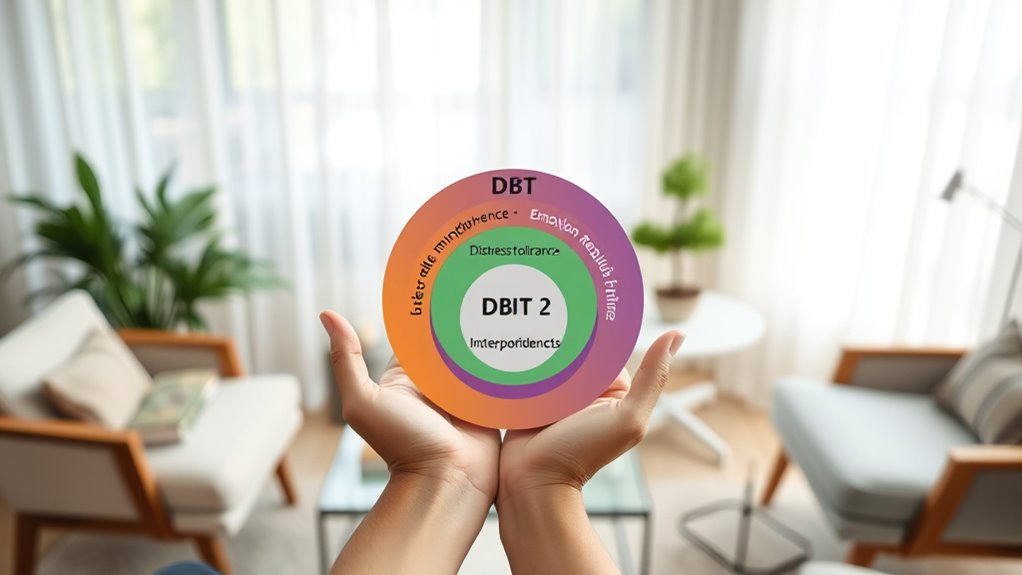
Understanding the core components of DBT helps clarify how this therapy uniquely supports individuals with BPD. Mindfulness is central, teaching you to stay fully present and aware without judgment. Distress tolerance skills help you manage emotional crises without harmful actions. Emotion regulation techniques enable you to control intense feelings, reducing impulsivity. Interpersonal effectiveness improves your communication, helping you to build healthier relationships while asserting your needs. These components are delivered through a structured therapeutic setting, including individual therapy, group skills training, phone coaching, and a therapist consultation team. The skills are learned in group sessions, tailored to your specific goals, and reinforced through real-life practice. This all-encompassing approach provides continuous support, empowering you to develop lasting coping strategies. Research supports the effectiveness of these core skills in improving emotional stability and reducing harmful behaviors. Additionally, the integration of evidence-based practices ensures that the therapy remains effective and adaptive to individual needs. For instance, emotional regulation techniques are often combined with other therapeutic methods to enhance overall treatment outcomes. Recognizing the importance of cultural adaptability can further improve therapeutic engagement and success across diverse populations. A focus on personalized treatment plans can also help address unique challenges faced by each individual, enhancing the overall effectiveness of DBT. Incorporating technological advancements like mobile apps and online resources can also support ongoing skill development outside therapy sessions.
Main Symptoms Targeted by DBT in BPD

You’ll see how DBT helps you manage emotional instability by teaching skills to handle mood swings and reduce emotional crises. It also focuses on decreasing impulsive actions like reckless behaviors, giving you tools to pause before acting. Together, these strategies aim to stabilize your emotions and improve your overall functioning. DBT is specifically designed to address the intense emotions and impulsivity often experienced by individuals with BPD. Incorporating emotional regulation skills from DBT can further enhance your ability to cope with challenging feelings effectively.
Emotional Instability Management
Managing emotional instability in BPD involves targeted strategies that help you stay grounded during intense emotional episodes. DBT teaches mindfulness skills, so you become aware of your feelings without judgment, making it easier to notice early warning signs. Emotion regulation techniques provide structured methods to reduce emotional intensity, helping you identify and manage your reactions. Distress tolerance skills enable you to cope with pain without making situations worse, using tools like self-soothing and crisis survival strategies. Interpersonal effectiveness improves your communication and boundary-setting, reducing stress that often triggers emotional volatility. These combined skills strengthen your ability to process emotions constructively, pause impulsive reactions, and build resilience. Incorporating mental health practices into your routine can further support emotional stability and reduce mood swings over time. Recognizing emotional dysregulation can enhance your ability to recognize patterns and triggers, leading to more effective management. Understanding holistic care models can help you adopt comprehensive approaches that address social determinants of health, further stabilizing your emotional well-being. Additionally, understanding the importance of evidence-based therapies like DBT ensures you are utilizing proven methods for recovery. For example, integrating community support can provide additional encouragement and accountability. As a result, you experience greater emotional stability and fewer intense mood swings over time.
Impulsivity Reduction Strategies
Impulsivity is a core challenge in BPD that often leads to risky behaviors, emotional outbursts, and strained relationships. To target this, DBT offers practical strategies that help you pause and manage impulses effectively. These techniques are most effective when practiced regularly and integrated into daily life, increasing your overall emotional resilience. Treatment duration supports the development of these skills over time, allowing for sustained progress. 1. Pausing Techniques: Use STOP or TIPP skills to delay reactions before acting impulsively. 2. Self-Soothing Activities: Engage in calming activities to reduce urges and regain control. 3. Distraction Skills: Shift your attention to healthy distractions, diverting from impulsive thoughts. 4. Problem-Solving: Tackle underlying issues systematically to prevent impulsive responses. Developing emotion regulation skills is essential for long-term change. Recognizing the importance of emotional stability, these tools, combined with skills like mindfulness and self-validation, empower you to interrupt impulsive behaviors, fostering healthier decision-making and stronger relationships over time.
Essential Skills Taught in DBT

Dialectical Behavior Therapy (DBT) teaches a set of essential skills designed to help you regulate emotions, improve relationships, and handle tough situations. These skills include mindfulness, which keeps you grounded in the present; emotion regulation, reducing intense feelings; distress tolerance, helping you cope without harmful actions; and interpersonal effectiveness, improving communication and boundaries. Together, these techniques provide a toolkit to navigate life’s challenges. Incorporating prophetic dreams into your understanding of emotional patterns can offer additional insight into your inner experiences. Recognizing the importance of natural materials and textures in creating a calming environment can also support emotional stability. Engaging with local legal resources can also support your journey toward emotional well-being by providing guidance and stability. Developing an awareness of paint sprayer techniques can further enhance your ability to manage emotional triggers through creative outlets.
Evidence Supporting DBT’s Effectiveness in BPD

You can trust that numerous controlled trials since 1991 prove DBT’s effectiveness in treating BPD. These studies show it considerably reduces suicidality, improves long-term symptoms, and lowers hospitalization rates. This strong evidence highlights how DBT offers sustained benefits for individuals with BPD. Research evidence from various international studies supports these findings, confirming the robustness of DBT’s clinical impact.
Suicidality Reduction Evidence
Research consistently demonstrates that Dialectical Behavior Therapy (DBT) effectively reduces suicidality in individuals with borderline personality disorder (BPD). Multiple randomized clinical trials show that skills training and core strategies help decrease suicidal behaviors. Because DBT was initially designed for chronically suicidal patients, its targeted approach addresses this high-risk group directly. Support Options for Mental Health Clinicians and patients alike have reported significant improvements in managing suicidal urges through DBT’s specialized techniques. Consider these key points: 1. Clinical trials confirm DBT’s success in reducing suicidal thoughts and actions. 2. The therapy’s combination of acceptance and change strategies tackles emotion dysregulation that fuels suicidality. 3. Components like mindfulness and cognitive restructuring help patients manage impulses more effectively. 4. The structured modes of therapy, including coaching and skills training, provide ongoing support during crises. Together, these elements contribute to DBT’s strong evidence base in lowering suicide risk among BPD patients.
Long-term Symptom Improvement
Evidence indicates that DBT produces sustained improvements in various symptoms of BPD over the long term. You can expect reductions in general psychopathology, mood instability, and impulsivity that last up to 24 months post-treatment. This long-term benefit is comparable to other specialized therapies. Additionally, improvements in self-harm behaviors, hospitalizations, and emergency visits remain significant years after therapy ends. The table below illustrates these outcomes:
| Symptom Area | Long-term Change | Duration |
|---|---|---|
| General Psychopathology | Significant, sustained improvement | Up to 24 months |
| Self-Harm Behaviors | Moderate, lasting reduction | 24 months post-treatment |
| Hospitalizations | Decreased hospital stays, sustained | Up to 2 years |
| Comorbid Symptoms | Ongoing management, long-term effects | Beyond treatment period |
These results highlight DBT’s lasting impact on BPD recovery.
Long-term benefits are supported by research demonstrating evidence-based improvements in multiple areas.
Furthermore, regular mindfulness practices can enhance emotional regulation and resilience, contributing to long-term recovery in individuals with BPD.
Controlled Trial Support
Numerous randomized controlled trials (RCTs) have consistently demonstrated that Dialectical Behavior Therapy (DBT) is more effective than standard community treatments for addressing borderline personality disorder (BPD). Since 1991, the Linehan Institute has compiled RCTs showing DBT’s superior outcomes. You’ll find that DBT leads to a significant reduction in parasuicidal behaviors, with patients attempting suicide half as often as those in usual treatments. Additionally, DBT improves treatment adherence and lowers hospitalizations, emergency visits, and crisis interventions. These trials also show that DBT is effective across diverse populations, including different ages, genders, and ethnicities. The broad applicability and strong evidence base make DBT a proven, reliable approach for BPD recovery. Research evidence confirms that the positive outcomes observed are consistent across multiple studies, highlighting its empirical support as an evidence-based therapy. Furthermore, the diverse demographic groups benefiting from DBT underscore its versatility and widespread applicability. The integration of evidence-based practices ensures that DBT remains at the forefront of effective BPD treatment. Recent research also emphasizes treatment adaptability, demonstrating how DBT can be tailored to meet individual patient needs effectively.
Principles That Guide DBT Practice

The principles guiding DBT practice are rooted in balancing acceptance with the need for change, which is achieved through dialectical thinking. You learn to hold conflicting ideas simultaneously—accepting your current feelings while working toward growth. This approach promotes flexibility and helps you synthesize opposing perspectives. Imagine this as a table:
| Acceptance | Change | Balance |
|---|---|---|
| Recognizing emotions | Developing new skills | Achieving harmony |
| Mindfulness | Emotion regulation | Flexibility |
| Compassion | Assertiveness | Personal growth |
| Patience | Behavioral shifts | Better quality of life |
This visual helps you see how embracing acceptance while pursuing change creates a dynamic, adaptable path forward. It’s a core principle that underpins every aspect of DBT, fostering resilience and progress.
Comparing DBT to Other Therapeutic Options

When comparing Dialectical Behavior Therapy (DBT) to other therapeutic options, it’s clear that DBT offers unique advantages for individuals with Borderline Personality Disorder (BPD). Its structured, skills-based approach effectively reduces parasuicidal behaviors, hospitalizations, and emergency visits more than standard community therapies. DBT also improves treatment retention and adherence, making it more sustainable. Compared to Cognitive Behavioral Therapy (CBT), DBT specializes in emotion regulation and distress tolerance, which are essential for BPD. Unlike psychodynamic therapy, DBT is more concrete and symptom-focused. And, while medication management helps with specific symptoms, DBT addresses core BPD features more holistically. Here are four key differences:
- Structured skills-based focus
- Empirical support for self-harm reduction
- Emphasis on emotion regulation
- Better treatment adherence
Techniques and Strategies Used in DBT

Dialectical Behavior Therapy (DBT) employs a range of targeted techniques and strategies designed to help you manage intense emotions and improve your overall functioning. You’ll learn mindfulness meditation to stay present and reduce stress, making it easier to regulate emotions. Interpersonal effectiveness skills help you set boundaries and communicate more clearly in relationships. Distress tolerance teaches you coping skills to handle crises without harmful behaviors, while emotion regulation strategies help you manage and reduce emotional intensity. Skills training groups provide a structured environment to practice these techniques with others. Additionally, your therapy involves individual sessions, telephone support for crises, and homework assignments to reinforce your progress. These combined strategies empower you to develop healthier responses and build resilience.
Expanding the Reach: Applications Beyond BPD

You’ll find that DBT’s skills are now being adapted to treat a range of conditions beyond BPD, including substance use disorders, PTSD, and eating disorders. Its focus on emotional regulation and distress tolerance helps address core challenges across these issues. As research continues, it’s clear that DBT’s versatility offers promising options for many complex mental health concerns.
Substance Use Disorders
Have you ever wondered how therapies developed for one mental health challenge can be adapted to others? Dialectical Behavior Therapy (DBT), originally created for BPD, now effectively addresses Substance Use Disorders (SUDs). It improves emotional regulation and reduces harmful behaviors, especially for those with intense emotional difficulties. Here are four key ways DBT helps with SUDs:
- Enhances distress tolerance to manage crises without substance use.
- Boosts mindfulness to increase awareness of triggers.
- Develops emotional regulation to control feelings and behaviors.
- Promotes radical acceptance to cope with unchangeable situations.
PTSD and Trauma
Ever wondered how therapies like DBT, initially designed for BPD, can be adapted to treat PTSD and trauma? DBT has been modified to focus on emotional regulation and resilience for trauma survivors. It effectively reduces PTSD severity, especially in complex cases, and works well alongside other therapies like prolonged exposure. When trauma is intertwined with emotional dysregulation, DBT’s skill-building approach can be particularly beneficial. Here’s a snapshot of how DBT supports trauma recovery:
| Key Aspect | Focus | Benefit |
|---|---|---|
| Emotional Regulation | Managing intense emotions | Reduces trauma-related distress |
| Mindfulness | Staying present during triggers | Prevents emotional escalation |
| Coping Strategies | Handling distress without harmful behaviors | Builds resilience and stability |
Eating Disorder Treatment
Building on DBT’s success in treating trauma-related symptoms, its application to eating disorders demonstrates its versatility across mental health conditions. You’ll find that brief group DBT (10 sessions) can be as effective as longer versions in reducing binge-eating behaviors. Early improvements are often rapid, with over half of patients abstaining from binge eating by Session 4. Research shows that 89% of DBT-treated BED patients stop binging, compared to just 12.5% in waitlist controls. Additionally, 40% achieve abstinence at follow-up, and outcomes remain positive after one month. DBT targets emotion regulation, helping you develop adaptive responses to emotional triggers, especially if you struggle with complex or resistant eating issues. Tailoring DBT to your needs can maximize its effectiveness and support lasting recovery.
- Rapid binge-eating reductions
- Improvements in emotional regulation
- Effectiveness in treatment-resistant cases
- Flexibility in community settings
Future Directions and Innovations in DBT

Future directions and innovations in Dialectical Behavior Therapy (DBT) are shaping the way mental health professionals adapt to evolving needs. You’ll see increased use of technology, including virtual workshops and telehealth, making DBT more accessible and flexible. Training now emphasizes working with adolescents and families to address youth mental health challenges like social isolation and depression. Innovative strategies, such as Radically Open DBT (RO DBT), target emotional over-control, expanding therapeutic options. There’s also a focus on developing new skills and fostering teamwork and support networks to improve outcomes. Ongoing research explores telehealth’s impact on DBT’s effectiveness, while interdisciplinary studies aim to refine techniques. These advancements ensure DBT remains responsive, evidence-based, and capable of addressing complex mental health issues across diverse populations.
Frequently Asked Questions
How Long Does It Typically Take to See Significant Improvements With DBT?
You’ll typically notice significant improvements within four to eight months of starting DBT. Consistent attendance, commitment, and a strong therapeutic relationship boost your progress. As you work through skills like emotion regulation and distress tolerance, you’ll likely see reductions in emotional dysregulation, self-harming behaviors, and hospitalizations. Keep in mind, individual differences matter, and some people may experience faster or slower progress based on their unique circumstances.
Can DBT Be Effectively Combined With Medication Treatments?
Your question about combining DBT with medication is a vital one, as it can profoundly influence your treatment journey. Research suggests that this combination can be as effective as medication alone in reducing symptoms. While some studies show promising results, others highlight the need for more extensive research. You might find that blending therapy and medication offers a flexible, holistic approach tailored to your unique needs, enhancing your path to recovery.
Is DBT Suitable for Adolescents or Other Age Groups?
You ask if DBT suits adolescents or other age groups. Evidence shows DBT adapts well for teens, especially for reducing self-harm and suicidal behaviors, with positive outcomes in emotional regulation and impulsivity. It’s also effective for adults with BPD, decreasing hospitalizations and symptoms. While less studied in children or older adults, the core principles remain helpful. Overall, DBT’s flexibility makes it suitable across various age groups, tailored to developmental needs.
What Are Common Challenges Patients Face During DBT Treatment?
Imagine you’re starting DBT and find group sessions intimidating, feeling vulnerable sharing your thoughts. You might struggle with emotional highs and impulsiveness, making commitment tough. Balancing individual therapy, homework, and group work can feel overwhelming. Trust issues or fear of rejection may also arise, especially if your social support is limited. These challenges test your patience and persistence but are essential steps toward building healthier coping skills.
How Accessible Is DBT Training for New Mental Health Professionals?
You might find DBT training somewhat challenging to access, especially as a new mental health professional. Certification often requires an unrestricted license, active participation in DBT programs, and mentorship from certified therapists. Costs for coursework, supervision, and exams can be high, and competition for training spots is tough. Additionally, geographic and resource limitations may restrict your ability to participate fully, making it harder to become certified without substantial effort and support.
Conclusion
Now that you’ve explored DBT’s origins, core skills, and proven effectiveness, you’re equipped to appreciate its power in BPD recovery. Think of it as your trusty compass guiding you through stormy emotional seas, much like a wise old sailor of yore. With ongoing innovations, DBT continues to evolve, offering hope and healing. Embrace this therapy like a seasoned explorer, and take confident steps toward a more balanced, resilient life—your own modern-day odyssey.