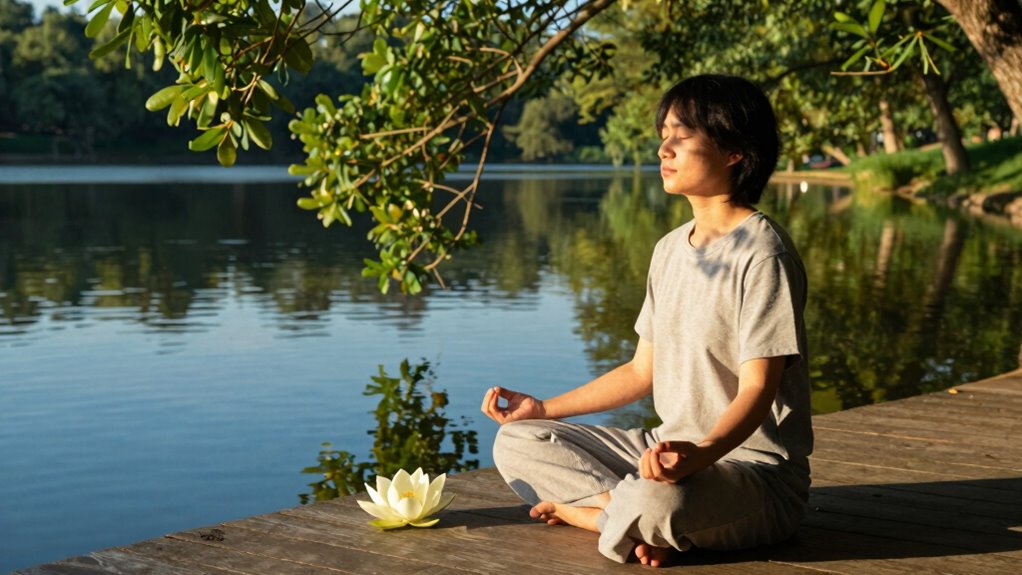

Learning to pause before reacting is a key step in managing BPD and building emotional resilience. When you pause, you create space between feeling and action, helping you respond thoughtfully instead of impulsively. Techniques like mindful breathing and grounding help you stay present and recognize early signs of distress. With practice, pausing becomes more automatic, improving your emotional regulation and relationships. Keep exploring these strategies to deepen your understanding and strengthen your progress.

Turn your wind-down time into listening time
- Thousands of audiobooks, podcasts and originals
- Listen on your phone, tablet or Echo — also offline
- Cancel anytime
Key Takeaways
- Pausing before reacting enhances emotional regulation and reduces impulsivity in BPD recovery.
- Mindfulness techniques, like breathing and grounding, cultivate the ability to pause during emotional distress.
- Recognizing early signs of emotional distress allows for timely intervention and thoughtful responses.
- Regular practice makes the pause automatic, fostering resilience and patience over time.
- Incorporating natural environments can strengthen mindfulness and support overall emotional well-being.

Recovering from Borderline Personality Disorder (BPD) often involves learning to pause before reacting, which can considerably improve emotional regulation and relationships. When you practice this pause, you’re giving yourself a moment to step back from intense feelings and assess the situation more clearly. One effective way to do this is by developing strong emotional regulation skills. These skills help you manage your emotions instead of being overwhelmed by them, allowing you to respond thoughtfully rather than impulsively. It’s not about suppressing your feelings but understanding and steering them in a healthier way.
Mindfulness techniques are particularly powerful tools for cultivating this pause. By focusing your attention on the present moment, you can create space between feeling an emotion and reacting to it. For example, you might use mindful breathing, where you take slow, deep breaths, paying close attention to each inhale and exhale. This simple practice can ground you during moments of emotional turmoil, making it easier to avoid impulsive reactions. Other mindfulness strategies include body scans, where you notice physical sensations without judgment, and grounding exercises that bring your awareness to your immediate environment.
When you incorporate mindfulness into your daily routine, you start to recognize patterns in your reactions. You become more aware of the initial signs of emotional distress, which is vital for intervening early. Over time, this awareness helps you develop a habit of pausing before responding, giving you the chance to choose a more constructive response. This process not only reduces the intensity of emotional outbursts but also enhances your ability to communicate more effectively with others.
Practicing regular mindfulness strengthens your emotional regulation skills, making the pause more automatic over time. Instead of reacting impulsively, you learn to observe your feelings with curiosity and compassion. This shift creates a calmer internal state and improves your relationships because others notice your increased capacity for patience and understanding. Remember, recovery isn’t about perfection, but progress. Each moment you consciously choose to pause and employ mindfulness techniques, you’re building resilience against emotional reactivity. Over time, this approach becomes an integral part of your life, helping you manage BPD symptoms more effectively and fostering healthier, more stable connections with the people around you. Additionally, incorporating elements from natural environments such as outdoor settings or landscapes can further enhance your mindfulness practice and emotional well-being.
mindfulness breathing exercises for emotional regulation
As an affiliate, we earn on qualifying purchases.
As an affiliate, we earn on qualifying purchases.
Frequently Asked Questions
How Long Does It Typically Take to See Progress in BPD Recovery?
You might start noticing progress in BPD recovery within a few months, but emotional resilience and improved coping mechanisms develop gradually. It varies for each person, depending on consistency and support. As you learn to pause before reacting, you’ll build healthier responses, which accelerates progress. Remember, patience is key. With ongoing effort, you’ll see your emotional stability strengthen over time, leading to better relationships and self-understanding.
Can Medications Help With Emotional Regulation in BPD?
Medications can help with emotional regulation in BPD by supporting emotional stability, though their effectiveness varies from person to person. You might find that certain medications reduce intense mood swings or impulsivity, but they often work best when combined with therapy. Keep in mind, medication isn’t a cure, but it can be a helpful tool on your journey toward better emotional control and stability. Talk to your doctor about what options suit you.
What Are Common Triggers That Worsen BPD Symptoms?
You might find emotional triggers like feeling misunderstood or rejected worsen your BPD symptoms. Relationship conflicts, especially when communication breaks down or trust feels compromised, can also intensify emotional distress. These triggers can lead to impulsive behaviors or intense mood swings. Recognizing and managing emotional triggers, along with developing healthy coping strategies, helps you reduce their impact and supports your recovery journey.
How Does Therapy Differ From Self-Help Strategies for BPD?
Like steering through a stormy sea, therapy offers structured guidance you can’t get alone. It differs from self-help because it uses dialectical techniques and deepens emotional awareness with a trained professional. While self-help strategies like journaling or mindfulness are helpful, therapy provides personalized support, accountability, and tools to challenge harmful patterns. Together, they create an extensive approach that helps you manage BPD symptoms more effectively and build healthier coping skills.
Are There Specific Mindfulness Techniques Best Suited for BPD?
You should try mindfulness meditation and grounding exercises, as they’re particularly effective for BPD. Mindfulness meditation helps you stay present and observe your feelings without judgment, reducing impulsivity. Grounding exercises, like focusing on physical sensations or your environment, can calm intense emotions and prevent reactive behaviors. Incorporating these techniques into your daily routine can improve emotional regulation and help you respond more thoughtfully during challenging moments.
Conclusion
Remember, recovery from BPD is a journey, and learning to pause before reacting is a crucial step. Nearly 80% of people with BPD who practice mindfulness report reduced impulsivity and emotional swings. By taking a moment to breathe and reflect, you regain control and foster healthier responses. Keep going—each small pause is a powerful move toward stability and self-understanding. You’ve got this, and every step forward counts.
Halloween Picks
halloween
As an affiliate, we earn on qualifying purchases.