TL;DR

Turn your wind-down time into listening time
- Thousands of audiobooks, podcasts and originals
- Listen on your phone, tablet or Echo — also offline
- Cancel anytime
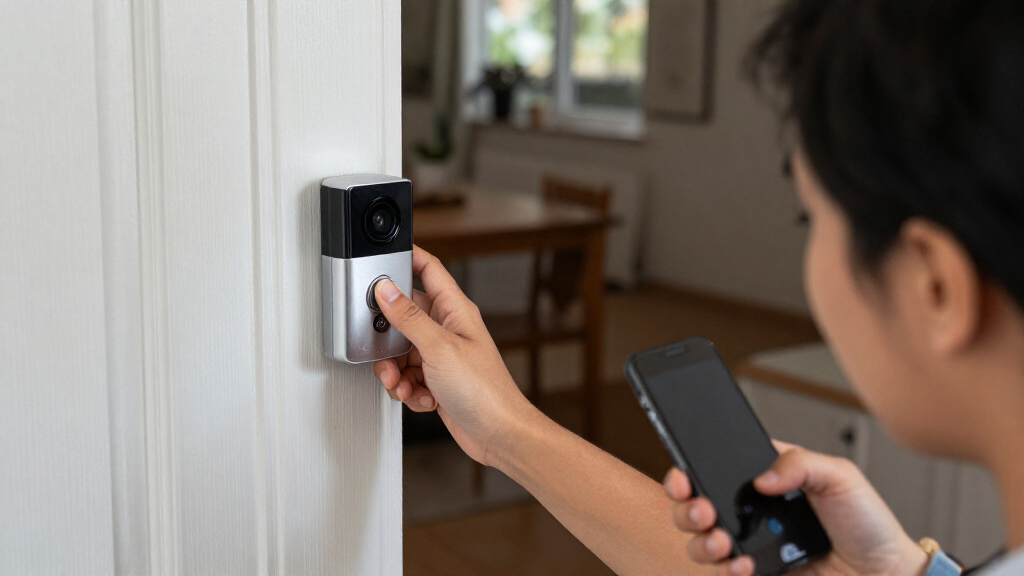
A video doorbell camera combines a doorbell with a camera, microphone, speaker, motion detection, and a network connection, so you can see and speak with visitors from your phone. If you are replacing a battery-powered Ring 2K model, compare the Ring Wired Doorbell 2K, Ring Wired Doorbell Plus (2nd Gen), and Blink Wired Doorbell 2K+ against your wiring, Wi-Fi, field of view, and recording needs. Check current storage and subscription details before choosing: motion alerts do not always mean a video clip gets saved.
A visitor can ring your bell, leave a parcel, and be halfway down the walk before you reach the door. A video doorbell camera can put that moment on your phone, letting you see who came by and, on many models, speak through the camera’s speaker. But when a familiar battery model is hard to find or appears to have been discontinued, the closest-looking replacement may not suit your wiring or recording habits.
This guide walks through the choices that matter in daily use: battery versus wired power, camera view, Wi-Fi, saved footage, and privacy. You will also see how several Ring and Blink alternatives compare with the Ring Battery Doorbell 2K – Retinal, so you can make a shortlist based on your own doorway rather than a resolution number alone.
Think of the camera as a peephole that can call your phone; like a peephole, its position shapes what you actually see. A wide view can show the path and the doorstep, but careful placement also helps keep a neighbor’s window out of frame. The key is to match the device to your entryway and check current product terms before buying.
Match the replacement’s power source to your wiring and your willingness to recharge a built-in battery.
Compare field of view, camera placement, and low-light performance alongside resolution; a 2K label alone cannot show whether a parcel fits in frame.
Confirm that motion events are saved as replayable clips and check current subscription, storage, and retention terms.
Test Wi-Fi at the mounting spot and check compatibility with your chime, phone, and smart-home setup.
Aim the camera at your approach and doorstep, use privacy zones where available, and review account access and local audio rules.
What a Video Doorbell Camera Actually Does at Your Door
A video doorbell camera combines a doorbell with a camera, microphone, speaker, motion detection, and a network connection. When someone presses the button or moves through a configured activity area, it can send an alert to your phone; depending on the model and settings, it can show a live view or save a clip for later. That makes it easier to answer a delivery driver while you are upstairs or see whether a visitor left a parcel.
Picture a rainy Tuesday: a courier sets a small box beside your door, rings once, and leaves. A motion alert may tell you the person approached, while a saved recording could let you replay where the parcel was placed. Those are separate functions, though. An alert is useful when you can respond right away; a recording matters when you need to check the event later. A device can notify you about movement yet not retain a useful recording unless you have enabled the right setting or storage option.
Many models also offer two-way talk, motion zones, and forms of person or package detection. These features can make an alert more relevant, but no detector reads every scene perfectly. A cat crossing the porch, headlights sweeping across a wall, or a tree shadow moving in a storm can still prompt an alert. Treat the camera as a useful way to check your entrance, not a guarantee that every event will be noticed or recorded. If alerts arrive constantly, you may start ignoring them; if detection is too restrictive, you could miss activity you care about.
It also helps to think beyond the button. A camera combines a doorbell with a small internet-connected device pointed at a shared space. Visitors, delivery workers, neighbors, and passersby may enter its field of view. The device can make everyday arrivals easier to manage, while asking you to make thoughtful decisions about placement, saved video, and who can view it. Those choices affect both how useful the camera is and how much activity from other people it captures.
As an affiliate, we earn on qualifying purchases.
Choose Battery or Wired Power Around Your Existing Doorbell
The best power option depends on what is already at your doorway and how much upkeep you will accept. A battery-powered model can suit a home without usable doorbell wires, while a wired model can avoid routine battery charging if your transformer and wiring meet its requirements. The tradeoff is convenience over time: a battery model is easier to place where wiring is absent, but its charging schedule depends on how often it wakes to record or send alerts. Some wired cameras still need a compatible adapter or transformer, so “wired” does not automatically mean your current setup will work.
The Ring Battery Doorbell 2K – Retinal uses a built-in lithium-ion battery that recharges over USB-C. The Ring Wired Doorbell 2K – Retinal can use a standard doorbell system, a compatible Ring plug-in adapter, or a suitable hardwired transformer. Its listed transformer range is 16–24 volts AC and 10–40 VA, with 30–40 VA recommended. Those details matter if you are swapping devices: a model that fits the wall may still need different electrical support. If the existing transformer cannot supply the required power, choosing the wired model could mean additional work before installation.
For example, imagine a renter whose front door has no doorbell wiring and whose landlord does not want new cables installed. A rechargeable unit could be the more practical fit, even if charging means removing it now and then. A homeowner with verified working wiring may prefer a wired option and avoid that chore. Battery life varies with motion traffic, settings, weather, and Wi-Fi signal: frequent activity can wake the camera more often, while weak Wi-Fi may make it work harder to stay connected. A quiet porch and a busy shared entrance can therefore produce very different charging routines.
Before choosing, check your wiring and the manufacturer’s current installation guidance. If you are unsure about the transformer, ask a qualified installer to identify it. Also account for the physical dimensions: the battery Ring model is listed at 2.11 by 5.78 by 1.41 inches, while the wired Ring 2K is about 2.1 by 5.2 by 1.02 inches. A deeper unit can protrude farther into a narrow entry or interfere with a storm door; a deep doorframe or narrow trim can make those fractions of an inch matter.
Compare the Closest Ring and Blink Replacements
If you want a close replacement for the Ring Battery Doorbell 2K – Retinal, start by comparing the features that shape everyday use: resolution, field of view, power, and Wi-Fi. The Ring Wired Doorbell 2K – Retinal shares a 140° horizontal and vertical view, two-way talk, and 2K video, but it changes the power arrangement. That makes it a closer match for the image and conversation features than for installation: existing wiring or an appropriate adapter becomes part of the decision. The Ring Wired Doorbell Plus (2nd Gen) also lists 2K video and a 140° by 140° view, with dual-band Wi-Fi 6. Its 5 GHz support can be useful where that band reaches the entrance reliably, while 2.4 GHz often travels farther through walls; the router and doorway determine which matters more.
Blink’s wired 2K+ model lists a 1920 by 1920 image and 140° horizontal and vertical coverage. The Blink Video Doorbell – HD View lists 1440 by 1440p resolution and a 150° field of view, plus battery-oriented power details. A wider number does not tell you whether a camera will show the parcel at your specific threshold; height, angle, exposure handling, and night conditions all affect the picture. These specifications help narrow the candidates, but the practical test is whether the installed view captures the face, package, and approach at the distance and angle your entry allows.
| Model | Video and view | Power and connection | Useful distinction |
|---|---|---|---|
| Ring Battery Doorbell 2K – Retinal | Retinal 2K; 140° × 140° | Built-in rechargeable battery; 2.4 GHz Wi-Fi 4 | Battery reference model with two-way talk |
| Ring Wired Doorbell 2K – Retinal | Retinal 2K; up to 6× Enhanced Zoom; 140° × 140° | Existing system or compatible adapter/transformer; 2.4 GHz Wi-Fi 4 | Closest listed match for view and talk, but wired |
| Ring Wired Doorbell Plus (2nd Gen) | 2K; 140° × 140° | Standard system or compatible adapter/transformer; dual-band Wi-Fi 6 | Lists both 2.4 GHz and 5 GHz connectivity |
| Blink Wired Doorbell 2K+ | 1920 × 1920; 140° × 140° | 12–24V AC or 24V DC; 2.4 GHz Wi-Fi | Wired Blink option with two-way audio and noise cancellation |
| Blink Video Doorbell – HD View | 1440 × 1440p; 150° view | 8–24V AC wired or 5V USB power for Sync Module; 2.4 GHz Wi-Fi | Lower listed resolution and wider stated view |
Use this table to narrow the field, then verify the exact model number and current specifications with the seller or manufacturer. Product names and feature sets can change. For a household already using Ring, staying in that ecosystem may simplify app use and shared access, but it does not by itself guarantee that recordings are stored in the way you expect. For someone prioritizing the Blink wired model’s listed power range, transformer compatibility may decide the question. Compare the cost and setup across the whole routine—installation, app access, and recording—not just the device’s headline specifications. The best match is the one that fits your installation and saves the footage you actually need.
Look Beyond 2K to Get a Useful Picture
Resolution alone cannot tell you whether a doorbell camera will show a face or parcel clearly. Resolution describes how many image pixels are available, but the lens’s field of view, camera height, lighting, night vision, and exposure handling determine how those pixels are distributed across the scene. A very wide view can fit more of the porch while making a distant face occupy fewer pixels. A high-resolution sensor can still miss a package tucked below the frame, while a well-placed camera with a more modest resolution may show the whole doorstep clearly.
Imagine mounting a camera too high under a deep porch canopy. It might capture a visitor’s hair and the street beautifully, yet crop out a small parcel left right against the wall. A more vertical, head-to-toe view can help capture both a person and the threshold. The Ring models in the comparison list a 140° horizontal by 140° vertical view; the Blink HD View lists 150° but does not provide the same vertical-and-horizontal breakdown in the supplied specifications. Without the vertical measurement, you cannot tell from that figure alone how much of the ground close to the wall will appear.
Zoom claims deserve a practical check too. The Ring Wired Doorbell 2K – Retinal lists up to 6× Enhanced Zoom, which may help inspect a section of the image, but digital enlargement cannot create detail that the original image did not capture. If you need to read a label, test what the camera can resolve at the distance from the mounting point to the delivery area. A live test during daylight and after dark gives a more useful answer than comparing headline specs. If the label remains too small in the original view, zoom may enlarge it without making the text legible.
Lighting can change the result dramatically. A bright sky behind a visitor may leave their face dim; porch lights can create glare; rain can sparkle in infrared or reflect off a lens. Before deciding that a model’s image quality falls short, check whether a small change in angle avoids direct sunlight or a shiny wall. Clean the lens occasionally, too: a thin film of dust can turn a crisp porch light into a fuzzy halo. The best framing is a compromise between seeing the details you need and avoiding glare, blind spots, or unnecessary views into nearby spaces.
Set Alerts and Recording to Match Your Routine
Motion settings work best when they focus on the approach to your door instead of every moving thing nearby. Many video doorbell cameras let you change activity zones and sensitivity, and some can label people, vehicles, animals, or packages. These tools can cut down on irrelevant notifications, but detection remains imperfect: changing weather, pets, headlights, and shadows can all affect what the camera flags. There is a balance to strike: broad coverage may catch more events but also generate more noise, while narrow zones make alerts easier to act on but can leave activity outside them unreported.
Say your porch faces a sidewalk where dozens of people walk past each afternoon. If the camera watches the entire street, your phone may buzz so often that you start ignoring it. Adjusting the activity area toward the path and doorstep can make alerts more useful. If your app offers sensitivity controls, lower them gradually and watch how the change affects package or visitor alerts over a few days. Changing one setting at a time helps you see whether fewer alerts came at the cost of missing the events you wanted to catch.
Keep one distinction clear: an alert is not the same as a saved recording. A camera may tell you that motion happened but retain no clip for you to play later, depending on the model, setup, storage plan, and settings. Before relying on footage to check a delivery, confirm how event recording works, what features require a subscription, and how long saved clips remain available. This matters most when you expect to review something after the event; an instant notification cannot help reconstruct details once the visitor has left.
- Start with your main purpose. Decide whether you care most about answering visitors, checking parcels, or reviewing activity after an event.
- Frame the useful area. Aim to include the approach and threshold while excluding more of the street or a neighbor’s private space than you need.
- Set zones and sensitivity. Make one adjustment at a time, then observe how often the camera sends alerts.
- Check saved footage. Trigger a test event and confirm that a clip appears, can be replayed, and stays available as expected.
That last check can prevent a frustrating surprise. A household may assume every ring creates a video history, then discover after a delivery that alerts were enabled while clip saving required a separate setting or plan. Check the current terms and app options before you count on recording. A short test also reveals whether the camera’s zones and recording behavior fit your routine before you depend on them for a real delivery.
Check Wi-Fi and Storage Before You Count on Video
A doorbell camera needs dependable power and a reliable network connection for many of its phone and cloud features. A device near the front entrance may sit farther from your router than a laptop does, especially when brick, metal doors, or several walls stand between them. The Ring Battery Doorbell 2K and Ring Wired Doorbell 2K list 2.4 GHz Wi-Fi 4; Ring Wired Doorbell Plus (2nd Gen) lists dual-band Wi-Fi 6, and the Blink models in the comparison use 2.4 GHz Wi-Fi. The frequency and Wi-Fi generation describe compatibility and connection options, but actual signal quality at the mounting point determines whether alerts and live video arrive promptly.
For example, your phone may show full Wi-Fi bars in the kitchen while the doorbell struggles beside a metal-clad front door. Test the network at the intended mounting spot before installation if you can. Slow live view, delayed alerts, or gaps in clips can point to weak signal, although an outage or the manufacturer’s service can also affect access. The practical consequence is that a camera with good video specifications may still be frustrating if you cannot reliably open its live view when someone is at the door.
Recording options vary across models. Some devices offer local storage, while others depend on cloud services; saved history, smart detection, or sharing may require a paid plan. Those details can change over time, so read the current model’s subscription and retention terms. Check what the camera does without a plan, how long it keeps events, whether clips can be downloaded, and what happens if you cancel. These terms affect the camera’s value beyond the purchase price: a cheaper device may cost more over time if the history or features you need require recurring payment.
Consider a simple household example: you want to review a parcel delivery from two days ago, but your plan only keeps a shorter event history. The camera may have worked perfectly and still have no clip left to show. Write down the records you actually expect to use, then match them to the storage period. Also check whether anyone else in the household needs access, since app sharing and account permissions can vary by system. A plan that retains footage long enough for you is only useful if the right household members can securely find it.
Protect Your Privacy Without Losing the View You Need
A video doorbell camera points into a space used by visitors, neighbors, and people passing by, so where you aim it matters. Try to capture the approach and the doorstep without turning a neighbor’s windows or a large stretch of public walkway into the main subject. If the app offers privacy masks or zones, use them to block areas you do not need to monitor. A slightly narrower or downward angle may reduce incidental capture, though it should still leave the threshold visible enough to check deliveries.
Picture a camera mounted beside an apartment entrance that faces a shared corridor. A few degrees of adjustment may keep the resident’s doormat and doorway in view while reducing the amount of a neighbor’s entrance recorded. At a house, a privacy zone may mask the sidewalk beyond the front path. Small changes can preserve practical coverage and reduce unnecessary capture. Recheck the frame after changing the angle: the privacy adjustment should not create a blind spot where parcels are normally left.
Also review who can access the account, how clips are shared, and how long they are kept. Use a strong, unique password and available account protections such as multifactor authentication. If you share access with a family member or neighbor, grant only the access they need and remove it when it is no longer useful. Video may reveal when people come and go, which makes account security part of the camera’s everyday setup; an account that is too broadly shared can expose more of that routine than the camera’s field of view suggests.
Audio recording raises its own questions. Local laws and rules can differ by location, particularly for recording conversations. Check the rules that apply where you live and review the device’s audio settings before enabling two-way talk or recorded sound. For medical, legal, or other formal decisions about your situation, consult a qualified professional. Thoughtful settings can help you use the camera for visitors and deliveries while treating other people’s privacy with care.
Make Installation and Upkeep Part of the Decision
Installation can be quick when the mounting surface, wiring, and network all cooperate, but each can add friction. The Ring Battery Doorbell 2K source material lists an average installation time of about 10 minutes, and the wired Ring 2K lists about 15 minutes. Those figures are estimates, not a promise for every home: old screws, brittle wiring, an unfamiliar transformer, or a poor Wi-Fi signal can stretch the job. Installation effort also affects which model is practical: a battery unit may avoid electrical work, while wired power can require checking the circuit and fitting the device safely.
Consider a front door with narrow trim and an old chime. Before drilling, measure the mounting area and compare it with the device dimensions. The Ring Wired Doorbell 2K is listed at roughly 2.1 by 5.2 by 1.02 inches; its battery counterpart is deeper and slightly taller. Even a slim unit may conflict with a storm door or sit awkwardly beside decorative molding. Discovering that after drilling can mean extra patching or a poor camera angle, so measuring first can save time and preserve the view you intended.
Plan for maintenance after installation. A battery device needs recharging, and a wired device may still need occasional checks of its connection, settings, and lens. Wipe the lens gently when dust or rain spots soften the image, and revisit motion zones after a seasonal change—bare branches moving in winter may trigger alerts that leafy summer foliage did not. Thinking about upkeep up front helps avoid choosing a device whose routine you are unlikely to maintain.
A practical pre-install checklist can save a return trip to the toolbox:
- Measure the mounting spot and confirm the door can open without hitting the camera.
- Check power requirements against the existing wiring or your preferred charging routine.
- Test Wi-Fi at the entrance and note whether a door or wall weakens the signal.
- Confirm chime and app compatibility for the exact model and household devices.
- Read current setup and storage terms before you depend on a feature.
Installation convenience is a real tradeoff, not just a box on a spec sheet. A battery model can spare you electrical work but asks you to recharge it. A wired model can reduce charging tasks but requires compatible power and may be harder to install at a rental or older home. Include that recurring effort in the decision alongside the initial price, because the easiest model to fit today may not be the easiest one to live with over the next year.
Know What a Doorbell Camera Can and Cannot Cover
A video doorbell camera can help you see and speak with someone at your entrance, but it is not a guaranteed security system or a replacement for emergency services. Its view is limited by its lens and mounting position; alerts depend on power, network access, software, and the provider’s systems. If the internet drops, live viewing and remote notifications may stop even if the device still has power. That makes it useful for checking arrivals under ordinary conditions, but a poor sole source of coverage when you need uninterrupted monitoring.
For instance, a camera may help you confirm that a delivery driver left a box, but it may not see a person moving around the side gate. A wider property may need separate cameras or other security measures to cover areas outside the doorway. Think of the doorbell as one useful window into arrivals, not a complete record of every approach to your home. Its position is optimized for the entrance, so treating it as whole-property coverage can leave important blind spots.
Continuous recording is not universal. Many doorbells save events when motion or a button press triggers them, and recording length or availability can depend on settings, storage, and the specific model. If you need continuous coverage, check that exact capability in current documentation rather than inferring it from a high-resolution label or a motion-alert feature. Event recording can be efficient for a front door with occasional activity, but it may not provide a complete timeline if motion detection misses an event or the connection fails.
Finally, make decisions based on the specific product version you are buying. Product features, software support, storage limits, and privacy policies can change. Check the exact model identifier, the manufacturer’s current specifications, and what happens to clips if you close an account or cancel a plan. A little verification up front can prevent you from expecting a device to cover a blind spot or retain footage that it was never configured to save.
Frequently Asked Questions
Do video doorbell cameras work without Wi-Fi or internet?
Remote alerts and live phone viewing generally rely on a network connection, and cloud recording needs internet access. Some models may retain footage locally during an outage, but the details vary. Check the exact device’s offline behavior before you count on it.
Can I use a video doorbell camera without a subscription?
That depends on the model. Live viewing or basic alerts may work without a plan, while saved video, extended history, or advanced detection can require one. Confirm what works without payment and how long recordings remain available under current terms.
How often will I need to recharge a battery doorbell?
There is no single battery interval that fits every home. Frequent motion, cold weather, settings, and weak Wi-Fi can all affect battery use. A busy entrance may need more frequent charging than a quiet porch, so check the app’s battery status after installation.
Can a video doorbell camera record continuously?
Many doorbells save event clips rather than continuous video, though capabilities vary by model and plan. Motion alerts do not prove a clip was saved. Check recording modes, clip length, and storage limits for the exact model you are considering.
Will my doorbell camera work with my existing chime?
Compatibility depends on the camera, chime type, wiring, and transformer. Review the manufacturer’s current compatibility guidance and power specifications before installation. If you cannot identify your electrical setup, ask a qualified installer to check it.
How can I reduce false motion alerts?
Adjust the activity zone so it focuses on your approach and doorstep, then reduce sensitivity gradually if passing traffic or moving branches create too many notifications. Test each change for a few days. Smart detection can help, but weather, shadows, pets, and lighting can still affect results.
Can I record audio at my front door?
Many doorbell cameras include a microphone and speaker for two-way talk, and some may save audio with video. Rules for recording conversations vary by location. Check local requirements and the device’s settings before enabling audio recording.
Conclusion
Choose a replacement by starting at your doorway: check the power you have, the view you need, the Wi-Fi signal you can reach, and the recording history you expect. Then compare the exact model’s current features and terms, because a motion alert does not always mean a saved clip.
Once the camera is mounted, make one final walk to the front step and look at the frame on your phone. You should see the arrival that matters—and leave the rest of the neighborhood out of view.
Halloween Picks
halloween
As an affiliate, we earn on qualifying purchases.