TL;DR

Get self-care and calm essentials delivered free — and shop member deals
- Fast, free delivery on millions of items
- Access to Prime Big Deal Days deals on October 6–7
- Prime Video, Amazon Music and more included
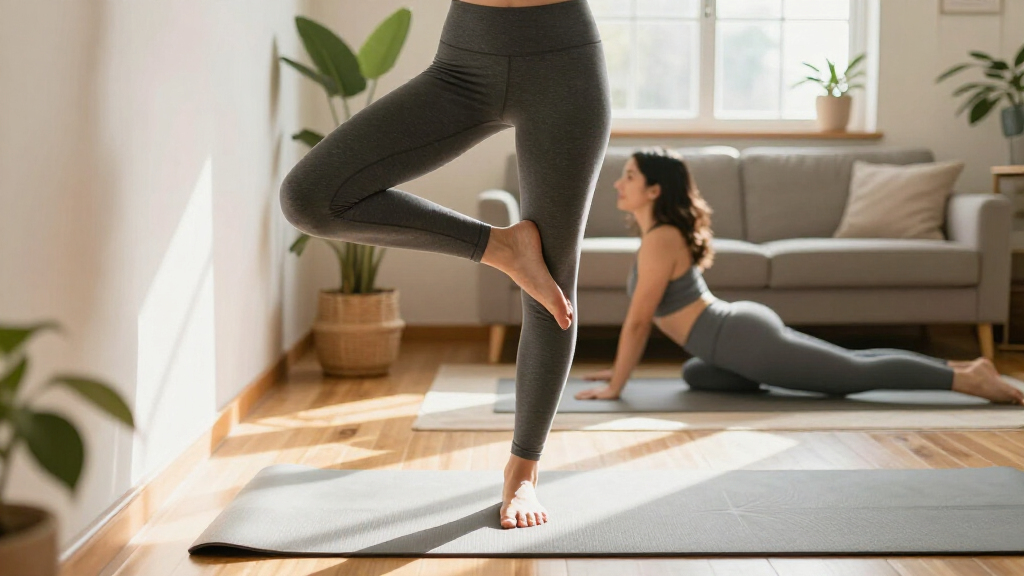
Yoga teacher Cheryl McColgan recommends tree pose, eagle pose and warrior three as single-leg exercises that may help develop balance and stability. She suggests progressing from tree to the more challenging poses, using a fixed gaze and a wall or chair for support as needed.
Yoga teacher Cheryl McColgan recommends tree pose, eagle pose and warrior three as three ways to practice balance and stability, with each pose requiring a person to bear weight on one leg. In a report published by Fit&Well, McColgan says the poses work muscles around the ankle, knee and hip while practicing proprioception, the body’s sense of its position and movement.
McColgan, founder of Heal, Nourish, Grow, says yoga can train proprioception and build muscular strength and endurance. Those are her explanations for why balancing poses may support stability; the report does not present clinical research comparing the poses or measuring their effects.
She recommends that beginners start with tree pose, then progress to eagle pose and warrior three. For all three, she advises fixing the gaze on a single point and using a wall or chair for support if needed. Each pose is held for three to 10 breaths, then repeated on the other side.
In tree pose, stand on one foot and place the other against the standing ankle, calf or inner thigh, avoiding pressure on the knee. In eagle pose, bend both knees slightly, cross one thigh over the other and wrap the raised foot behind the standing calf if comfortable; the toes can remain on the floor. Warrior three involves hinging forward at the hips while extending the other leg behind. The arms can be held in prayer, extended behind the torso or, for a greater challenge, straight ahead.
How the Poses Build Balance Practice
These recommendations offer readers a graded set of movements rather than one fixed balance test. Tree pose allows several foot placements and the option of holding support. Eagle pose adds a crossed-leg position, while warrior three asks the person to hinge forward and extend the free leg behind, changing the balance challenge.
That progression matters for people who want to practice stability at a level they can manage. McColgan’s guidance also makes clear that the full versions are not required to begin: someone can use a wall or chair, keep the toes down in eagle pose, or start with a simple one-leg stand. The source does not establish that these poses prevent falls or guarantee improved balance, so the recommendations are best understood as exercise suggestions, not promises of a particular result.
As an affiliate, we earn on qualifying purchases.
A Stepwise Approach to Single-Leg Yoga
The Fit&Well report frames balance exercise as one way to support physical function with age and identifies yoga as a form of movement that can include stability practice. Its central recommendation is single-leg work: each of the three poses shifts much of the body’s weight onto one leg, though the posture and difficulty differ.
McColgan’s suggested order moves from a relatively adaptable standing pose to positions with more complex leg placement or a forward hinge. Her cues are practical rather than a formal training program: look at one point, take support if needed, hold for three to 10 breaths and switch sides. She also suggests practicing a one-leg stand while brushing one’s teeth as a starting activity. The report does not specify how often to practice or how long it might take to notice a change.
“One of my favorite things about yoga is that it trains proprioception—your body’s ability to sense its own movements and position—so it can definitely help with balance and stability.”
— Cheryl McColgan, yoga teacher and founder of Heal, Nourish, Grow
What the Report Does Not Establish
The report provides an instructor’s exercise recommendations, not findings from a clinical trial. It does not quantify how much the poses improve balance, compare them with other exercises, or establish whether they reduce falls. It also gives no schedule for practice or timeframe for possible results.
Readers’ ability to perform the poses will vary, and the report does not discuss individual injuries, medical conditions or other reasons a person might need modified activity. Its support options and easier versions are described as practical adjustments, but they are not a substitute for individualized professional guidance where that is needed.
How Readers Can Start Practicing
McColgan’s proposed sequence is to begin with tree pose and move to eagle pose and then warrior three as the movements become manageable. The guidance is to hold each for three to 10 breaths on both sides, focus the eyes on one point and use a wall or chair for support when necessary.
The report does not announce a follow-up study, training plan or new measurement of results. For now, its next step for readers is practice at a suitable level: start with a supported one-leg stand or the simpler versions of the poses, rather than treating the full postures as a requirement.
Key Questions
Which three yoga poses does the report recommend for balance?
Tree pose, eagle pose and warrior three are the three poses recommended by yoga teacher Cheryl McColgan in Fit&Well.
Which pose should a beginner try first?
McColgan recommends starting with tree pose, then progressing to eagle pose and warrior three. A wall or chair can provide support.
How long should each pose be held?
The report gives a range of three to 10 breaths for each pose, followed by switching sides.
What if I cannot do the full pose?
The suggested adjustments include holding a wall or chair, keeping the toes on the floor in eagle pose, or starting with a simple one-leg stand. The report does not provide individualized medical guidance.
Does the report show these poses prevent falls?
No. It reports McColgan’s recommendations and rationale, but provides no measured evidence that the poses prevent falls or produce a specific improvement in balance.
Source: rss
Fall Picks
fall essentials
As an affiliate, we earn on qualifying purchases.