
TL;DR

Turn your wind-down time into listening time
- Thousands of audiobooks, podcasts and originals
- Listen on your phone, tablet or Echo — also offline
- Cancel anytime
A Fit&Well report on a 30-day weighted-vest test describes how adding weight while also increasing running distance and speed was followed by swollen knees and a fitness plateau. The report cites instructor Holly Haywood’s advice to start light, progress gradually, preserve good technique and avoid combining multiple increases in training load. It does not establish that weighted vests preserve muscle or bone density in a clinical trial.
A Fit&Well report on a 30-day weighted-vest test warns that adding a vest while also increasing running distance, speed or frequency can place too much strain on the body. The writer said their knees swelled and their fitness plateaued during the trial, and quoted fitness instructor Holly Haywood advising people to start with a light load, keep good form and increase only one training variable at a time. The account is a personal report, not evidence from a clinical study that weighted vests preserve muscle or bone density.
The writer said they used two vests from U.S. brand OMORPHO—the 6-pound G-Vest Run and the 10-pound G-Vest Icon—during workouts for 30 days while training for a marathon. They described wearing a vest during runs and increasing other demands at the same time, including running farther or faster. The writer reported that their knees became swollen and their fitness stopped improving, and said a 14-mile long run ended at 12.5 miles.
Haywood, lead instructor at London health-club chain Third Space, recommended beginning with a vest weighing no more than 5% of body weight for general resistance training. The article gives an example of an 8-pound vest for someone weighing 160 pounds. It says runners may want to begin at a lower proportion—around 1% to 2% of body weight, according to the writer’s own takeaway—and increase in small steps, rather than making a large jump.
The report suggests reserving a vest for shorter sessions or bodyweight exercises, such as push-ups, dips and pull-ups, rather than wearing it on long runs or walks. Haywood’s advice is to remove the vest or use a lighter one if it causes joint discomfort. She also suggested starting with a 15- to 20-minute brisk treadmill walk and building the workload gradually. These are recommendations reported in the article; individual tolerance and appropriate training loads can vary.
How Added Load Can Change Training
A weighted vest adds resistance to movement, which can make a workout more demanding without adding repetitions. That may appeal to people looking for ways to progress bodyweight exercises or walking, but the report’s central point is that added weight is still added training load. It should not be layered on top of sudden increases in speed, duration or frequency without allowing the body to adjust.
The article’s reference to preserving muscle and bone density reflects the potential value often associated with load-bearing exercise, not a result measured in this 30-day product test. Readers should not take the account as proof that wearing a vest prevents age-related muscle loss or osteoporosis. The practical relevance is narrower: the report offers cautionary advice about introducing extra resistance, especially for people running or exercising for longer periods.
Joint discomfort and changes in technique matter because a person may respond to extra load by altering how they move. The report says a vest that affects form or causes discomfort may work against the intended workout. That makes gradual progression and close attention to movement more useful takeaways than treating a vest as a shortcut to greater fitness.
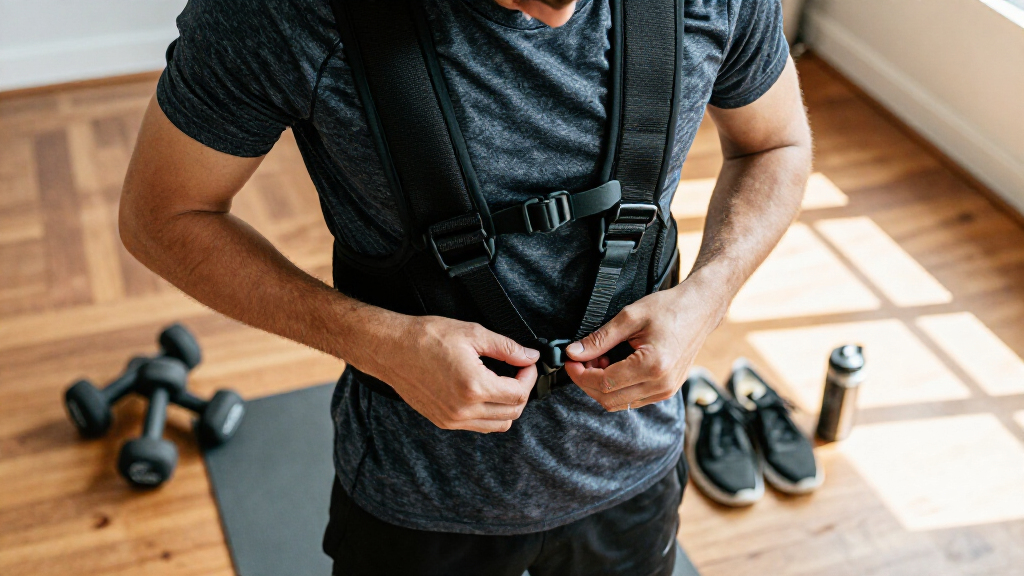
weighted vest for resistance training
As an affiliate, we earn on qualifying purchases.
As an affiliate, we earn on qualifying purchases.
A Marathon Test Went Too Far
The Fit&Well piece is framed as a first-person review rather than a controlled experiment. Its writer tried two OMORPHO vests over 30 days while preparing for a marathon, a demanding training period that already involves managing running volume and intensity. The writer later concluded that increasing the vest load alongside other aspects of training was a mistake.
Haywood’s four broad principles in the report are to start light, avoid wearing the vest for long runs, use it for suitable bodyweight exercises, and change only one variable at a time. For instance, someone introducing a vest could keep their usual pace and distance steady rather than adding weight while also running faster or farther. The article does not compare vest training with unweighted exercise or report measured changes in muscle mass or bone density.
“The general recommendation, like with most resistance training, is to start light and gradually build up as strength and comfort with the vest improve.”
— Holly Haywood, lead instructor at Third Space, as quoted by Fit&Well
What the Vest Test Cannot Show
The article does not provide controlled measurements of muscle mass, bone density or injury rates, and it does not establish whether either vest caused the writer’s swollen knees. The writer was also training for a marathon and changed several aspects of their workouts, making it impossible to isolate the effect of the vest from the rest of the training plan.
The report does not specify how the writer’s symptoms were assessed or whether they received medical care. It also does not establish that the suggested starting percentages or progression steps are suitable for every person or activity. Readers with pain, a health condition or questions about resistance training should seek guidance from a qualified health professional or appropriately trained exercise professional.
Progress One Training Factor
The report recommends beginning with a light vest during a short, manageable session, then checking whether movement remains comfortable and technique stays sound. If the session feels manageable, a person can adjust one factor at a time—such as load, incline, speed or duration—rather than increasing several together. The article offers a brisk 15- to 20-minute treadmill walk as one possible starting point, not a universal prescription.
Fit&Well’s account does not announce a follow-up study or provide a schedule for further findings. The next useful evidence would be research that measures outcomes such as strength, muscle and bone density, while comparing vest use with other forms of exercise over a defined period. Until then, the article’s claims about benefits should be distinguished from its personal experience and training advice.
Key Questions
Does this report prove weighted vests preserve muscle and bone density?
No. Fit&Well describes a 30-day personal test; it does not report measurements of muscle or bone density or establish that a vest prevents muscle loss or osteoporosis.
What starting weight does the article suggest?
Haywood recommends starting at no more than 5% of body weight for general resistance training. The writer says runners may prefer starting around 1% to 2%, but that is the writer’s takeaway, not a universal medical guideline.
Should you wear a weighted vest on long runs?
The report advises against using one on long runs, describing added strain and the writer’s own difficulty during a long-distance training session. Haywood says to reduce the load or remove the vest if it causes joint discomfort.
How should someone increase vest workouts?
The article advises starting with a short, manageable session, maintaining sound form and increasing one training variable at a time. The writer gives a 15- to 20-minute brisk walk as an example; individual needs differ.
Source: rss
Columbus Day / Indigenous Peoples' Day Picks
long weekend sales
As an affiliate, we earn on qualifying purchases.