
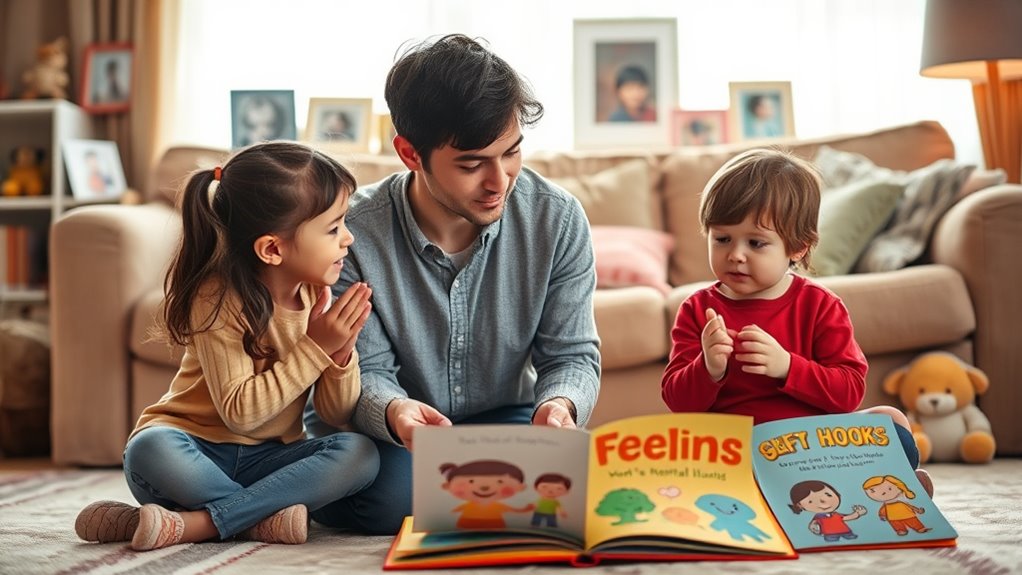
When explaining your BPD to your children, use simple words that focus on feelings and safety. Describe emotions like storms or roller coasters to help them understand mood swings, and always reassure them they are loved regardless of how you feel. Be honest but gentle about challenges, and encourage questions to create trust. If you want to know more about how to communicate effectively and support your kids, there’s helpful guidance to explore.
Key Takeaways
- Use simple words to explain emotions as feelings like happiness or sadness children already understand.
- Reassure children they are loved and safe, regardless of emotional ups and downs.
- Describe emotional changes as weather or roller coasters to make them easier to understand.
- Be honest about challenges but emphasize that everyone struggles and love remains constant.
- Encourage questions, listen carefully, and provide comfort to help children feel supported and secure.
Understanding BPD and How It Affects Emotions
Understanding BPD is important because it explains why some people experience very strong and intense emotions that are hard to control. When you have BPD, your feelings can flare up quickly and feel overwhelming. You might feel angry, sad, or empty in ways that seem out of proportion to the situation. These emotional reactions come from past experiences, like childhood invalidation or emotional neglect, which made it difficult to manage feelings healthily. As a result, you might struggle to calm down once you’re upset. This emotional instability affects relationships, making it hard to trust or feel secure with others. Recognizing how BPD impacts your emotions helps you understand why these intense feelings happen and the importance of learning ways to manage them better.
Tailoring Your Explanation for Different Age Groups

When explaining BPD to children, you need to think about their age and understanding. For young kids, use simple words and focus on feelings and safety, avoiding complex details. Always include clear reassurance to help them feel secure and supported as they process the information.
Simplify for Young Kids
To explain BPD to young children, it’s best to use simple words and focus on feelings they already understand. Kids this age experience emotions intensely and need reassurance. Keep your explanation gentle and straightforward, emphasizing safety and love. Avoid technical terms or details that might confuse them. Instead, talk about feelings like being very upset, happy, or scared, and that everyone has these feelings sometimes. Make sure they know it’s okay to feel big emotions and that you’re there to help. Use simple ideas to help them understand what’s happening inside.
- Talk about feelings they recognize, like being happy or sad
- Reassure them they are loved and safe
- Explain that sometimes emotions can be very big and hard to control
Use Relatable Metaphors
Using metaphors helps children grasp complex feelings by connecting them to familiar ideas. For younger kids, compare feelings to weather—like a sudden storm or a sunny day—to show how emotions can change quickly. For example, you might say, “Sometimes, my feelings are like a storm—strong and fast, and it’s hard to calm down right away.” For older children, use relatable situations like a roller coaster—going up and down, sometimes feeling scary or exciting. These metaphors help them understand that emotional swings are normal but intense in BPD. Keep metaphors simple, concrete, and relevant to their experiences. This makes it easier for children to understand and accept that emotions can be powerful, and they’re not alone in feeling overwhelmed.
Provide Clear Reassurance
Clear reassurance is essential when talking to children about BPD, as it helps them feel safe and loved despite the complexities of the disorder. Children may worry about your feelings or the stability of your relationship. By consistently emphasizing your love and commitment, you help build trust and security. Tailor your reassurance to their age: young kids need simple affirmations like “I love you no matter what,” while older children benefit from explanations that highlight your efforts to manage emotions and stay connected. Use gentle words to counteract fears of abandonment or misunderstanding.
- Reaffirm your love regularly, regardless of mood swings
- Explain that emotions can be intense but are manageable
- Encourage questions to clarify fears and promote understanding
Using Metaphors and Simple Language to Describe Emotional Intensity

When explaining emotional intensity to children, metaphors can make complex feelings easier to understand. For example, you might compare emotions to weather—sometimes it’s sunny and calm, and other times it’s stormy with thunderstorms. This helps children see that feelings can change quickly and are part of normal life. Using simple language like “your feelings are like a roller coaster” can also help them grasp how emotions can rise and fall rapidly. Keep explanations age-appropriate by avoiding clinical terms and focusing on relatable images. The goal is to help your child recognize their emotions without feeling overwhelmed. Metaphors and straightforward words create a gentle way for children to understand emotional ups and downs, making it easier for them to express and manage their feelings.
Discussing Challenges and Reassuring Your Children

Talking to your children about challenges related to BPD can feel overwhelming, but it’s important to approach these conversations with honesty and reassurance. Children need to understand that everyone faces difficulties, and your openness helps them feel safe and supported. Focus on emphasizing stability, love, and your ongoing efforts to manage your feelings. Use simple language to explain that sometimes emotions can be intense, but you’re working on coping strategies. Reassure your children that they are not responsible for your feelings and that they are loved unconditionally.
- Normalize emotional struggles and emphasize everyone has ups and downs
- Reassure your children that your challenges don’t change your love for them
- Highlight your commitment to managing emotions and seeking support
Supporting Your Kids Through Their Questions and Feelings

Supporting your kids through their questions and feelings is essential for helping them feel safe and understood. When they ask questions or express strong emotions, listen carefully and acknowledge their feelings without judgment. Use simple language to explain what they’re experiencing, reassuring them that their feelings are normal and valid. Avoid dismissing their concerns or making them feel guilty for having questions. Instead, encourage open dialogue, letting them know it’s okay to express themselves and seek support. Offer comfort through hugs, reassurance, or calm words. Help them identify their emotions and guide them in expressing those feelings constructively. Remember, your patience and understanding foster trust, making it easier for your children to process their feelings and build emotional resilience over time.
Building Resilience and Healthy Emotional Skills Together

Building resilience and healthy emotional skills is an essential part of helping your child navigate challenging feelings and experiences. You can do this by creating a safe environment where emotions are acknowledged and validated. Teach your child to identify and name their feelings, which helps them understand and manage emotions better. Encourage problem-solving and coping strategies, like deep breathing or journaling, to build their emotional toolkit. Also, model healthy emotional responses yourself, showing how to handle stress constructively.
- Practice active listening and validate their feelings
- Teach calming techniques and coping skills
- Reinforce their strengths and progress to boost confidence
Frequently Asked Questions
How Can I Explain BPD Without Overwhelming My Child’s Understanding?
You can explain BPD simply by focusing on emotions and reassurance. Tell your child that sometimes you feel very intense emotions, like anger or sadness, and it’s okay to feel that way. Use gentle language and examples they understand, like mood swings or strong feelings. Reassure them that you’re working on managing your feelings, and they’re loved and safe. Keep the conversation open, encouraging questions and expressing your support.
What Signs Should I Look for in My Child Related to BPD?
You should look for signs like sudden mood swings, intense reactions to perceived rejection, impulsive behaviors, and difficulty managing emotions. Watch for unstable relationships or feelings of emptiness, along with self-harm or risky actions. If your child shows these patterns, especially combined with irritability or paranoia, it could indicate emotional dysregulation linked to BPD traits. Early recognition helps you seek support and develop coping strategies together.
How Do I Address My Child’s Fears About Abandonment Linked to BPD?
Did you know that children with insecure attachments are up to 90% more likely to develop BPD traits? To address your child’s fears about abandonment, reassure them of your consistent love and presence. Use simple, honest words, emphasizing that you’re always there for them, even during tough times. Encourage open conversations, validate their feelings, and teach coping skills to help them feel safe and secure in your support.
When Is the Right Time to Seek Professional Help for My Child?
You should seek professional help for your child as soon as you notice signs like intense emotional instability, impulsivity, trouble forming relationships, or self-harm behaviors. If these traits are persistent or worsening, it’s best to consult a mental health expert promptly. Early intervention can provide your child with coping skills and support, helping prevent future difficulties and promoting healthier emotional development. Trust your instincts and don’t hesitate to reach out.
How Can I Balance Honesty and Reassurance When Discussing BPD With My Kids?
Think of your words as a gentle bridge between honesty and reassurance. You want to share the truth about BPD without letting it feel like a stormy sea. Be truthful yet comforting, like a warm blanket on a cold night. Use simple language, acknowledge feelings, and emphasize love and safety. This balance helps your kids understand without overwhelming them, building trust and a sense of security for their emotional journey.
Conclusion
By sharing your journey with gentle words and understanding, you create a safe space for your children to learn about your world. When you use kind metaphors and reassure them, you help nurture their curiosity and compassion. Remember, your openness plants seeds of resilience and warmth, helping them grow into empathetic adults. Together, you build a foundation of trust and love, guiding them gently through life’s colorful emotional landscape with hope and reassurance.