Anxiety and stress relief journals come in two very different flavors: structured CBT workbooks that walk you through reframing exercises, and gentle prompt-based journals built for low-effort daily check-ins. The Calm Collective Guided CBT Anxiety Relief Journal Kit stands out as the best overall pick because it pairs evidence-based prompts with a bundled pen and a complete kit format, removing the friction that stops most people from journaling consistently. If daily consistency feels like your biggest hurdle, the 5-Minute Anxiety Relief Journal keeps entries short enough to survive a bad week, while the Clever Fox Mental Health and Anxiety Journal offers the most rigorous CBT structure for anyone who wants real therapeutic depth. The main tradeoff across the category is depth versus effort — the more powerful the exercises, the more likely they get abandoned during the anxious stretches when you need them most. Read on for the full breakdown of all 14 options and who each one suits best.

Turn your wind-down time into listening time
- Thousands of audiobooks, podcasts and originals
- Listen on your phone, tablet or Echo — also offline
- Cancel anytime
Key Takeaways
- Kit-style options like the Calm Collective journal outperformed standalone books on adherence factors — bundled accessories and all-in-one formats remove small excuses that derail journaling habits.
- The strongest split in this category is between CBT-structured journals (Clever Fox, Healing Anxiety and Overthinking) and creative or activity-based options (Out of Your Mind, Anxiety Relief Games for Women) — the right choice depends on whether you want to process anxious thoughts or escape from them.
- Time commitment varied more than anything else: the 5-Minute Anxiety Relief Journal demands a fraction of the daily effort required by the 52-Week Mental Health Journal, and this single factor predicts success better than prompt quality.
- Several options, including Worry for Nothing and No Worries, overlap heavily in format — buyers should choose between them based on tone and prompt style rather than features, since their structures are nearly interchangeable.
- Niche formats earned their spots for specific situations: 52 Lists for Calm works best for list-lovers who resist free writing, while Out of Your Mind suits people whose anxiety spikes when asked to confront feelings directly.
| The 5-Minute Anxiety Relief Journal: A Creative Way to Stop Freaking Out |  | Best for Busy Schedules | Format: Guided journal | Approach: Creative anxiety-relief exercises | Time Commitment: Approximately 5 minutes per entry | VIEW LATEST PRICE | See Our Full Breakdown |
| No Worries: A Guided Journal to Help You Calm Anxiety, Relieve Stress, and Practice Positive Thinking Each Day |  | Best Overall for Beginners | Format: Guided journal | Approach: Daily guided prompts | Focus: Anxiety, stress relief, positive thinking | VIEW LATEST PRICE | See Our Full Breakdown |
| My Anxiety Relief Journal: For Calm, Clarity & Peace of Mind |  | Best Value Pick | Pages: 120 lined pages | Features: Guided prompts | Format: Lined journal with prompts | VIEW LATEST PRICE | See Our Full Breakdown |
| Goodbye, Anxiety: A Guided Journal for Overcoming Worry | 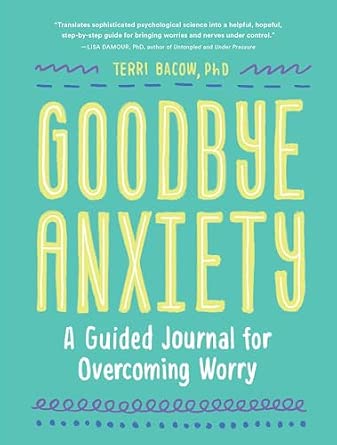 | Best CBT-Based Pick | Format: Guided journal | Approach: Cognitive behavioral therapy (CBT) prompts | Focus: Worry, mental health, stress relief, self-care | VIEW LATEST PRICE | See Our Full Breakdown |
| Worry for Nothing Guided Anxiety Journal |  | Best Premium Build | Brand: Four Progress | Cover: Linen hardcover with gold foil logo | Color: Black | VIEW LATEST PRICE | See Our Full Breakdown |
| Clever Fox Mental Health and Anxiety Journal with CBT Prompts, A5, Purple |  | Best Structured CBT Pick | Size: A5 (5.8 x 8.3 inches) | Cover: Eco-leather hardcover | Paper weight: 120 GSM | VIEW LATEST PRICE | See Our Full Breakdown |
| Create Your Own Calm: A Journal for Quieting Anxiety |  | Best for Gentle, Low-Pressure Guidance | Format: Guided journal (paperback book) | Focus: Quieting anxiety and building calm | Guidance style: Prompt-driven, self-paced | VIEW LATEST PRICE | See Our Full Breakdown |
| Healing Anxiety and Overthinking Journal and Workbook |  | Best Hybrid Journal-Workbook | Format: Journal and workbook hybrid | Focus: Anxiety, overthinking, and fear | Stated goals: Letting go of anxiety, overcoming fear, finding peace | VIEW LATEST PRICE | See Our Full Breakdown |
| 52-Week Mental Health Journal: Guided Prompts and Self-Reflection to Reduce Stress and Improve Well-Being |  | Best for Long-Term Habit Building | Duration: 52 weeks | Format: Guided journal with self-reflection prompts | Focus: Stress reduction and well-being | VIEW LATEST PRICE | See Our Full Breakdown |
| Out of Your Mind: A Journal and Coloring Book to Distract Your Anxious Mind |  | Best Creative Distraction Pick | Format: Journal and coloring book combined | Focus: Distraction and creative relief from anxious thoughts | Guidance style: Prompts plus coloring pages | VIEW LATEST PRICE | See Our Full Breakdown |
| The Calm Woman Anxiety Relief Journal for Overthinking and Stress |  | Best for Overthinkers | Format: Guided journal | Focus: Anxiety relief, overthinking, stress management, mindfulness | Features: Guided prompts, daily rituals, mindfulness exercises | VIEW LATEST PRICE | See Our Full Breakdown |
| 52 Lists for Calm: Journaling Inspiration for Soothing Anxiety and Creating a Peaceful Life |  | Best Low-Pressure Format | Format: Self-care list journal | Focus: Mindfulness, anxiety relief, stress relief | Structure: 52 list prompts | VIEW LATEST PRICE | See Our Full Breakdown |
| Anxiety Relief Games for Women: Calming Activity Book |  | Best for Distraction-Based Relief | Format: Activity book | Includes: Puzzles, creative prompts, journaling exercises | Intended audience: Adult women | VIEW LATEST PRICE | See Our Full Breakdown |
| Calm Collective Guided CBT Anxiety Relief Journal Kit with Pen |  | Best Structured CBT System | Page count: 160 pages | Worksheets: 77 identical CBT-inspired worksheets | Free-writing pages: 76 | VIEW LATEST PRICE | See Our Full Breakdown |
| anxiety and stress relief journal | Format | Focus |
|---|---|---|
| The 5-Minute Anxiety Relief Jo | Guided journal | Anxiety relief |
| No Worries: A Guided Journal t | Guided journal | Anxiety, stress relief, positive thinking |
| My Anxiety Relief Journal: For | Lined journal with prompts | Calm, clarity, peace of mind |
| Goodbye | Guided journal | Worry, mental health, stress relief, self-care |
| Worry for Nothing Guided Anxie | — | — |
| Clever Fox Mental Health and A | — | — |
| Create Your Own Calm: A Journa | Guided journal (paperback book) | Quieting anxiety and building calm |
| Healing Anxiety and Overthinki | Journal and workbook hybrid | Anxiety, overthinking, and fear |
| 52-Week Mental Health Journal: | Guided journal with self-reflection prompts | Stress reduction and well-being |
| Out of Your Mind: A Journal an | Journal and coloring book combined | Distraction and creative relief from anxious thoughts |
| The Calm Woman Anxiety Relief | Guided journal | Anxiety relief, overthinking, stress management, mindfulness |
| 52 Lists for Calm: Journaling | Self-care list journal | Mindfulness, anxiety relief, stress relief |
| Anxiety Relief Games for Women | Activity book | Stress relief, worry, overthinking |
| Calm Collective Guided CBT Anx | — | — |
More Details on Our Top Picks
The 5-Minute Anxiety Relief Journal: A Creative Way to Stop Freaking Out
This option stands out for its time-boxed format, which makes it the most realistic pick for anyone who feels that structured journaling demands more minutes than they have. Where Worry for Nothing asks you to work through full two-page CBT worksheets, this journal breaks anxiety relief into short creative exercises you can finish between meetings or before bed. That creative angle also distinguishes it from the more clinical Goodbye, Anxiety — it leans on drawing, listing, and playful reflection rather than formal thought records. The tradeoff is depth: five-minute exercises rarely match the lasting behavioral work a CBT-based journal provides, and readers wanting a systematic program may outgrow it within a couple of months.
Pros:- Extremely low time commitment per entry
- Creative exercises feel less clinical than therapy-style prompts
- Approachable for journaling newcomers
- Easier habit consistency than long-form workbooks
Cons:- Exercises are shallow compared with CBT journals like Goodbye, Anxiety
- Creative format may not suit people who want measurable progress tracking
Best for: People with packed schedules who want a low-commitment daily anxiety ritual they’ll actually keep up
Not ideal for: Buyers seeking structured therapeutic work — the quick creative prompts won’t replace a CBT-based program
- Format:Guided journal
- Approach:Creative anxiety-relief exercises
- Time Commitment:Approximately 5 minutes per entry
- Focus:Anxiety relief
- Style:Creative and playful
- Experience Level:Beginner-friendly
Our verdict“This pick makes the most sense for busy people who need fast, forgiving anxiety relief rather than a deep therapeutic program.”
No Worries: A Guided Journal to Help You Calm Anxiety, Relieve Stress, and Practice Positive Thinking Each Day
This journal earns the top beginner slot because it balances three goals in one format — calming anxiety, relieving stress, and building a daily positive-thinking habit — without overwhelming the reader. Compared with The 5-Minute Anxiety Relief Journal, it offers more structure and continuity, so entries build on each other rather than standing alone. And unlike the worksheet-driven Worry for Nothing, its gentle guided prompts feel encouraging rather than clinical, which matters if you’re new to writing about your emotions. The tradeoff is that its breadth dilutes its focus: it touches positive thinking and general stress alongside anxiety, so readers dealing with intense, specific worry patterns may get more from a dedicated CBT option.
Pros:- Guided prompts remove the blank-page problem entirely
- Covers anxiety, stress, and positive thinking in one daily practice
- Encouraging tone suits journaling beginners
- Daily format builds a sustainable routine
Cons:- Broad focus means shallower treatment of anxiety specifically
- Positive-thinking framing may frustrate readers who prefer evidence-based CBT methods
Best for: First-time journalers who want an encouraging all-in-one daily habit for mild anxiety and everyday stress
Not ideal for: Anyone with persistent, specific anxiety symptoms — the generalist prompts lack the targeted CBT tools of Goodbye, Anxiety
- Format:Guided journal
- Approach:Daily guided prompts
- Focus:Anxiety, stress relief, positive thinking
- Structure:Daily entries
- Tone:Encouraging and accessible
- Experience Level:Beginner-friendly
Our verdict“The strongest starting point for newcomers who want a friendly, well-rounded daily journal rather than a specialized therapeutic tool.”
My Anxiety Relief Journal: For Calm, Clarity & Peace of Mind
With 120 lined pages plus guided prompts, this journal delivers more raw writing space per dollar of effort than most rivals in this lineup. Compared with No Worries, it leans toward open reflection: the prompts point you toward calm and clarity, but the generous lined pages leave room to write at length rather than filling in short blanks. That makes it a better match for people who already know journaling helps them and just want light structure with room to ramble. The drawback mirrors its strength — with only a light prompt framework, it lacks the CBT rigor of Goodbye, Anxiety, and anxious beginners who freeze in front of open space may stall out without tighter guidance.
Pros:- Generous 120-page count offers long-term use
- Guided prompts provide just enough direction
- Combines structure with open writing space
- Straightforward focus on calm and clarity
Cons:- Lighter prompt structure than dedicated CBT journals
- Less suitable for people who need step-by-step therapeutic exercises
Best for: Budget-conscious journalers who want gentle prompts but plenty of open space for freeform writing
Not ideal for: Beginners who need heavy guidance — 120 mostly blank pages can feel intimidating without strong prompts
- Pages:120 lined pages
- Features:Guided prompts
- Format:Lined journal with prompts
- Focus:Calm, clarity, peace of mind
- Writing Style:Mixed guided and freeform
- Capacity:Long-term daily use
Our verdict“This option makes the most sense for value-minded writers who want a long-lasting journal with just a nudge of guidance.”
Goodbye, Anxiety: A Guided Journal for Overcoming Worry
Among the therapy-grounded options here, this journal is the most direct application of cognitive behavioral therapy prompts aimed squarely at worry. Its structured reflections walk you through identifying anxious thought patterns — a step My Anxiety Relief Journal largely leaves to the writer. Compared with Worry for Nothing, which formalizes CBT into repeated two-page worksheets, this one takes a more narrative, reflective approach, which feels less like homework and more like self-exploration. The real tradeoff is effort and emotional demand: genuine CBT work means sitting with uncomfortable thoughts, so this is better suited to motivated readers ready for serious self-examination than to someone seeking light evening decompression.
Pros:- Grounded in cognitive behavioral therapy techniques
- Structured prompts target worry patterns directly
- Supports mental health reflection and self-care together
- Narrative style feels less clinical than worksheet formats
Cons:- Demands more emotional engagement than casual journals
- Slower pace may discourage readers wanting quick relief
Best for: Motivated readers who want structured, evidence-based CBT reflection to actively work through chronic worry
Not ideal for: People wanting light stress relief — CBT prompts require real emotional effort and honest self-examination
- Format:Guided journal
- Approach:Cognitive behavioral therapy (CBT) prompts
- Focus:Worry, mental health, stress relief, self-care
- Style:Structured reflective prompts
- Best Use:Active worry management
- Experience Level:Intermediate to committed
Our verdict“This pick makes the most sense for readers committed to doing real CBT-style work on worry rather than dabbling in casual journaling.”
Worry for Nothing Guided Anxiety Journal
This is the most polished object in the batch: a black linen hardcover with gold foil detailing, 100 gsm paper that handles ink without bleed, and 60 two-page CBT worksheets for documenting worries and examining automatic thoughts. Compared with Goodbye, Anxiety, its format is more systematic — each worksheet repeats the same therapeutic structure, which builds discipline but can feel monotonous by week three. The discreet cover is a genuine advantage over flashier options like the Clever Fox Mental Health Journal, since it reads as a plain notebook in a coffee shop or office. The tradeoff is rigidity: with identical worksheets throughout, there’s no variety in approach, and the premium binding costs more than simpler guided journals like No Worries.
Pros:- Premium linen hardcover with discreet, professional appearance
- Quality 100 gsm paper resists ink bleed
- 60 structured two-page CBT worksheets for consistent practice
- Includes instructions and mindful tips alongside the exercises
Cons:- Every worksheet repeats the same prompts, which feels monotonous over time
- Higher price point than simpler guided journals
- Rigid format offers no variety for changing needs
Best for: Professionals and students who want a durable, discreet, well-made CBT workbook they can carry anywhere without drawing attention
Not ideal for: Buyers who dislike routine — 60 near-identical worksheets get repetitive, and softer options like No Worries offer more variety
- Brand:Four Progress
- Cover:Linen hardcover with gold foil logo
- Color:Black
- Worksheets:60 two-page CBT worksheets
- Paper Weight:100 gsm
- Dimensions:5-7/8 x 8-1/4 inches
- Weight:9.9 ounces
- Extras:Instructions and mindful tips included
Our verdict“This model is better suited to buyers who value build quality and privacy and want disciplined, repeatable CBT practice in a book built to last.”
Clever Fox Mental Health and Anxiety Journal with CBT Prompts, A5, Purple
This option stands out for its grounding in CBT techniques — the prompts guide readers through identifying triggers, examining emotions, and reframing negative thought patterns rather than just venting onto a page. Compared with looser guided journals like Create Your Own Calm, the Clever Fox offers a more methodical, therapy-adjacent framework, which matters for buyers who want a repeatable process instead of open-ended reflection. The build quality also separates it: a discreet eco-leather hardcover means you can carry it to work or a café without advertising its contents, and the 120 GSM paper handles most pens without ghosting. The tradeoff is commitment — the CBT prompts only pay off with regular, consistent entries, and the page count isn’t disclosed, so long-haul buyers are buying partly on faith.
Pros:- CBT-based prompts that walk you through triggers, emotions, and reframing
- Discreet eco-leather hardcover suitable for public settings
- Thick 120 GSM paper resists ghosting and bleed-through
- Practical extras: pen loop, elastic closure, stickers, and a user guide
Cons:- Benefits depend on consistent, regular journaling — prompts lose power with sporadic use
- Total page count isn’t specified, making it hard to gauge how long the journal lasts
Best for: Buyers who want a structured, CBT-based system for identifying triggers and reframing thoughts in a journal they can carry anywhere
Not ideal for: Anyone wanting a casual or occasional brain dump — the prompt system is built for regular practice, not sporadic use
- Size:A5 (5.8 x 8.3 inches)
- Cover:Eco-leather hardcover
- Paper weight:120 GSM
- Color:Purple
- Included:Stickers and user guide
- Features:Pen loop and elastic closure
- Guarantee:60-day money-back guarantee
Our verdict“This pick makes the most sense for someone who wants a disciplined, CBT-driven anxiety tool with premium portability, not a low-commitment notebook.”
Create Your Own Calm: A Journal for Quieting Anxiety
Where the Clever Fox CBT journal asks you to work a system, Create Your Own Calm takes a softer posture — it’s built around quieting anxiety rather than dissecting it. That makes it a better fit for readers who find clinical-style prompts intimidating and want a journal that feels more like a conversation than homework. Compared with the 52-Week Mental Health Journal, it’s less prescriptive about pacing, so there’s no guilt if you skip a week — but that same looseness is the tradeoff. There’s little public detail about page count or structure, so buyers can’t verify how much guidance they’re actually getting before it arrives. Readers who thrive on a defined progression should look elsewhere; those who want permission-based, self-paced calm will find it here.
Pros:- Gentle, low-pressure tone suited to anxiety-prone readers
- Focused specifically on creating calm rather than clinical self-analysis
- Self-paced format with no rigid schedule to fall behind on
- Approachable entry point for journaling newcomers
Cons:- Minimal published detail on structure, length, or prompt style
- Light structure may feel repetitive or directionless for experienced journalers
Best for: Journalers who find structured CBT workbooks overwhelming and prefer a gentle, self-paced approach to calming anxious thoughts
Not ideal for: Detail-oriented buyers who want to know exactly what prompts, page count, and format they’re getting before purchasing
- Format:Guided journal (paperback book)
- Focus:Quieting anxiety and building calm
- Guidance style:Prompt-driven, self-paced
- Tone:Gentle and accessible
- Audience:General readers managing everyday anxiety
Our verdict“This is the right choice if structured workbooks feel like a chore and you’d rather ease into calm at your own pace.”
Healing Anxiety and Overthinking Journal and Workbook
This title earns its spot by bridging two formats — it functions as both a reflective journal and a workbook with exercises, which the more purely reflective Create Your Own Calm doesn’t attempt. That hybrid approach suits the specific pain point in its name: overthinking. Rumination rarely responds to freewriting alone, so having structured exercises to interrupt thought spirals alongside space to write gives buyers two tools in one volume. Its stated scope is also broader — fear, peace, and letting go — where the 52-Week Mental Health Journal narrows to weekly reflection. The obvious drawback: almost no product data is published about page count, dimensions, or interior layout, so you’re trusting the title over the details. Buyers who want to evaluate the actual exercises first should temper expectations.
Pros:- Combines journaling space with workbook-style exercises
- Directly targets overthinking and rumination, not just general anxiety
- Broad scope covering fear, letting go, and finding peace
- Two-in-one format reduces the need to buy separate books
Cons:- Very little published detail on contents, page count, or format
- Dual purpose means neither the journaling nor the workbook side may go as deep as dedicated single-format books
Best for: Chronic overthinkers who want written reflection AND structured exercises to interrupt rumination in a single book
Not ideal for: Buyers who need to see interior pages, length, or exercise examples before committing — the listing offers almost nothing to evaluate
- Format:Journal and workbook hybrid
- Focus:Anxiety, overthinking, and fear
- Stated goals:Letting go of anxiety, overcoming fear, finding peace
- Guidance style:Reflective writing plus exercises
- Best use:Interrupting thought spirals and rumination
Our verdict“Worth a look if rumination is your main struggle and you want exercises plus writing space together — just buy knowing the listing is sparse on specifics.”
52-Week Mental Health Journal: Guided Prompts and Self-Reflection to Reduce Stress and Improve Well-Being
Most anxiety journals in this roundup are open-ended — you finish when you finish. This one builds in a full 52-week structure, making it the strongest choice for buyers whose real goal is a sustainable year-long practice rather than crisis-period relief. Compared with the Healing Anxiety and Overthinking Journal, the pacing is predictable: each week brings guided self-reflection prompts, which removes the daily decision fatigue that derails most journaling attempts. The scope is broader than pure anxiety relief — it frames itself around overall well-being and stress reduction, so it doubles as a general mental health companion. The flip side of that breadth is depth: readers dealing with acute anxiety or overthinking may find the prompts too gentle compared with CBT-driven options like the Clever Fox, and a year-long commitment can feel daunting to start.
Pros:- Clear 52-week structure removes decision fatigue about when and what to write
- Guided prompts make it easy for beginners to start without a blank page
- Broad well-being focus supports long-term mental health, not just anxious moments
- Weekly cadence is low-pressure compared with daily journals
Cons:- Weekly format delivers slower feedback than daily CBT-style journals
- Generalist prompts may feel shallow for targeted anxiety or overthinking work
- A one-year commitment can feel like a lot for someone testing the waters
Best for: Buyers who want a structured, year-long weekly practice that builds a lasting journaling habit while managing everyday stress
Not ideal for: Anyone seeking acute anxiety intervention — the weekly cadence and broad well-being focus are too gentle for intense, immediate relief
- Duration:52 weeks
- Format:Guided journal with self-reflection prompts
- Focus:Stress reduction and well-being
- Cadence:Weekly entries
- Guidance style:Prompt-driven self-reflection
- Best use:Building a consistent long-term journaling habit
Our verdict“This model is better suited to habit builders who want a full year of guided structure — skip it if you need intensive, anxiety-specific work right now.”
Out of Your Mind: A Journal and Coloring Book to Distract Your Anxious Mind
Every other journal here asks you to engage with your anxiety — examine it, reframe it, reflect on it. Out of Your Mind takes the opposite approach: it pairs journaling with coloring pages to give an anxious brain something else to do entirely. For buyers whose spirals worsen the moment they start analyzing their feelings, this distraction-first design is genuinely different from the CBT structure of the Clever Fox or the weekly reflection of the 52-Week Mental Health Journal. Coloring occupies the hands and part of the mind, which many people find useful in the acute grip of anxiety. The tradeoff is clear, though — distraction isn’t processing. If your goal is understanding triggers or building coping strategies, this won’t do that work, and the split format means you get less of each activity than dedicated books offer.
Pros:- Coloring offers an immediate, hands-on way to interrupt anxious thought loops
- Dual format gives two coping tools in one book
- Useful in acute moments when reflective writing feels impossible
- Part of a dedicated anxiety journaling and coloring series for readers who want more
Cons:- Distraction-based approach doesn’t build insight, coping strategies, or trigger awareness
- Split format means fewer journaling prompts and fewer coloring pages than single-focus books
Best for: People whose anxiety spikes when they self-analyze, and who calm down better through hands-on creative activity than reflection
Not ideal for: Buyers who want to understand and reframe anxious thoughts — distraction skips the processing entirely, so CBT-style journals serve that goal better
- Format:Journal and coloring book combined
- Focus:Distraction and creative relief from anxious thoughts
- Guidance style:Prompts plus coloring pages
- Series:Anxiety Journaling and Coloring Series
- Best use:Acute anxious moments and hands-on calming
Our verdict“Pick this when you need to get out of your head in the moment — not when you’re ready to work through why the anxiety is there.”
The Calm Woman Anxiety Relief Journal for Overthinking and Stress
Most journals in this roundup, like No Worries, spread their prompts across general anxiety topics, but this one puts overthinking at the center of its structure. That focus matters if your anxiety tends to show up as racing thoughts at night rather than situational worry. The combination of guided prompts, daily rituals, and mindfulness exercises gives the journal a built-in routine, which is helpful for buyers who struggle to journal consistently without structure.
The tradeoff is transparency. Compared with The Calm Collective CBT Journal Kit, which clearly documents its page count and worksheet structure, this option offers few hard details about length or layout, so buyers are trusting the concept more than the specifics. If you want a known quantity, the Clever Fox is the safer bet; if rumination is your core struggle, this focused angle justifies the risk.
Pros:- Narrow focus on overthinking rather than general anxiety
- Daily rituals help build a consistent journaling habit
- Combines prompts with mindfulness exercises for variety
- Designed specifically for women’s stress patterns
Cons:- No published details on page count or number of prompts
- Less structured than CBT-based competitors
- Undocumented depth — buyers can’t preview the approach
Best for: Women whose anxiety manifests mainly as overthinking and racing thoughts and who want a daily ritual structure
Not ideal for: Buyers who want to know exactly what they’re getting — page counts and prompt structure are undocumented
- Format:Guided journal
- Focus:Anxiety relief, overthinking, stress management, mindfulness
- Features:Guided prompts, daily rituals, mindfulness exercises
- Intended audience:Women
- Structure:Daily-use format
- Approach:Mindfulness-based
Our verdict“A focused pick for overthinkers who value daily ritual over documented structure.”
52 Lists for Calm: Journaling Inspiration for Soothing Anxiety and Creating a Peaceful Life
Where journals like Goodbye, Anxiety and Worry for Nothing ask you to write open-ended reflections, this book asks for something far more approachable: lists. That single design choice changes the whole experience. List-making lowers the barrier for people who freeze at a blank page, and it turns journaling into a weekly, one-list-at-a-time rhythm rather than a daily obligation — a real advantage for anyone who abandons daily journals within two weeks.
Compared with the 52-Week Mental Health Journal, which also uses a paced format, this one leans toward inspiration and self-care rather than structured self-reflection, and it’s lighter on clinical techniques. Buyers hoping for CBT-style worksheets will find it too gentle. But for soothing anxiety through creativity rather than analysis, the list format is genuinely harder to quit than prose journaling.
Pros:- List format is far less intimidating than open prose
- Weekly pacing prevents journaling burnout
- Encourages reflection without clinical heaviness
- Well-suited to gifting
Cons:- Too gentle for anyone wanting evidence-based anxiety tools
- Weekly cadence offers less support during acute stress
- Not designed for daily habit building
Best for: Journalers who freeze at open-ended prompts and prefer a gentle weekly list format over daily writing obligations
Not ideal for: Buyers wanting structured therapeutic techniques — this is inspiration-driven, not CBT-based
- Format:Self-care list journal
- Focus:Mindfulness, anxiety relief, stress relief
- Structure:52 list prompts
- Pacing:One list per week
- Prompt style:List-making rather than open-ended writing
- Tone:Inspirational self-care
Our verdict“The easiest entry point in this lineup for people who find traditional journaling intimidating.”
Anxiety Relief Games for Women: Calming Activity Book
This is the only entry in the batch built around play rather than reflection, which puts it closer in spirit to Out of Your Mind, the journal-coloring hybrid, than to prompt-driven options like No Worries. Mixing puzzles with creative prompts and journaling makes sense for a specific anxiety type: the kind that spikes when you’re left alone with your thoughts. A puzzle gives your hands and brain a job to do, and the distraction itself is the therapy.
The hybrid structure has a real cost, though. Because page space is split three ways, the journaling component is shallower than a dedicated option like The Calm Woman Journal, and there’s no detail on how many activities are included or how hard the puzzles get. Compared with a purist journal, this is a mood-shift tool — great for anxious evenings, weaker as a long-term practice.
Pros:- Three activity types prevent boredom with any single format
- Puzzles genuinely interrupt rumination loops
- Low commitment — dip in and out freely
- Designed specifically for adult women
Cons:- No details on activity count or puzzle difficulty
- Journaling content is shallower than dedicated journals
- Not a substitute for structured anxiety management
Best for: Women whose anxiety responds better to distraction and light engagement than to deep reflection
Not ideal for: Buyers building a serious daily journaling practice — the mixed format dilutes the reflective work
- Format:Activity book
- Includes:Puzzles, creative prompts, journaling exercises
- Intended audience:Adult women
- Approach:Distraction and light engagement
- Focus:Stress relief, worry, overthinking
- Structure:Mixed activities, dip-in format
Our verdict“Pick this for anxious evenings when you need your mind occupied, not examined.”
Calm Collective Guided CBT Anxiety Relief Journal Kit with Pen
This is the most fully specified product in the batch, and it shows. With 77 CBT-inspired worksheets for identifying triggers and rebuilding thought patterns, plus 76 free-writing pages, it splits the difference between guided structure and blank-page freedom — something neither the Clever Fox Mental Health Journal nor Worry for Nothing documents as clearly. The hardware matters too: a lay-flat binding, elastic closure, pen holder, and included pen mean it works as a carry-everywhere kit, and the discreet black vegan leather cover won’t announce “anxiety journal” in a meeting.
The honest catch is that all 77 worksheets are identical. Compared with 52 Lists for Calm, where every prompt differs, repetition here can feel monotonous by week six — though that sameness is arguably the point in CBT, where repetition of one framework builds skill. Buyers wanting variety should look elsewhere; buyers wanting a method get one.
Pros:- Complete kit with pen, holder, and elastic closure included
- Balances 77 guided worksheets with 76 free-writing pages
- Lay-flat design and compact size suit daily carry
- Discreet hardcover doesn’t look like a mental health journal
Cons:- All 77 worksheets are identical, which gets repetitive
- Heavier commitment than list-based or activity-based alternatives
- Paper weight unit is unspecified despite no-bleed claims
Best for: Buyers who want a repeatable CBT framework they can carry daily, with discreet build quality and everything included
Not ideal for: Buyers who crave prompt variety — the same worksheet repeats 77 times
- Page count:160 pages
- Worksheets:77 identical CBT-inspired worksheets
- Free-writing pages:76
- Dimensions:5-7/8 x 8-1/4 inches
- Cover:Black vegan leather hardcover with gold foil logo
- Paper:120 g, described as no-bleed-through
- Included accessories:Pen and red nylon attached marker
- Features:Habit tracker, gratitude and affirmation list, stress management list, pen holder, elastic closure, lay-flat center seam
Our verdict“The best-documented CBT system in this lineup for buyers who value method and portability over prompt variety.”

How We Picked
My ranking starts with one question: will a person actually keep using this journal after week two? Prompt quality matters far less than consistency, so I weighted daily time commitment, page layout clarity, and how much momentum each book builds on its own. Journals that front-load effort — dense instructions, long daily spreads, vague prompts — ranked lower than ones with clear, finite entries that feel achievable on a bad mental health day.
From there, I compared therapeutic grounding and fit. Options with genuine CBT or reframing structure scored higher for people managing persistent worry, while creative and distraction-based formats were judged on their own terms as tools for acute moments. I also factored in physical usability: binding that lies flat, space to write for adultsized handwriting, and layouts that do not require reading an instruction manual first. Finally, I eliminated redundancy by assigning each overlapping title a distinct role, so no two picks serve the same buyer.
Factors to Consider When Choosing Anxiety And Stress Relief Journals
Before choosing a journal, it helps to understand what actually drives results in this category — and where buyers most often go wrong. These are the factors that separated the working picks from the abandoned ones.Depth of Effort You Can Realistically Sustain
The most common mistake buyers make is choosing the journal they wish they had the energy for rather than the one they will actually complete. Structured CBT workbooks with multi-step daily spreads deliver better results if used consistently, but a fifteen-minute commitment on a high-anxiety day often simply does not happen. If your anxiety tends to spike in the evenings or you already struggle with routine, a five-minute or single-prompt format will outperform a richer workbook you open twice and shelve. Be honest about your worst days, not your best ones, when estimating this.
Processing Versus Distraction
Not all anxiety journals are trying to do the same job. Prompt-based and CBT journals ask you to face and reframe anxious thoughts, which research on cognitive behavioral techniques supports for long-term reduction. Activity-based options like coloring journals and game-style workbooks instead aim to interrupt rumination in the moment — a different mechanism that works well for acute spirals but does not build skills over time. Ideally, these two types complement each other rather than compete, and many people benefit from owning one of each.
Prompt Quality and Guided Structure
A weak journal hands you a blank page titled “what are you worried about?” — which can actually amplify rumination. Strong options provide scaffolded prompts that move from identifying a thought to challenging it to identifying a next action. Look for journals that reference recognizable techniques like cognitive reframing, worry scheduling, or grounding exercises, because these translate into real coping skills you can use without the book. Vague gratitude-only prompts are a red flag for anyone with persistent anxiety rather than mild stress.
Format, Binding, and Physical Usability
This sounds minor until you use the journal daily. Lay-flat bindings and A5 or larger page sizes make a genuine difference in whether you complete entries at a desk, in bed, or on a commute. Undated formats forgive missed days without leaving guilt-inducing blank pages; dated 52-week structures motivate some people and shame others. If portability matters, a chunky hardcover workbook will stay home — which may be fine, or may end your habit entirely.
Tone and Emotional Fit
Journal tone varies from clinical and therapeutic to playful and irreverent, and mismatched tone is a quiet dealbreaker. Some people find humor — sarcasm, coloring pages, game formats — disarming in the best way, while others find it trivializing when they are genuinely struggling. Read a few sample prompts before buying if the option exists. The right tone makes an entry feel like relief; the wrong one makes it feel like a chore performed by someone else’s personality.
When to Pay More for a Kit or Premium Format
Most journals in this category are inexpensive, so paying more usually means paying for bundled completeness — pen included, habit trackers, supplementary materials, or premium paper and binding. That premium is worth it if you know small friction points derail you: hunting for a pen genuinely stops some people from journaling. It is not worth it if you already own supplies and just want good prompts. A basic, well-structured journal used daily beats a deluxe kit used occasionally, every time.
Frequently Asked Questions
Are guided anxiety journals actually effective, or just placebo?
Guided journals built on cognitive behavioral techniques — thought records, reframing, worry scheduling — carry more evidence than generic gratitude or free-writing journals. Writing about anxious thoughts has been shown to reduce rumination partly because it externalizes worries that otherwise loop in working memory. That said, a journal is a self-help tool, not a treatment: if anxiety is significantly affecting your work, sleep, or relationships, pair any journal with professional support rather than substituting one for the other. The journals with explicit CBT prompts in this roundup are the closest to structured therapeutic homework.
Should I choose a CBT-style journal or a creative, distraction-based one?
They serve different moments, so think about when your anxiety is worst. If you tend to ruminate and overthink and want to change the underlying thought patterns, a CBT-structured journal like the Clever Fox or Healing Anxiety and Overthinking options makes more sense. If your anxiety hits as acute panic or spiraling that gets worse when you try to analyze it, a distraction format like a coloring journal or activity book interrupts the loop more effectively. Many people keep a structured journal for weekly use and a distraction-style book for high-stress moments like travel or before difficult events.
What if I buy a journal and then stop using it after a week?
This is the single most common failure mode, and it is usually a format mismatch rather than a discipline problem. If daily entries felt heavy, drop down to a five-minute or single-prompt format rather than giving up entirely. Undated journals help because a missed week does not leave visible gaps that create guilt, whereas dated 52-week spreads can turn a lapse into an abandonment. Starting with the lowest-effort option that still addresses your anxiety, then scaling up once the habit sticks, works far better than starting ambitious and quitting.
Are the women-focused anxiety journals actually different, or just marketing?
In most cases, the differences are tone and presentation rather than technique. Titles like The Calm Woman and Anxiety Relief Games for Women use language, examples, and visual design aimed at women’s reported stressors — overthinking, people-pleasing, mental load — while the underlying exercises overlap heavily with gender-neutral options. If those framings resonate with you, that resonance improves adherence, which is what actually drives results. If they feel gimmicky, the neutral CBT journals in this lineup will serve you just as well, so choose based on which voice you would want to spend ten minutes with daily.
How long should I use one before deciding whether it’s working?
Give any anxiety journal at least three to four weeks of regular use before judging it, because the benefit comes from repeated practice of the techniques rather than any single entry. Track something concrete — sleep, morning anxiety level, or how quickly you recover from a worry spiral — rather than relying on a general feeling. If after a month the prompts feel repetitive or the format consistently goes unused, that is your signal to switch formats, not to abandon journaling altogether. Switching between a structured and a lighter format is a normal adjustment, not a failure.
Conclusion
For most buyers, the Calm Collective Guided CBT Anxiety Relief Journal Kit is the best overall choice — its complete-kit format, evidence-based prompts, and low-friction design give it the highest chance of sustained use. If budget or simplicity is the priority, the No Worries guided journal delivers solid daily structure at a basic standalone price, making it my best value pick. For beginners who are intimidated by workbooks, the 5-Minute Anxiety Relief Journal offers the gentlest possible entry point, while the Clever Fox Mental Health and Anxiety Journal earns the premium spot for buyers who want the most rigorous CBT structure and a durable A5 format. Specific needs round out the lineup: the Out of Your Mind journal and coloring book suits anyone whose anxiety worsens with introspection, 52 Lists for Calm fits list-lovers who resist free writing, and the 52-Week Mental Health Journal works best for those committed to a full year of self-reflection. Match the journal to your realistic daily capacity, not your idealized one, and you will get far more from whichever option you choose.
Halloween Picks
halloween
As an affiliate, we earn on qualifying purchases.