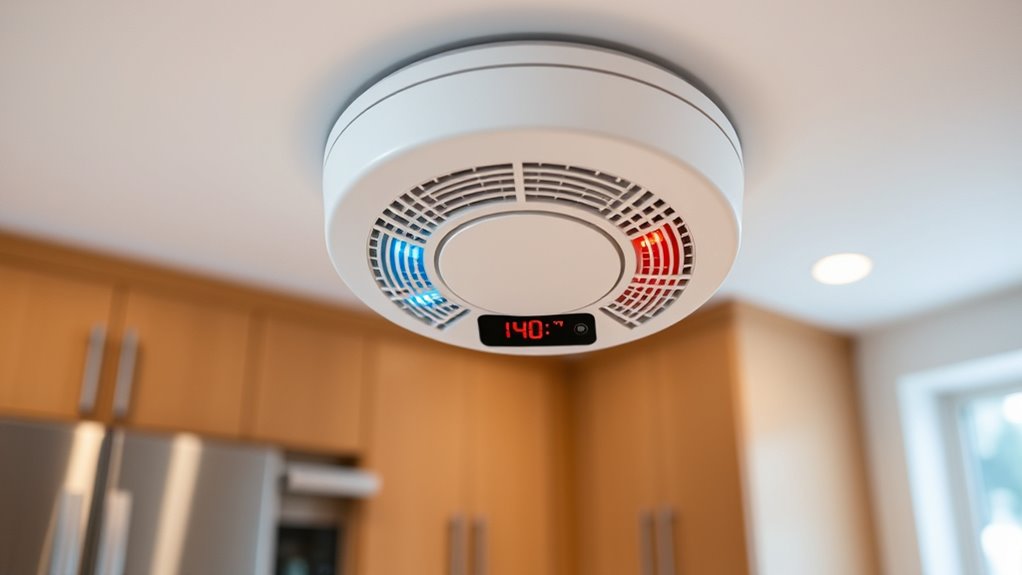

When selecting advanced smoke alarms with voice alerts, the First Alert Hardwired Combination Smoke & Carbon Monoxide Alarm stands out as the best overall pick due to its dual-threat detection and precise room identification capabilities. For those prioritizing ease of installation without rewiring, the Kidde Smoke Detector with 10-Year Battery offers a compelling alternative with long-term maintenance benefits. The primary tradeoff in this category revolves around hardwired reliability versus battery convenience, as well as the added cost of combination units versus standalone smoke detectors. This guide breaks down the specific features, power requirements, and alert clarity of twelve leading models to help you secure your home effectively.

Turn your wind-down time into listening time
- Thousands of audiobooks, podcasts and originals
- Listen on your phone, tablet or Echo — also offline
- Cancel anytime
Key Takeaways
- Hardwired models with battery backup provide the most reliable power continuity, but require professional installation or existing wiring compatibility.
- Voice alerts that specify the room of origin (e.g., ‘Warning, Fire in the Bedroom’) significantly reduce evacuation time compared to generic sirens.
- Combination smoke and carbon monoxide alarms offer better value per square foot than installing separate dedicated units in every room.
- Battery-powered units with sealed 10-year batteries eliminate the annual replacement hassle but cannot be interconnected wirelessly in some older home setups.
- Interconnectivity is the most critical feature for large homes, as it ensures an alarm triggered in the garage alerts occupants on the second floor.
| First Alert Hardwire Smoke Alarm |  | Best for Existing Hardwired Setups | Model: SMI100-AC | Power source: Corded electric | Battery backup: 9V | VIEW ON AMAZON | See Our Full Breakdown |
| First Alert Hardwired Smoke Alarm with Battery Backup |  | Best Basic Hardwired Replacement | Model: SMI100-AC | Power source: Corded electric | Sensor type: Ionization | VIEW ON AMAZON | See Our Full Breakdown |
| Kidde Smoke Detector, 10-Year Battery-Powered, 20SD10-V, 1 Pack |  | Best Voice-Alert Upgrade Without Wiring | Model: 20SD10-V | Power: Built-in battery | Battery life: 10 years | VIEW ON AMAZON | See Our Full Breakdown |
| Kidde Smoke Detector, Hardwired & 10-Year Battery Backup, 20SA10-V, 3 Pack |  | Best for Whole-Home Voice Coverage | Model: 20SA10-V | Unit count: 3 | Alarm type: Smoke detector | VIEW ON AMAZON | See Our Full Breakdown |
| First Alert Hardwired Combination Smoke & Carbon Monoxide Alarm with Voice and Location Alerts |  | Best for Spoken Hazard and Location Alerts | Model: SMCO100V-AC | Power source: Corded electric | Alarm type: Combination smoke and carbon monoxide | VIEW ON AMAZON | See Our Full Breakdown |
| First Alert Hardwired Combination Smoke & Carbon Monoxide Alarm with Voice and Location Alerts |  | Best for Dual-Threat Protection | Power Source: Corded Electric | Alarm Type: Combination Smoke & CO Alarm | Sensor Type: Photoelectric | VIEW ON AMAZON | See Our Full Breakdown |
| First Alert Hardwire Smoke Alarm with Voice Alerts |  | Best Multi-Pack Value | Brand: First Alert | Model Number: SM100V-AC | Unit Count: 3 | VIEW ON AMAZON | See Our Full Breakdown |
| First Alert Hardwire Smoke Alarm with Voice Alerts |  | Best for Quick-Response Fires | Brand: First Alert | Model Number: SM100V-AC | Power Source: Corded Electric | VIEW ON AMAZON | See Our Full Breakdown |
| Kidde Smoke and Carbon Monoxide Detector, Hardwired with 10-Year Battery Backup |  | Best Long-Term Reliability | Detection Type: 2-in-1 smoke and CO detection | Alarm Volume: 85 dB | Power Source: 120V AC with 10-year battery backup | VIEW ON AMAZON | See Our Full Breakdown |
| First Alert Battery Smoke Alarm |  | Best for Easy Installation | Power Source: Battery Powered | Sensor Type: Ionization | Operating Humidity: 10-95% RH | VIEW ON AMAZON | See Our Full Breakdown |
| First Alert SMI100 Battery-Operated Smoke Alarm |  | Best for Quick Retrofitting | Power Source: Battery Powered | Smoke Sensor Type: Ionization | Style: Precision Detection | VIEW ON AMAZON | See Our Full Breakdown |
| First Alert SMI100 Battery-Operated Smoke Alarm (with EOL) |  | Best for Compliance & Awareness | Power Source: Battery Powered | Sensor Type: Ionization | Style: Precision Detection | VIEW ON AMAZON | See Our Full Breakdown |
| advanced smoke alarms with voice alert | Power source | Color | Dimensions | Weight |
|---|---|---|---|---|
| First Alert Hardwire Smoke Ala | Corded electric | White | 21.63 x 3.81 x 15 in | 16 oz |
| First Alert Hardwired Smoke Al | Corded electric | — | 5.6 x 5.6 x 1 in | 9.6 oz |
| Kidde Smoke Detector | — | — | — | — |
| Kidde Smoke Detector | — | — | — | — |
| First Alert Hardwired Combinat | Corded electric | — | 5.1 x 5.1 x 2.4 in | 11.2 oz |
| First Alert Hardwired Combinat | Corded Electric | White | — | — |
| First Alert Hardwire Smoke Ala | Corded Electric | White | — | — |
| First Alert Hardwire Smoke Ala | Corded Electric | White | 5.1"D x 5.1"W x 2.4"H | — |
| Kidde Smoke and Carbon Monoxid | 120V AC with 10-year battery backup | — | — | — |
| First Alert Battery Smoke Alar | Battery Powered | White | 5.4"D x 5.4"W x 1.9"H | 11.2 ounces |
| First Alert SMI100 Battery-Ope | Battery Powered | White | 5.6"D x 5.6"W x 1.9"H | 9.6 ounces |
| First Alert SMI100 Battery-Ope | Battery Powered | White | 5.6"D x 5.6"W x 1.9"H | 9.6 ounces |
More Details on Our Top Picks
First Alert Hardwire Smoke Alarm
The First Alert SMI100-AC is a practical choice when you want smoke detection on an existing hardwired circuit, with a 9V battery backup to keep it operating during an outage. Its quick-connect plug can simplify replacement when the wiring and connector are compatible, while interconnect support lets linked alarms sound together. Compared with the Kidde 20SD10-V, this model relies on home wiring rather than a built-in 10-year battery, so it suits planned upgrades better than a no-wiring installation. The main tradeoff for a roundup focused on voice alerts is clear: the supplied product details do not list voice announcements, so it cannot give the spoken hazard prompts offered by the Kidde or First Alert combination alarm. Hardwiring and the unusually large listed dimensions may also complicate placement.
Pros:- 9V battery backup maintains protection during a power outage
- Quick-connect plug can simplify compatible replacements
- Interconnect capability can link alerts across the home
Cons:- Voice alerts are not listed in the supplied product details
- Requires hardwiring and may call for professional installation
- Listed dimensions are bulky compared with the compact Kidde 20SD10-V
Best for: Homeowners replacing an existing compatible hardwired smoke alarm who want battery backup and whole-home interconnection.
Not ideal for: Renters or buyers seeking spoken alerts, a compact listed footprint, or an alarm that installs without hardwiring.
- Model:SMI100-AC
- Power source:Corded electric
- Battery backup:9V
- Alarm style:Precision Detection
- Interconnect:Compatible
- Color:White
- Dimensions:21.63 x 3.81 x 15 in
- Weight:16 oz
Our verdict“Choose this First Alert for a compatible hardwired replacement with backup power, but skip it if spoken alerts are a must-have.”
First Alert Hardwired Smoke Alarm with Battery Backup
This First Alert SMI100-AC is the straightforward pick for buyers prioritizing a hardwired smoke alarm with battery backup and interconnect support. Its quick-connect plug is intended to ease installation without rewiring when the existing setup is compatible, and the listed ionization sensor gives buyers a defined sensor type. Unlike the Kidde 20SA10-V, this First Alert listing does not specify voice alerts or a 10-year backup battery; it is better treated as a basic replacement than as a feature-rich voice alarm. The 9V backup provides outage coverage, but it means a battery will need attention rather than relying on the Kidde model’s stated long-life battery. Buyers should also confirm sensor type and wiring compatibility before choosing it, since installation still depends on a hardwired connection.
Pros:- Quick-connect plug may simplify replacement on compatible wiring
- 9V alkaline battery backup supports operation during outages
- Interconnect support can carry alarms across linked units
- Ionization sensor type is specified
Cons:- Voice alerts are not specified in the supplied details
- Hardwired installation may require an electrician
- Ionization-only listing offers less sensor-type flexibility than buyers seeking another detection approach
Best for: Homeowners replacing a compatible hardwired ionization smoke alarm who want interconnection and a replaceable backup battery.
Not ideal for: Buyers who require voice alerts, a sealed long-life backup battery, or a smoke-and-carbon-monoxide combination alarm.
- Model:SMI100-AC
- Power source:Corded electric
- Sensor type:Ionization
- Battery backup:9V alkaline battery
- Interconnect:Yes
- Alarm style:Precision Detection
- Dimensions:5.6 x 5.6 x 1 in
- Weight:9.6 oz
Our verdict“Pick this model for a compatible hardwired smoke-alarm replacement, not for spoken warnings or long-life battery convenience.”
Kidde Smoke Detector, 10-Year Battery-Powered, 20SD10-V, 1 Pack
The Kidde 20SD10-V is the clearest fit here for buyers who want voice alerts without hardwiring. Its built-in 10-year battery removes routine battery changes during the stated battery life, while the 85-decibel alarm and voice warning offer more actionable information than the First Alert SMI100-AC models, whose supplied descriptions do not list voice prompts. That simplicity comes with limits: this is a smoke-only detector, not the First Alert SMCO100V-AC, which also covers carbon monoxide and identifies alert location. The product data also lists no smart-home integration or interconnect capability, so it is better suited to an individual room or a simple installation than to a linked whole-home system. Choose it for a direct voice-alert upgrade, not broader connected protection.
Pros:- Voice alerts provide spoken warning alongside the alarm
- Built-in battery is specified for 10 years
- 85-decibel alarm provides a stated sound level
- Advanced sensing is described as reducing nuisance alarms
Cons:- Detects smoke only, unlike the First Alert SMCO100V-AC combination alarm
- No smart-home integration or interconnect capability is listed
- A sealed built-in battery may mean replacing the unit when its battery life ends
Best for: Renters and homeowners adding a smoke-only alarm where hardwiring is impractical and long battery life is a priority.
Not ideal for: Buyers who need carbon monoxide detection, linked alarms, or smart-home integration.
- Model:20SD10-V
- Power:Built-in battery
- Battery life:10 years
- Alarm sound level:85 dB
- Detection technology:Advanced sensing
- Standards:UL 217 10th Edition, FCC
- Warranty:10-year limited
Our verdict“Choose the Kidde 20SD10-V for a simple, battery-powered smoke alarm with voice warnings, but not for CO coverage or linked alerts.”
Kidde Smoke Detector, Hardwired & 10-Year Battery Backup, 20SA10-V, 3 Pack
For buyers outfitting several rooms at once, the Kidde 20SA10-V three-pack pairs hardwired power with a 10-year built-in battery backup and voice announcements that say “Fire.” Interconnect capability is the main distinction from the single-unit Kidde 20SD10-V: compatible linked alarms can alert occupants beyond the room where smoke is detected. The product description also claims over 25% faster smoke detection and fewer cooking- or steam-related nuisance alarms, though its hardwired installation may require a professional. Compared with the First Alert SMCO100V-AC, this is a smoke-only option and does not provide carbon monoxide or location announcements. Compatibility is another constraint: interconnection is specified for compatible Kidde alarms, so buyers should check their existing system before planning a mixed-brand setup.
Pros:- Three units support a multi-room upgrade
- Voice alert announces “Fire”
- 10-year built-in battery backup is specified
- Interconnect capability can spread warnings across compatible alarms
Cons:- Hardwired setup may require professional installation
- Interconnection is limited to compatible Kidde models
- Smoke-only detection lacks the CO coverage and location alerting of the First Alert SMCO100V-AC
Best for: Homeowners replacing several compatible hardwired smoke alarms who want voice warnings, backup power, and linked alerts.
Not ideal for: Buyers who need carbon monoxide detection, easy no-wiring installation, or confirmed compatibility with a mixed-brand alarm system.
- Model:20SA10-V
- Unit count:3
- Alarm type:Smoke detector
- Power:Hardwired
- Battery backup:10-year built-in battery
- Alarm sound:85 dB
- Interconnect:Yes, compatible Kidde models
- Warranty:10-year limited
Our verdict“Choose this three-pack for linked, hardwired smoke protection with voice alerts, provided your wiring and alarm network are compatible.”
First Alert Hardwired Combination Smoke & Carbon Monoxide Alarm with Voice and Location Alerts
The First Alert SMCO100V-AC stands out for buyers who want spoken information beyond a general fire warning: its voice and location alerts identify the type and location of danger, and the unit detects both smoke and carbon monoxide. That makes it more informative than the smoke-only Kidde 20SD10-V and 20SA10-V, especially for households that want one alarm to cover two hazards. Hardwired power, battery backup, and interconnect support suit a broader home safety setup, while the quick-connect plug may help with a compatible replacement. The tradeoff is installation: this is not a simple battery-only add-on, and interconnection is limited to compatible alarms. The supplied details also do not specify the backup battery life, so buyers should not assume the 10-year backup listed for the Kidde 20SA10-V.
Pros:- Voice alerts identify hazard type and location
- Detects both smoke and carbon monoxide
- Battery backup supports protection during power outages
- Interconnect capability supports compatible whole-home systems
Cons:- Hardwired installation may require professional wiring
- Interconnect support is limited to compatible alarms
- Backup battery life is not specified, unlike the Kidde 20SA10-V
Best for: Homeowners replacing a compatible hardwired alarm who want spoken hazard identification, location alerts, and both smoke and CO detection.
Not ideal for: Renters or buyers seeking a battery-only installation, a stated 10-year backup battery, or compatibility with any alarm brand.
- Model:SMCO100V-AC
- Power source:Corded electric
- Alarm type:Combination smoke and carbon monoxide
- Voice alerts:Hazard type and location
- Battery:AA batteries included
- Interconnect:Yes, compatible alarms
- Dimensions:5.1 x 5.1 x 2.4 in
- Weight:11.2 oz
- Standards:Meets new industry standards
Our verdict“Choose the SMCO100V-AC when spoken hazard and location details plus smoke and CO detection matter more than a no-wiring setup.”
First Alert Hardwired Combination Smoke & Carbon Monoxide Alarm with Voice and Location Alerts
This model stands out by addressing two distinct hazards simultaneously. Unlike the First Alert Hardwire Smoke Alarm which focuses solely on fire, this unit detects both smoke and carbon monoxide, making it ideal for homes with gas appliances or attached garages. The voice and location alerts are particularly valuable for children or elderly residents who might struggle to identify a standard beep. However, the requirement for professional installation adds complexity and cost compared to battery-operated options. While it offers robust protection, the interconnect limitation means it may not sync seamlessly with older, non-compatible devices in a mixed-brand home.Pros:- Detects both smoke and carbon monoxide in one unit
- Clear voice alerts announce hazard type and location
- Battery backup maintains protection during power failures
Cons:- Hardwired setup typically requires an electrician
- Interconnectivity is restricted to compatible First Alert models
Best for: Homeowners with gas heating, fireplaces, or attached garages who need combined fire and CO safety.
Not ideal for: Renters or those in older homes without existing hardwired electrical boxes, as installation is complex.
- Power Source:Corded Electric
- Alarm Type:Combination Smoke & CO Alarm
- Sensor Type:Photoelectric
- Style:Precision Detection
- Color:White
- Item Weight:1.9 pounds
- Backup:Battery Backup
Our verdict“This is the safest choice for homes with multiple combustion sources, provided you can manage the hardwired installation.”
First Alert Hardwire Smoke Alarm with Voice Alerts
Buying in a three-pack makes this First Alert BRK Precision Detection unit a cost-effective way to cover an entire floor or bedroom suite. Compared to the single-unit First Alert Hardwired Combination Alarm, this option simplifies uniform coverage across multiple rooms. The advanced sensing technology is designed to reduce nuisance alarms from minor cooking fumes, a common complaint with cheaper ionization models. While it lacks the dual-threat detection of combination units, it offers reliable, dedicated fire safety. The main drawback is the lack of smart home integration, meaning you cannot receive mobile alerts if you are away from the house.Pros:- Three-unit pack offers better value for whole-home coverage
- Photoelectric sensor reduces false alarms from cooking
- Voice alerts specify the room of origin for faster response
Cons:- No smart home connectivity or mobile app integration
- Hardwiring is required for primary power source
Best for: Homeowners looking to equip multiple rooms simultaneously with consistent, voice-enabled fire alarms.
Not ideal for: Smart home enthusiasts who require app connectivity or mobile notifications for remote monitoring.
- Brand:First Alert
- Model Number:SM100V-AC
- Unit Count:3
- Battery Backup:Yes
- Power Source:Corded Electric
- Sensor Type:Photoelectric
- Color:White
- Item Weight:10.24 ounces
Our verdict“This pack is the most practical choice for standardizing voice-enabled fire safety across several bedrooms without breaking the budget.”
First Alert Hardwire Smoke Alarm with Voice Alerts
This unit utilizes an ionization sensor, distinguishing it from the photoelectric models in this roundup. Ionization sensors are generally faster at detecting the small particles produced by flaming fires, such as those involving paper or flammable liquids. However, this sensitivity comes at a cost: they are more prone to false alarms from cooking compared to the Kidde Smoke and Carbon Monoxide Detector. The voice alert feature mitigates some confusion by stating the location, but the lack of CO detection means it must be paired with a separate unit for complete safety. It is a straightforward, no-frills device that prioritizes speed in specific fire scenarios.Pros:- Ionization sensor detects flaming fires rapidly
- Voice alerts announce location for clear identification
- Simple test and silence button for easy maintenance
Cons:- Higher likelihood of false alarms from steam or smoke
- Does not detect carbon monoxide
Best for: Kitchens or utility rooms where flaming fire risks are higher and CO is not a primary concern.
Not ideal for: Bedrooms near kitchens, as the ionization sensor may trigger frequent nuisance alarms during cooking.
- Brand:First Alert
- Model Number:SM100V-AC
- Power Source:Corded Electric
- Sensor Type:Ionization
- Style:Precision Detection
- Color:White
- Dimensions:5.1″D x 5.1″W x 2.4″H
- Batteries:AA Batteries
Our verdict“Choose this model for specific high-risk areas like kitchens, but pair it with a CO detector for comprehensive home safety.”
Kidde Smoke and Carbon Monoxide Detector, Hardwired with 10-Year Battery Backup
The 10-year sealed battery backup sets this Kidde model apart from competitors that require annual battery swaps. This feature significantly reduces maintenance, making it a set-and-forget option for busy households. While the First Alert Hardwired Combination Alarm offers similar dual detection, Kidde’s 10-year warranty and sealed power source provide longer peace of mind. The 85-decibel alarm ensures the alert is loud enough to wake sleeping occupants, and the voice feature clearly states the hazard. The tradeoff is the higher initial cost and the need for professional electrical work, which may deter DIYers looking for a quick upgrade.Pros:- 10-year sealed battery backup eliminates maintenance
- Dual detection for smoke and carbon monoxide
- 10-year limited warranty for added confidence
Cons:- Higher upfront cost compared to standard alarms
- Hardwired installation requires professional assistance
Best for: Homeowners who want to minimize ongoing maintenance and ensure decade-long reliability without battery changes.
Not ideal for: Those on a tight budget who are comfortable with annual battery replacements and DIY installation.
- Detection Type:2-in-1 smoke and CO detection
- Alarm Volume:85 dB
- Power Source:120V AC with 10-year battery backup
- Voice Alerts:Yes
- LED Indicator:Yes
- Interconnect Capability:Yes
- Warranty:10-year limited
- Model Number:30CUA10-V
Our verdict“This is the premium choice for those who value long-term reliability and low maintenance over initial cost savings.”
First Alert Battery Smoke Alarm
This battery-operated unit is the most accessible option in the lineup, requiring no electrical wiring or professional help. Unlike the hardwired models from First Alert and Kidde, you can mount this anywhere with screws and adhesive. It is ideal for renters or homes with outdated electrical systems. However, it lacks the voice alert feature found in its hardwired counterparts, relying instead on a traditional loud beep. The end-of-life warning is a helpful safety net, but the need for regular battery changes adds a layer of maintenance that sealed-battery options avoid. It is a basic, reliable solution for essential coverage.Pros:- No wiring required for simple, quick installation
- End-of-life warning prevents unnoticed failure
- Lightweight and easy to mount in any location
Cons:- No voice alerts or location identification
- Requires regular battery replacements to function
Best for: Renters, DIYers, or those upgrading alarms in homes without existing hardwired connections.
Not ideal for: Users who require voice location alerts or want to avoid the hassle of periodic battery replacements.
- Power Source:Battery Powered
- Sensor Type:Ionization
- Operating Humidity:10-95% RH
- Color:White
- Dimensions:5.4″D x 5.4″W x 1.9″H
- Weight:11.2 ounces
- Alert Type:Audible Beep
Our verdict“This is the best choice for simple, affordable fire safety when hardwiring is not an option or voice alerts are not needed.”
First Alert SMI100 Battery-Operated Smoke Alarm
This First Alert SMI100 stands out for renters or homeowners who want zero-wiring installation. Unlike the Kidde 10-Year Battery-Powered models that require specific mounting plates or longer lead times for delivery of multi-packs, this unit is sold individually and fits standard junction boxes without modification. The front-access battery compartment is a practical feature, allowing you to swap batteries without removing the entire unit from the ceiling, which is a significant advantage over hardwired options that often require a ladder and screwdriver for basic maintenance.
However, because it relies on ionization sensing, it may trigger false alarms more frequently during cooking than photoelectric alternatives. It is a simple, no-frills safety device that prioritizes ease of setup over advanced connectivity or dual-sensor accuracy.
Pros:- Tool-free battery swap via front access panel
- Compact design fits tight ceiling spaces
- No wiring or professional installation required
Cons:- Ionization sensor is prone to cooking-related false alarms
- Requires regular battery changes unlike sealed 10-year models
- No voice alerts or smart home integration
Best for: Renters or DIY homeowners who need to upgrade existing alarms quickly without hiring an electrician
Not ideal for: Users who want a ‘set it and forget it’ solution, as the replaceable battery requires annual attention
- Power Source:Battery Powered
- Smoke Sensor Type:Ionization
- Style:Precision Detection
- Color:White
- Dimensions:5.6″D x 5.6″W x 1.9″H
- Weight:9.6 ounces
Our verdict“Choose this if you need an immediate, budget-friendly safety upgrade that you can install yourself in under five minutes.”
First Alert SMI100 Battery-Operated Smoke Alarm (with EOL)
While visually identical to its sibling, this version of the First Alert SMI100 adds a critical end-of-life warning indicator. This feature addresses a common safety gap: many users forget when they last replaced their alarms. Compared to the basic First Alert Hardwire Smoke Alarm which lacks clear aging signals, this model proactively alerts you when the sensor degrades, ensuring compliance with newer industry standards. It remains a battery-operated unit, so it retains the easy installation benefits of the previous pick but offers better long-term reliability tracking.
The tradeoff is that it still uses ionization technology, meaning it remains susceptible to false triggers from steam or smoke. It is a smarter version of the basic alarm, but it does not solve the core limitation of single-sensor detection found in more advanced combination smoke and carbon monoxide alarms.
Pros:- End-of-life indicator signals when the unit needs replacement
- Complies with updated industry safety standards
- Maintains the easy front-access battery design
Cons:- Still limited to ionization sensing only
- Battery-powered nature means ongoing maintenance
- No voice alerts to specify location of danger
Best for: Safety-conscious homeowners who want to ensure their detectors are replaced before they fail silently
Not ideal for: Those seeking dual-threat protection, as this unit only detects smoke, not carbon monoxide
- Power Source:Battery Powered
- Sensor Type:Ionization
- Style:Precision Detection
- Color:White
- Dimensions:5.6″D x 5.6″W x 1.9″H
- Weight:9.6 ounces
- Key Feature:End-of-Life Warning
Our verdict“This is the better choice over the basic model if you want automated reminders that your detector is still functional.”
How We Picked
I evaluated these twelve models based on alert clarity, power reliability, and installation flexibility. Voice quality was judged not just on volume, but on the specificity of the message—whether the device can identify the location of the threat or only its type. I prioritized units with photoelectric sensors for faster smoldering fire detection, a common weakness in older ionization models.
Power source options were weighed heavily, comparing sealed 10-year batteries against hardwired systems with backup batteries. I also considered interconnectivity capabilities, as standalone alarms fail to protect distant sleeping areas. Models lacking clear voice distinction or offering ambiguous sensor types were ranked lower, regardless of brand reputation.
| advanced smoke alarms with voice alert | Sensor type |
|---|---|
| First Alert Hardwire Smoke Ala | — |
| First Alert Hardwired Smoke Al | Ionization |
| Kidde Smoke Detector | — |
| Kidde Smoke Detector | — |
| First Alert Hardwired Combinat | — |
| First Alert Hardwired Combinat | Photoelectric |
| First Alert Hardwire Smoke Ala | Photoelectric |
| First Alert Hardwire Smoke Ala | Ionization |
| Kidde Smoke and Carbon Monoxid | — |
| First Alert Battery Smoke Alar | Ionization |
| First Alert SMI100 Battery-Ope | — |
| First Alert SMI100 Battery-Ope | Ionization |
Factors to Consider When Choosing Advanced Smoke Alarms With Voice Alerts
Choosing the right alarm involves more than just picking a brand. You must match the technology to your home’s layout and your personal maintenance preferences. Here is what you need to know before buying.
Hardwired vs. Battery-Powered Power Sources
The decision between hardwired and battery-powered units often dictates your installation effort and long-term maintenance. Hardwired alarms draw power from your home’s electrical system, ensuring they remain active even if you forget to change a battery, but they typically require a backup battery for power outages. Battery-powered models are easier to install and relocate, especially in homes without existing alarm wiring. However, sealed 10-year battery models are a growing trend that eliminates the need for periodic replacements, though you must replace the entire unit after a decade. Consider your home’s age and whether you have access to a licensed electrician before committing to a hardwired system.
The Importance of Interconnectivity
For any home larger than a single apartment, interconnectivity is a non-negotiable feature. When one alarm detects smoke, all interconnected units should sound simultaneously. This is particularly vital for hardwired systems, where a simple three-wire connection links all units. Some modern battery-powered alarms offer wireless interconnectivity via radio frequency, allowing them to communicate without wires. If you choose standalone units, a fire in the basement may go unnoticed until it reaches the bedrooms. Always verify that the specific model you choose supports interconnection with other units in your home, especially if you plan to mix brands.
Voice Alerts vs. Standard Sirens
Advanced voice alerts provide critical context that standard sirens cannot. Instead of a generic beeping, these alarms announce “Warning, Fire” or “Warning, Carbon Monoxide”, and some can specify the room, such as “Fire in the Kitchen.” This specificity reduces panic and confusion, allowing occupants to avoid the danger zone rather than running toward it. While standard sirens are cheaper, the cognitive load of interpreting a beeping sound during a high-stress emergency can delay evacuation. If your household includes children or elderly individuals, the clarity of voice alerts is often worth the additional cost.
Photoelectric vs. Ionization Sensor Technology
Modern safety standards favor photoelectric sensors for detecting smoldering fires, which produce more smoke than flame. Ionization sensors are better at detecting fast-flaming fires but are slower to respond to the smoldering fires that are more likely to occur in living spaces. Many advanced alarms now use dual-sensor technology to capture both types of fires. When comparing models, check the sensor type listed in the specifications. If a unit only lists ionization, it may not be as effective for typical residential fires. Dual-sensor or photoelectric-only models are generally the safer choice for bedrooms and living areas.
Combination Smoke and Carbon Monoxide Units
Installing separate smoke and carbon monoxide (CO) alarms doubles the hardware cost and installation effort. Combination units integrate both detectors into a single housing, saving space and simplifying the buying process. These are ideal for rooms near attached garages or fuel-burning appliances where CO risk is higher. However, not every room needs a CO detector; building codes typically require them near sleeping areas and on every level. Using combination units in all locations may be overkill if you only need CO detection in specific zones. Assess your home’s layout to determine if you need full coverage or can mix dedicated smoke alarms with combination units in high-risk areas.
Frequently Asked Questions
Can I mix hardwired and battery-powered alarms in the same system?
No, you generally cannot mix hardwired and battery-powered alarms in a single interconnected system because they use different communication methods. Hardwired units communicate through the electrical wiring, while battery-powered units that offer interconnectivity use radio frequency signals. These two systems cannot talk to each other directly. If you have a mix of wired and unwired areas in your home, you will need to maintain two separate alarm systems or upgrade all units to a compatible wireless interconnected model. Attempting to combine them will result in alarms that do not trigger each other, compromising your safety.
How often should I test my advanced voice alert smoke alarm?
You should test your smoke alarms once a month by pressing the test button to confirm the voice alert sounds clearly and the sensor is active. Monthly testing ensures that the battery has sufficient power and that the electronic components are functioning correctly. Additionally, you should vacuum the alarm exterior every six months to remove dust and cobwebs that can block the sensor intake. While 10-year sealed battery alarms do not require battery changes, they still require this regular functional testing and cleaning to maintain reliability. Never ignore a chirping sound, as it usually indicates a low battery or end-of-life warning.
Do voice alerts work during a power outage for hardwired units?
Yes, hardwired alarms with battery backup will continue to function during a power outage, provided the backup battery is fresh and properly installed. The primary power source is your home’s electricity, but the internal battery takes over immediately when the main power fails. This is why hardwired models are often preferred for their redundancy; they have two independent power sources. Without a backup battery, a hardwired alarm will go silent during a blackout, leaving you unprotected. Always check the backup battery status when you test the unit, even if the main power is on.
Is it necessary to have a voice alert in every room?
Building codes typically require smoke alarms in every bedroom, outside each sleeping area, and on every level of the home, including the basement. While you do not need a voice alert in every single room, having them in sleeping areas is highly recommended for the clarity of the warning. Voice alerts are particularly beneficial in bedrooms where occupants are asleep and may be confused by a standard siren. For utility rooms or closets, a standard siren may suffice if budget is a concern. Prioritize voice alerts in the rooms where people sleep and in common areas where evacuation decisions are made.
How long do the voice alert speakers last compared to the sensor?
The voice alert speaker and the smoke sensor are integrated into the same unit, so they share the same lifespan. Most advanced smoke alarms have a recommended replacement window of 8 to 10 years from the date of manufacture. After this period, the sensor becomes less sensitive and the voice components may degrade, though the unit may still beep. There is no separate replacement for the speaker; when the alarm reaches its end-of-life date, you must replace the entire device. Check the manufacture date printed on the back of the unit to determine when it needs to be swapped out.
Conclusion
Selecting the right advanced smoke alarm with voice alerts depends on your home’s infrastructure and your maintenance tolerance. For the highest level of safety and integration, the First Alert Hardwired Combination Smoke & Carbon Monoxide Alarm is the best overall choice, offering dual-threat detection and precise room identification. If you prefer a hassle-free, no-wire solution, the Kidde Smoke Detector with 10-Year Battery is the best value option, providing long-term reliability without the need for battery changes. Beginners or renters should look toward the First Alert Battery Smoke Alarm for its simple plug-and-play installation. Those in larger homes with existing wiring should prioritize hardwired models with interconnectivity to ensure every alarm sounds when danger is detected anywhere in the house. Always verify that your chosen model meets current local building codes before installation.
Halloween Picks

Gemmy 6.4 ft Beetlejuice Animatronic Halloween Decoration with Spinning Head

Haunted Hill Farm 2-Ft. Zombie Raccoon Halloween Animatronic

HOPOCO Halloween Pumpkin Fog Machine with 12 LED Colors and 4 Light Modes
As an affiliate, we earn on qualifying purchases.