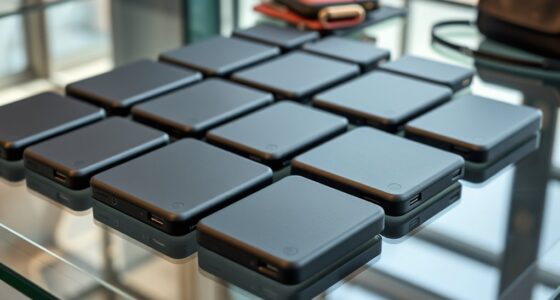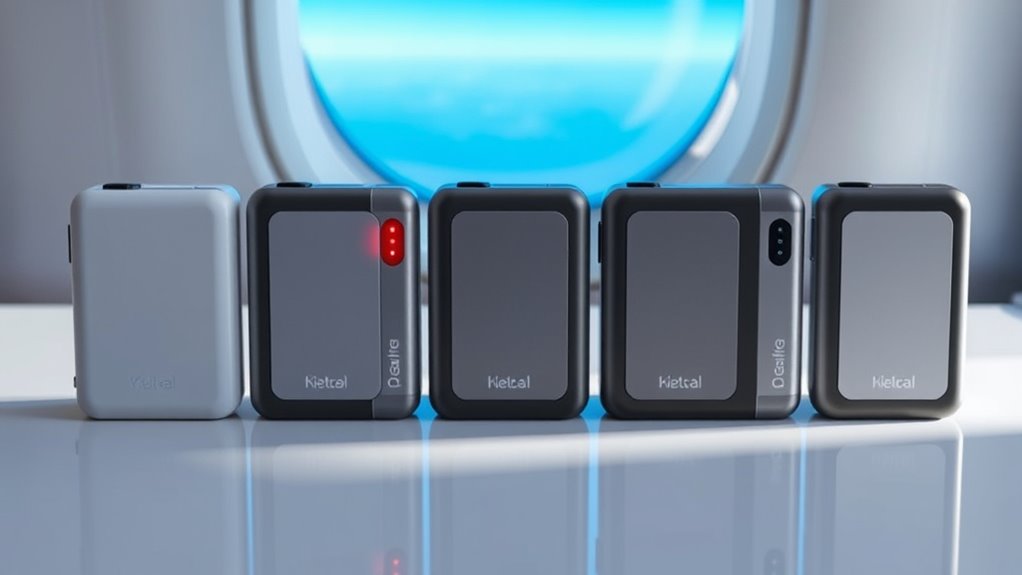

Airline-approved battery packs for medical devices need to fit both your device’s power requirements and the airline’s rules. My best overall pick is the EasyLonger ES270, a 99.9Wh option that stays below the common 100Wh carry-on threshold. The Pilot Flex Navy also offers 98Wh capacity with support for 12V and 24V CPAP machines, while the NiteOwl 2nd Generation stands out for its swappable 150Wh cell. The tradeoff is between a simpler, lower-capacity pack and higher capacity that may require airline approval and more planning. Read on for the full breakdown and guidance on matching a pack to your device and trip.

Turn your wind-down time into listening time
- Thousands of audiobooks, podcasts and originals
- Listen on your phone, tablet or Echo — also offline
- Cancel anytime
Key Takeaways
- Capacity affects airport planning: the ES270’s 99.9Wh and Pilot Flex’s 98Wh sit just under the common 100Wh threshold, while the 148Wh, 150Wh, and 160Wh options may need airline approval before travel.
- CPAP compatibility is not interchangeable: the Pilot Flex explicitly supports 12V and 24V machines, so buyers should check voltage and connector requirements rather than rely on a CPAP label alone.
- The NiteOwl’s swappable 150Wh cell prioritizes flexibility: its replaceable-cell setup differs from the simpler, fixed-capacity packs, but its capacity calls for more airline-rule checking.
- The insulin cooler pack serves a different job: its 5V, 7800mAh output is aimed at a cooler box, not as a substitute for the higher-capacity CPAP batteries.
- Device runtime cannot be ranked by watt-hours alone: actual use depends on device draw and settings, so travelers should verify expected runtime with the device maker before relying on a pack overnight.
| EasyLonger ES270 CPAP Battery – 99.9Wh Power Bank for Air Travel |  | Best Compact All-Rounder | Capacity: 99.9Wh | Dimensions: 5.08 x 2.95 x 1.97 inches | Weight: 1.3 pounds | VIEW ON AMAZON | See Our Full Breakdown |
| NiteOwl Backup Power Supply & Travel Battery – 2nd Generation, Swappable 150Wh Cell Pack, CPAP Compatible, Portable for Camping, TSA Approved |  | Best for Extended Runtime | Battery capacity: 150Wh (30,000mAh) | Cell type: Lithium-ion | Battery weight: 2.5 pounds | VIEW ON AMAZON | See Our Full Breakdown |
| EASYLONGER CPAP Battery Backup ES400 AIR, 148Wh Lithium-Ion Battery Pack |  | Best for Multi-Route Backup Power | Battery capacity: 148Wh | Dimensions: 7.28 x 4.76 x 1.57 inches | Weight: 2.05 pounds | VIEW ON AMAZON | See Our Full Breakdown |
| Pilot Flex Navy 98Wh CPAP Battery Backup Power for 12V & 24V CPAP Machines |  | Best Lightweight Dual-Voltage Pick | Capacity: 98Wh | Weight: 1.2 pounds | Voltage compatibility: 12V and 24V | VIEW ON AMAZON | See Our Full Breakdown |
| Battery Pack for Insulin Cooler Box – 7800mAh, 5V Rechargeable Lithium-Ion |  | Best Replacement Battery for QIRDLP Insulin Coolers | Capacity: 7,800mAh | Voltage: 5V | Battery type: Lithium-ion | VIEW ON AMAZON | See Our Full Breakdown |
| Freedom CPAP Battery 160Wh |  | Best for Multi-Night CPAP Trips | Capacity: 160Wh | Recharge cycles: Over 500 | Stated runtime: Up to 35 hours | VIEW ON AMAZON | See Our Full Breakdown |
| airline approved battery packs for medical device | Capacity | Weight | Dimensions |
|---|---|---|---|
| EasyLonger ES270 CPAP Battery | 99.9Wh | 1.3 pounds | 5.08 x 2.95 x 1.97 inches |
| NiteOwl Backup Power Supply & | — | — | 8.7 x 4.8 x 0.9 inches |
| EASYLONGER CPAP Battery Backup | — | 2.05 pounds | 7.28 x 4.76 x 1.57 inches |
| Pilot Flex Navy 98Wh CPAP Batt | 98Wh | 1.2 pounds | — |
| Battery Pack for Insulin Coole | 7,800mAh | 2.5g | — |
| Freedom CPAP Battery 160Wh | 160Wh | — | — |
More Details on Our Top Picks
EasyLonger ES270 CPAP Battery – 99.9Wh Power Bank for Air Travel
The EasyLonger ES270 pairs a 99.9Wh capacity with a compact 1.3-pound body, making it a practical choice for CPAP users who want a travel-sized pack that stays below 100Wh. Its stated runtime is up to eight hours with low-power machines, and four included CPAP cables reduce the chance of needing to source a compatible lead separately. Unlike the larger EASYLONGER ES400 AIR, it is lighter and includes a USB-C adapter, but it offers less capacity and may not cover a full night with higher-power setups. The 100W USB-C output, wireless charging pad, and solar or car recharge options add flexibility beyond CPAP use. For air travel, check your airline’s current battery rules and your device’s power needs; humidifiers and heaters can cut runtime sharply.
Pros:- 99.9Wh capacity fits a compact travel-power category.
- Four included CPAP cables cover a range of connections.
- 100W USB-C output and included 65W adapter support other devices.
- USB-C, solar, and car charging provide several recharge routes.
Cons:- Up to eight hours applies to low-power CPAP use; heaters and humidifiers reduce runtime.
- Less capacity than the 148Wh EASYLONGER ES400 AIR.
- Battery-level information is limited to the smart display.
Best for: CPAP travelers with a low-power machine who want a relatively light pack and several included connection options.
Not ideal for: Users who rely on a humidifier or heated tubing, or need dependable overnight power for a higher-draw CPAP setup.
- Capacity:99.9Wh
- Dimensions:5.08 x 2.95 x 1.97 inches
- Weight:1.3 pounds
- Battery type:Lithium-ion
- Ports:100W USB-C PD; wireless charging pad
- Included CPAP cables:4 universal CPAP charging cables
- Included adapter:65W USB-C adapter
- Recharge time:2 hours via USB-C; 1.5 hours via solar or car charger
Our verdict“Choose the ES270 if you want a compact, sub-100Wh CPAP pack with useful included accessories and your machine can run without heat.”
NiteOwl Backup Power Supply & Travel Battery – 2nd Generation, Swappable 150Wh Cell Pack, CPAP Compatible, Portable for Camping, TSA Approved
The NiteOwl NO2-150 stands out for its 150Wh swappable cell pack, giving it more stated capacity than the 99.9Wh EasyLonger ES270 and the 98Wh Pilot Flex. That extra capacity can suit longer CPAP sessions, camping, or backup use, though actual runtime depends on the machine and settings. NiteOwl says the pack charges from a CPAP’s AC adapter, so travelers may avoid carrying a separate charger; confirm that your specific machine and cable setup are compatible before departure. At 2.5 pounds, it weighs more than the ES270 and the 2.05-pound EASYLONGER ES400 AIR. The cell is swappable, but the package includes only one battery, so extended trips require arranging another compatible pack. Its 150Wh capacity also calls for checking the airline’s battery-approval process before flying.
Pros:- 150Wh capacity exceeds the ES270 and Pilot Flex capacities listed here.
- Swappable cell design can support longer use when a spare is available.
- Charges from a compatible CPAP AC adapter, without an extra charger.
- Listed as compatible with major CPAP brands including ResMed and Philips Respironics.
Cons:- At 2.5 pounds, it is heavier than the ES270 and ES400 AIR.
- Only one battery is included, so extended runtime requires a separate spare.
- Airline acceptance for a 150Wh battery may involve additional approval steps.
Best for: CPAP users planning longer sessions or camping trips who value a swappable, higher-capacity battery and can manage the added weight.
Not ideal for: Ultralight travelers or flyers who want a simple sub-100Wh pack without checking extra airline rules for a 150Wh battery.
- Battery capacity:150Wh (30,000mAh)
- Cell type:Lithium-ion
- Battery weight:2.5 pounds
- Dimensions:8.7 x 4.8 x 0.9 inches
- Model number:NO2-150
- Cell design:Swappable cell pack
- Charging method:Charges from a compatible CPAP AC adapter
- Listed compatibility:ResMed, Philips Respironics, and other major CPAP brands
Our verdict“Pick the NiteOwl if added capacity and a swappable cell matter more to you than carrying the lightest pack or avoiding airline approval checks.”
EASYLONGER CPAP Battery Backup ES400 AIR, 148Wh Lithium-Ion Battery Pack
The EASYLONGER ES400 AIR offers 148Wh in a 2.05-pound pack, making it a middle ground between the lighter sub-100Wh options and the NiteOwl’s 150Wh swappable cell. Its listed runtime is up to about ten hours, and pass-through charging lets a compatible CPAP run while the battery recharges—a useful setup for backup at home or in a vehicle. It also supports AC, car, and solar recharging, although the car charger and solar panel are sold separately. The listed compatibility covers several ResMed, AirMini, Luna, and DreamStation models, but heated tubing is not supported; humidifiers and heating also reduce runtime. Compared with the EasyLonger ES270, the ES400 AIR has greater capacity and more explicit machine compatibility, but its larger battery may require airline approval beyond the simplest under-100Wh category.
Pros:- 148Wh capacity and stated runtime of up to about ten hours.
- Pass-through charging supports device use while the battery recharges.
- AC, car, and solar recharge options accommodate different travel setups.
- Compatibility is listed for several ResMed, Luna, and Philips Respironics models.
Cons:- Heated tubing is not supported, and heat or humidification reduces runtime.
- Car charger and solar panel are not included.
- Its 148Wh capacity may require airline approval beyond the sub-100Wh category.
Best for: CPAP users with a listed compatible machine who want near-full-night capacity, pass-through use, and more than one recharge option.
Not ideal for: People who use heated tubing, depend on humidification for therapy, or want a sub-100Wh battery for simpler airline planning.
- Battery capacity:148Wh
- Dimensions:7.28 x 4.76 x 1.57 inches
- Weight:2.05 pounds
- Output ports:160W car socket, 30W USB-C, 18W USB-A
- Included charger:AC adapter
- Optional recharge accessories:Car charger and solar panel sold separately
- Pass-through charging:Supported
- Listed compatibility:ResMed AirSense 10/11, AirCurve 10/11, AirMini, S9; Luna G3; Philips DreamStation 1/2
Our verdict“Choose the ES400 AIR for a compatible CPAP and flexible backup charging, provided you do not need heated tubing and can manage its airline battery requirements.”
Pilot Flex Navy 98Wh CPAP Battery Backup Power for 12V & 24V CPAP Machines
The Pilot Flex Navy is the lightest CPAP-specific option in this group at 1.2 pounds, with a 98Wh capacity that stays below the 100Wh threshold commonly used in airline battery guidance. Its 12V and 24V compatibility makes it a better fit for travelers whose machines need one of those voltages than a general-purpose pack with less specific CPAP support. AirMini and AirSense 11 cables are included, while cables for other models may need to be purchased separately. Compared with the EasyLonger ES270, the Pilot Flex is slightly lighter and adds an aluminum casing, but it lacks the ES270’s listed wireless charging and broad accessory bundle. Its 98Wh capacity can also fall short for longer trips without a recharge, so check runtime against your machine and settings.
Pros:- Light 1.2-pound design is the easiest CPAP pack here to carry.
- 98Wh capacity sits below the commonly used 100Wh airline threshold.
- Supports both 12V and 24V CPAP machines.
- Includes AirMini and AirSense 11 cables and has an aluminum casing.
Cons:- Other CPAP models may require separately purchased cables.
- 98Wh capacity may not cover longer use without recharging.
- Does not list the extra wireless charging and multiple included cables offered by the ES270.
Best for: CPAP travelers who prioritize low carry weight, use a 12V or 24V machine, and own an AirMini or AirSense 11.
Not ideal for: Users with other CPAP models who do not want to source separate cables, or anyone needing extended runtime without access to recharging.
- Capacity:98Wh
- Weight:1.2 pounds
- Voltage compatibility:12V and 24V
- Included cables:AirMini and AirSense 11
- Recharge time:2–3 hours
- Casing:Aluminum
- Backup function:Automatic backup power during outages
- Color:Navy
Our verdict“The Pilot Flex suits travelers who want a particularly light sub-100Wh battery and have a compatible 12V or 24V CPAP setup.”
Battery Pack for Insulin Cooler Box – 7800mAh, 5V Rechargeable Lithium-Ion
This 7,800mAh replacement battery serves a different medical-travel need from the CPAP packs above: it is designed for QIRDLP insulin cooler boxes, not for powering a CPAP machine. At 5V and a listed weight of just 2.5g, it is a small replacement component for keeping a compatible cooler powered during travel or storage. That makes it more targeted than the Pilot Flex or ES270, both of which are CPAP-focused batteries with machine connections and higher stated watt-hour capacities. The limitation is just as specific: the listing names QIRDLP cooler models, so buyers with another insulin cooler should not assume compatibility. It comes without extra accessories, and the provided data does not state watt-hours or airline approval. I would verify the cooler model and airline battery requirements before relying on it for a flight.
Pros:- Designed for all QIRDLP insulin cooler box models.
- Rechargeable lithium-ion battery can be reused.
- Listed 2.5g weight makes it a lightweight replacement component.
Cons:- Compatibility is limited to QIRDLP cooler models.
- No accessories are included.
- The product data does not list watt-hours or airline approval details.
Best for: Travelers replacing the battery in a QIRDLP insulin cooler box who have confirmed their cooler model is compatible.
Not ideal for: CPAP users, owners of non-QIRDLP insulin coolers, or travelers who need a clearly stated watt-hour capacity and airline approval information.
- Capacity:7,800mAh
- Voltage:5V
- Battery type:Lithium-ion
- Weight:2.5g
- Rechargeable:Yes
- Compatible equipment:QIRDLP insulin cooler box models
Our verdict“Buy this only as a replacement for a confirmed-compatible QIRDLP insulin cooler, not as a general medical-device or CPAP battery.”
Freedom CPAP Battery 160Wh
The 160Wh capacity makes this the strongest fit here for travelers prioritizing longer CPAP use between charges. The stated runtime is up to 35 hours, though actual endurance depends on pressure settings and whether humidification is running. Compared with the 98Wh Pilot Flex and 99.9Wh EasyLonger ES270, this battery offers more capacity for off-grid stays; its listed FAA compliance also makes it relevant for air travel. Compatibility spans several ResMed, Philips, Luna, and Transcend models, giving it broader stated device coverage than a CPAP-specific fit alone might suggest. The tradeoff is practical: heated humidification cuts runtime, and the larger capacity may be more than a short-trip traveler needs. I would confirm the airline’s battery rules and the exact CPAP connection requirements before flying.
Pros:- 160Wh capacity is higher than the listed 98Wh and 99.9Wh alternatives
- Stated FAA compliance supports airline-travel use, subject to airline rules
- Up to 35 hours of stated runtime, with potential for multiple nights depending on setup
- Compatibility list includes multiple ResMed, Philips, Luna, and Transcend models
Cons:- Heated humidification reduces runtime
- Actual operating time varies with pressure settings and device configuration
- Its higher capacity may be unnecessary for short trips compared with smaller options
Best for: CPAP users planning multi-night trips or outages who need extended runtime and own a listed compatible machine
Not ideal for: Travelers seeking the smallest-capacity pack for occasional overnight use, or CPAP users who rely on heated humidification and need predictable runtime
- Capacity:160Wh
- Recharge cycles:Over 500
- Stated runtime:Up to 35 hours
- FAA compliance:Yes
- Compatible devices:ResMed AirSense 10/11, AirMini, AirCurve 10 ASV; Philips DreamStation 1/2; Luna G3, Luna TravelPAP; Transcend Micro
- Intended use:CPAP power for travel, camping, and power outages
- Runtime factors:Pressure settings and humidification use affect runtime
Our verdict“Choose the Freedom CPAP Battery 160Wh for longer CPAP trips when its listed compatibility and airline rules match your setup, but plan for less runtime with heated humidification.”

How We Picked
I ranked these options around the decisions that matter for medical-device air travel: stated watt-hour capacity, device-specific fit, and the amount of airline planning each pack may require. Packs under 100Wh have a practical advantage for many travelers because they are below the common threshold for requiring airline approval, though airline and route rules still need checking. Higher-capacity batteries can offer more reserve power, but that benefit comes with added approval steps and should not be treated as automatic permission to fly.
I also separated CPAP-focused models from the insulin cooler battery rather than treating every product as interchangeable. Explicit voltage support, swappable-cell design, and intended device type shaped each pick’s role. The ranking favors a clear balance of travel practicality and stated capability; it does not claim a guaranteed runtime or universal airline acceptance. Buyers should confirm current airline rules, device compatibility, and permitted use directly with the relevant airline and medical-device manufacturer.
Factors to Consider When Choosing Airline Approved Battery Packs For Medical Devices
Choosing a battery for a medical device involves more than picking the largest capacity. I would start with the device’s power needs, then check how the battery’s watt-hours interact with the airline’s rules and your trip length.
Check Watt-Hours Against Your Airline’s Rules
Airlines commonly distinguish batteries at or below 100Wh from those above 100Wh, but the exact rules, approval process, and limits can vary. A 98Wh or 99.9Wh pack may simplify planning, yet that does not mean every airline will accept it in every circumstance. Batteries above 100Wh, such as the 148Wh to 160Wh models here, may need advance airline approval and can face limits on how many you carry. Check the rules for every carrier on your itinerary, including connecting flights. Use the watt-hour rating printed on the battery rather than estimating from a marketing name or mAh figure. Keep the manufacturer’s documentation accessible in case staff ask about the pack.
Match Voltage, Connectors, and Device Approval
A battery can have ample capacity and still fail to power your device if the voltage, connector, or power-delivery method does not match. Confirm your device’s exact model and power input in its manual, then compare those details with the battery’s specifications. CPAP users should also check whether their machine needs a compatible cable or adapter, and whether heated humidification or a heated hose can run from battery power. Those features can draw substantially more power than the blower alone. Ask the device maker which settings are supported for battery use rather than assuming that a general compatibility claim covers every configuration. For insulin coolers, check the required input and operating conditions separately; a 5V cooler battery is not a general-purpose replacement for a CPAP pack.
Estimate Runtime From Power Draw, Not Capacity Alone
Watt-hours provide a useful comparison, but they do not directly tell you how long a medical device will run. Runtime depends on the device’s power draw, settings, battery conversion losses, temperature, and battery condition. A CPAP machine used without heated humidification may draw less than the same machine with heating enabled. Ask the device manufacturer for a runtime estimate using your intended settings, and leave a reserve instead of planning to use every rated watt-hour. If uninterrupted operation is medically necessary, discuss backup plans with your care team rather than relying on a single battery estimate. A short trip and an overnight flight may call for different capacity choices even with the same device.
Plan for Carry-On Handling and Battery Condition
Spare lithium batteries are generally subject to carry-on rules, and passengers should not assume they can place a medical-device battery in checked baggage. Airline policies may specify how batteries must be protected against damage or accidental activation. Review the airline’s current instructions before packing, and keep the battery’s terminals protected as directed by its manufacturer. Check for the watt-hour label and avoid traveling with a swollen, damaged, or recalled battery. A battery that is compliant on paper may still cause delays if its rating is unreadable or its condition is questionable. Pack the device’s cables and any required adapters together so a compatible battery is usable when you need it.
Choose Capacity for the Whole Itinerary
Think beyond the flight itself: airport delays, ground transport, and time between charging opportunities can add hours to your power needs. A lower-capacity pack may be easier to clear under common airline limits, while a larger one can provide more reserve but may require advance permission. A swappable-cell design can suit trips where replacing a cell is practical, but it does not remove airline rules for the cells you carry. Check whether your destination offers a reliable charging option and whether your battery can recharge from the outlets or adapters available there. For a medically necessary device, plan a backup route if the battery is depleted, delayed, or not accepted. The right balance is enough verified runtime for your itinerary without treating extra capacity as a substitute for travel preparation.
Frequently Asked Questions
Does a battery below 100Wh automatically qualify for every flight?
No. A rating below 100Wh may fall under a commonly used airline threshold, but each airline can set its own conditions for spare batteries and medical equipment. Route, aircraft, battery condition, and how the battery is packed can also affect acceptance. Check the rules for each carrier on your booking, including connections, before departure. Keep the battery’s watt-hour label visible and ask the airline directly if its policy is unclear.
Can I bring a 148Wh, 150Wh, or 160Wh battery on a plane?
It may be possible, but batteries above 100Wh commonly require airline approval and may be subject to quantity limits. Do not rely on a product description that uses words such as “air travel” or “TSA approved” as a substitute for your airline’s current policy. Contact the airline before traveling and provide the battery’s exact watt-hour rating and intended medical use. Ask whether approval must be recorded in advance and whether any packing or documentation requirements apply. Get confirmation for every carrier on the itinerary.
How do I tell whether a CPAP battery will power my exact machine?
Compare your CPAP model’s input voltage, connector, and power requirements with the battery and cable specifications. A general statement that a pack is CPAP-compatible does not confirm compatibility with every machine or setup. Check whether your planned use includes a humidifier or heated hose, since those features can change power demand and runtime. The device manufacturer can confirm suitable battery operation and settings. If you use an adapter, verify that it is the correct one for your model before travel.
Should I choose a 98Wh pack or a higher-capacity battery?
A 98Wh option may make sense if its verified runtime covers your trip and you want to avoid the added approval steps that can apply above 100Wh. A higher-capacity model may offer more reserve, but it can require advance airline permission and does not guarantee acceptance. Estimate power needs using your actual device settings, then include time for delays and charging gaps. If you need more runtime than a sub-100Wh pack can provide, ask the airline about the larger battery before purchasing or traveling. Medical necessity does not remove the need to follow battery rules.
Can I use the 5V insulin cooler battery for a CPAP machine?
Do not assume it can. The listed insulin cooler pack is a 5V battery intended for a cooler box, while CPAP machines may require different voltage, connectors, and power output. Capacity figures such as 7800mAh also cannot be compared directly with watt-hour ratings unless voltage is accounted for. Check the CPAP maker’s electrical requirements and the battery’s full output specifications before connecting anything. Use a battery explicitly compatible with your device and follow the medical-device manufacturer’s instructions.
Conclusion
For most CPAP travelers, I’d start with the EasyLonger ES270: its 99.9Wh rating balances travel practicality with a clear CPAP-focused purpose, making it my best overall pick. The Pilot Flex Navy is my best value-style choice for buyers whose 12V or 24V machine matches its stated support and whose runtime needs fit its 98Wh capacity. For buyers who prioritize a swappable cell, the NiteOwl is the premium-style flexibility pick, though its 150Wh rating calls for airline approval checks. Beginners should favor a sub-100Wh option when its confirmed runtime is enough, then verify cables and airline rules before the trip. For a specific insulin cooler need, choose the 7800mAh, 5V cooler battery only if it matches that cooler; it is not a CPAP alternative. I would consider the ES400 AIR or Freedom 160Wh when their capacity better fits the device and itinerary, after confirming compatibility and airline permission.
Fall Picks
fall essentials
As an affiliate, we earn on qualifying purchases.