
Apartment-friendly emergency gear should cover likely disruptions without taking over a small home. I’d name the Ready America 70280 2-Person 3-Day Emergency Survival Backpack the best overall starting point for shared household preparedness, while the HOWEASY Portable Power Station stands out for backup electricity and the ISOP 13-foot Fire Escape Rope Ladder for a specific upper-floor escape need. The main tradeoff is between all-in-one kits that save planning time and compact, specialized gear that takes less storage but leaves more gaps to fill. Household size, building layout, and access to safe exits matter as much as the item list. Read on for a comparison of all 10 options and guidance on choosing gear that fits your apartment and your plan.

Turn your wind-down time into listening time
- Thousands of audiobooks, podcasts and originals
- Listen on your phone, tablet or Echo — also offline
- Cancel anytime
Key Takeaways
- The Ready America 2-person backpack is the most balanced starting pick here because it serves a small household in one carried kit, while single-person packs require a second kit for two adults.
- The HOWEASY power station addresses a different problem from the backpacks: keeping selected devices powered rather than supplying a general 72-hour kit. Its usefulness depends on what you need to run and how you plan to recharge it.
- The ISOP rope ladder is a specialized escape tool, not a substitute for a household emergency kit. Apartment residents should verify that its length, attachment method, and use suit their window, floor, and building rules.
- Family-oriented kits vary in how they simplify preparation: the First My Family kit is framed for four people, while Stealth Angel covers a wider household range. Check actual included quantities against your household before choosing.
- Several Blue Seventy-Two options serve different purchasing needs: a one-person pack, a Pro Series version, and a four-pack. Buying multiple packs can simplify distribution, but it can also create duplicate gear and take more closet space.


| apartment friendly emergency gear | Weight |
|---|---|
| Ready America 70280 2-Person 3 | — |
| Blue Seventy-Two Emergency Bac | 119.64 g, as listed |
| Mezonn Emergency Sleeping Bag | 4.2 ounces |
| ISOP Fire Escape Rope Ladder 1 | 3 kg |
| Blue Seventy-Two Pro Series Re | — |
| HOWEASY Portable Power Station | 5 lbs |
| First My Family All-in-One 4 P | — |
| Ready America 72 Hour Emergenc | 4.2 lbs |
| Stealth Angel Survival 72 Hour | — |
| Family 4 Pack | — |
More Details on Our Top Picks
Ready America 70280 2-Person 3-Day Emergency Survival Backpack
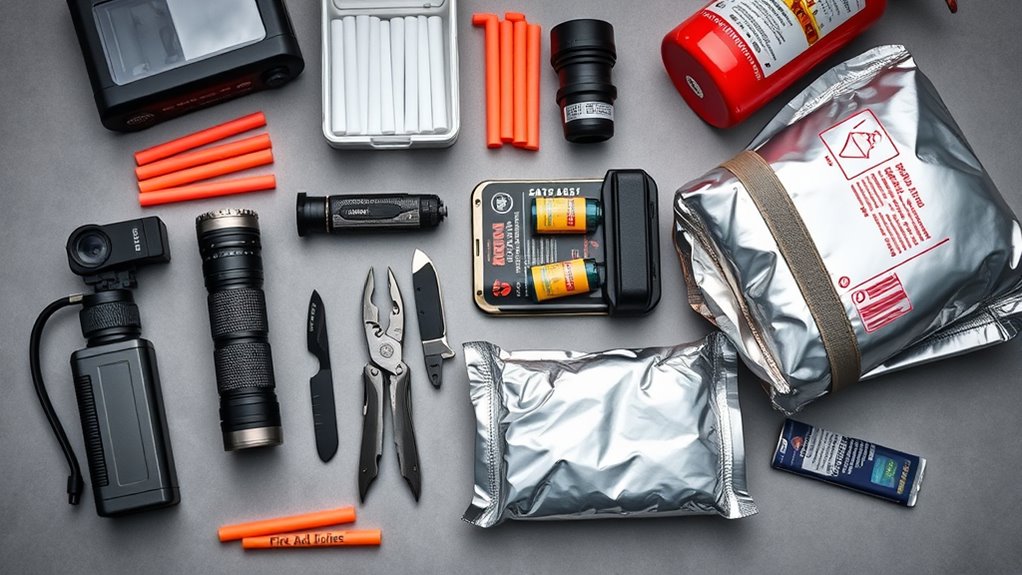
The Ready America 70280 earns its place for apartment residents who want core supplies for two people in one grab-and-go bag. Its food bars, sealed water, first aid basics, ponchos, blankets, masks, and lightsticks cover more immediate needs than the Mezonn Emergency Sleeping Bag, which is a focused warmth item rather than a full kit. The five-year shelf life for the food and water makes routine replacement easier to plan, while the compact backpack is simpler to store than a larger multi-person setup. The tradeoff is that this is a starter cache: its 33-piece first aid kit is basic, and it has no cooking or heating equipment. Apartment households with more than two people will need extra supplies.
Pros:- Combines food, water, first aid, shelter, and signaling supplies in one backpack.
- Supplies are intended for two people rather than just one.
- Food and water pouches have a stated five-year shelf life.
- Compact bag is suited to a closet or entryway storage spot.
Cons:- Basic 33-piece first aid kit may not cover serious injuries or ongoing medical needs.
- No cooking or heating equipment is included.
- Limited supplies are not intended for households larger than two.
Best for: Two-person apartment households seeking a compact, ready-to-carry supply of food, water, basic first aid, and shelter items.
Not ideal for: Families of three or more, or anyone who needs substantial medical supplies or a way to cook and heat food.
- Food:2 emergency food bars; 4,800 calories total
- Water:12 sealed pouches, 4.225 oz each
- First aid:33-piece kit
- Lighting:2 lightsticks, each rated for 12 hours
- Shelter:2 emergency ponchos and 2 survival blankets
- Protection:Dust masks and nitrile gloves
- Shelf life:5 years for food and water pouches
- Pack:Lightweight backpack organized for quick access
Our verdict“Choose this backpack if two apartment residents want a compact emergency kit with core supplies and a stated five-year food-and-water shelf life.”
Blue Seventy-Two Emergency Backpack Survival Kit for 1 Person
For a solo apartment resident, the Blue Seventy-Two offers a single-person set of essentials without asking you to store a family-sized kit. Its listed dimensions—14.8 x 9.9 x 4.4 inches—make it a relatively space-conscious choice beside the two-person Ready America 70280, though it provides supplies for only one person. Food rations, water, first aid, a blanket, poncho, mask, whistle, and flashlight cover a broader range of immediate needs than the compact Mezonn bivy alone. The limitation is depth: the listing describes a basic 36-piece kit, not a substitute for extra medication, water, or longer-term provisions. Its water pouches also have a five-year shelf life, so apartment storage still calls for periodic checks.
Pros:- Designed around one person’s supplies, avoiding the storage burden of a larger household kit.
- Includes food, water, first aid, blanket, poncho, mask, whistle, and flashlight.
- Listed dimensions make it easier to plan closet or entryway storage.
- 36-piece contents provide a broad starter set for common emergencies.
Cons:- Supplies cover only one person.
- Basic contents may need supplements for medication, extra water, or longer disruptions.
- Water pouches have a stated five-year shelf life and need replacement planning.
Best for: A solo renter who wants a modestly sized backpack with basic food, water, first aid, light, and weather protection.
Not ideal for: Couples, families, or people preparing for needs beyond the basic supplies in a one-person kit.
- Intended capacity:1 person
- Number of pieces:36
- Dimensions:14.8 x 9.9 x 4.4 inches
- Weight:119.64 g, as listed
- Included supplies:First aid kit, emergency blanket, poncho, whistle, mask, flashlight, food rations, and drinking water
- Materials:Fabric, plastic, and metal
- Brand:Blue Coolers
- Water shelf life:5 years, as stated in product information
Our verdict“Pick this for a solo apartment emergency bag when compact storage matters more than supplies for multiple people.”
Mezonn Emergency Sleeping Bag Survival Bivy Sack, Lightweight Emergency Blanket for Outdoor Camping and Disasters
The Mezonn Emergency Sleeping Bag is the easiest item in this group to tuck into a small apartment emergency bin: it weighs 4.2 ounces and packs into its included nylon sack. Its reflective, waterproof, windproof PE material can serve as a bivy, blanket, shelter layer, or ground cover, giving it a useful role if a power outage or evacuation leaves you exposed to cold or wet conditions. Unlike the Blue Seventy-Two, it does not supply food, water, or first aid; it is a focused add-on, not a standalone emergency kit. The 37-by-80.7-inch size may feel restrictive for larger adults, and the material is best treated as emergency gear rather than dependable bedding for repeated use.
Pros:- At 4.2 ounces, it adds little weight or storage burden to an emergency bag.
- Reflects 90% of body heat according to the product description.
- Waterproof and windproof material can help shield against exposure.
- Can serve as a bivy, blanket, shelter layer, or ground cover.
Cons:- Provides no food, water, first aid, or signaling supplies.
- 37 x 80.7-inch dimensions may not fit larger adults comfortably.
- Repeated use or severe conditions may limit its practical reusability.
Best for: Apartment dwellers with limited storage who already have basic supplies and want a lightweight backup for warmth and weather exposure.
Not ideal for: Anyone seeking an all-in-one kit, a roomy sleeping setup, or durable bedding for frequent reuse.
- Material:Polyethylene (PE)
- Size:37 x 80.7 inches
- Weight:4.2 ounces
- Heat reflection:Reflects 90% of body heat, as stated
- Weather protection:Waterproof and windproof
- Construction:Tear-resistant material with reinforced tape seams
- Occupancy:1 person
- Included storage:Nylon sack with carabiner
Our verdict“Add this compact bivy to an existing apartment emergency kit if warmth and weather protection matter more than all-in-one coverage.”
ISOP Fire Escape Rope Ladder 13ft (4m) with Carabiners, Waterproof and Weather Resistant
Among these picks, the ISOP Fire Escape Rope Ladder addresses a specific apartment risk the backpacks do not: a possible exit from an upper-floor window when a normal route is blocked. Its 13-foot reach and four steps make it relevant only where the window height and attachment point match the ladder’s limits; that fit matters more than the listed 900 kg load capacity. Compared with the Ready America 70280, this is not general emergency gear but a specialized evacuation tool, and it takes more planning to store and use safely. The 3 kg weight and absence of mounting hardware are meaningful drawbacks. I would treat it as a planned escape option, not a substitute for checking local fire guidance or practicing a safe deployment method.
Pros:- Provides a dedicated evacuation option for a compatible upper-floor window.
- No assembly is required before deployment.
- Waterproof, weather-resistant nylon suits emergency storage.
- Four steps offer a defined route down from a suitable exit point.
Cons:- The 13-foot maximum reach limits which apartment windows it can serve.
- No mounting hardware is included, so attachment planning is required.
- At 3 kg, it is heavier and less convenient to move than the bivy or backpacks.
Best for: Residents on a lower upper floor whose measured window-to-ground route is within 13 feet and who can plan a secure attachment point.
Not ideal for: People on floors above its reach, renters without a suitable attachment point, or anyone looking for a general-purpose emergency kit.
- Material:Nylon
- Maximum height:13 feet (4 m)
- Weight:3 kg
- Listed load capacity:900 kg
- Number of steps:4
- Attachment:Carabiners included
- Weather resistance:Waterproof and weather resistant
- Assembly:No assembly required
Our verdict“Consider this ladder only if its reach and attachment method match a specific apartment escape route.”
Blue Seventy-Two Pro Series Red Deluxe 72-Hour Emergency Backpack Survival Kit for One Person
The Blue Seventy-Two Pro Series is the more accessory-focused solo option here. Alongside food bars, water, first aid, a mask, whistle/compass, blanket, and poncho, it adds a canteen cup and playing cards, giving the pack a few extras beyond the basics in the Blue Seventy-Two Emergency Backpack. Its 11 x 7.5 x 17-inch dimensions describe a compact footprint, but a full supply load can still make it less convenient to carry or stash than the smaller-format solo kit. The tactical-style fabric backpack may appeal to buyers who want one organized bag rather than loose supplies, though the product data does not specify a total weight or detailed quantities for each provision. It remains a one-person setup, not a household solution.
Pros:- Combines food, water, first aid, shelter, and signaling supplies in one backpack.
- Adds a canteen cup and playing cards beyond core emergency items.
- Listed dimensions give a clear basis for planning storage space.
- Fabric tactical-style pack keeps supplies together for grab-and-go use.
Cons:- Designed for one person, so households need additional supplies or separate kits.
- A full supply load may be bulky or heavy for everyday carrying.
- Product data does not provide the pack’s total weight or detailed quantities for each provision.
Best for: Solo apartment residents who want a one-bag supply set with extra accessories and room for a few personal additions.
Not ideal for: Couples or families, and buyers prioritizing the lightest possible bag or clearly listed quantities for every supply.
- Set:Blue Seventy-Two Pro Series
- Intended capacity:1 person
- Dimensions:11 x 7.5 x 17 inches
- Material:Fabric
- Included provisions:Food bars, water pouches, first aid supplies, mask, whistle/compass, blanket, and rain poncho
- Additional accessories:Canteen cup and playing cards
- Manufacturer:Blue Coolers
- Pack style:Tactical-style backpack
Our verdict“Choose the Pro Series over the standard Blue Seventy-Two if you want extra accessories in a single-person emergency backpack and can accommodate its full load.”
HOWEASY Portable Power Station 260W – Foldable 60W Solar Panel
For apartment residents who want backup electricity without storing a large generator, the 5-pound HOWEASY is the most space-conscious power option in this group. Its 260W continuous output can support small devices, while the 65W USB-C port is useful for charging compatible phones, tablets, and laptops. Nine ports provide more connection choices than a single-purpose phone bank, and the hidden handle makes it easier to move between a closet, car, or evacuation bag. Compared with the Ready America and family kits here, this supplies power rather than food, water, and first aid, so it fills a different preparedness gap. The tradeoff is its modest output: it is not suited to high-demand appliances, and despite the title, the solar panel is sold separately.
Pros:- Compact 5-pound body and hidden handle suit limited storage space
- Nine output ports include two AC outlets and a 65W USB-C port
- Can recharge from an AC adapter, car charger, or compatible solar input
- Built-in LED flashlight includes an SOS mode
Cons:- 260W continuous output rules out many household appliances
- The solar panel is sold separately
- Power station alone does not provide the food, water, or first aid included in the emergency kits
Best for: Apartment dwellers who want a compact way to power phones, small electronics, and other low-wattage devices during outages
Not ideal for: Buyers who need to run high-power appliances or expect a solar panel to be included in the box
- Continuous power output:260W
- Maximum power:300W
- Weight:5 lbs
- Dimensions:8.71 x 4.72 x 5.43 in
- Ports:2 AC outlets, 1 USB-C (65W), 3 USB-A, 3 DC
- Charging methods:AC wall adapter, car charger, or solar input
- Solar input:18–24V
- Protection features:Overload, short-circuit, overvoltage, overcurrent, and overheating protection
Our verdict“Choose this for compact backup power for small electronics, but not as a substitute for a full emergency supply kit or appliance generator.”
First My Family All-in-One 4 Person 72 Hour Emergency Survival Kit
When an apartment household needs a shared set of core supplies, this four-person, 72-hour kit offers a simpler storage choice than buying four individual grab-and-go packs. Food, water, an 85-piece first-aid kit, and shelter and warmth materials are gathered in a waterproof backpack, which can be moved as one unit during an evacuation. That consolidated format is its main distinction from the Ready America one-person kit and the Family 4 Pack Blue Seventy-Two, both of which organize supplies around individual users. The tradeoff is that a shared bag can be awkward to divide among household members, and the supplied details do not identify the quality or quantities of each item. It covers a short emergency window, not longer disruptions, and may be more kit than a solo apartment resident needs.
Pros:- Designed to supply four people for 72 hours
- Combines food, water, first aid, shelter, and warmth supplies
- Waterproof backpack provides one portable storage package
- 85-piece first-aid kit is specified
Cons:- Shared backpack may be less convenient to distribute among several people
- Individual supply quantities and item quality are not specified
- 72-hour scope does not cover extended emergencies
Best for: Households of up to four people who want one portable bag of basic supplies for a short evacuation or outage
Not ideal for: Solo residents or households that want individually distributed bags, detailed item specifications, or supplies for emergencies beyond 72 hours
- Capacity:4 people
- Duration:72 hours
- Container:Waterproof backpack
- Food and water:Food and water rations
- First aid:85-piece first-aid kit
- Other supplies:Shelter and warmth materials
Our verdict“Pick this if your household prefers one waterproof bag with basic short-term supplies over separate packs for each person.”
Ready America 72 Hour Emergency Kit, 1-Person, Backpack with First Aid, Food, Water, and Survival Gear
For someone preparing alone, this one-person 72-hour backpack avoids the excess of a family kit while keeping food, water, first aid, and evacuation basics together. At 4.2 pounds and about 12.3 x 9.7 x 5.1 inches, its listed size and weight make it easier to plan around a small closet or a grab-and-go spot than a multi-person supply bag. The food bar, water pouches, emergency blanket, poncho, gloves, and signaling items give it a broader evacuation mix than the HOWEASY power station, which focuses on charging devices rather than personal supplies. The limitation is scale: it is built for one, not a household. Food and water pouches have a stated five-year shelf life, so they need periodic replacement, and the listed weight may still feel substantial when carried on foot.
Pros:- Supplies are organized in a portable nylon backpack
- Includes food, water, first aid, and basic shelter items
- Whistle and lightstick provide signaling options
- Listed dimensions and weight help buyers plan storage and carrying
Cons:- Supplies are intended for one person only
- The 4.2-pound kit may be burdensome during a longer evacuation on foot
- Food and water pouches have a five-year shelf life and require replacement
Best for: Solo renters who want a compact, ready-to-carry set of food, water, first aid, and basic evacuation gear
Not ideal for: Families needing shared or multi-person provisions, or buyers who want a lighter kit and do not want to track dated food and water
- Capacity:1 person
- Duration:72 hours
- Number of pieces:33
- Weight:4.2 lbs
- Dimensions:12.3 x 9.7 x 5.1 in
- Material:Nylon
- Included components:First-aid kit, food bar, backpack, emergency blanket, lightstick, poncho, gloves, whistle, and water pouches
- Food and water pouch shelf life:5 years
Our verdict“Choose this if you live alone and want one carryable 72-hour kit rather than a larger family pack.”
Stealth Angel Survival 72 Hour Family Emergency Kit for 1-5 People
The Stealth Angel kit makes the most sense for households that want a 72-hour supply option spanning one to five people, rather than a pack sized for a fixed group. Its listed contents reach beyond food and first aid to include a radio, multi-tool, shelter and warmth items, giving apartment residents more categories of emergency gear in one organized backpack. That makes it broader in scope than the Ready America solo kit, though the Ready America listing gives clearer specifics such as dimensions, weight, and individual components. Here, the item details and pack weight are not provided, so it is harder to judge how well the bag fits a small closet or whether one person can carry it comfortably. The stated range is useful for flexible planning, but buyers should verify quantities against their household size.
Pros:- Stated capacity range accommodates one to five people
- Includes food and water, first aid, shelter, and warmth supplies
- Radio adds a communication tool not listed in the Ready America kit contents
- Multi-tool provides another practical emergency-use item
Cons:- Backpack weight and dimensions are not specified
- Individual item quantities are not detailed
- Supplies are limited to a 72-hour period
Best for: Households with changing or uncertain headcounts that want food, water, communication, first aid, and shelter supplies in one backpack
Not ideal for: Buyers who need a clearly itemized kit, a known carry weight, or a compact bag they can evaluate against limited apartment storage
- Capacity:1–5 people
- Duration:72 hours
- Container:Backpack
- Food and water:Included
- First aid:First-aid kit
- Shelter and warmth:Included
- Communication:Radio
- Additional tool:Multi-tool
Our verdict“Consider this for a household that values flexible capacity and a broad mix of supplies, provided the unspecified pack details meet your storage and carrying needs.”
Family 4 Pack – Blue Seventy-Two 72 Hour Emergency Backpack Survival Kit for 1 Person
Rather than put a household’s supplies in one shared pack, this four-backpack bundle provides a separate 72-hour kit for each person. That setup can make apartment evacuation more manageable: each resident can take a bag, unlike the First My Family kit, which is organized around a single four-person backpack. Each pack lists 2,400 calories of food with a five-year shelf life, five water pouches, a 36-piece first-aid kit, and basics such as a crank flashlight, emergency blanket, and poncho. The tradeoff is that individual bags need more closet space than one shared kit, and the listed water supply is limited. The contents are a starting point rather than a full medical setup, so anyone with specific health or mobility needs may need to add personal supplies.
Pros:- Four separate backpacks support individual evacuation
- Each pack is specified for a 72-hour period
- Each kit includes 2,400 calories of food with a five-year shelf life
- Crank flashlight, whistle, and compass add useful preparedness tools
Cons:- Four backpacks require more storage space than a shared family kit
- Five small water pouches per pack provide limited water
- The 36-piece first-aid kit may not meet specialized medical needs
Best for: Families or roommates who want a separate grab-and-go emergency backpack for each of four people
Not ideal for: Residents with very limited storage, households that prefer one shared bag, or buyers seeking larger water reserves or specialized medical supplies
- Bundle size:4 backpacks
- Capacity per backpack:1 person
- Duration per backpack:72 hours
- Food:2,400 calories per backpack; 5-year shelf life
- Water:Five 4.22 oz pouches per backpack; 5-year shelf life
- First aid:36-piece kit per backpack
- Additional items:Mask, whistle/compass, crank flashlight, tissue pack, emergency blanket, and rain poncho
- Backpack type:Reinforced Grab-N-Go
Our verdict“Choose this bundle if each household member needs a separate emergency bag and you have room to store all four.”

How We Picked
I compared these options through the needs that shape apartment preparedness: storage footprint, household coverage, portability, practical function, and flexibility. A kit that can be carried from a small closet matters more in an apartment than one that assumes a dedicated garage or storage room. I also looked at whether an option addresses a broad set of needs, such as basic supplies for several people, or a narrower one, such as backup electricity or escape from a particular floor.
The ranking favors useful coverage per stored item and a clear role for the buyer, rather than treating every product as interchangeable. Multi-person kits rank well when they reduce the burden of assembling supplies, but they still need household-specific checks for quantities, dietary needs, medication, and fit. Specialized gear ranks lower as an all-around recommendation because it covers only one part of a plan, though it may be the better choice for a specific risk. Product names and stated features inform this comparison; buyers should confirm current contents, dimensions, and compatibility before relying on any item.
Factors to Consider When Choosing Apartment Friendly Emergency Gear
Choosing apartment-friendly emergency gear starts with the limits and risks of your particular home, not with the biggest kit. I’d settle the questions below before deciding whether an all-in-one backpack, separate equipment, or a mix will serve you best.
Match Kit Size to the People Who Will Use It
Count everyone who may shelter with you, including children or anyone who might need assistance carrying supplies. A one-person kit can look compact, but two single-person packs may duplicate items while still missing household-specific needs. Family kits reduce the work of gathering basics, yet their stated person count does not tell you whether every quantity suits your family for the same duration. Check food and water quantities, first-aid contents, and whether each person can carry the load. Add personal medication, glasses, pet supplies, and essentials for infants separately. The common mistake is buying by the largest head-count label without checking what the kit actually covers.
Plan for Storage You Can Reach Quickly
Emergency supplies are useful only if you can find and carry them when leaving home is necessary. Measure closet or entry storage before buying, and think about stairwells, narrow hallways, and how far you may need to walk with a pack. A large family kit might be convenient to keep together but awkward to move through a crowded building. Splitting supplies into smaller containers can make carrying easier, though it takes more labeling and upkeep. Avoid storing everything in a hard-to-reach spot just because it is out of sight. Prioritize a location that remains accessible without blocking exits or common areas.
Separate Shelter-in-Place Needs From Evacuation Needs
An apartment emergency plan may call for staying home during one disruption and leaving quickly during another. A backpack favors evacuation, while a power station may be more useful during an outage when remaining inside is safe. Sleeping bags or emergency bivy gear can add warmth, but they do not replace water, sanitation supplies, or a way to communicate. Decide which scenario is more likely to leave your household without normal services, then build around that gap. A frequent buying error is treating one 72-hour backpack as a complete response to every hazard. Keep a small set of home supplies in addition to anything designed to leave with you.
Treat Escape Equipment as Building-Specific
A fire escape ladder is only relevant if it fits the height, window, and structure where it may be used. Check its stated length and attachment arrangements against your apartment rather than assuming a single model works from every floor. Ask the property manager about building rules and identify approved exits before an emergency; never use a window route that is unsafe or prohibited. Practice understanding the setup without putting anyone at risk, and keep the equipment where the intended user can reach it. A ladder cannot replace alarms, a clear exit route, or following fire-service guidance. For many residents, confirming a safe primary exit is a better first step than buying specialized escape gear.
Choose Power Gear Around Devices and Recharging
Before choosing a portable power station, list the devices you expect to use and how long you need them powered. Phone charging and a small light create a different demand from medical equipment or appliances, and a stated wattage alone does not tell you runtime. Check the ports, output limits, charging options, and whether a solar panel can realistically recharge the unit in your apartment setting. Window access, weather, and available sunlight can limit solar charging, so it should not be treated as guaranteed backup. Keep a separate plan for essential medical devices and contact the device provider about approved power sources. Pay for capacity that matches a defined need, not an abstract wish to power everything.
Budget Space for Maintenance and Personal Supplies
A kit is not a one-time purchase: food, water, batteries, and other supplies may need inspection or replacement. Leave room for items the packaged kit cannot reliably anticipate, such as prescriptions, local documents, spare glasses, and personal hygiene products. Keep an inventory and make checks part of a routine, especially after using or moving supplies. A broad kit can save assembly time, but a lower-effort purchase may still require additions to match dietary restrictions or household needs. Compare the practical workload of maintaining one larger kit with several smaller pieces of gear. The best fit is the setup you can store, carry, and keep current.
Frequently Asked Questions
Is one emergency backpack enough for a two-person apartment?
One two-person backpack may provide a useful shared starting point, but the label alone does not confirm that every included supply is sufficient for both people. Check quantities and decide whether each person can carry the pack if you need to use stairs or evacuate on foot. Add individual medication, documents, clothing, and any special dietary or medical supplies. A second smaller bag can keep personal essentials separate and make the load easier to divide. If you choose a single-person kit, plan explicitly for the second person rather than assuming one pack covers both.
Should I buy a family kit or several individual kits?
A family kit can reduce the effort of assembling common supplies and may be easier to manage as one purchase. Individual kits can be simpler to distribute, especially if household members may need to leave separately, but they can repeat shared items and use more storage space. Compare the included quantities with the number and ages of the people in your household instead of relying on the product’s person count. Consider who will carry each pack and whether children or people with mobility limits need a lighter load. A mixed approach—shared household supplies plus personal bags—can address both situations.
Does a portable power station make sense in an apartment?
It can make sense if you have a clear need to power devices during an outage and a safe place to store and operate the unit. Start by identifying the devices, their power requirements, and the expected runtime; a small station may be suitable for selected electronics but not larger appliances. Check charging methods and do not assume a solar panel will recharge it reliably through an apartment window. Follow the manufacturer’s operating and ventilation instructions, and keep the station away from blocked exits. Residents who only need occasional phone charging may prefer a smaller backup option, while those with critical equipment should seek device-specific power guidance.
Should renters buy a fire escape ladder for an upper-floor apartment?
Not automatically: a ladder only helps when it is appropriate for the floor, window, attachment point, and building rules. Confirm the route with your property manager and check the ladder’s stated reach and setup requirements against the actual opening. Identify the normal exit route and follow local fire-safety guidance before relying on a window escape. Keep any approved equipment accessible to the people expected to use it, and do not attempt unsafe practice. If the ladder cannot be securely and appropriately used in your unit, it may add storage burden without providing a dependable escape option.
What should I add to a ready-made 72-hour kit for apartment use?
Begin with gaps tied to your household rather than adding more general gear by default. Common additions include prescribed medication, personal documents, glasses, hygiene items, clothing suited to local weather, and supplies for children or pets. Check food and water amounts, expiration or replacement dates, and whether the kit can be carried through your building. Add communication and lighting items only after checking what is already included, so you do not spend storage on needless duplicates. Keep a written inventory and review it on a schedule that matches the products’ maintenance needs.
Conclusion
For a balanced starting point, I’d choose the Ready America 70280 two-person backpack as the best overall pick in this lineup. The Ready America one-person kit is a straightforward best-value fit for someone preparing for one person, while the Blue Seventy-Two Pro Series is the premium-leaning option for buyers who want a more specific deluxe single-person pack; confirm its contents against your needs. For beginners, a ready-made backpack is easier to organize than piecing together several specialized items, with the two-person version making sense for a small shared household. Choose the First My Family kit or Stealth Angel family kit when household coverage is the priority, and compare included quantities before deciding. Pick the HOWEASY power station for a defined backup-power need or the ISOP ladder only when your building and escape plan make it appropriate. My recommendation is to start with household size and building layout, then add specialized gear only to address a real gap.