Among these dash cams, I’d put the VIOFO A229 Plus first for drivers who want a capable, balanced front-and-rear setup, while the Garmin Dash Cam X310 stands out for compact 4K recording and the 360 View 4 Channel Dash Cam for broad cabin and side coverage. The main choice is between sharper footage, more camera angles, and a simpler installation; adding channels can cover blind spots but also adds wiring and setup work. Sensor performance, night footage, parking recording, and included memory cards vary across this group, so headline resolution alone does not settle the decision. I compare those tradeoffs alongside ease of use and fit for different drivers. Continue reading for the full breakdown and a recommendation matched to your priorities.

Turn your wind-down time into listening time
- Thousands of audiobooks, podcasts and originals
- Listen on your phone, tablet or Echo — also offline
- Cancel anytime
Complete the kit


Key Takeaways
- The VIOFO A229 Plus is the balanced front-and-rear pick: its dual 2K STARVIS 2 sensors and HDR prioritize usable footage from both directions rather than a 4K front camera paired with a lower-resolution rear view.
- 4K is not the only measure of useful evidence: sensor generation, HDR, camera placement, and night recording affect whether details can be made out in changing light.
- Four-channel models trade simplicity for coverage: options such as the 360 View four-channel camera can capture more of the cabin and sides, but they require more cameras, wiring, and setup than a conventional dual-channel unit.
- Compact models favor discretion over coverage: the Garmin Mini 3 keeps the footprint small, while front-and-rear and cabin-facing options are better suited to drivers who need more viewpoints.
- Included memory cards reduce setup friction, not ongoing maintenance: several models bundle storage, but drivers still need to check capacity, recording settings, and card condition over time.
| 360 View 4 Channel Dash Cam with GPS, Night Vision, WiFi, 128GB Card Included |  | Best for Full-Cabin Coverage | Resolution: 1080p | Camera count: 4 | Field of view: 160 degrees | VIEW ON AMAZON | See Our Full Breakdown |
| Galphi 4K Front Dash Cam – 5GHz WiFi, 32GB Card Included, Mini |  | Best Compact Front Camera | Resolution: 2160p (4K UHD) | Field of view: 160 degrees | Frame rate: 30 fps | VIEW ON AMAZON | See Our Full Breakdown |
| Garmin Dash Cam X310, Compact 4K Ultra HD Dash Camera | 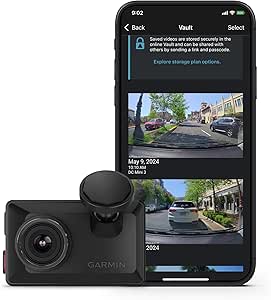 | Best for On-Camera Controls | Resolution: 4K Ultra HD | Field of view: 140 degrees | Display: 2.4-inch LCD touchscreen | VIEW ON AMAZON | See Our Full Breakdown |
| REDTIGER 4K STARVIS 2 Dashcam Front and Rear with 128GB Card |  | Best for Touchscreen Dual-Camera Setup | Front resolution: 4K UHD | Rear resolution: 1080p FHD | Sensor: STARVIS 2 CMOS | VIEW ON AMAZON | See Our Full Breakdown |
| ROVE R2-4K Dual Dash Cam Front and Rear |  | Best for Flexible Storage and Parking Modes | Front resolution: 2.5K, upscaled to 4K | Rear resolution: 1080p Full HD | Sensor: Sony STARVIS 2 IMX675 5MP | VIEW ON AMAZON | See Our Full Breakdown |
| 4K+1080P*3 FHD Dash Cam Front and Rear, 360° Car Camera, 5.8GHz WiFi |  | Best for Full-Cabin Coverage | Video resolution: 2160p | Camera coverage: Four channels; 4K front and three adjustable 1080p lenses | Screen: 3.18 inches | VIEW ON AMAZON | See Our Full Breakdown |
| 4 Channel 360° Dash Cam with 4K Front and 1080P Side Cameras |  | Best Four-Channel Pick for GPS Features | Number of channels: 4 | Front resolution: 4K (2160p) | Side camera resolution: 1080p | VIEW ON AMAZON | See Our Full Breakdown |
| Garmin Dash Cam Mini 3, Ultracompact 1080p HD Dash Cam |  | Best Compact Dash Cam | Video resolution: 1080p | Field of view: 140 degrees | Mount: Windshield mount | VIEW ON AMAZON | See Our Full Breakdown |
| REDTIGER F7NP 4K Dash Cam Front Rear, STARVIS 2 Sensor, Free Card Included |  | Best Front-and-Rear Balance | Front resolution: 4K (2160p) | Rear resolution: 1080p | Field of view: 170 degrees | VIEW ON AMAZON | See Our Full Breakdown |
| 3-Channel 4K Full HD Dash Camera for Cars with Wi-Fi, Night Vision, and Parking Mode |  | Best for Drivers Who Need Cabin Recording | Resolution: 4K front, 1080p cabin and rear | View angles: 170° front, 150° cabin, 160° rear | Display: 2-inch IPS | VIEW ON AMAZON | See Our Full Breakdown |
| 3 Channel 4K+2K+2K Dash Cam with 64GB Card, WiFi, Night Vision, and Parking Monitoring |  | Best for All-Around Three-View Coverage | Video resolution: 4K front + 2K rear + 2K in-car | Front lens: 170° wide angle | Interior camera: Infrared night vision | VIEW ON AMAZON | See Our Full Breakdown |
| VIOFO A229 Plus Dash Cam Front and Rear, 2K Dual STARVIS 2 Sensors & HDR |  | Best for Hands-Free Dual-Channel Recording | Resolution: 1440P front + 1440P rear | Image sensors: Dual Sony STARVIS 2 IMX675 | Front frame rate: Up to 60fps | VIEW ON AMAZON | See Our Full Breakdown |
| 4K+4K Dual Dash Cam Front and Rear with 128GB Card and Night Vision |  | Best for 4K Front-and-Rear Detail | Resolution: 3840 × 2160P front and rear | Field of view: 170° front, 150° rear | Aperture: f/1.5 | VIEW ON AMAZON | See Our Full Breakdown |
| 4K+4K+1080P 3 Channel Dash Cam with 128GB Card and Night Vision |  | Best for High-Resolution Three-Channel Coverage | Video resolution: 4K front + 4K rear + 1080P cabin | Viewing angles: 170° front, 150° rear, 150° cabin | Night vision: AProX HD Night Vision with IR lights | VIEW ON AMAZON | See Our Full Breakdown |
| 3 Channel Dash Cam Front Rear Inside, STARVIS 2 4K HDR Car Camera |  | Best for Harsh-Weather Three-Channel Use | Video resolution: 4K front + 2K interior + 2K rear | Field of view: 170° | Screen: 3.19 inches | VIEW ON AMAZON | See Our Full Breakdown |
| dash cam | Connectivity | Display | Field of view |
|---|---|---|---|
| 360 View 4 Channel Dash Cam wi | 5GHz Wi-Fi and USB | 3 inches | 160 degrees |
| Galphi 4K Front Dash Cam | — | None | 160 degrees |
| Garmin Dash Cam X310 | Bluetooth, USB, and Wi-Fi | 2.4-inch LCD touchscreen | 140 degrees |
| REDTIGER 4K STARVIS 2 Dashcam | 5GHz Wi-Fi and GPS | 3.18-inch LCD touchscreen | 170 degrees front, 140 degrees rear |
| ROVE R2-4K Dual Dash Cam Front | — | 3-inch IPS widescreen | 150 degrees front, 140 degrees rear |
| 4K+1080P*3 FHD Dash Cam Front | Wi-Fi | — | — |
| 4 Channel 360° Dash Cam with 4 | Wi-Fi and GPS | — | — |
| Garmin Dash Cam Mini 3 | Bluetooth, USB, and Wi-Fi | — | 140 degrees |
| REDTIGER F7NP 4K Dash Cam Fron | Wi-Fi | 3.16 inches | 170 degrees |
| 3-Channel 4K Full HD Dash Came | Wi-Fi | 2-inch IPS | — |
| 3 Channel 4K+2K+2K Dash Cam wi | WiFi | 2.99 inches | — |
| VIOFO A229 Plus Dash Cam Front | — | — | — |
| 4K+4K Dual Dash Cam Front and | — | 3-inch IPS | 170° front, 150° rear |
| 4K+4K+1080P 3 Channel Dash Cam | WiFi 6 dual-band, 5.8GHz and 2.4GHz | 3.18 inches | — |
| 3 Channel Dash Cam Front Rear | USB and WiFi | — | 170° |
More Details on Our Top Picks
360 View 4 Channel Dash Cam with GPS, Night Vision, WiFi, 128GB Card Included
For drivers who want to record more than the road ahead, this four-camera setup captures front, rear, left, and right views at 1080p. That coverage can help document incidents at intersections, in parking lots, or around a vehicle used for rideshare. Compared with the ROVE R2-4K Dual Dash Cam, it trades higher front-camera detail for coverage on both sides of the car; the ROVE instead pairs front and rear recording with a stronger emphasis on front-image clarity.
The 160-degree lens, night vision, and WDR add useful context in varied lighting, while the included 128GB card gives it more out-of-box storage than the Galphi’s 32GB card. The tradeoff is setup: four camera views can take more work to position, and the product information says GPS and parking mode may need separately purchased hardware. Buyers should confirm what is included before relying on those functions.
Pros:- Four cameras cover front, rear, left, and right views.
- Night vision and WDR support recording in low-light conditions.
- Includes a 128GB memory card and supports cards up to 256GB.
- Wi-Fi provides a way to transfer and share footage.
Cons:- Positioning and connecting four cameras can make installation more involved.
- GPS and parking mode hardware may need to be purchased separately.
- 1080p recording offers less front-camera detail than the 4K options here.
Best for: Rideshare drivers and owners who want recorded views around the sides and rear of the vehicle, not just the front.
Not ideal for: Drivers seeking a simple, quick-install front camera or high-resolution front footage; four-camera placement adds setup work, and recording is 1080p.
- Resolution:1080p
- Camera count:4
- Field of view:160 degrees
- Frame rate:30 FPS
- Display:3 inches
- Included memory card:128GB
- Maximum supported storage:256GB
- Connectivity:5GHz Wi-Fi and USB
- Power component:Supercapacitor
Our verdict“Choose this model if broad, multi-direction vehicle coverage matters more to you than 4K detail or the simplest installation.”
Galphi 4K Front Dash Cam – 5GHz WiFi, 32GB Card Included, Mini
The Galphi keeps its job narrow: it records the road ahead in 4K UHD from a compact, screen-free unit. Its adhesive mount and lack of a display suit drivers who want a less conspicuous setup and do not need to check clips on the device itself. Compared with the Garmin Dash Cam X310, it offers a wider stated field of view and a simpler, smaller-screen-free design, while Garmin supplies an LCD touchscreen and glare-reducing polarizer.
A 5GHz Wi-Fi connection and companion app make phone-based clip transfers the intended workflow. The f/1.6 aperture, WDR, and night-vision feature are aimed at preserving useful footage in dim conditions, and the included 32GB card gets recording started. That card is smaller than the 128GB cards supplied with the REDTIGER and ROVE models. The main compromises are a front-only view, no built-in screen, and parking mode that requires an optional hardwire kit.
Pros:- 4K UHD front recording captures more detail than the 1080p options.
- Compact, screen-free design keeps the camera less prominent on the windshield.
- 5GHz Wi-Fi supports phone-based footage transfers.
- Includes a 32GB microSD card and supports cards up to 256GB.
Cons:- No rear camera, so it cannot document events behind the vehicle.
- No built-in display for checking footage or settings in the car.
- Parking mode requires an optional hardwire kit.
Best for: Drivers who want a compact, front-facing 4K camera and are comfortable managing clips through a phone app.
Not ideal for: Buyers who want front-and-rear recording, on-device playback, or parking mode without purchasing a separate hardwire kit.
- Resolution:2160p (4K UHD)
- Field of view:160 degrees
- Frame rate:30 fps
- Aperture:f/1.6
- Wi-Fi:5GHz
- Included memory card:32GB
- Maximum supported storage:256GB
- Display:None
- Parking mode:Available with optional Type-C hardwire kit
Our verdict“Pick the Galphi if you want a compact 4K front camera and accept phone-only playback and separately powered parking mode.”
Garmin Dash Cam X310, Compact 4K Ultra HD Dash Camera
The X310 is the pick for drivers who want 4K recording with a screen on the camera, rather than relying on a phone to review clips. Its 2.4-inch touchscreen supports playback and adjustments in the vehicle, and voice control offers another way to operate it hands-free. Compared with the Galphi 4K Front Dash Cam, Garmin is less screen-free and has a narrower 140-degree field of view, but it is more accommodating for buyers who want visible controls and on-device viewing.
Garmin Clarity polarizer technology is designed to reduce windshield glare, which can help keep road details more legible in bright conditions. The tradeoff is that the listed premium connected features are not all included as standard: parking guard and live view require a paid Vault subscription and Wi-Fi connection. Its single-camera setup also leaves the rear of the vehicle uncovered, unlike the ROVE R2-4K Dual Dash Cam.
Pros:- 4K recording captures more detail than 1080p front cameras.
- 2.4-inch touchscreen allows playback and adjustments on the device.
- Polarizer technology is designed to reduce windshield glare.
- Voice control supports hands-free operation.
Cons:- Records from the front only, unlike the ROVE dual-camera option.
- Live view and parking guard require a paid Vault subscription and Wi-Fi.
- Its 140-degree field of view is narrower than the 160-degree Galphi.
Best for: Drivers who want a compact 4K front camera with a touchscreen, voice control, and a way to review clips without a phone.
Not ideal for: Buyers who need rear-camera coverage or want live view and parking guard without subscription requirements.
- Resolution:4K Ultra HD
- Field of view:140 degrees
- Display:2.4-inch LCD touchscreen
- Frame rate:30 FPS
- Connectivity:Bluetooth, USB, and Wi-Fi
- Mounting:Windshield mount
- Video format:MP4
- Control:Voice control
Our verdict“Choose the X310 if an on-camera screen and voice control matter more than rear coverage or subscription-free connected features.”
REDTIGER 4K STARVIS 2 Dashcam Front and Rear with 128GB Card
The REDTIGER pairs a 4K front camera with a 1080p rear camera, giving drivers footage from both ends of the car without stepping up to a four-camera system. Its 170-degree front view is broader than the ROVE R2-4K’s stated 150-degree front view, while the STARVIS 2 sensor, WDR, and HDR target clearer recording in difficult lighting. The included 128GB card also provides more starting capacity than the Galphi’s 32GB card.
A 3.18-inch touchscreen and voice control offer two ways to operate the camera, though that mix may feel more involved than the Galphi’s screen-free approach. Built-in GPS and 5GHz Wi-Fi add location data and wireless access to clips. Parking monitoring needs a separate hardwire kit, and routing the rear camera can take effort. The ROVE is a useful comparison for buyers weighing dual-camera coverage: it supports larger cards and lists multiple parking modes, while REDTIGER specifies a wider front view.
Pros:- Records 4K front and 1080p rear footage.
- 170-degree front field of view captures a wide area ahead.
- Includes GPS, 5GHz Wi-Fi, and a 128GB microSD card.
- Touchscreen and voice control provide different operating options.
Cons:- Parking monitoring requires a separately purchased hardwire kit.
- Rear-camera installation may require extra effort to route and position.
- Touchscreen controls may be more involved than a simpler screen-free camera.
Best for: Drivers who want a front-and-rear system with a touchscreen, voice controls, GPS, and a memory card included.
Not ideal for: Buyers who want a quick front-camera-only installation or parking monitoring without adding a hardwire kit.
- Front resolution:4K UHD
- Rear resolution:1080p FHD
- Sensor:STARVIS 2 CMOS
- Field of view:170 degrees front, 140 degrees rear
- Display:3.18-inch LCD touchscreen
- Connectivity:5GHz Wi-Fi and GPS
- Included memory card:128GB
- Parking monitoring:Requires hardwire kit
- Controls:Touchscreen and voice control
Our verdict“Choose REDTIGER if you want dual-camera coverage and on-device controls, and do not mind installing a rear camera or adding parking-mode hardware.”
ROVE R2-4K Dual Dash Cam Front and Rear
The ROVE stands out for drivers who want front-and-rear recording with room to grow storage. It includes a 128GB card and supports up to 1TB, more than the 256GB ceiling listed for the REDTIGER and Galphi. Its front footage is described as 2.5K upscaled to 4K, not native 4K, so the resolution label should not be read as equivalent to a camera capturing native 4K. The REDTIGER records native 4K front video and offers a wider stated front view; ROVE counters with higher storage capacity and detailed parking-mode options.
The Sony STARVIS 2 sensor, HDR, and wide apertures are designed to help with low-light recording. Dual-band Wi-Fi and built-in GPS add convenient clip access and location data, while the 3-inch display supports in-car review. Time-lapse, motion, and collision parking modes offer different ways to capture activity, but parking use requires a separately sold hardwire kit. Its 150-degree front view is also narrower than REDTIGER’s 170-degree view.
Pros:- Records front and rear video, with a 1080p rear camera.
- Supports up to 1TB of storage and includes a 128GB card.
- Built-in GPS and dual-band Wi-Fi support location overlays and wireless transfers.
- Offers time-lapse, motion-detection, and collision-detection parking modes.
Cons:- Front video is 2.5K upscaled to 4K rather than native 4K.
- Parking modes require a separately purchased hardwire kit.
- Its 150-degree front field of view is narrower than REDTIGER’s stated 170 degrees.
Best for: Drivers who want front-and-rear footage, built-in GPS, several parking-mode choices, and support for a large-capacity memory card.
Not ideal for: Buyers who require native 4K front recording or want parking modes powered without buying a separate hardwire kit.
- Front resolution:2.5K, upscaled to 4K
- Rear resolution:1080p Full HD
- Sensor:Sony STARVIS 2 IMX675 5MP
- Field of view:150 degrees front, 140 degrees rear
- Included memory card:128GB
- Maximum supported storage:1TB
- Wi-Fi:5.8GHz and 2.4GHz
- Display:3-inch IPS widescreen
- Parking modes:Time-lapse, motion detection, and collision detection; hardwire kit required
Our verdict“Pick the ROVE if storage flexibility and multiple parking modes matter more to you than native 4K front capture or the widest field of view.”
4K+1080P*3 FHD Dash Cam Front and Rear, 360° Car Camera, 5.8GHz WiFi
This four-channel setup makes sense for drivers who want footage around the vehicle, not just ahead and behind. Its 4K front camera is paired with three adjustable 1080p lenses, giving it broader coverage than the REDTIGER F7NP, which records front and rear only. That extra perspective can help document activity at the sides or inside the car, but it also means a more involved installation and more camera angles to position. The included 64GB card gets recording started without an immediate storage purchase, while Wi-Fi and app control offer a way to manage clips. Parking surveillance needs a separate hardwire kit, so this is a stronger fit for buyers willing to handle a fuller setup than for anyone seeking a simple windshield camera.
Pros:- Four adjustable camera views cover more of the vehicle than a standard front-and-rear setup.
- 4K front recording preserves more detail in forward-facing footage.
- Includes a 64GB SD card for initial storage.
- Wi-Fi and app control support wireless clip access.
Cons:- Parking monitoring requires a separate hardwire kit.
- Positioning and wiring three additional lenses can make installation more involved.
- The included 64GB card may be limiting for four-channel recording.
Best for: Drivers who want front, side, and cabin views for rideshare work, family transport, or documenting incidents around a parked vehicle.
Not ideal for: Drivers seeking a quick, uncomplicated install or reliable parking surveillance without buying and fitting a separate hardwire kit.
- Video resolution:2160p
- Camera coverage:Four channels; 4K front and three adjustable 1080p lenses
- Screen:3.18 inches
- Maximum aperture:f/1.6
- Connectivity:Wi-Fi
- Storage included:64GB SD card
- Parking monitoring:24-hour mode; hardwire kit required
- Mount:Windshield mount
Our verdict“Choose this if broad four-angle coverage matters more than an easy installation or a simple two-camera setup.”
4 Channel 360° Dash Cam with 4K Front and 1080P Side Cameras
This model pairs four-direction recording with GPS connectivity, making it a fit for drivers who want location data alongside footage. Like the 4K+1080P*3 FHD Dash Cam, it uses a 4K front camera and three adjustable 1080p lenses to cover the vehicle’s sides and interior. Its 3-inch IPS screen gives you a direct way to check the view, while Wi-Fi and app control support phone-based management. GPS is a useful distinction, but the available details do not specify how location data appears in recordings or the app. The tradeoff is a setup that asks for more camera positioning than the Garmin Dash Cam Mini 3; 24-hour parking mode also requires a separate hardwire kit. It supports cards up to 256GB, though no card is listed as included.
Pros:- Four channels capture the front, sides, and cabin.
- GPS and Wi-Fi connectivity add location and wireless management options.
- A 3-inch IPS screen offers on-device viewing.
- Supports memory cards up to 256GB.
Cons:- 24-hour parking mode requires a separate hardwire kit.
- Four camera views can take more time to position and install than a front-and-rear pair.
- No included memory card is specified.
Best for: Drivers who want four-channel coverage with GPS connectivity and are comfortable managing a multi-camera installation.
Not ideal for: Buyers who want a discreet, straightforward front camera, or who expect a memory card and parking-mode wiring kit in the box.
- Number of channels:4
- Front resolution:4K (2160p)
- Side camera resolution:1080p
- Screen:3-inch IPS
- Connectivity:Wi-Fi and GPS
- Memory card support:Up to 256GB
- Parking mode:24 hours; hardwire kit required
- Mount:Windshield mount with suction cup
Our verdict“Pick this four-channel option if GPS connectivity matters and you can supply the storage and wiring needed for the setup.”
Garmin Dash Cam Mini 3, Ultracompact 1080p HD Dash Cam
The Garmin Dash Cam Mini 3 takes the opposite approach to the four-channel models in this lineup: it records a single forward view and keeps its windshield footprint small. Its 140-degree field of view and 1080p HDR video suit drivers who want a discreet camera without placing multiple lenses around the cabin. Garmin Clarity polarizer is aimed at reducing glare, and voice control can make basic operation easier while driving. By comparison, the REDTIGER F7NP adds a rear camera and 4K front recording, making it a better choice when coverage and front-camera detail take priority. The Mini 3’s tradeoff is its narrower role: additional cameras are separate, and online storage or live-view features depend on a paid Vault subscription and an active power and Wi-Fi connection.
Pros:- Ultracompact design takes up little windshield space.
- 140-degree field of view captures a broad forward scene.
- HDR optics and a glare-reducing polarizer support clearer footage in challenging light.
- Voice control offers hands-free operation.
Cons:- Records only the front view unless additional cameras are purchased.
- 1080p resolution provides less detail than the 4K front cameras in several alternatives.
- Vault storage and live-view features require a paid subscription and suitable power and Wi-Fi.
Best for: Drivers who prioritize a small, unobtrusive front camera and want voice control rather than multi-camera coverage.
Not ideal for: Drivers who need rear or cabin footage, 4K resolution, or online storage features without a paid subscription.
- Video resolution:1080p
- Field of view:140 degrees
- Mount:Windshield mount
- Control:Voice
- Connectivity:Bluetooth, USB, and Wi-Fi
- Optical sensor:CMOS or CCD
- Memory slots:1
- Color:Black
Our verdict“Choose the Mini 3 for discreet, voice-controlled front recording, but look to the REDTIGER F7NP or a multi-channel model for broader coverage.”
REDTIGER F7NP 4K Dash Cam Front Rear, STARVIS 2 Sensor, Free Card Included
The REDTIGER F7NP is a practical middle ground for drivers who want more coverage than a front-only camera without the wiring and lens placement of a four-channel system. It records 4K in front and 1080p at the rear, with a STARVIS 2 sensor and WDR listed for low-light footage. Its 128GB included card and support for cards up to 512GB give it a stronger storage starting point than the 32GB supplied with the 3-Channel 4K Full HD Dash Camera. The tradeoff is that the F7NP does not cover the cabin or sides as the four-channel options do. Wi-Fi and app control aid clip access, while parking mode needs a separate hardwire kit. Its supercapacitor is specified as heat-resistant, but setup may take more effort than a single-camera model.
Pros:- Records 4K front and 1080p rear footage.
- Includes a 128GB memory card and supports cards up to 512GB.
- STARVIS 2 sensor and WDR support low-light recording.
- Supercapacitor is designed for heat resistance and durability.
Cons:- Parking mode requires a separate hardwire kit.
- Two-camera coverage does not capture the cabin or vehicle sides.
- The product description recommends original accessories for optimal performance, which can limit accessory flexibility.
Best for: Drivers who want 4K forward footage, a rear view, and generous included storage without installing four cameras.
Not ideal for: Rideshare drivers or owners who need cabin and side coverage, or buyers who want parking mode without a separate hardwire kit.
- Front resolution:4K (2160p)
- Rear resolution:1080p
- Field of view:170 degrees
- Display:3.16 inches
- Connectivity:Wi-Fi
- Included memory card:128GB
- Maximum memory card support:512GB
- Parking mode:Yes; hardwire kit required
- Power component:Supercapacitor
Our verdict“Choose the F7NP if front-and-rear recording and a large included card matter more than cabin coverage.”
3-Channel 4K Full HD Dash Camera for Cars with Wi-Fi, Night Vision, and Parking Mode
This three-channel camera is aimed at drivers who need to document the road and activity inside the vehicle, with a rear view included as well. Its 4K front, 1080p cabin, and 1080p rear configuration covers more than the two-camera REDTIGER F7NP, though it does not provide the separate side views offered by four-channel models. The listed viewing angles—170 degrees in front, 150 degrees inside, and 160 degrees at the rear—help explain its focus on broad vehicle coverage. A 2-inch IPS screen keeps the unit relatively compact, but the included 32GB card is a modest starting point for three video streams. Wi-Fi, app control, night vision, and G-sensor recording round out the feature set; parking mode requires a separate hardwire kit.
Pros:- Records the road, cabin, and rear of the vehicle.
- 4K front resolution captures more detail than a 1080p-only camera.
- Wide listed viewing angles cover broad areas around each camera.
- Wi-Fi, app control, loop recording, and G-sensor support day-to-day clip management.
Cons:- Includes only a 32GB memory card, which may fill quickly with three channels recording.
- Parking mode requires a separate hardwire kit.
- Cabin and rear views do not replace dedicated exterior side cameras.
Best for: Rideshare drivers and families who want front, cabin, and rear footage from one three-channel setup.
Not ideal for: Drivers who need exterior side-camera coverage, substantial included storage, or parking monitoring without a hardwire installation.
- Resolution:4K front, 1080p cabin and rear
- View angles:170° front, 150° cabin, 160° rear
- Display:2-inch IPS
- Included memory card:32GB
- Connectivity:Wi-Fi
- Night vision:Yes
- G-sensor:Yes
- Loop recording:Yes
- Parking mode:Yes; hardwire kit required
Our verdict“Choose this model if cabin footage is a priority and you can manage its limited included storage and hardwire requirement.”
3 Channel 4K+2K+2K Dash Cam with 64GB Card, WiFi, Night Vision, and Parking Monitoring
This model balances road and cabin coverage without pushing every camera to 4K: the 4K front view is paired with 2K rear and interior recording. That makes it a practical fit for drivers who want evidence from inside the vehicle as well as from both directions, while the included 64GB card gets recording started without a separate memory-card purchase. Its 170° front lens and infrared interior camera add useful breadth, especially for night driving or rideshare work.
Compared with the 4K+4K+1080P 3 Channel Dash Cam, it gives up rear resolution but records the cabin at 2K rather than 1080P. The tradeoff is a smaller included card and a setup that may take more effort; three video streams also fill storage faster than a basic front-and-rear system. I’d choose it for balanced coverage, not maximum rear detail.
Pros:- Records 4K front and 2K rear and cabin views
- Infrared night vision supports cabin recording in low light
- WiFi and a touchscreen provide more than one way to manage footage
- Includes a 64GB memory card and installation accessories
Cons:- The 64GB card may need frequent management with three recording channels
- Setup can be more involved than with a basic dual-channel dash cam
- Rear resolution is lower than the 4K rear camera on the 4K+4K+1080P 3 Channel model
Best for: Rideshare drivers and families who want front, rear, and cabin footage, plus an included card to get started.
Not ideal for: Drivers who prioritize the sharpest possible rear footage or want a simple, low-maintenance two-camera setup.
- Video resolution:4K front + 2K rear + 2K in-car
- Front lens:170° wide angle
- Interior camera:Infrared night vision
- Display:2.99 inches
- Included memory card:64GB
- Connectivity:WiFi
- Recording features:Loop recording and G-sensor
- Parking monitoring:Yes
Our verdict“Choose this for balanced three-channel coverage with an included card, but skip it if rear-camera resolution is your priority.”
VIOFO A229 Plus Dash Cam Front and Rear, 2K Dual STARVIS 2 Sensors & HDR
The VIOFO A229 Plus takes a more focused approach than the three-channel choices here: it records 1440P front and rear with dual Sony STARVIS 2 sensors and HDR on both cameras. Its front camera can reach 60fps, giving moving details more frames to capture, while voice commands let drivers protect or manage footage without reaching for the screen. That combination suits people who want useful road coverage and hands-free controls rather than cabin recording.
Against the 4K+4K Dual Dash Cam, the A229 Plus trades headline resolution for HDR, a specified 60fps front mode, and multiple parking-mode choices. GPS supports several satellite systems, and 5GHz WiFi can make transfers more convenient. The main catch is that no memory card is included, and setting up parking modes may require extra installation work. I’d favor it when control and dual-camera low-light features matter more than 4K capture.
Pros:- Dual STARVIS 2 sensors record 1440P front and rear
- HDR is available on both cameras
- Front camera supports up to 60fps
- Voice control and several parking modes offer flexible operation
Cons:- Memory card is not included
- Resolution is 1440P rather than the 4K front and rear offered by the 4K+4K Dual Dash Cam
- Parking-mode setup may require additional installation work
Best for: Drivers seeking a front-and-rear system with voice control, HDR on both cameras, and configurable parking recording.
Not ideal for: Buyers who want 4K footage, cabin coverage, or an included memory card.
- Resolution:1440P front + 1440P rear
- Image sensors:Dual Sony STARVIS 2 IMX675
- Front frame rate:Up to 60fps
- HDR:Front and rear
- GPS:Quad-mode GPS: GPS, BEIDOU, GALILEO, GLONASS
- WiFi:5GHz
- Parking modes:Auto Event Detection, Time Lapse, Low Bitrate
- Voice control:12 commands
- Memory card support:128GB, 256GB, or 512GB recommended; card not included
Our verdict“Pick the A229 Plus for feature-rich 1440P dual recording and voice control, not for maximum resolution or out-of-box storage.”
4K+4K Dual Dash Cam Front and Rear with 128GB Card and Night Vision
For drivers who want matching high resolution at both ends of the car, this dual-channel camera records 4K from the front and rear. That is its clearest distinction from the VIOFO A229 Plus, which uses 1440P cameras but offers HDR on both and voice control. Here, the appeal is resolution, a 128GB card included, and a bright f/1.5 aperture paired with starlight night vision. A 3-inch IPS display also gives drivers a built-in way to review clips without relying entirely on a phone.
The tradeoffs are practical: video is listed at 25fps, parking mode requires a separately sold hardwire kit, and full management leans on the app. It records front and rear rather than inside the cabin, so rideshare drivers needing passenger-area footage should look to a three-channel option such as the 4K+4K+1080P 3 Channel Dash Cam. This is a resolution-first pick, not the most flexible coverage setup.
Pros:- Records 4K from both front and rear cameras
- Includes a 128GB memory card and supports up to 512GB
- f/1.5 aperture and starlight night vision support low-light recording
- Built-in 3-inch IPS display allows local clip review
Cons:- Listed video frame rate is 25fps
- Parking mode requires a separately sold hardwire kit
- App dependence and setup may be inconvenient for drivers who prefer simple onboard controls
Best for: Drivers who want 4K front and rear footage, an included 128GB card, and an onboard screen for clip review.
Not ideal for: Rideshare drivers needing cabin footage or buyers who want parking monitoring without a separate hardwire kit.
- Resolution:3840 × 2160P front and rear
- Field of view:170° front, 150° rear
- Aperture:f/1.5
- Frame rate:25fps
- Display:3-inch IPS
- Included memory:128GB; supports microSD up to 512GB
- WiFi:Dual-band 5GHz and 2.4GHz
- Other features:GPS, collision sensor, voice guidance, OTA updates
- Parking mode:Requires a separately sold hardwire kit
Our verdict“Choose it for 4K footage at both ends of the car; look elsewhere for cabin recording or simpler parking-mode installation.”
4K+4K+1080P 3 Channel Dash Cam with 128GB Card and Night Vision
This is the most resolution-heavy three-channel option in this group: it records 4K front, 4K rear, and 1080P inside. That rear resolution sets it apart from the 3 Channel 4K+2K+2K Dash Cam, while the included 128GB card gives it twice that model’s listed capacity. WiFi 6, built-in GPS, and a 3.18-inch screen add convenient ways to manage footage and review driving details. Infrared cabin illumination is useful when passengers need to be visible after dark.
The compromise is that cabin video is 1080P, below the 2K interior capture of the 4K+2K+2K model. Parking monitoring also requires a hardwire kit, and three streams of footage call for storage planning even with the larger card. Its fixed three-camera layout suits drivers who want broad vehicle coverage as sold, but not buyers seeking an expandable camera system. I’d choose it when 4K rear footage matters more than matching cabin resolution.
Pros:- Records 4K front and rear with a separate 1080P cabin view
- Includes a 128GB card and supports microSD cards up to 512GB
- Infrared lights support cabin recording in dark conditions
- Built-in GPS and WiFi 6 support location logging and wireless management
Cons:- Cabin resolution is 1080P, below the 2K interior recording of the 4K+2K+2K model
- Parking monitoring requires a hardwire kit
- Three-channel recording and setup add storage and installation complexity
Best for: Rideshare drivers and vehicle owners who want 4K front and rear footage, cabin recording, and a larger included card.
Not ideal for: Drivers who need higher-resolution interior footage, a simple installation, or parking monitoring without a hardwire kit.
- Video resolution:4K front + 4K rear + 1080P cabin
- Viewing angles:170° front, 150° rear, 150° cabin
- Night vision:AProX HD Night Vision with IR lights
- Included memory:128GB; supports microSD up to 512GB
- Connectivity:WiFi 6 dual-band, 5.8GHz and 2.4GHz
- Display:3.18 inches
- GPS:Built-in speed and location tracking
- Parking monitoring:24-hour monitoring with time-lapse; hardwire kit required
- Recording features:Loop recording and G-sensor
Our verdict“Pick this for 4K front-and-rear coverage with cabin video, provided 1080P inside and hardwiring for parking mode suit your needs.”
3 Channel Dash Cam Front Rear Inside, STARVIS 2 4K HDR Car Camera
This three-channel model pairs 4K front recording with 2K interior and rear video, making it better suited to drivers who need cabin coverage than the two-camera 4K+4K Dual Dash Cam. Its strongest differentiator is the combination of a supercapacitor and stated operating tolerance from -4°F to 158°F, a useful match for vehicles exposed to wide temperature swings. GPS, WiFi, infrared night vision, and an included 128GB card round out a setup aimed at daily driving, rideshare work, and longer trips.
Compared with the 4K+4K+1080P 3 Channel Dash Cam, it offers 2K cabin footage but gives up 4K rear recording. The tradeoff is the usual three-channel burden: large files can use storage quickly, and parking monitoring needs a separate hardwire kit. Its 3.19-inch screen and app or button controls provide options, but multiple features may make installation less straightforward. I’d favor it when cabin detail and temperature tolerance matter more than 4K rear footage.
Pros:- Records 4K front with 2K interior and rear views
- Supercapacitor and stated operating range from -4°F to 158°F
- Infrared night vision and GPS support cabin visibility and location records
- Includes a 128GB card and supports memory up to 512GB
Cons:- Rear recording is 2K, not 4K like the 4K+4K+1080P 3 Channel model
- Parking monitor requires a separate hardwire kit
- Three video streams create larger storage demands and a more involved setup
Best for: Rideshare drivers and owners of vehicles parked in hot or cold conditions who want cabin footage and a supercapacitor-equipped camera.
Not ideal for: Drivers who want 4K rear recording, a no-hassle parking setup, or minimal storage demands.
- Video resolution:4K front + 2K interior + 2K rear
- Field of view:170°
- Screen:3.19 inches
- Included memory:128GB; supports up to 512GB
- Lens aperture:f/1.6
- Connectivity:USB and WiFi
- Recording features:G-sensor, loop recording, night vision, parking monitor
- GPS:Yes
- Power and temperature:Supercapacitor; stated weather tolerance from -4°F to 158°F
Our verdict“Choose it for three-channel coverage with a supercapacitor and broad temperature tolerance, but not if 4K rear footage is a must.”

How We Picked
I compared the 15 dash cams on the factors that change what a driver can record and how practical the system is to live with: camera coverage, stated resolution, sensor and HDR features, night recording, connectivity, included storage, and parking-monitoring claims. I also weighed installation complexity and whether the design suits a driver who wants a discreet single-camera setup or a multi-angle system. Because product names and feature lists do not establish real-world image quality, I avoid treating resolution claims as proof that one camera captures clearer evidence in every condition.
The order favors useful coverage and a sensible balance of capability and day-to-day effort. The VIOFO A229 Plus leads for its dual 2K STARVIS 2 configuration and HDR, while the Garmin X310 and Mini 3 serve drivers with different priorities around resolution and size. Multi-channel models rank well for drivers who need cabin or side views, but they sit behind simpler systems for general use because extra cameras bring added installation and configuration demands. I also distinguish between bundled storage and a complete parking setup: buyers may still need a hardwire kit or other compatible accessories.
Factors to Consider When Choosing Dash Cams
Picking a dash cam is less about chasing the largest resolution number and more about matching the camera layout and installation to how you drive. I’d start with the situations you want recorded, then check the practical limits of storage, power, and placement before choosing a feature set.
Choose Camera Coverage Around What You Need Recorded
A front camera captures the road ahead with the least equipment, but it cannot show what happens behind or inside the vehicle. A dual setup is a common middle ground for everyday driving because it records the front and rear without the complexity of several extra cameras. Add a cabin-facing view if rideshare, family trips, or interior incidents matter; side cameras make more sense when side coverage is a stated priority. More channels mean more mounting points and cables, so check whether the installation can route wires cleanly without obstructing your view. A frequent mistake is buying the most cameras available without deciding which viewpoints will actually be useful. Match the layout to the evidence you need rather than treating maximum coverage as an automatic upgrade.
Compare Image Features, Not Resolution Labels Alone
Higher resolution can preserve more detail, but it does not guarantee readable plates in motion, at night, or in glare. Sensor design, HDR handling, lens placement, and exposure all affect how much usable information a clip retains. Front and rear cameras may also have different resolutions, so check each channel rather than relying on a combined headline. HDR can help manage bright headlights and darker surroundings, though it does not remove every lighting limitation. Think about the footage you are most likely to need: a sharp forward view may be enough for a commuter, while a driver who needs rear evidence should pay attention to the rear camera’s capabilities too. Avoid paying extra for a resolution label if the camera arrangement leaves the area you care about unrecorded.
Plan for Parking Recording and Power
Parking mode is useful only if the camera can stay powered and record in the way you expect while the engine is off. Some setups may need a separately purchased hardwire kit or a compatible power accessory, so verify what is included before planning an installation. Check how parking recording is triggered and whether it records continuously, by impact, or through another supported mode. Continuous recording can consume more storage and power than event-based recording, while event-only recording may not capture every moment before an incident. Hardwiring also calls for a suitable installation and attention to the vehicle battery; do not assume a parking feature means the camera is ready for unattended use out of the box. If you rarely park in exposed locations, a straightforward driving-only setup may be a better fit.
Estimate Storage Needs Before You Rely on a Bundled Card
An included memory card makes initial setup easier, but capacity determines how much footage can remain available before older files are overwritten. Higher-resolution and multi-channel recording can use storage faster than a single-camera setup. Loop recording is useful for routine use, yet important clips may need to be protected promptly so they are not lost as recording continues. Check the camera’s supported card type and capacity rather than assuming any replacement card will work. A card is a consumable part of a recording system, so review it periodically and replace it if recording errors appear. Choose storage based on how often you drive, how many cameras record at once, and whether you need to keep clips for longer periods.
Balance Discreet Size Against Screen and Controls
A very small dash cam can be easier to place behind a mirror and less distracting, but a compact body may offer fewer on-device controls or a smaller screen. Wi-Fi and a phone app can make clip review more convenient, though they add another step if you need footage quickly at the roadside. A screen can help with initial framing, while app-based setup may suit drivers who prefer a cleaner windshield. Before buying, check whether the camera’s mounting position leaves the lens unobstructed by tint bands, sensors, or the rearview mirror. Think through how often you expect to adjust settings or retrieve a clip, not just how the camera looks installed. The best form factor is the one you can position correctly and operate without distracting yourself while driving.
Pay for Added Channels Only When They Solve a Real Gap
Extra cameras can be worthwhile for rideshare, commercial use, or drivers who want evidence from the cabin and sides. For ordinary commuting, a multi-channel system may create more installation work without improving the view that matters most. More cameras also mean more footage to review and greater storage demand, so the added coverage brings ongoing practical costs beyond the initial setup. Compare whether a model records each channel at a useful resolution rather than assuming every camera offers equal detail. If you are choosing between a premium front-and-rear system and a broad four-channel package, decide whether image quality in two directions or more viewpoints better fits your risks. A simpler setup is often easier to maintain and can be the better choice when its coverage matches your routine.
Frequently Asked Questions
Is a 4K dash cam a better choice than a dual 2K model?
Not automatically. A 4K front camera may retain more detail in its forward view, but a dual 2K system can give you a stronger balance if rear footage matters too. Sensor performance, HDR, lighting, motion, and lens placement all affect what a clip shows. Compare the resolution and features of each camera separately, rather than judging by the front-camera label alone. Choose 4K when the forward view is your priority; choose a balanced dual setup when evidence from both directions matters more.
Do I need a four-channel dash cam for everyday driving?
Most everyday drivers can start with a front camera or a front-and-rear setup. Four channels are more useful when you need cabin and side coverage, such as for rideshare work or specific vehicle-monitoring needs. The extra viewpoints also mean more wiring, mounting decisions, and storage use. Before choosing one, identify the incident or blind spot you want an additional camera to capture. If you cannot name a clear use for the extra views, a simpler camera layout may be easier to install and maintain.
Can a dash cam record while my car is parked?
Some models offer parking-monitoring features, but recording with the engine off depends on the camera’s supported mode and power setup. A hardwire kit or another compatible power source may be needed, and it may not be included with the camera. Check whether parking recording is event-triggered or continuous, since the choice affects storage use and how footage is captured. Consider your vehicle battery and installation requirements before leaving a camera powered for long periods. Confirm the exact accessories and settings for the model you choose rather than assuming the feature works as soon as it is mounted.
Is an included memory card enough for a multi-channel dash cam?
An included card can get you started, but whether it is enough depends on capacity, recording resolution, number of active cameras, and how much footage you want to retain. Multi-channel recording generally uses storage faster than a single forward camera. Check the camera’s supported card specifications and how loop recording handles older files. If you need to preserve an incident, learn how to lock or copy the clip promptly. Treat the card as a part that needs periodic checks rather than assuming the bundled one will serve indefinitely.
Should I choose a compact dash cam or one with a built-in screen?
A compact design can sit discreetly behind a mirror and reduce visual clutter, as illustrated by the Garmin Mini 3 in this roundup. A built-in screen can make aiming and basic adjustments more direct, which may help during installation. App-based controls can serve a similar role, but they require a phone connection when reviewing or changing settings. Consider where the camera will fit, how often you expect to access clips, and whether you prefer on-device controls. Neither format is automatically easier for every driver; installation and routine use should decide it.
Conclusion
For a balanced everyday setup, I’d choose the VIOFO A229 Plus as the best overall pick, thanks to its front-and-rear 2K STARVIS 2 cameras and HDR. For a value-minded buyer who wants straightforward 4K front-and-rear coverage with a card included, the ROVE R2-4K Dual Dash Cam is a practical option to compare, while the Garmin Dash Cam X310 is my premium choice for a compact 4K camera. New users who want a discreet, simpler installation should look at the Garmin Dash Cam Mini 3. Drivers who need cabin or side views should focus on the 360 View four-channel models or the listed three-channel cameras, accepting the added setup work in exchange for broader coverage. Match the camera layout to the views you actually need, then check power and storage requirements before deciding.
Halloween Picks
halloween
As an affiliate, we earn on qualifying purchases.