Among these gaming laptops, I rank the ASUS ROG Strix G16 with RTX 5070 Ti as the best overall for its high-end graphics, 32GB of memory, and 1TB SSD. The Acer Nitro V 16S AI is a compelling alternative for buyers who want an RTX 5060, 32GB of memory, and a fast 180Hz screen, while the ASUS TUF F16 offers a more modest RTX 4050 configuration for less demanding gaming. The main tradeoffs are graphics performance, screen size and refresh rate, portability, and how much storage and memory you get up front. Some models are built for demanding games, while others have integrated graphics and are better suited to lighter play. Read on for the full comparison and guidance on choosing the right fit.

Turn your wind-down time into listening time
- Thousands of audiobooks, podcasts and originals
- Listen on your phone, tablet or Echo — also offline
- Cancel anytime
Key Takeaways
- The ROG Strix G16 with RTX 5070 Ti leads this group because it pairs the strongest listed graphics option with 32GB of DDR5 and a 1TB SSD; it is a more capable gaming choice than the RTX 5070 and RTX 5060 models, though those may better suit buyers who do not need as much GPU headroom.
- The Acer Nitro V 16S AI stands out among RTX 5060 laptops by including 32GB of memory, a 1TB SSD, and a 180Hz display, making its specification balance more gaming-ready than several 16GB alternatives.
- The two ASUS TUF F16 listings share the same core RTX 4050, memory, storage, and display specifications; the listed operating system differs, so buyers should verify the exact configuration rather than assume one has better gaming performance.
- Large-screen and compact designs serve different priorities: the ROG Strix G18 favors an expansive 18-inch view, while the Predator Helios Neo 14 AI is the more portable direction for buyers who still want a dedicated RTX 5070.
- The NIMO 17.3-inch model uses Radeon 780M integrated graphics, and the two NIMO 15.6-inch models also lack a listed dedicated gaming GPU; they suit light gaming and general use better than demanding modern games.
| ASUS TUF F16 AI Gaming Laptop, 16-inch WUXGA IPS 144Hz, Intel Core i5 8-core, 16GB DDR5, 512GB SSD, GeForce RTX 4050 6GB, Windows 11 Pro | 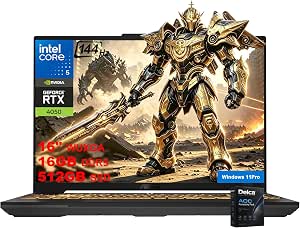 | Best Entry-Level Pick | Processor: Intel Core i5 210H, 8-core, 2.2GHz up to 4.8GHz | Graphics: NVIDIA GeForce RTX 4050 6GB GDDR6; integrated Intel graphics | Display: 16-inch WUXGA IPS, 1920 x 1200, 144Hz, 100% sRGB | VIEW ON AMAZON | See Our Full Breakdown |
| MSI Katana 15 HX 15.6-inch QHD+ Gaming Laptop with Intel Core i9-14900HX and RTX 5070 |  | Best for High-Resolution Gaming | Processor: Intel Core i9-14900HX | Graphics: NVIDIA GeForce RTX 5070 | Display: 15.6-inch QHD+, 2560 x 1440, 165Hz, 100% DCI-P3 | VIEW ON AMAZON | See Our Full Breakdown |
| ASUS ROG Strix G16 (2025) Gaming Laptop, 16-inch ROG Nebula Display, RTX 5070 Ti, Intel Core Ultra 9, 32GB DDR5, 1TB SSD, Wi-Fi 7 |  | Best Premium Performance | Processor: Intel Core Ultra 9 275HX | Graphics: NVIDIA GeForce RTX 5070 Ti | Display: 16-inch ROG Nebula, 240Hz, 3ms | VIEW ON AMAZON | See Our Full Breakdown |
| Acer Predator Helios Neo 14 AI Gaming Laptop with Intel Core Ultra 9 and NVIDIA GeForce RTX 5070 |  | Best Compact Gaming Pick | Processor: Intel Core Ultra 9 285H | Graphics: NVIDIA GeForce RTX 5070 | Display: 14.5-inch WQXGA, 165Hz, G-SYNC, matte | VIEW ON AMAZON | See Our Full Breakdown |
| ASUS ROG Strix G16 (2025) Gaming Laptop, 16-inch FHD+ 165Hz, RTX 5060, Intel Core i7-14650HX, 16GB DDR5, 1TB SSD |  | Best Balanced Midrange Pick | Processor: Intel Core i7-14650HX | Graphics: NVIDIA GeForce RTX 5060 | Display: 16-inch FHD+, 165Hz | VIEW ON AMAZON | See Our Full Breakdown |
| Alienware 15 Gaming Laptop, RTX 4050, Intel Core 7 240H, Windows 11 Home |  | Best for a Fast, Compact Gaming Display | Display: 15.3-inch WUXGA, 1920 x 1200, 165Hz | Processor: Intel Core 7 240H | Graphics: NVIDIA GeForce RTX 4050, 6GB GDDR6 | VIEW ON AMAZON | See Our Full Breakdown |
| ASUS ROG Strix G16 Gaming Laptop, 16” FHD+ 165Hz, NVIDIA GeForce RTX 5050, Intel Core i5 14450HX, 16GB DDR5, 512GB SSD, Wi-Fi 7, Windows 11 Home |  | Best for Upgrades and Newer Connectivity | Display: 16-inch, 1920 x 1200, 165Hz, 300 nits | Processor: Intel Core i5-14450HX | Graphics: NVIDIA GeForce RTX 5050, 8GB GDDR7 (as listed) | VIEW ON AMAZON | See Our Full Breakdown |
| ASUS ROG Strix G18 (2025) Gaming Laptop, 18” FHD+ 16:10 144Hz/3ms Display, NVIDIA GeForce RTX 5070, Intel Core i9 Processor, 32GB DDR5, 1TB PCIe SSD, Windows 11 Home |  | Best for Big-Screen Performance | Display: 18-inch, 2560 x 1600, 144Hz, 3ms | Processor: Intel Core i9-14900HX | Graphics: NVIDIA GeForce RTX 5070 | VIEW ON AMAZON | See Our Full Breakdown |
| Acer Nitro V 16S AI Gaming Laptop with AMD Ryzen 7 2600, NVIDIA GeForce RTX 5060, 16″ WUXGA IPS 180Hz Display, 32GB DDR5, 1TB SSD |  | Best Balanced Midrange Configuration | Display: 16-inch WUXGA IPS, 1920 x 1200, 180Hz | Processor: AMD Ryzen 7 2600 | Graphics: NVIDIA GeForce RTX 5060 Laptop GPU | VIEW ON AMAZON | See Our Full Breakdown |
| NIMO 17.3″ Gaming Laptop with AMD Ryzen 9 8945HS, 32GB DDR5, 1TB SSD, Radeon 780M Graphics, Windows 11 |  | Best for Casual Gaming and Battery Flexibility | Display: 17.3-inch LCD, 1920 x 1080 | Processor: AMD Ryzen 9 8945HS, 8 cores/16 threads, up to 5.2GHz | Graphics: AMD Radeon 780M integrated graphics | VIEW ON AMAZON | See Our Full Breakdown |
| ASUS TUF F16 AI Gaming Laptop, 16″ WUXGA IPS 144Hz, Intel Core i5 8-core, 16GB DDR5, 512GB SSD, GeForce RTX 4050 6GB, Windows 11 |  | Best Entry-Level Dedicated-GPU Pick | Processor: Intel Core i5-210H, 8-core, 2.2GHz up to 4.8GHz | Graphics: NVIDIA GeForce RTX 4050, 6GB GDDR6 | Memory: 16GB DDR5 | VIEW ON AMAZON | See Our Full Breakdown |
| Alienware 16 Aurora Gaming Laptop with NVIDIA RTX 5060 and Intel Core i7-12450H | 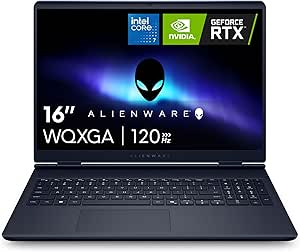 | Best for High-Resolution Gaming | Processor: Intel Core i7-12450H | Graphics: NVIDIA GeForce RTX 5060 | Memory: 16GB DDR5 | VIEW ON AMAZON | See Our Full Breakdown |
| NIMO 15.6″ Light Gaming Laptop with AMD Ryzen 7, 16GB DDR5, 512GB SSD, FHD Display, Backlit Keyboard, AI Content Creators & Students |  | Best Lightweight Everyday Gaming Laptop | Processor: AMD Ryzen 7 7735HS | Graphics: AMD Radeon 680M integrated graphics | Memory: 16GB DDR5 5600MHz | VIEW ON AMAZON | See Our Full Breakdown |
| NIMO 15.6″ IPS FHD Light Gaming Laptop with AMD Ryzen 5 6600H, 16GB DDR5 RAM, 256GB SSD, Backlit Keyboard, Fingerprint Sensor |  | Best for Casual Gaming on a Tighter Storage Budget | Processor: AMD Ryzen 5 6600H, up to 4.5GHz | Graphics: AMD Radeon 660M integrated graphics | Memory: 16GB DDR5 | VIEW ON AMAZON | See Our Full Breakdown |
| gaming laptop | Processor | Graphics | Display | Memory |
|---|---|---|---|---|
| ASUS TUF F16 AI Gaming Laptop | Intel Core i5 210H, 8-core, 2.2GHz up to 4.8GHz | NVIDIA GeForce RTX 4050 6GB GDDR6; integrated Intel graphics | 16-inch WUXGA IPS, 1920 x 1200, 144Hz, 100% sRGB | 16GB DDR5 SDRAM |
| MSI Katana 15 HX 15.6-inch QHD | Intel Core i9-14900HX | NVIDIA GeForce RTX 5070 | 15.6-inch QHD+, 2560 x 1440, 165Hz, 100% DCI-P3 | 32GB DDR5 |
| ASUS ROG Strix G16 | Intel Core Ultra 9 275HX | NVIDIA GeForce RTX 5070 Ti | 16-inch ROG Nebula, 240Hz, 3ms | 32GB DDR5-5600MHz |
| Acer Predator Helios Neo 14 AI | Intel Core Ultra 9 285H | NVIDIA GeForce RTX 5070 | 14.5-inch WQXGA, 165Hz, G-SYNC, matte | 32GB LPDDR5X |
| ASUS ROG Strix G16 | Intel Core i7-14650HX | NVIDIA GeForce RTX 5060 | 16-inch FHD+, 165Hz | 16GB DDR5-5600MHz |
| Alienware 15 Gaming Laptop | Intel Core 7 240H | NVIDIA GeForce RTX 4050, 6GB GDDR6 | 15.3-inch WUXGA, 1920 x 1200, 165Hz | 16GB DDR5 |
| ASUS ROG Strix G16 Gaming Lapt | Intel Core i5-14450HX | NVIDIA GeForce RTX 5050, 8GB GDDR7 (as listed) | 16-inch, 1920 x 1200, 165Hz, 300 nits | 16GB DDR5-5600 |
| ASUS ROG Strix G18 | Intel Core i9-14900HX | NVIDIA GeForce RTX 5070 | 18-inch, 2560 x 1600, 144Hz, 3ms | 32GB DDR5-5600 |
| Acer Nitro V 16S AI Gaming Lap | AMD Ryzen 7 2600 | NVIDIA GeForce RTX 5060 Laptop GPU | 16-inch WUXGA IPS, 1920 x 1200, 180Hz | 32GB DDR5-5600 |
| NIMO 17.3" Gaming Laptop with | AMD Ryzen 9 8945HS, 8 cores/16 threads, up to 5.2GHz | AMD Radeon 780M integrated graphics | 17.3-inch LCD, 1920 x 1080 | 32GB DDR5 |
| ASUS TUF F16 AI Gaming Laptop | Intel Core i5-210H, 8-core, 2.2GHz up to 4.8GHz | NVIDIA GeForce RTX 4050, 6GB GDDR6 | 16-inch WUXGA IPS, 1920 x 1200, 144Hz, 100% sRGB | 16GB DDR5 |
| Alienware 16 Aurora Gaming Lap | Intel Core i7-12450H | NVIDIA GeForce RTX 5060 | 16-inch LED, 2560 x 1600, 16:10, anti-glare | 16GB DDR5 |
| NIMO 15.6" Light Gaming Laptop | AMD Ryzen 7 7735HS | AMD Radeon 680M integrated graphics | 15.6-inch Full HD, 1920 x 1080 | 16GB DDR5 5600MHz |
| NIMO 15.6" IPS FHD Light Gamin | AMD Ryzen 5 6600H, up to 4.5GHz | AMD Radeon 660M integrated graphics | 15.6-inch IPS Full HD, 1920 x 1080 | 16GB DDR5 |
More Details on Our Top Picks
ASUS TUF F16 AI Gaming Laptop, 16-inch WUXGA IPS 144Hz, Intel Core i5 8-core, 16GB DDR5, 512GB SSD, GeForce RTX 4050 6GB, Windows 11 Pro
The ASUS TUF F16 is the most approachable gaming-focused option here: its RTX 4050 provides dedicated graphics, while the 144Hz, 16-inch screen gives fast-paced games room to breathe. Its 100% sRGB coverage also suits buyers who want more accurate color than a basic gaming display may offer. Compared with the ASUS ROG Strix G16 with RTX 5060, this TUF has less graphics headroom, but its WUXGA resolution is a sensible match for its GPU. The Thunderbolt 4, HDMI 2.1, and Ethernet connections make it easier to attach accessories or a larger display. The tradeoffs are a relatively heavy 4.85-pound chassis, a modest 56Wh battery, and only 512GB of storage, which may fill quickly with a game library.
Pros:- RTX 4050 6GB provides dedicated graphics for gaming.
- 144Hz IPS display with 100% sRGB coverage combines smoother motion with broad color coverage.
- Thunderbolt 4, HDMI 2.1, and RJ45 support varied peripherals and wired networking.
- 16GB DDR5 memory and an 8-core Core i5 support gaming alongside everyday multitasking.
Cons:- At 4.85 pounds, it is heavy for a laptop intended for frequent travel.
- The 56Wh battery may limit gaming away from an outlet.
- 512GB SSD leaves less room for a large installed game collection than the 1TB options in this roundup.
Best for: New PC gamers who want a dedicated NVIDIA GPU, a high-refresh-rate screen, and Windows 11 Pro without stepping up to a higher-tier graphics configuration.
Not ideal for: Traveling gamers who prioritize low carry weight or long unplugged sessions, and players who want more than 512GB of built-in storage.
- Processor:Intel Core i5 210H, 8-core, 2.2GHz up to 4.8GHz
- Graphics:NVIDIA GeForce RTX 4050 6GB GDDR6; integrated Intel graphics
- Display:16-inch WUXGA IPS, 1920 x 1200, 144Hz, 100% sRGB
- Memory:16GB DDR5 SDRAM
- Storage:512GB SSD
- Battery:56Wh
- Connectivity:Wi-Fi 6, Bluetooth 5.3, Thunderbolt 4, USB 3.2 Gen 2 Type-C, HDMI 2.1, RJ45
- Weight:4.85 lbs
- Operating system:Windows 11 Pro
Our verdict“Choose the TUF F16 if you want a capable entry-level gaming setup with a color-accurate 144Hz screen and can accept its weight and limited storage.”
MSI Katana 15 HX 15.6-inch QHD+ Gaming Laptop with Intel Core i9-14900HX and RTX 5070
The MSI Katana 15 HX pairs an RTX 5070 with a QHD+ 165Hz screen, making it a stronger fit for detailed, high-refresh-rate gaming than the WUXGA-screened ASUS TUF F16. Its 100% DCI-P3 coverage also gives the display broader color coverage for creative work. The Core i9-14900HX and 32GB of DDR5 are well suited to demanding games and heavier multitasking, while the 1TB SSD offers more room for installations than the TUF’s 512GB drive. That performance comes with a five-pound carry weight, so this is less appealing for frequent commuting. The supplied details do not specify battery capacity or runtime, making unplugged gaming harder to judge. I’d pick it over the RTX 5060 ASUS ROG Strix G16 when screen resolution and GPU tier take priority.
Pros:- RTX 5070 graphics paired with an Intel Core i9-14900HX target demanding gaming workloads.
- QHD+ 165Hz display offers higher resolution than the WUXGA ASUS TUF F16.
- 100% DCI-P3 display coverage suits color-rich games and creative tasks.
- 32GB DDR5 and a 1TB NVMe SSD provide generous memory and storage.
Cons:- Five-pound weight makes it less convenient to carry regularly.
- Battery capacity and runtime are not specified.
- Its higher-tier graphics and display may be more than needed for buyers content with WUXGA gaming.
Best for: Gamers who want an RTX 5070 paired with a high-resolution, high-refresh-rate display and enough memory for demanding games and simultaneous tasks.
Not ideal for: Frequent travelers who need a lightweight laptop, or buyers who require clear battery-life information before choosing.
- Processor:Intel Core i9-14900HX
- Graphics:NVIDIA GeForce RTX 5070
- Display:15.6-inch QHD+, 2560 x 1440, 165Hz, 100% DCI-P3
- Memory:32GB DDR5
- Storage:1TB NVMe SSD
- Connectivity:Wi-Fi 6E, Bluetooth 5.4, HDMI, USB 3.2 Gen 2, Ethernet
- Weight:5 lbs
- Operating system:Windows 11 Home
Our verdict“Pick the Katana 15 HX if you want QHD+ gaming, an RTX 5070, and 32GB of memory in a package you can mostly keep plugged in.”
ASUS ROG Strix G16 (2025) Gaming Laptop, 16-inch ROG Nebula Display, RTX 5070 Ti, Intel Core Ultra 9, 32GB DDR5, 1TB SSD, Wi-Fi 7
The ASUS ROG Strix G16 (2025) is the performance-first choice in this group, combining an RTX 5070 Ti and Core Ultra 9 275HX with a 240Hz/3ms display. That higher refresh rate gives it a clear screen-speed advantage over the MSI Katana 15 HX and its 165Hz panel, while the 32GB of memory and 1TB Gen 4 SSD are ready for demanding games and substantial multitasking. Wi-Fi 7 adds a newer wireless standard, though its benefit depends on compatible network equipment. This configuration makes the most sense for gamers who will use the extra GPU and display capability; it is harder to justify for casual play. High-end components can draw substantial power, and battery-life information is not supplied. The full-surround RGB light bar also favors a conspicuous gaming aesthetic.
Pros:- RTX 5070 Ti and Intel Core Ultra 9 275HX form the most performance-focused combination in this batch.
- 240Hz/3ms ROG Nebula display offers a faster refresh rate than the 165Hz panels in the MSI Katana and Acer Predator.
- 32GB DDR5-5600MHz supports demanding games and heavier multitasking.
- Wi-Fi 7 and a 1TB PCIe Gen 4 SSD provide modern connectivity and ample listed storage.
Cons:- High-performance components can increase power consumption.
- Battery life is not specified.
- Its premium-tier hardware may be unnecessary for buyers playing less demanding games.
Best for: Enthusiast gamers who want a top-tier GPU, a very fast 240Hz display, and 32GB of memory for demanding play and multitasking.
Not ideal for: Casual gamers, buyers prioritizing long unplugged sessions, or anyone who would rather spend less on performance they may not use.
- Processor:Intel Core Ultra 9 275HX
- Graphics:NVIDIA GeForce RTX 5070 Ti
- Display:16-inch ROG Nebula, 240Hz, 3ms
- Memory:32GB DDR5-5600MHz
- Storage:1TB PCIe Gen 4 SSD
- Connectivity:Wi-Fi 7
- Special features:Full-surround RGB light bar, Stealth Mode
- Operating system:Windows 11 Home
Our verdict“Choose this ROG Strix G16 if you will make use of its RTX 5070 Ti and 240Hz screen and do not need a battery-focused gaming laptop.”
Acer Predator Helios Neo 14 AI Gaming Laptop with Intel Core Ultra 9 and NVIDIA GeForce RTX 5070
The Acer Predator Helios Neo 14 brings an RTX 5070 and Core Ultra 9 into a 14.5-inch-class design, making it the most travel-minded high-performance option here. At 4.19 pounds, it is lighter than both the five-pound MSI Katana 15 HX and the 4.85-pound ASUS TUF F16, though it is still not an ultraportable. Its WQXGA, 165Hz matte screen with G-SYNC offers a sharp, fast gaming surface in a smaller footprint; the larger ASUS ROG Strix G16 instead offers a 240Hz panel and a stronger RTX 5070 Ti. Acer lists advanced cooling hardware, including an AeroBlade 3D fan and liquid metal thermal grease, but battery life is unspecified. Choose this model for portability and a compact gaming display, not for the biggest screen or highest listed GPU tier.
Pros:- The 4.19-pound weight is lower than the listed weights of the other laptops in this batch.
- RTX 5070 graphics and a Core Ultra 9 processor bring strong hardware to a 14.5-inch-class laptop.
- WQXGA 165Hz matte display includes G-SYNC.
- Listed cooling features include an AeroBlade 3D fan, Vortex Flow, and liquid metal thermal grease.
Cons:- The 14.5-inch display gives less screen area than the 16-inch ROG Strix and TUF models.
- Battery capacity and runtime are not specified.
- The RTX 5070 Ti ROG Strix G16 has a higher listed graphics tier for buyers focused on maximum performance.
Best for: Gamers who carry their laptop between home, school, or work and want an RTX 5070 with a high-refresh-rate screen in a smaller chassis.
Not ideal for: Buyers who want a large gaming display, the highest GPU tier in this set, or confirmed battery-life figures before buying.
- Processor:Intel Core Ultra 9 285H
- Graphics:NVIDIA GeForce RTX 5070
- Display:14.5-inch WQXGA, 165Hz, G-SYNC, matte
- Memory:32GB LPDDR5X
- Storage:1TB PCIe Gen 4 SSD
- Weight:4.19 lbs
- Connectivity:Wi-Fi 6E, Bluetooth 5.4, Thunderbolt 4, USB Type-C, USB 3.2 Gen 2, HDMI 2.1
- Cooling:AeroBlade 3D fan, Vortex Flow, liquid metal thermal grease
- Battery:Not specified
Our verdict“Choose the Helios Neo 14 if you want a comparatively lighter RTX 5070 gaming laptop and accept a smaller screen and unknown battery life.”
ASUS ROG Strix G16 (2025) Gaming Laptop, 16-inch FHD+ 165Hz, RTX 5060, Intel Core i7-14650HX, 16GB DDR5, 1TB SSD
This ASUS ROG Strix G16 sits between the RTX 4050 ASUS TUF F16 and the more powerful RTX 5070/5070 Ti laptops in this batch. Its RTX 5060, Core i7-14650HX, and 165Hz 16-inch display make a balanced configuration for gamers who want more graphics capability than the TUF offers without moving to the premium ROG Strix G16 RTX 5070 Ti. The 1TB Gen 4 SSD gives it twice the listed capacity of the TUF, while Wi-Fi 7 adds a current wireless standard. The tradeoff is 16GB of DDR5, less memory than the 32GB MSI Katana, Acer Predator, and RTX 5070 Ti ROG options. The FHD+ resolution also prioritizes refresh rate over the sharper QHD+ screens on the MSI and Acer.
Pros:- RTX 5060 offers a middle ground between the RTX 4050 TUF F16 and RTX 5070-class choices.
- 16-inch 165Hz display supports smooth gameplay.
- 1TB PCIe Gen 4 SSD offers more listed storage than the TUF F16.
- Wi-Fi 7 provides newer wireless connectivity.
Cons:- 16GB DDR5 is less memory than the 32GB configurations in several higher-tier alternatives.
- FHD+ resolution is lower than the QHD+ MSI Katana and WQXGA Acer Predator displays.
- Its RTX 5060 sits below the RTX 5070 and RTX 5070 Ti options for buyers seeking the highest graphics tier.
Best for: Gamers seeking a 16-inch high-refresh-rate laptop with an RTX 5060 and 1TB storage, without stepping up to the RTX 5070-class models.
Not ideal for: Players who want QHD+ detail, 32GB of memory from the outset, or the greater graphics tier of the RTX 5070 Ti ROG Strix.
- Processor:Intel Core i7-14650HX
- Graphics:NVIDIA GeForce RTX 5060
- Display:16-inch FHD+, 165Hz
- Memory:16GB DDR5-5600MHz
- Storage:1TB PCIe Gen 4 SSD
- Connectivity:Wi-Fi 7
- Cooling:Advanced cooling technology
- Operating system:Windows 11 Home
Our verdict“Pick this ROG Strix G16 for a sensible RTX 5060 and 1TB balance, but choose the MSI Katana or RTX 5070 Ti ROG if resolution or graphics headroom matters more.”
Alienware 15 Gaming Laptop, RTX 4050, Intel Core 7 240H, Windows 11 Home
I’d shortlist the Alienware 15 for players who want a high-refresh screen without stepping up to a larger chassis. Its 15.3-inch, 1920 x 1200 display runs at 165Hz, giving fast-paced games room to look smoother than on the 144Hz ASUS ROG Strix G18. The RTX 4050 and Intel Core 7 240H make this a more modest gaming configuration than that G18’s RTX 5070, so demanding games may call for reduced settings rather than maximum visual effects. A 1TB SSD gives a useful amount of space for a game library, and Alienware’s cooling controls include a one-click Stealth mode for quieter use. The tradeoff is the older-generation graphics tier and a 4.9-pound weight that is substantial for a 15-inch laptop. I’d choose it for screen speed and familiar Alienware controls, not for maximum graphics headroom.
Pros:- 165Hz WUXGA display offers a high refresh rate and extra vertical space for games.
- RTX 4050 dedicated graphics provide a discrete GPU for gaming.
- 1TB SSD offers more listed storage than the ASUS ROG Strix G16’s 512GB drive.
- Stealth mode and Alienware Command Center provide convenient noise and performance controls.
Cons:- RTX 4050 is a lower graphics tier than the RTX 5070 in the ASUS ROG Strix G18.
- At 4.9 pounds, it is fairly heavy for a 15-inch laptop.
- The listing does not specify battery capacity or battery life.
Best for: Players who prioritize a 165Hz 16:10 display, a 1TB drive, and Alienware’s performance controls in a mid-size laptop.
Not ideal for: Gamers seeking stronger graphics performance for demanding settings, or frequent travelers wanting a particularly light 15-inch machine.
- Display:15.3-inch WUXGA, 1920 x 1200, 165Hz
- Processor:Intel Core 7 240H
- Graphics:NVIDIA GeForce RTX 4050, 6GB GDDR6
- Memory:16GB DDR5
- Storage:1TB SSD
- Operating system:Windows 11 Home
- Weight:4.9 pounds
- Wireless:Wi-Fi 6, Bluetooth 5.2
Our verdict“Pick the Alienware 15 if its 165Hz display and 1TB storage matter more to you than the stronger graphics of the ROG Strix G18.”
ASUS ROG Strix G16 Gaming Laptop, 16” FHD+ 165Hz, NVIDIA GeForce RTX 5050, Intel Core i5 14450HX, 16GB DDR5, 512GB SSD, Wi-Fi 7, Windows 11 Home
The ROG Strix G16 is a good fit for someone who wants a gaming laptop they can expand instead of replacing as needs grow. Its tool-free upgrade access makes adding storage or memory less of a project than on a machine with less accessible internals, while Wi-Fi 7 gives it newer wireless capability than the Wi-Fi 6 Acer Nitro V 16S. The RTX 5050 and 165Hz, 16-inch display put it in a capable midrange position; the Nitro, however, lists 32GB of memory, 1TB storage, and a 180Hz screen out of the box. Here, the tradeoff is a 512GB SSD and 16GB RAM, which leave less room for a large game collection and heavy multitasking before upgrades. I’d put this Strix ahead for upgrade flexibility and connectivity, but not for the most generous included memory and storage.
Pros:- RTX 5050 graphics are paired with a 165Hz 1920 x 1200 display.
- Tool-free access makes RAM and SSD upgrades more approachable.
- Wi-Fi 7 and Bluetooth 5.4 offer newer wireless standards than the Nitro V 16S.
- Four USB ports, Thunderbolt, HDMI, and Ethernet provide a broad selection of listed connections.
Cons:- The 512GB SSD is smaller than the 1TB drives in the Acer Nitro V 16S and ASUS ROG Strix G18.
- 16GB RAM is half the listed memory of the Acer Nitro V 16S and ROG Strix G18.
- The listing does not provide battery-life information.
Best for: PC gamers who want a 16-inch high-refresh laptop with accessible upgrade options and Wi-Fi 7.
Not ideal for: Buyers who want 32GB RAM and 1TB of storage already installed, or who do not plan to use upgrade access.
- Display:16-inch, 1920 x 1200, 165Hz, 300 nits
- Processor:Intel Core i5-14450HX
- Graphics:NVIDIA GeForce RTX 5050, 8GB GDDR7 (as listed)
- Memory:16GB DDR5-5600
- Storage:512GB PCIe Gen 4 SSD
- Operating system:Windows 11 Home
- Wireless:Wi-Fi 7, Bluetooth 5.4
- Ports:4 USB ports, 1 HDMI, 1 Thunderbolt, 1 Ethernet
Our verdict“Choose this ROG Strix G16 if upgrade access and Wi-Fi 7 matter more than having the Nitro V 16S’s larger memory and SSD from day one.”
ASUS ROG Strix G18 (2025) Gaming Laptop, 18” FHD+ 16:10 144Hz/3ms Display, NVIDIA GeForce RTX 5070, Intel Core i9 Processor, 32GB DDR5, 1TB PCIe SSD, Windows 11 Home
For a buyer who wants a gaming setup that stays mostly on a desk, the ROG Strix G18 brings the strongest listed graphics configuration in this five-laptop group: an RTX 5070 paired with a Core i9-14900HX. Its 18-inch, 2560 x 1600 panel gives games more detail and screen area than the 16-inch Acer Nitro V 16S, while the 3ms response time and 144Hz refresh rate suit quick play. The 32GB of memory and 1TB SSD also provide more room for multitasking and installed games than the smaller ROG Strix G16. That performance and display size come with a major mobility cost: the listed weight is 10 pounds, making this a poor choice for daily commuting. I’d rank it for desktop-replacement use, not as an all-purpose travel gaming laptop; the large display does not erase the burden of carrying it.
Pros:- RTX 5070 and Intel Core i9-14900HX make it the strongest listed graphics-and-processor pairing in this batch.
- 18-inch 2560 x 1600 screen provides more display area and resolution than the 16-inch Nitro V 16S.
- 32GB DDR5 memory supports heavier multitasking than the 16GB Alienware 15 and ROG Strix G16.
- 1TB PCIe Gen 4 SSD provides substantial listed storage.
Cons:- Listed 10-pound weight makes it cumbersome to carry regularly.
- Its 18-inch footprint is less suited to small desks and compact setups.
- The listing gives a 90Wh battery capacity but no runtime estimate.
Best for: Desk-based gamers and creators who want a large, high-resolution display, strong listed graphics, and substantial memory.
Not ideal for: Students or commuters who carry their laptop frequently, since its listed 10-pound weight is far above the other mid-size options here.
- Display:18-inch, 2560 x 1600, 144Hz, 3ms
- Processor:Intel Core i9-14900HX
- Graphics:NVIDIA GeForce RTX 5070
- Memory:32GB DDR5-5600
- Storage:1TB PCIe Gen 4 SSD
- Battery:90Wh lithium-ion
- Weight:10 pounds
- Operating system:Windows 11 Home
Our verdict“Choose the ROG Strix G18 for a powerful, large-screen gaming station, but skip it if portability is part of your daily routine.”
Acer Nitro V 16S AI Gaming Laptop with AMD Ryzen 7 2600, NVIDIA GeForce RTX 5060, 16″ WUXGA IPS 180Hz Display, 32GB DDR5, 1TB SSD
The Acer Nitro V 16S stands out for giving gamers a well-rounded set of components without leaning as heavily toward sheer size or premium processor specifications as the ROG Strix G18. It pairs an RTX 5060 with 32GB of DDR5 memory and a 1TB SSD, so it has more listed memory and storage than the ASUS ROG Strix G16 while keeping a 16-inch form. Its 180Hz WUXGA IPS display also has the highest listed refresh rate in this batch, a practical match for players who value smooth motion. The tradeoff is connectivity: its listed wireless is Wi-Fi 6, not the Strix G16’s Wi-Fi 7, and the product information provides fewer detail points about ports and upgrade access. I’d choose the Nitro for its strong out-of-box balance, but buyers who prioritize newer wireless or easy tool-free upgrades may prefer the ASUS.
Pros:- 180Hz WUXGA IPS display has the highest listed refresh rate among these five laptops.
- RTX 5060 graphics are paired with 32GB DDR5 memory.
- 1TB PCIe Gen 4 SSD offers twice the listed capacity of the ROG Strix G16.
- 16-inch size offers a more manageable screen footprint than the 18-inch ROG Strix G18.
Cons:- Wi-Fi 6 is an older wireless standard than the Wi-Fi 7 listed for the ROG Strix G16.
- The processor is identified as Ryzen 7 2600, but the listing supplies limited detail about its capabilities.
- The provided product data does not specify weight, battery capacity, or a full port list.
Best for: Gamers who want a 16-inch high-refresh display, RTX 5060 graphics, and 32GB RAM plus 1TB storage included.
Not ideal for: Buyers who specifically need Wi-Fi 7 or want confirmed details about tool-free access and the full port selection.
- Display:16-inch WUXGA IPS, 1920 x 1200, 180Hz
- Processor:AMD Ryzen 7 2600
- Graphics:NVIDIA GeForce RTX 5060 Laptop GPU
- Memory:32GB DDR5-5600
- Storage:1TB PCIe Gen 4 SSD
- Wireless:Wi-Fi 6
Our verdict“Pick the Nitro V 16S if you want a balanced 16-inch gaming configuration with 32GB RAM and a 1TB SSD already included.”
NIMO 17.3″ Gaming Laptop with AMD Ryzen 9 8945HS, 32GB DDR5, 1TB SSD, Radeon 780M Graphics, Windows 11
The NIMO 17.3-inch is the outlier here: rather than pairing a gaming-focused dedicated GPU with its processor, it relies on integrated Radeon 780M graphics. That makes it better suited to lighter games and general productivity than the Acer Nitro V 16S, whose RTX 5060 is the clearer choice for demanding modern games. NIMO’s strengths are elsewhere: it lists a Ryzen 9 8945HS, 32GB of memory, a 1TB SSD, and a 75Wh battery with up to 15.5 hours of stated runtime. At 4.6 pounds, it is lighter than the 10-pound ROG Strix G18 despite its larger 17.3-inch screen. I’d consider it for casual gaming and everyday work away from a desk, but not as a substitute for a laptop with dedicated RTX graphics. The battery claim is a listed maximum, not a gaming-runtime estimate.
Pros:- Ryzen 9 8945HS and 32GB DDR5 suit multitasking and productivity workloads.
- 1TB SSD provides substantial listed storage.
- 17.3-inch 1920 x 1080 screen gives more viewing area than the 16-inch Nitro V 16S.
- 75Wh battery has a listed maximum runtime of up to 15.5 hours, and its 4.6-pound weight is far below the ROG Strix G18’s.
Cons:- Integrated Radeon 780M graphics are less suited to demanding gaming than the dedicated RTX 5060 in the Acer Nitro V 16S.
- The listing does not give a display refresh rate, making it harder to judge for high-frame-rate play.
- The stated battery runtime is not identified as a gaming-use estimate.
Best for: Students and productivity-focused buyers who play lighter games and want a large screen, generous memory, and a stated long battery runtime.
Not ideal for: Gamers aiming to run demanding modern titles with dedicated-GPU performance; the Radeon 780M is integrated graphics, unlike the RTX GPUs in the Nitro V 16S and ROG Strix G18.
- Display:17.3-inch LCD, 1920 x 1080
- Processor:AMD Ryzen 9 8945HS, 8 cores/16 threads, up to 5.2GHz
- Graphics:AMD Radeon 780M integrated graphics
- Memory:32GB DDR5
- Storage:1TB SSD
- Battery:75Wh, up to 15.5 hours stated
- Weight:4.6 pounds
- Operating system:Windows 11
- Connectivity:Wi-Fi 6E, Bluetooth 5.2, USB4, HDMI
Our verdict“Choose the NIMO for everyday work and lighter gaming with a large screen, but pick the Acer Nitro V 16S for dedicated-GPU gaming.”
ASUS TUF F16 AI Gaming Laptop, 16″ WUXGA IPS 144Hz, Intel Core i5 8-core, 16GB DDR5, 512GB SSD, GeForce RTX 4050 6GB, Windows 11
The ASUS TUF F16 is the clearest fit here for buyers who want a genuine gaming GPU without stepping up to the heavier, higher-resolution Alienware 16 Aurora. Its RTX 4050 and 144Hz display suit fast-paced games at the laptop’s 1920 x 1200 resolution, while 100% sRGB coverage also helps with general creative work. The 8-core Core i5 and 16GB of DDR5 give everyday multitasking room, and Thunderbolt 4, HDMI 2.1, and wired Ethernet make desk setups flexible. The tradeoff is that its 512GB SSD can fill quickly with a game library, and the 56Wh battery and 4.85-pound weight make it less appealing as an all-day carry. I’d choose it over the NIMO models for gaming, but not for lightweight travel.
Pros:- RTX 4050 dedicated graphics are better suited to demanding games than the NIMO laptops’ integrated Radeon graphics.
- 144Hz, 1920 x 1200 display combines smooth motion with a 16:10 workspace.
- 100% sRGB coverage supports color-aware creative tasks.
- Thunderbolt 4, HDMI 2.1, and RJ45 support versatile monitor and network connections.
Cons:- 512GB SSD leaves limited room for a large collection of modern games.
- At 4.85 pounds with a 56Wh battery, it is not an especially travel-friendly gaming option.
- The supplied details do not specify additional cooling features for sustained gaming loads.
Best for: Gamers seeking a dedicated NVIDIA GPU and high-refresh display for 1080p-class play, plus broad port selection for a desk setup.
Not ideal for: Frequent travelers or players who want a large installed game library; its weight limits carry comfort and its 512GB SSD may need expansion.
- Processor:Intel Core i5-210H, 8-core, 2.2GHz up to 4.8GHz
- Graphics:NVIDIA GeForce RTX 4050, 6GB GDDR6
- Memory:16GB DDR5
- Storage:512GB SSD
- Display:16-inch WUXGA IPS, 1920 x 1200, 144Hz, 100% sRGB
- Connectivity:Wi-Fi 6, Bluetooth 5.3, Thunderbolt 4, USB-C, HDMI 2.1, RJ45
- Battery:56Wh
- Weight:4.85 lbs
Our verdict“Choose the TUF F16 if you want a 144Hz screen and dedicated RTX graphics in a more restrained setup than the Alienware 16 Aurora.”
Alienware 16 Aurora Gaming Laptop with NVIDIA RTX 5060 and Intel Core i7-12450H
The Alienware 16 Aurora stands apart from the TUF F16 by prioritizing a sharper 2560 x 1600 display and an RTX 5060 rather than a 144Hz, 1920 x 1200 panel and RTX 4050. That pairing makes it the more compelling choice for players who value detailed visuals and also use their laptop for creative work. Its 16:10 screen adds vertical room, while the listed Cryo-Chamber cooling structure is intended to support demanding sessions. It also doubles the TUF’s listed SSD capacity at 1TB. There are real costs in portability: at 5.5 pounds, it is the heaviest of these four, and the supplied details don’t state a refresh rate, so competitive players may prefer a model with a clearly specified high-refresh panel. I’d skip it if travel weight matters more than resolution.
Pros:- 2560 x 1600 resolution provides more detail and workspace than the TUF F16’s 1920 x 1200 panel.
- RTX 5060 is a stronger dedicated-graphics tier than the RTX 4050 in the TUF F16.
- 1TB SSD offers more room for games and creative files than the 512GB drives in the TUF and NIMO Ryzen 7.
- Cryo-Chamber cooling structure is designed with sustained performance in mind.
Cons:- At 5.5 pounds, it is the least portable of the four featured laptops.
- The listed specifications do not provide a display refresh rate.
- The product details list a single 1TB SSD without describing additional storage options.
Best for: Players and creators who want a high-resolution 16:10 screen, an RTX 5060, and a 1TB SSD in one laptop.
Not ideal for: Competitive gamers who require a confirmed high-refresh display, or commuters who want a lighter machine than the 5.5-pound chassis.
- Processor:Intel Core i7-12450H
- Graphics:NVIDIA GeForce RTX 5060
- Memory:16GB DDR5
- Storage:1TB SSD
- Display:16-inch LED, 2560 x 1600, 16:10, anti-glare
- Cooling:Cryo-Chamber structure
- Connectivity:Bluetooth, Ethernet, HDMI, USB 3.2 Gen 1 and Gen 2
- Weight:5.5 lbs
Our verdict“Pick the Alienware 16 Aurora if display resolution and RTX 5060 graphics matter more to you than low carry weight or a confirmed high refresh rate.”
NIMO 15.6″ Light Gaming Laptop with AMD Ryzen 7, 16GB DDR5, 512GB SSD, FHD Display, Backlit Keyboard, AI Content Creators & Students
The NIMO Ryzen 7 is the portability-first choice in this group: it weighs under 1.7kg, far less than either the ASUS TUF F16 or Alienware 16 Aurora. Its Ryzen 7 7735HS, 16GB DDR5, and 512GB PCIe 4.0 SSD make a capable base for schoolwork, multitasking, and lighter games. But its Radeon 680M is integrated graphics, not a dedicated gaming GPU, so it is a different kind of pick from the RTX-equipped TUF and Alienware. The Full HD screen is also listed without a high refresh rate. That makes this a sensible everyday laptop for someone who games casually, rather than a substitute for a machine built around demanding modern titles. I’d choose it over the NIMO Ryzen 5 for the larger SSD and stronger listed processor, while recognizing that neither is aimed at high-end gaming.
Pros:- Under 1.7kg makes it much easier to carry than the TUF F16 or Alienware 16 Aurora.
- Ryzen 7 7735HS and 16GB DDR5 suit multitasking, study, and general creative workloads.
- 512GB PCIe 4.0 SSD provides twice the listed capacity of the NIMO Ryzen 5.
- Port selection includes two USB-C ports, HDMI 2.0, three USB-A ports, and a microSD reader.
Cons:- Integrated Radeon 680M graphics are a substantial gaming limitation compared with the RTX GPUs in the TUF and Alienware.
- The Full HD display’s refresh rate is not specified.
- Battery runtime is not provided, making unplugged gaming expectations hard to judge.
Best for: Students and mobile users who want a lightweight laptop for everyday work and casual gaming, with 16GB memory and a 512GB SSD.
Not ideal for: Players focused on graphically demanding games or high-refresh competitive play; integrated Radeon graphics and an unspecified display refresh rate limit its gaming credentials.
- Processor:AMD Ryzen 7 7735HS
- Graphics:AMD Radeon 680M integrated graphics
- Memory:16GB DDR5 5600MHz
- Storage:512GB PCIe 4.0 SSD
- Display:15.6-inch Full HD, 1920 x 1080
- Weight:Under 1.7kg
- Battery:53.58Wh
- Ports:2 USB-C, HDMI 2.0, 3 USB-A, microSD, 3.5mm audio
- Warranty:2 years
Our verdict“Choose the NIMO Ryzen 7 if low carry weight and everyday versatility matter more than dedicated graphics or high-refresh gaming.”
NIMO 15.6″ IPS FHD Light Gaming Laptop with AMD Ryzen 5 6600H, 16GB DDR5 RAM, 256GB SSD, Backlit Keyboard, Fingerprint Sensor
The NIMO Ryzen 5 is a basic, portable option for casual gaming and everyday use, not a direct performance rival to the RTX-equipped ASUS TUF F16. Its Ryzen 5 6600H and Radeon 660M integrated graphics can handle lighter play, while the 15.6-inch IPS Full HD screen, backlit keyboard, and fingerprint sensor cover practical daily needs. Compared with the NIMO Ryzen 7, this model has a less powerful listed processor and only 256GB of storage, so it leaves less room for a growing game library. Its 3.75-pound weight is manageable, though the Ryzen 7 NIMO is notably lighter. I’d consider this only if your games are modest in size and visual demands; buyers planning to install several large titles should look to a laptop with more storage and dedicated graphics.
Pros:- Ryzen 5 6600H and 16GB DDR5 provide a capable foundation for everyday multitasking.
- 15.6-inch IPS Full HD display suits general gaming and video viewing.
- Fingerprint sensor and backlit keyboard add practical convenience.
- Multiple USB ports and HDMI provide flexibility for peripherals and an external screen.
Cons:- 256GB SSD is much smaller than the 512GB drive in the NIMO Ryzen 7 and may quickly constrain game installs.
- Integrated Radeon 660M graphics are not suited to the same gaming demands as the TUF F16’s RTX 4050.
- At 3.75 pounds, it is heavier than the NIMO Ryzen 7 despite its more modest gaming hardware.
Best for: Casual players who mainly use a laptop for everyday tasks and lighter games, and value a fingerprint reader and backlit keyboard.
Not ideal for: Gamers installing several large titles or seeking modern high-detail gaming; the 256GB SSD and integrated Radeon 660M are limiting.
- Processor:AMD Ryzen 5 6600H, up to 4.5GHz
- Graphics:AMD Radeon 660M integrated graphics
- Memory:16GB DDR5
- Storage:256GB SSD
- Display:15.6-inch IPS Full HD, 1920 x 1080
- Battery:53.58Wh
- Wireless:Wi-Fi 802.11a/b/g/n/ac, Bluetooth
- Weight:3.75 lbs
- Security:Fingerprint sensor
Our verdict“Choose the NIMO Ryzen 5 for casual play and everyday tasks if its small SSD fits your needs, but pick the TUF F16 for demanding games.”

How We Picked
I ranked these gaming laptops by their fit for actual gaming workloads, giving the most weight to the listed GPU, processor, memory, storage, and display. A dedicated RTX graphics chip generally matters more to game performance than a fast refresh rate or a large memory figure on its own, so models with stronger dedicated graphics rise above systems built for casual play. I also weighed whether the screen size, resolution, and refresh rate make sense for the hardware, since a high-resolution display can ask more of a GPU.
After performance, I considered everyday usability and configuration balance: portability, included RAM and SSD capacity, and whether a model appears aimed at gaming, mixed use, or light play. The ranking favors systems that combine capable graphics with useful memory and storage rather than relying on one standout spec. Products with integrated graphics or incomplete gaming-focused specifications rank lower for demanding games, though they may still suit students or casual users. Where two listings share nearly identical hardware, I treat them as the same performance tier and call out configuration details buyers should verify.
| gaming laptop | Operating system |
|---|---|
| ASUS TUF F16 AI Gaming Laptop | Windows 11 Pro |
| MSI Katana 15 HX 15.6-inch QHD | Windows 11 Home |
| ASUS ROG Strix G16 | Windows 11 Home |
| Acer Predator Helios Neo 14 AI | — |
| ASUS ROG Strix G16 | Windows 11 Home |
| Alienware 15 Gaming Laptop | Windows 11 Home |
| ASUS ROG Strix G16 Gaming Lapt | Windows 11 Home |
| ASUS ROG Strix G18 | Windows 11 Home |
| Acer Nitro V 16S AI Gaming Lap | — |
| NIMO 17.3" Gaming Laptop with | Windows 11 |
| ASUS TUF F16 AI Gaming Laptop | — |
| Alienware 16 Aurora Gaming Lap | — |
| NIMO 15.6" Light Gaming Laptop | — |
| NIMO 15.6" IPS FHD Light Gamin | — |
Factors to Consider When Choosing Gaming Laptops
Specs are most useful when read as a system, not as a checklist. I would start with the games you play, how often the laptop needs to travel, and whether you use an external monitor; those answers help set a sensible balance between graphics power, screen size, and portability.
Match the Graphics Chip to Your Games
For demanding 3D games, the dedicated GPU is usually the first specification I compare because it carries much of the rendering work. A stronger GPU can support higher settings or smoother play, but results also depend on the laptop’s power limits, cooling, and the game itself. Integrated graphics can handle some lighter titles, but buyers should not treat a large memory number as a substitute for a dedicated gaming GPU. Check benchmarks for the exact laptop configuration and games you care about before choosing between GPU tiers. If your library is mostly esports or older games, you may not need the same graphics headroom as someone playing new, visually demanding releases.
Balance Resolution and Refresh Rate
A high refresh rate can make motion look smoother, especially in competitive games, but the laptop must render enough frames to take advantage of it. Higher screen resolutions can sharpen images while also increasing the workload on the GPU. Do not choose a display by its refresh-rate number alone: panel response, brightness, color, and resolution affect the experience too. A 144Hz or 165Hz panel may be a more balanced match for midrange graphics than a resolution that pushes the GPU too hard. If you mostly connect an external monitor, screen size and panel features may matter less than the ports and graphics output available.
Choose a Size You Will Actually Carry
Screen size shapes the laptop’s footprint, and larger systems can be less convenient to carry even when their display is more comfortable for gaming. A 14-inch design can suit frequent travel, while a 16-inch laptop offers a middle ground between viewing space and portability. An 18-inch model gives games and split-screen work more room, but it is better suited to a desk than a daily commute. Check the weight and power adapter together, since the charger adds to what you carry. If the laptop will stay in one place, a larger chassis may also offer room for more cooling, though actual thermals still depend on the design.
Plan Memory and Storage Around Your Habits
Memory affects multitasking and can help avoid slowdowns when a game runs alongside chat, a browser, or creative software. The listings here range from 16GB to 32GB, but buyers should check whether RAM is replaceable and whether the laptop has an open slot. Storage fills quickly when games have large installs, so a 1TB SSD can reduce the need to manage a library constantly. A smaller drive can still work if you play a few games at a time or can add storage later. Before buying, check the number of SSD slots, supported drive sizes, and whether upgrades affect the warranty.
Look Beyond the Headline Specs
Cooling, keyboard comfort, port selection, fan noise, and battery behavior all shape daily use, yet product titles rarely explain them fully. A gaming laptop can run loudly under load, and battery performance during games is typically more limited than during light tasks. Check independent testing for temperatures and sustained performance, since short bursts of speed do not show how a system behaves during a long session. Confirm that the ports support your headset, wired network, external display, and accessories without a pile of adapters. Also compare the exact model number and operating system: similar product names may describe different configurations.
Decide When Paying for More Power Makes Sense
Paying for a higher graphics tier makes the most sense when your games demand it, you use a high-resolution external display, or you want more room to raise settings over time. It is less useful if you mainly play lighter games or spend most of your time on school and office tasks. Extra memory and storage can improve convenience, but they do not automatically make games run faster if the GPU is the limiting part. A premium chassis may bring a better display or more refined features, but compare those benefits with the cost of a capable GPU and cooling system. I would prioritize the component that addresses your actual bottleneck rather than buying the model with the longest spec list.
Frequently Asked Questions
Is integrated Radeon 780M graphics enough for a gaming laptop?
It can be enough for lighter gaming, older titles, and some esports games at reduced settings, but it is not equivalent to a dedicated RTX graphics chip. The NIMO 17.3-inch model lists Radeon 780M graphics, so I would treat it as a general-purpose laptop with light gaming potential rather than a choice for demanding new releases. Check performance for the specific games you play, since settings and resolution can change the experience substantially. If modern AAA gaming is a priority, a dedicated GPU should be high on your shortlist. Integrated graphics may still make sense if portability and everyday work matter more than high-end gaming.
Should I choose an RTX 5060 laptop or an RTX 5070 model?
I would choose based on the games, display resolution, and performance headroom you want, rather than the GPU name alone. The RTX 5070 models in this roundup include the ROG Strix G18 and Predator Helios Neo 14 AI, while the Acer Nitro V 16S AI pairs an RTX 5060 with 32GB of memory and a 180Hz display. A higher GPU tier can help with demanding games and settings, but the exact laptop’s power limits and cooling influence real results. If you play less demanding titles, the RTX 5060 may be a better-balanced fit. Compare independent results for the exact configuration before paying for the higher tier.
Is 16GB of RAM enough, or should I buy 32GB?
For gaming with ordinary background tasks, 16GB can be workable, but 32GB leaves more room for multitasking and demanding games. This roundup includes both, and the difference is most useful if you keep many applications open, stream, edit media, or want to reduce the chance of running short on memory. RAM capacity does not replace GPU performance, so I would not choose a weaker graphics configuration solely to get more memory. Check whether the laptop supports a later memory upgrade and whether its memory is replaceable. If upgrades are difficult or not supported, buying the capacity you expect to need can save hassle.
Are the two ASUS TUF F16 listings different gaming laptops?
The supplied specifications list the same 16-inch WUXGA 144Hz screen, Intel Core i5 8-core processor, 16GB DDR5, 512GB SSD, and RTX 4050 6GB for both TUF F16 entries. The stated difference is Windows 11 Pro on one listing and Windows 11 on the other, so the listed gaming hardware does not indicate a performance distinction. Product listings can still vary by exact model number, bundled software, or configuration details. I would verify the model identifier and seller’s specification sheet before ordering. Choose the operating system version that suits your work needs, not as a reason to expect faster games.
Can a gaming laptop replace a desktop if I want a big screen?
A laptop can be a practical desktop substitute when portability matters, especially if you connect an external monitor, keyboard, and mouse at home. The ROG Strix G18 already offers an 18-inch display, while a smaller laptop paired with a monitor can be easier to carry and position. A desktop usually offers more upgrade flexibility and can provide stronger cooling at a similar performance tier, but it cannot travel with you as easily. Check the laptop’s display outputs, USB ports, and charging setup before building a desk arrangement around it. Also account for fan noise and sustained performance when the system is used for long gaming sessions.
Conclusion
For most buyers seeking a gaming-first laptop, I recommend the ASUS ROG Strix G16 with RTX 5070 Ti as the best overall option because it combines the strongest listed GPU with 32GB of memory and 1TB of storage. The Acer Nitro V 16S AI is my best value-oriented configuration for buyers who want an RTX 5060, a 180Hz screen, and generous memory and storage without stepping up to an RTX 5070 model. For a best premium direction, choose the ROG Strix G18 if a large screen and high-end gaming hardware matter most; the Predator Helios Neo 14 AI better suits buyers who want more portability with an RTX 5070. Beginners with moderate gaming needs can start with the ASUS TUF F16, while casual players and students who prioritize general use can look at the NIMO models, understanding that their listed graphics are less suited to demanding games. Match the GPU to your game library, then confirm the exact configuration before choosing.
Fall Picks

Therabody Theragun Mini 3rd Gen Massage Gun (Travel Essential, Black)
As an affiliate, we earn on qualifying purchases.