

This checklist is for people exploring practical tools that may support emotional regulation, as well as caregivers and clinicians helping someone consider their options. Tools can complement professional care, but they are not a substitute for individualized mental health support.

Turn your wind-down time into listening time
- Thousands of audiobooks, podcasts and originals
- Listen on your phone, tablet or Echo — also offline
- Cancel anytime
The checklist is organized by tool type, from identifying emotions to exploring writing, breathing, sensory, and skills-based resources. Each section explains what to consider and names a pick where one was provided; the emotion wheel section is advice only.
Use the points as prompts, not rules. Consider the person’s preferences, sensitivities, and circumstances, and try one tool at a time when possible. If a tool feels uncomfortable or unhelpful, it is okay to stop and choose another approach.
Emotion Wheel Chart
An emotion wheel can offer a visual prompt when it is difficult to name what is happening internally. Start with a broad label, then look for a more specific word that feels close enough; there is no need to find a perfect match. The aim is curiosity, not a test, and a person may notice several emotions at once.
When choosing a chart, consider readability, vocabulary, and whether the layout feels inviting rather than overwhelming. A crowded design or unfamiliar terms may make the exercise harder, especially during intense distress. Look for clear text, a structure that is easy to scan, and language that fits the intended user. A printed chart, digital image, or handwritten list can all serve as a starting point; pick a format that is easy to access in the moment.
Use the chart gently: pause if focusing on emotions increases distress, and consider pairing it with a grounding step or support from a trusted person. It can help to ask what the emotion might be communicating without assuming it dictates what to do next. Keep in mind that charts vary in wording and organization, so personal fit matters more than covering every possible feeling.
What to look for:
- Clear, legible labels that are easy to scan
- Emotion words that feel understandable and relevant
- A layout that does not feel visually overwhelming
- A format that is easy to keep nearby or open
- Room to add personal words or notes if useful
Guided Journal
A guided journal can give reflection some structure, which may help when starting from a blank page feels difficult. The named pick, Guided Bible Study and Prayer Journal with Daily Scripture Prompts, combines journaling with a faith-based framing. Before choosing it, consider whether scripture and prayer are personally welcome; a spiritual format is a matter of preference, not a requirement for emotional regulation.
Look at the prompt style and how much writing each entry seems to invite. Some people prefer brief check-ins, while others want space for longer reflection. Consider whether the journal’s language feels supportive and whether the routine feels manageable alongside other responsibilities. If written reflection tends to become self-critical or intensify distress, use shorter entries, switch to a neutral prompt, or pause. The most useful choice is one that feels personally comfortable rather than obligatory.
For practical fit, consider where and when the journal might be used, whether its format is easy to handle, and whether the prompts allow flexibility. There is no need to complete every prompt or write every day. A journal can be one optional way to notice patterns and record thoughts, but it does not replace professional guidance. Let readiness and personal beliefs guide whether this particular title suits the user.
What to look for:
- Prompts that feel supportive rather than demanding
- A faith-based approach that matches the user’s preferences
- Writing space suited to brief or longer reflections
- A format that is comfortable to use in the intended setting
- Flexibility to skip prompts or write at one’s own pace
Guided Bible Study and Prayer Journal with Daily Scripture Prompts

This refillable guided journal supports daily Bible study, prayer, gratitude, and reflection, with prompts for scripture, takeaways, and weekly and monthly review. It has a leather cover, 100gsm pages, a magnetic strap, and gift-ready packaging.
Pros:
- Guided prompts for scripture, prayer, gratitude, and reflection
- Refillable design
- Leather cover with magnetic strap
- 237 pages and 100gsm paper
Cons:
- Binding type is unspecified
Best for: People who welcome scripture and prayer in journaling
Not ideal for: People seeking a nonreligious journal format
Bottom line: Choose this guided journal only if its faith-based prompts feel supportive to the person using it.
Breathing Exercise Cards
Cards can make breathing and body-based exercises easier to browse without having to search for an activity in the moment. The listed pick is 70 Vagus Nerve Exercises Cards for Nervous System Regulation. Its title identifies a card set centered on exercises; consider the specific activities and instructions before deciding whether they fit the intended user. A large collection is not automatically a better match than a smaller set that feels clear and approachable.
Review whether directions are easy to understand, whether exercises can be adapted, and whether any activity feels uncomfortable. Breath-focused practices do not suit everyone in every moment; some people find attention to breathing unsettling. It is reasonable to skip those exercises and choose a different grounding option. Consider also how easy the cards are to handle and store, and whether the user can select an activity without feeling pressured to finish a sequence.
Use the cards as a menu, not a prescribed routine. Start with an activity that feels manageable, stop if discomfort rises, and seek professional guidance when unsure whether a particular exercise is appropriate. Check that the wording avoids promises of guaranteed outcomes and supports choice. The best fit is the one the user can approach with comfort and control, not the one with the most ambitious claims.
What to look for:
- Instructions that are straightforward and easy to follow
- Activities the intended user feels comfortable trying
- Clear permission to stop or choose another exercise
- Cards that are easy to browse and handle
- Descriptions that avoid promising guaranteed results
70 Vagus Nerve Exercises Cards for Nervous System Regulation

This set includes 70 science-informed practices to stimulate the vagus nerve, helping reduce stress and restore emotional balance. The cards are beginner-friendly with clear instructions, illustrations, and affirmations, and include focused routines for stress relief and sleep support.
Pros:
- Easy-to-follow, beginner-friendly exercises
- Includes focused routines for specific goals
- Cards are visually attractive with illustrations and affirmations
- Compact size with a display stand for daily reminders
Cons:
- Limited information on exercise duration or intensity
- Requires manual setup and routine commitment
- No digital or app-based version available
Best for: People who like selecting from guided activity prompts
Not ideal for: People who find breath or body attention uncomfortable
Bottom line: Review the exercises first and use only the activities that feel comfortable.
Weighted Lap Pad
A weighted item is a personal sensory choice, so comfort and safe, suitable use matter more than appearance alone. The pick is the Drewin Leaf-Shaped Weighted Lap Blanket for Adults 7lbs, 41"x53" Sage. Its name specifies an adult product, a stated weight, dimensions, and color. Consider whether those details suit the intended person and how the blanket will be used, rather than assuming a weighted item will feel calming for everyone.
Think about the user’s sensory preferences, ability to move the item independently, and the setting where it may be used. Check the stated dimensions against the lap or seating area, and consider whether the weight feels manageable for that individual. Avoid use if it causes discomfort or restricts movement, and follow any applicable professional guidance. People with health or mobility concerns should consult an appropriate clinician about whether a weighted item is suitable. Individual comfort and safety should lead the decision.
Common mistakes include choosing by looks alone, overlooking the product’s specified size and weight, or treating it as a universal calming solution. It may help to consider where it can be stored and whether the user can put it on and remove it comfortably. The listed product is explicitly described for adults, so do not assume it is suitable for a child. Choose based on the intended user and use, and discontinue use if it does not feel right.
What to look for:
- A stated weight that the intended user can manage
- Dimensions that suit the planned seating area
- Clear adult-use labeling when buying for an adult
- Comfort and freedom of movement during use
- Professional guidance when health or mobility concerns apply
Drewin Leaf-Shaped Weighted Lap Blanket for Adults 7lbs, 41"x53" Sage Green
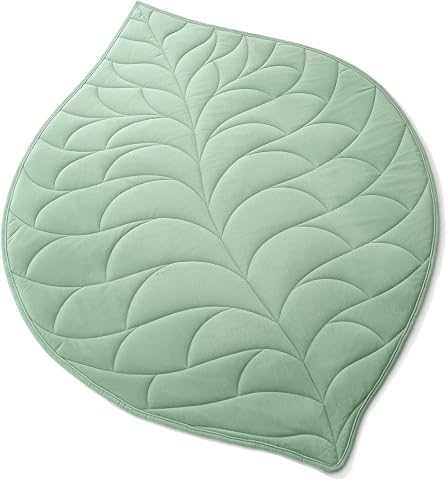
This leaf-shaped weighted lap blanket provides gentle pressure to promote relaxation and better sleep. Made with soft velvet fabric and filled with glass beads, it offers all-season comfort and is portable for travel or home use.
Pros:
- Unique leaf-shaped design adds decorative appeal
- Weighted for calming pressure and better rest
- Soft, breathable velvet fabric suitable for all seasons
- Portable and travel-friendly
Cons:
- May be too heavy for some users
- Limited color options
- Requires machine washing for maintenance
Best for: Adults who already know weighted pressure feels comfortable
Not ideal for: Anyone for whom weight or restricted movement feels uncomfortable
Bottom line: Check the stated size and weight against the user’s comfort and ability to handle it.
Sensory Fidget Set
A fidget item may offer a hands-on activity for someone who likes tactile input, but preferences differ widely. The pick is the Pushpeel Silicone Sensory Activity Board with Travel Bag and 11 String. The product name identifies a silicone activity board, a travel bag, and 11 strings; consider whether that kind of interaction is appealing and appropriate for the intended user. A set is only useful if its materials and activities feel comfortable to handle.
Check the product details for age guidance, care instructions, and any relevant safety information before use, particularly if buying for a child or someone who may mouth or pull at small components. Consider whether the board is easy to carry and whether its size suits the places it will be used. Inspect components as appropriate and follow the manufacturer’s guidance. If textures or repetitive hand movements increase irritation, stop and try a different sensory option.
Do not assume that a travel bag guarantees the set will suit every outing, or that more components mean a better experience. The user may prefer one simple object, or may not enjoy fidgets at all. Think about the intended setting, the person’s dexterity, and whether the activity is discreet enough for that context. Choose according to sensory preference and practical use, and let the person decline it without pressure.
What to look for:
- Materials and textures the intended user likes
- Age guidance and safety information suited to the user
- Care instructions that fit expected use
- A size and format that work in the intended setting
- Components that the user can handle comfortably
Pushpeel Silicone Sensory Activity Board with Travel Bag and 11 Strings

This silent, screen-free silicone activity board offers tactile push, peel, loop, and bridge play for travel or quiet time. It includes 11 colored strings and a carry bag, and is designed to encourage creativity, fine-motor skills, and hand-eye coordination.
Pros:
- Portable and includes a travel bag
- Silent and screen-free
- Offers multiple tactile play actions
- Designed to support fine-motor skills and creativity
Cons:
- The text does not provide dimensions or cleaning instructions
- Age suitability is not specified in the description
Best for: People who enjoy hands-on sensory activities
Not ideal for: People who dislike tactile input or small components
Bottom line: Check safety details and sensory preferences before choosing this activity board.
DBT Skills Workbook
A DBT skills resource may help a reader learn structured concepts and practice skills, but a book should not be treated as a substitute for therapy. The named pick is DBT Skills Training Manual. Before buying, check the edition, intended audience, and contents so the material matches the reader’s needs and level of familiarity. A manual may feel dense to someone seeking brief, everyday prompts, so consider whether structured learning is welcome.
Think about how the reader prefers to learn: independently, with a therapist, or alongside a group or other support. Consider whether the instructions are understandable and whether there is room or an accompanying format for practice and reflection. If the manual’s language feels confusing or emotionally activating, pause and discuss it with a qualified professional. Someone new to DBT may benefit from guidance in understanding how skills apply to their circumstances; the workbook alone cannot provide individualized care.
Common mistakes include choosing a resource by title alone, assuming it is the right edition, or expecting a manual to resolve distress without practice or support. Check the product listing for publication and format details rather than inferring them from the name. Match the resource to the person’s goals and available support, and use only what feels relevant. Fit, clarity, and guidance are more important than completing every exercise.
What to look for:
- Edition and contents that match the reader’s needs
- Language and instructions the reader can understand
- A learning format that suits independent or supported use
- Opportunities to reflect or practice skills
- Professional support when applying skills feels difficult
DBT Skills Training Manual

This manual provides comprehensive Dialectical Behavior Therapy (DBT) skills training for individuals seeking to improve emotional regulation and interpersonal effectiveness. It includes practical exercises and strategies to help manage difficult emotions and behaviors.
Pros:
- Comprehensive DBT skills coverage
- Practical exercises included
- Suitable for therapists and individuals
Cons:
- No specific edition or author details provided
- Lacks detailed description or reviews
Best for: Readers seeking a manual for learning DBT skills
Not ideal for: People needing individualized care rather than self-study
Bottom line: Check the manual’s edition and use it as a learning resource, not a replacement for care.
If you are choosing what to try first, begin with the simplest, most personally acceptable option rather than buying several tools at once. Consider free or already-available approaches—such as naming an emotion, taking a pause, or writing a brief note—before selecting a journal, card set, weighted item, or manual. Let comfort, access, and safety guide the order, and check product details carefully before purchasing.
Emotional regulation is personal, and no single tool works for everyone or in every situation. It is fine to adapt an activity, skip it, or ask a mental health professional for help deciding what fits. The goal is not to use every item on a checklist, but to find supportive options that feel workable and to build on them at a pace that respects the person’s needs.
Fall Picks
fall essentials
As an affiliate, we earn on qualifying purchases.