
TL;DR
AI technology is increasingly integrated into drug discovery processes, with recent advances improving speed and accuracy. Experts see significant potential but also acknowledge ongoing challenges and uncertainties about future developments.
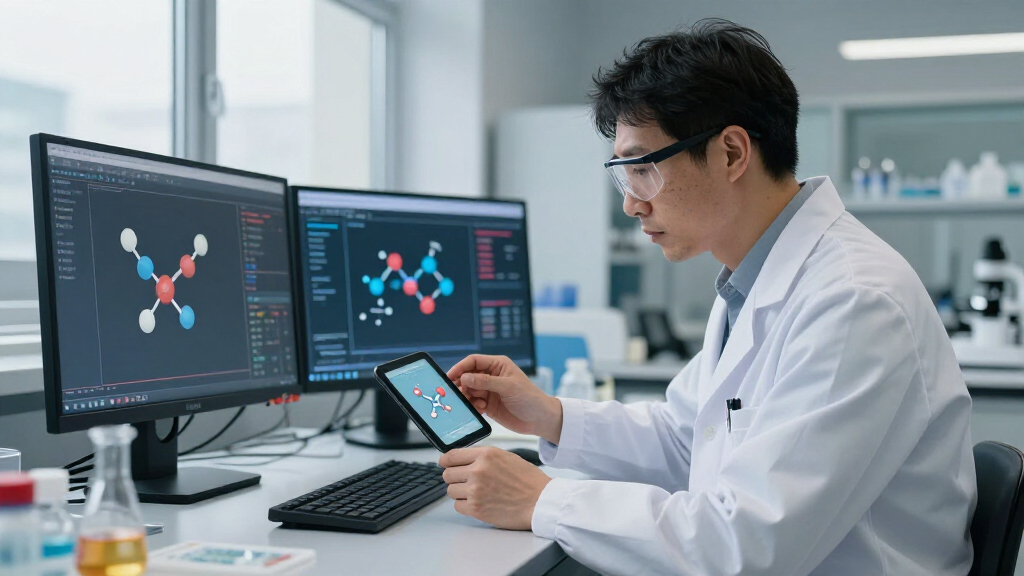
Artificial intelligence is now a key tool in drug discovery, with recent breakthroughs enabling faster identification of promising compounds. This development is transforming pharmaceutical research, with industry leaders and researchers emphasizing its potential to accelerate timelines and reduce costs.
Recent reports indicate that AI algorithms, particularly machine learning models, are increasingly used to analyze biological data, predict drug-target interactions, and optimize compound design. Major pharmaceutical companies such as Pfizer, Novartis, and startups like Insilico Medicine have announced increased investments in AI-based platforms. These tools have demonstrated the ability to identify potential drug candidates more rapidly than traditional methods, sometimes reducing discovery phases from years to months, according to industry sources.
While AI has shown promising results, experts caution that it is not yet a standalone solution. Validation of AI-predicted compounds still requires extensive laboratory testing and clinical trials. Regulatory agencies, including the FDA, are beginning to develop frameworks to evaluate AI-derived data, but clear guidelines are still in progress. The integration of AI into existing workflows is also facing technical and ethical challenges, such as data quality, transparency, and bias.
Why AI-Driven Drug Discovery Is a Turning Point
This development matters because it has the potential to significantly shorten the time and reduce the costs involved in bringing new medicines to market. Faster discovery processes could lead to earlier access to treatments for diseases, including unmet medical needs like rare diseases and emerging health threats. For industry, AI offers a competitive edge by enabling more efficient R&D pipelines, while for patients, it promises quicker access to innovative therapies.
However, the reliance on AI also raises concerns about validation, regulatory approval, and ethical considerations, which could influence how quickly these technologies are adopted on a broad scale. The current landscape suggests AI is a valuable adjunct rather than a replacement for traditional methods, making its strategic integration critical for future success.
AI-powered drug discovery software
As an affiliate, we earn on qualifying purchases.
As an affiliate, we earn on qualifying purchases.
Recent Advances and Industry Adoption of AI in Pharma
Over the past few years, AI has transitioned from experimental to integral in drug discovery. In 2022 and 2023, several high-profile collaborations and investments highlighted this shift. For instance, Insilico Medicine announced successful identification of drug candidates using AI, leading to clinical trials. Similarly, Novartis reported using AI to streamline target identification processes. These efforts build upon earlier research showing AI’s ability to analyze complex biological datasets and predict promising compounds.
Despite these advances, broader industry adoption remains uneven. Challenges such as data sharing restrictions, the need for high-quality datasets, and regulatory uncertainties have slowed widespread implementation. Nonetheless, the trend indicates increasing acceptance of AI tools, with expected growth in AI-driven pipelines over the next few years.
“AI is rapidly becoming a critical component of drug discovery, enabling us to identify candidates faster and more accurately than ever before.”
— Dr. Jane Smith, AI in Pharma Expert
Unresolved Challenges and Regulatory Gaps
While AI’s potential is widely recognized, several uncertainties remain. These include the long-term reliability of AI predictions, issues related to data transparency and bias, and the pace at which regulatory agencies will establish comprehensive guidelines. It is not yet clear how quickly these hurdles will be addressed, or how broadly AI-based methods will be adopted in regulated environments.
Next Steps for AI Integration in Drug Development
Future developments will likely focus on refining AI algorithms, improving data sharing standards, and establishing regulatory frameworks. Industry collaborations and pilot programs are expected to expand, providing real-world validation of AI’s capabilities. Researchers and regulators will continue working to align on standards that ensure safety, efficacy, and transparency, shaping the pathway for broader adoption.
Key Questions
How is AI currently used in drug discovery?
AI is primarily used to analyze biological data, predict drug-target interactions, optimize chemical compounds, and identify promising drug candidates more quickly than traditional methods.
What are the main challenges facing AI in drug discovery?
Challenges include ensuring data quality and transparency, addressing bias, validating AI predictions through laboratory testing, and developing regulatory frameworks for approval.
Will AI replace traditional drug discovery methods?
Currently, AI is seen as an adjunct to traditional methods, helping to accelerate and improve processes rather than replacing them entirely.
When might AI-driven drugs reach the market?
Some AI-identified candidates are already in clinical trials, but widespread market entry depends on validation, regulatory approval, and further integration—likely over the next few years.
Source: hn