
TL;DR

Turn your wind-down time into listening time
- Thousands of audiobooks, podcasts and originals
- Listen on your phone, tablet or Echo — also offline
- Cancel anytime
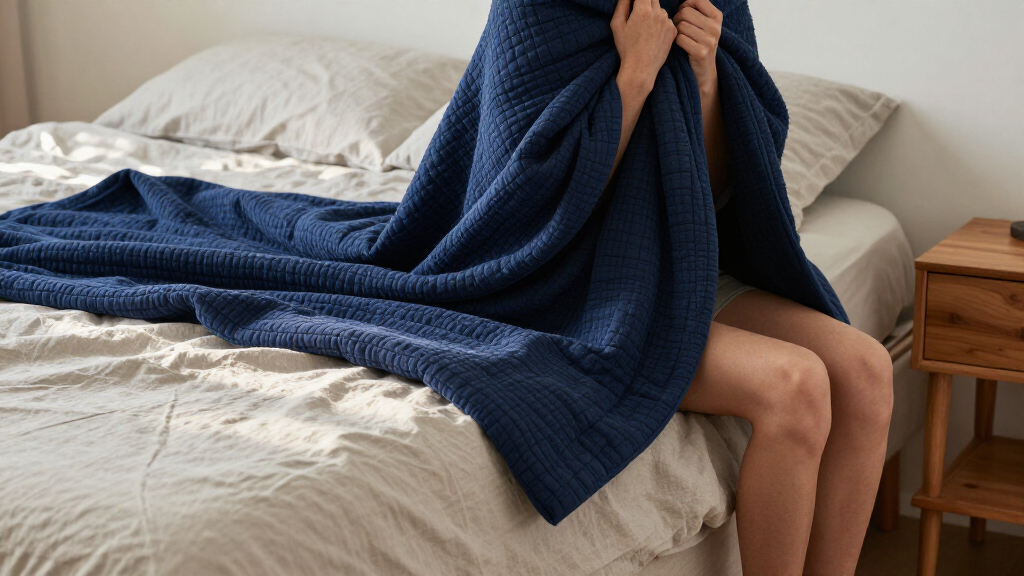
Weighted blankets apply gentle pressure that some people find comforting at rest or bedtime, but research does not show that they reliably treat anxiety for everyone. If you try one, choose a weight you can move easily, check heat and care needs, and stop if it feels confining or uncomfortable. Seek professional guidance when health, mobility, or persistent anxiety is a concern.
A heavy blanket can feel like a firm hug—or like something you want off your legs right away. That difference matters when you’re considering anxiety relief weighted blankets: the pressure comforts some people, while others feel warm, confined, or restless.
Here’s what weighted blankets are, what research can and can’t tell you, and how to try one with comfort and safety in mind. You’ll also find practical buying tips and signs that a blanket alone may not be enough.
Weighted blankets provide gentle pressure that some people find comforting, but research does not show reliable anxiety relief for everyone.
The often-cited 10% body-weight guideline is a rough shopping starting point, not a medical standard.
Try a blanket briefly while awake and stop if it feels hot, restrictive, uncomfortable, or affects your breathing.
Check that you can remove it independently; ask a healthcare professional about use for children or people with relevant health or mobility concerns.
Treat the blanket as a comfort aid, and seek professional help if anxiety persists, worsens, or disrupts daily life.
What a weighted blanket does—and what it can’t promise
Anxiety relief weighted blankets are heavier blankets designed to spread gentle pressure over your body. They’re often filled with glass beads or plastic pellets stitched into small pockets, which helps keep the weight from sliding into one corner. Some people find that steady pressure soothing, a little like a firm hug while sitting on the sofa.
That calming feeling is not the same as a proven treatment for an anxiety disorder. Studies have reported possible benefits for some people, but many have been small or focused on particular groups and settings. The research does not establish that a weighted blanket reliably reduces anxiety for everyone.
Imagine coming home tense after a long day and settling under a blanket while you read. If the even pressure helps you feel more settled, it may work as a comfort aid in that moment. It still shouldn’t replace professional care when anxiety persists or interferes with daily life.
A blanket can make rest feel more comfortable for some people; it cannot promise to treat anxiety.
Why the same pressure can soothe one person and bother another
Anxiety relief weighted blankets can feel calming because some people enjoy steady pressure across their body, but the response is personal. One person may notice a settled feeling while reading; another may feel trapped, hot, or eager to push the blanket away. Comfort is the useful test—not how a product is described in an ad. The distinction matters because pressure is the feature that may feel soothing, yet it can also make movement, cooling down, or getting out of bed harder. A blanket that helps someone unwind on the sofa may therefore be a poor fit for overnight use.
There’s no single best time to use one. You might try it on your lap during a quiet evening, or use it for part of bedtime rather than keeping it on all night. A shorter use gives you a chance to notice whether you feel calmer without committing to hours of heat or pressure. If your shoulders tense up or you start counting the minutes until you can remove it, take it off; persisting through discomfort defeats the purpose of a comfort aid.
Newer designs often feature breathable fabrics, removable washable covers, different sizes, and alternative fills. These features involve practical tradeoffs: a breathable cover may help with warmth, while the fill and pocket construction can affect how evenly the weight sits; a removable cover can simplify cleaning, though it does not make the inner blanket itself washable. These changes may make a blanket cooler or easier to clean, but a new fabric or fill does not show that the blanket treats anxiety better. For example, a washable cover may suit someone who snacks while reading, even if it doesn’t change how calming the weight feels.
Choose a weight you can move without help
For anxiety relief weighted blankets, the familiar guideline of about 10% of your body weight is a rough shopping starting point, not a medical rule. There is no universally validated “correct” weight, so you should favor a blanket that feels comfortable and that you can remove independently. The percentage can help narrow a product search, but it cannot account for how pressure feels on your body, your strength, or whether you tend to overheat. A blanket that feels too heavy can turn a relaxing moment into a struggle, especially if you need to shift position or get out from underneath it.
Before buying, compare a few practical details. A small, dense blanket may sit differently from a larger one with the same total weight, and fabric can affect how warm it feels. Check dimensions, stitching, fill, cover options, and the manufacturer’s care instructions. These are connected choices: a larger blanket spreads weight over more area, while fabric and fill affect heat and drape. A washable cover may simplify routine cleaning, but care instructions still matter because the weighted inner blanket may be too heavy for a home washer.
| What to check | Why it matters |
|---|---|
| Weight and size | You should be able to move the blanket off easily and comfortably. |
| Fabric and construction | Breathability, fill distribution, and stitching affect how it feels and holds up. |
| Cleaning instructions | A removable cover may be easier to wash than the weighted blanket itself. |
| Your comfort | Pressure should feel pleasant, not restrictive, overheated, or claustrophobic. |
For instance, if you tend to sleep warm, a breathable cover may matter more to you than choosing a heavier model. That choice trades some of the snug sensation you might want for a cooler rest, and you can’t know which matters more until you try it. Product reviews can help you learn how warm a blanket feels in everyday use, but they cannot establish that it works as anxiety treatment.
Try a weighted blanket in three comfortable steps
To find out whether a weighted blanket suits you, start with a brief trial while you’re awake and pay attention to comfort. You don’t need to commit to sleeping under it all night; a short, low-pressure test can tell you whether the sensation feels pleasant or restrictive. Trying it while awake also lets you respond immediately, before the weight or warmth has had hours to build up.
- Set up comfortably. Sit or lie somewhere you can remove the blanket easily, such as on your sofa with a clear space beside you. Keeping an easy exit matters because the trial should feel voluntary, not like something you have to endure.
- Try it briefly. Place it over your lap or body for a few minutes while reading or listening to music. Notice whether the weight feels calming, too warm, or confining. Pay attention to how easily you can shift your legs and whether you feel settled or are focused on the pressure.
- Adjust or stop. Remove it if you feel uncomfortable, overheated, restricted, or short of breath. If you like it, try a longer rest another time and decide whether you want it at bedtime. Gradual trials help you distinguish enjoying the sensation briefly from finding it comfortable for extended use.
Someone who enjoys the first few minutes but wakes feeling hot may prefer using the blanket while relaxing before bed instead of sleeping under it all night. That’s a reasonable use too. The right routine is the one that remains comfortable for you, rather than one that follows a prescribed duration.
Check safety before using one overnight
Use a weighted blanket only if you can remove it without help and it does not interfere with your breathing or movement. Overnight use deserves particular care because you may not be as alert to discomfort or able to adjust quickly while asleep. If you have concerns about breathing, circulation, temperature regulation, mobility, or another health condition, ask a qualified healthcare professional before trying added weight. Personal medical guidance matters more than a general shopping tip.
For a child, don’t assume an adult weight guideline applies. Follow product age recommendations and pediatric guidance, and get professional advice when you’re unsure whether the child can move the blanket safely. A child or anyone with limited strength or mobility may be unable to lift a heavy blanket away when uncomfortable, so independent removal is a practical safety test, not just a convenience. The same caution applies to anyone who may not be able to lift it off independently.
Care also deserves a quick check before you buy. A weighted blanket may be too heavy for your washing machine, so follow the care label; many blankets need spot cleaning or a separate washable cover. Cleaning needs can affect whether a blanket is practical for regular use, so check how the cover and inner blanket are cared for separately. If anxiety is persistent, worsening, or disrupting work, school, sleep, or relationships, speak with a qualified professional rather than relying on a comfort product alone. That kind of disruption is a sign that anxiety may need more support than a bedding change can provide.
Frequently Asked Questions
Do weighted blankets help with anxiety?
Some people find the gentle pressure calming, but research is limited and people respond differently. Weighted blankets are not a stand-alone treatment for anxiety disorders.
How heavy should my weighted blanket be?
A guideline of about 10% of body weight is often used as a rough starting point, but it is not a medical standard. Choose a blanket that feels comfortable and that you can remove without help.
Can I sleep with a weighted blanket all night?
Some people do, while others prefer using one for part of the night or while relaxing before bed. Stop using it if it causes discomfort, overheating, restricted movement, or trouble breathing.
Are weighted blankets safe for children or people with medical conditions?
Safety depends on the person’s age, health, mobility, and ability to remove the blanket independently. Follow pediatric guidance for children, and ask a healthcare professional before use if breathing, circulation, temperature regulation, mobility, or another health concern could make added weight risky.
Can a weighted blanket make me feel claustrophobic?
Yes. Some people find the pressure reassuring, while others feel confined or uncomfortable. A brief trial while awake can help you decide how it feels before using it at bedtime.
Conclusion
Think of a weighted blanket as an optional comfort tool: try it briefly, choose a weight you can move easily, and let your own comfort guide you. If anxiety keeps taking up space in your daily life, talk with a qualified professional; a blanket can soften an evening, but it can’t replace care.
Fall Picks
fall essentials
As an affiliate, we earn on qualifying purchases.