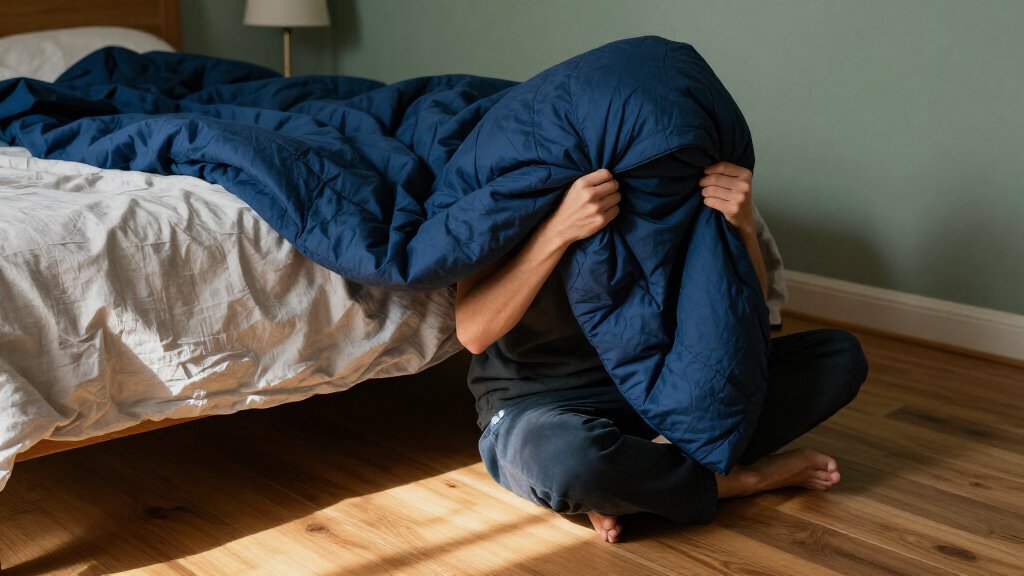

This guide helps adults choose and try a weighted blanket as one possible comfort aid during rest. You will check safety and fit, test the blanket gradually, and track whether it feels calming or uncomfortable. No special experience is needed. Allow 30-60 minutes to compare options and set up, then several nights to judge how it feels. A weighted blanket is not a treatment for an anxiety disorder and may not suit everyone.

Turn your wind-down time into listening time
- Thousands of audiobooks, podcasts and originals
- Listen on your phone, tablet or Echo — also offline
- Cancel anytime

Yescool Weighted Blanket for Adults, 20 lb, Queen, 60 x 80 in, Grey
- ✔ Weight: 20 lb
- ✔ Size: 60 x 80 in
- ✔ Recommended user weight: 190–210 lb

YnM 15 lb Weighted Blanket for Adults, 48 x 72 Inches, Dark Grey
- ✔ Weight: 15 lb
- ✔ Dimensions: 48 x 72 in
- ✔ Color: Dark grey

Mr. Sandman Cooling Weighted Blanket for Adults, Queen, 15 lb, 60 x 80 in
- ✔ Weight: 15 lb
- ✔ Dimensions: 60 x 80 in
- ✔ Size: Queen
Difficulty: Beginner | Time: 30-60 minutes to choose and set up; several nights to assess comfort
What You’ll Need
Tools & Materials:
- A washable weighted blanket with clear care instructions
- A scale or reliable body-weight estimate
- A sleep or symptom log, on paper or on a phone
Knowledge:
- Basic awareness of your comfort, breathing, and ability to move the blanket
- Any relevant health or mobility concerns that may affect safe use
Ask a healthcare professional before using a weighted blanket for a child, or if you have breathing or circulation problems, reduced strength or mobility, difficulty removing bedding, or another condition that could make pressure or heat unsafe. Follow the blanket maker’s age and use guidance. Do not use the blanket to restrain anyone.
Yescool Weighted Blanket for Adults, 20 lb, Queen, 60 x 80 in, Grey
For adults in its recommended 190–210 lb range, Yescool offers the clearest match between a specified user weight and a queen-size footprint. The 60 x 80 inch blanket sits on top of a queen mattress without overhang, which helps keep its weight on the sleeper rather than extending beyond the bed. That makes its dimensions purposeful, but buyers expecting a blanket to drape down the sides may find it smaller than a conventional bedspread.Its 5 x 5 inch stitched compartments are intended to limit bead movement, and the polyester shell can be machine washed on a cold, gentle cycle. Compared with YnM, Yescool gives more weight and broader mattress coverage, while YnM supplies a lighter 15 lb option with smaller compartments. Mr. Sandman also has queen dimensions, but at 15 lb and with a reversible design. Yescool’s simpler proposition is a strength if the weight suits you; it is a reason to skip it if you fall outside the stated range or want a lighter first blanket. Care requires air drying, and the blanket is not water resistant.
Pros:
- Recommended user-weight range is clearly stated.
- Dense 5 x 5 inch stitching is designed to help keep glass beads distributed.
- 60 x 80 inch footprint fits on a queen mattress without overhang.
- Machine washable on a cold, gentle cycle.
Cons:
- The 20 lb weight may be unsuitable for buyers outside the 190–210 lb range.
- Queen dimensions do not provide overhang and may feel small as a bed cover.
- Requires air drying and is not water resistant.
Best for: Adults weighing 190–210 lb who want a 20 lb blanket sized to cover a queen mattress without hanging over the edges.
Not ideal for: People outside the stated recommended weight range, anyone who wants generous side drape, or shoppers who need a water-resistant blanket.
Bottom line: We rank Yescool first for buyers in its stated weight range who prioritize a clearly specified 20 lb queen-size blanket over seasonal versatility or a lighter feel.
“We rank Yescool first for buyers in its stated weight range who prioritize a clearly specified 20 lb queen-size blanket over seasonal versatility or a lighter feel.”
YnM 15 lb Weighted Blanket for Adults, 48 x 72 Inches, Dark Grey
YnM is the most compact choice here: at 48 x 72 inches, it is intended to cover a person rather than behave like a full bed blanket. That can suit a solo relaxation routine, but it is not designed to hang over the bed edge and is less suitable if you want broad queen-size coverage. Compared with Yescool’s 20 lb queen footprint, YnM gives up both weight and width; alongside Mr. Sandman, it trades queen dimensions and reversible sides for more specific construction details.The seven-layer design and 2 x 2 inch compartments are intended to spread glass beads through smaller sections. Reduced fiberfill is described as supporting temperature regulation, though that does not make the blanket a guarantee of cool sleep. Sixteen duvet-cover loops offer attachment points, but the cover is sold separately, adding a step if you want easier cover care or a different feel against the skin. Its machine-wash instructions are more flexible than Yescool’s air-dry requirement: gentle washing followed by low tumble drying or line drying. YnM is the better match for someone who values a lighter, smaller format and compartment detail over full-bed coverage.
Pros:
- Small 2 x 2 inch compartments are designed for even bead distribution.
- Seven-layer construction and stitching are intended to help contain the glass beads.
- Reduced fiberfill is intended to support temperature regulation.
- Can be machine washed on gentle and tumble dried low or line dried.
Cons:
- The 48 x 72 inch size is smaller than an ordinary bed blanket and does not drape over the bed edge.
- Duvet cover is sold separately.
- The 15 lb weight may not suit every user.
Best for: Adults looking for a 15 lb, individual-size blanket with small compartments and explicit duvet-cover attachment points.
Not ideal for: Shoppers wanting queen-size coverage, mattress overhang, or an included duvet cover.
Bottom line: We recommend YnM for shoppers who prefer compact coverage and clearly described compartment construction, provided they are comfortable sourcing a cover separately.
“We recommend YnM for shoppers who prefer compact coverage and clearly described compartment construction, provided they are comfortable sourcing a cover separately.”
Mr. Sandman Cooling Weighted Blanket for Adults, Queen, 15 lb, 60 x 80 in
Mr. Sandman stands out for buyers who want queen-size dimensions at a lighter 15 lb weight and a blanket designed to be flipped between warmer- and cooler-season sides. That combination differs from Yescool, which is also 60 x 80 inches but weighs 20 lb and names a specific recommended user range. Compared with YnM, Mr. Sandman offers a wider, longer footprint and reversible use, while YnM provides more precise information about its compartment size and layers.The multi-layer construction is intended to help keep glass beads in place, and the blanket can be machine washed and tumble dried on low, a convenient care profile compared with Yescool’s air drying. However, the provided description does not identify the specific materials or compartment dimensions, so we have less detail to assess texture, breathability, or fill containment than we do with the other two options. Its 12-month guarantee is a defined support period, but it does not resolve the main fit question: whether 15 lb feels appropriate for the person using it. This makes Mr. Sandman a practical pick for shoppers who value reversibility and queen coverage, with less certainty about materials.
Pros:
- Reversible design is intended for warmer and cooler conditions.
- Queen-size 60 x 80 inch coverage.
- Machine washable and tumble dryable on low.
- Multi-layer construction is designed to help prevent bead leakage.
Cons:
- Material composition and compartment dimensions are not specified.
- The 15 lb weight may not suit every user.
- The seasonal comfort description does not provide specific warmth or breathability measurements.
Best for: Adults who want a 15 lb queen-size blanket with two sides intended for different seasonal conditions and low-heat tumble drying.
Not ideal for: Shoppers who need detailed material and compartment specifications, or anyone unsure whether a 15 lb blanket is manageable.
Bottom line: We place Mr. Sandman third for its useful reversible queen-size format, while its limited material detail makes it harder to compare precisely with YnM and Yescool.
“We place Mr. Sandman third for its useful reversible queen-size format, while its limited material detail makes it harder to compare precisely with YnM and Yescool.”
As an Amazon Associate we earn from qualifying purchases.
Before You Start
Choose a blanket you can remove easily by yourself. Pressure preferences differ, and there is no single weight that works for everyone. Product guidance often suggests starting around 5-10% of body weight for adults, but this is only a rough shopping reference, not a medical rule or guarantee. If you are unsure, choose a lighter option and seek clinical advice when health conditions may affect safe use. Check the return policy so you can stop if it feels wrong.
Step-by-Step Instructions
Step 1: Check whether a weighted blanket is suitable
Review your health and ability to move before buying or using a blanket. Ask a clinician first if pressure, warmth, or limited movement could affect your breathing, circulation, strength, or safety. If another person will use the blanket, consider whether they can communicate discomfort and remove it without help.
Tip:Stop and remove the blanket if you feel short of breath, overheated, trapped, numb, or in pain.
Check: You can identify any reason to ask a clinician first, and you or the intended user can remove the blanket independently.
Step 2: Choose a manageable blanket
Compare blankets by weight, dimensions, fabric, washability, and maker’s use instructions. Use body weight only as a rough reference when comparing adult options; choose a weight that feels easy to lift and move. Select a size that covers the intended area without hanging heavily over the sides of the bed. Check that the filling is distributed in stitched compartments and that the care label fits your laundry setup.
Tip:Breathable fabric may feel more comfortable if you tend to sleep warm. A heavier blanket is not automatically more calming.
Check: The blanket fits your bed and care needs, and you can lift and reposition it without strain.
Step 3: Prepare a cool, easy-to-exit sleep space
Place the blanket over your usual sheet or light bedding in a room that does not feel too warm. Keep the edge within easy reach and make sure your path out of bed is clear. Do not tuck the blanket tightly around your body or under the mattress, since you need to move it away promptly.
Tip:If you share a bed, use a separate blanket so each person can adjust their own covering.
Check: You can sit up, move your legs, and push the blanket aside without struggling.
Step 4: Test the blanket while awake
Place the blanket over your legs or lower body while sitting or lying down for about 10-15 minutes. Notice your breathing, temperature, movement, and comfort. Remove it right away if pressure feels unpleasant or you have any concerning symptoms. If it feels comfortable, try covering more of your body while leaving your head and neck uncovered.
Tip:Do not treat discomfort as something you must get used to. The blanket should feel manageable, not restrictive.
Check: You can keep it on briefly without distress and can remove it easily whenever you choose.
Step 5: Use it for a short rest period
Try the blanket for a short first sleep or relaxation period when you can remove it easily. Keep your head uncovered and use your normal bedtime routine. If you wake feeling hot, restricted, or uncomfortable, take it off and switch to lighter bedding. Do not add extra layers to compensate for a blanket that feels too light or too cool.
Tip:You can use a weighted blanket over your lap during a quiet rest instead of sleeping under it.
Check: You complete the trial without breathing difficulty, overheating, distress, or trouble moving the blanket.
Step 6: Track comfort and anxiety over several tries
After each use, record how long you used the blanket, whether it felt comfortable, and your anxiety or tension before and after on a simple 0-10 scale. Note sleep quality, warmth, and any unwanted effects. Repeat only when the previous trial felt safe and acceptable. Compare several ordinary uses rather than drawing a conclusion from one unusually good or bad night.
Tip:Keep other bedtime changes steady when practical so you can tell whether the blanket itself seems helpful.
Check: Your notes show whether the blanket is consistently comfortable and whether you notice a useful change in rest or tension.
Step 7: Adjust or stop based on your response
Continue using the blanket only if it remains comfortable and seems helpful to you. If it is too warm or heavy, stop and consider a lighter or more breathable option, following the return policy. If it causes distress, pain, breathing changes, or difficulty moving, discontinue use. Seek professional support if anxiety is persistent or interferes with daily life.
Check: You have a clear choice to continue, change to a lighter option, or stop, based on comfort and your notes.
Common Mistakes to Avoid
- Choosing a blanket only by a percentage-of-body-weight rule. — Treat weight guidance as a rough reference. Prioritize easy movement, comfort, product instructions, and clinical advice where relevant.
- Starting with all-night use before checking comfort. — Test it while awake, then try a short rest period before considering longer use.
- Tucking the blanket tightly or covering the head. — Keep your head uncovered and leave the blanket loose enough to remove quickly.
- Expecting the blanket to cure anxiety. — Treat it as an optional comfort aid. Continue any care plan recommended by a qualified professional.
Troubleshooting
Problem: The blanket feels too hot.
Solution: Remove it and cool the room or use lighter bedding. If you try another blanket, compare breathable fabrics and stop if heat remains uncomfortable.
Problem: The pressure feels restrictive or increases anxiety.
Solution: Take it off immediately. Do not force continued use; try an unweighted lap blanket or another calming routine instead.
Problem: The filling bunches into uneven heavy spots.
Solution: Check the maker’s instructions for shaking, repositioning, or washing. Stop using it if seams are damaged or the weight no longer spreads evenly.
Problem: You do not notice a benefit after several uses.
Solution: You do not need to keep using it. If it is comfortable, you may reserve it for short rest periods; otherwise return or discontinue it and consider discussing anxiety symptoms with a clinician.
What Success Looks Like
The trial is successful if you can use the blanket without breathing difficulty, overheating, distress, or restricted movement, and your notes show that it feels comfortable and may support rest or reduce tension. No benefit is also a useful result: weighted blankets do not help everyone, and stopping is an appropriate outcome.
Next Steps
If the blanket suits you, follow its care label, inspect seams and filling regularly, and keep it easy to remove. Reassess if your health, mobility, or comfort changes. If anxiety continues to disrupt sleep or daily activities, contact a qualified healthcare professional to discuss evidence-based support.
Frequently Asked Questions
What weight should I choose for anxiety relief?
There is no proven weight that relieves anxiety for everyone. Adult products may give a rough percentage-based suggestion, but fit, temperature, ease of movement, and personal comfort matter more. Ask a clinician if a health condition could make pressure unsafe.
Can I sleep with a weighted blanket all night?
Some adults may find all-night use comfortable, but start with a short trial and stop if you feel hot, restricted, distressed, or short of breath. Follow the maker’s instructions and any clinical guidance that applies to you.
Will a weighted blanket treat an anxiety disorder?
No. It may feel calming to some people, but it is not a substitute for assessment or treatment. Speak with a healthcare professional if anxiety is persistent or affects your daily life.
Is a weighted blanket safe for children?
Do not choose or use one for a child based on adult guidance. Ask the child’s healthcare professional and follow age-specific product instructions. A child must be able to move the blanket off and communicate discomfort.
How can I tell if it is helping?
Record comfort, tension, and sleep quality before and after use over several ordinary trials. Continue only if the blanket stays comfortable and you notice a useful effect; stop if it causes unwanted symptoms.
Halloween Picks
halloween
As an affiliate, we earn on qualifying purchases.