Living with BPD can cause intense emotional swings, which may make your responses to your children unpredictable or reactive. This can affect your ability to stay calm, consistent, and patient during parenting moments. You might also experience role reversal, where your child feels responsible for your emotional well-being, impacting their development. Recognizing how BPD influences your parenting helps you find strategies to create a more stable environment. Keep exploring to discover ways to foster healthier connections and support your journey.
Key Takeaways
- Intense emotional swings can lead to unpredictable and reactive parenting responses.
- Mood instability may cause overreactions or withdrawal during child interactions.
- Emotional dysregulation can undermine patience, stability, and calmness in parenting.
- Inconsistent responses may confuse children and impact their emotional security.
- Role reversal, where children become emotional caregivers, can harm their development and boundaries.
The Impact of Emotional Regulation Difficulties on Parenting

Emotional regulation difficulties considerably affect how mothers with BPD parent their children. When you struggle to manage intense emotions, your reactions can become unpredictable or overly reactive. This can lead to moments of anger, frustration, or sadness that feel overwhelming. As a result, you might respond impulsively rather than thoughtfully, which can confuse your children and make them feel insecure. Difficulties in regulating emotions also mean you may have trouble staying calm during your child’s distress or challenging behaviors. This can impact your ability to provide consistent comfort and guidance. Over time, these emotional ups and downs can undermine your child’s sense of stability and safety. Recognizing these challenges is the first step toward developing healthier emotional responses in your parenting.
How Inconsistent Parenting Styles Affect Your Child’s Development

Inconsistent parenting styles can considerably disrupt your child’s emotional and behavioral development. When your responses fluctuate between being overly involved and disengaged, your child may struggle to understand expectations and develop trust. This inconsistency can lead to confusion, making it harder for your child to regulate their emotions and behavior. They might become anxious, insecure, or act out as they seek stability. Your child relies on predictable boundaries and support to feel safe and confident. When these are missing or inconsistent, their ability to form healthy attachments and develop self-control can suffer. Over time, this inconsistency can hinder their social skills, resilience, and overall emotional well-being. Recognizing and addressing these patterns is essential to fostering a more stable environment for your child’s growth.
Recognizing Signs of Role Reversal and Its Effects on Children
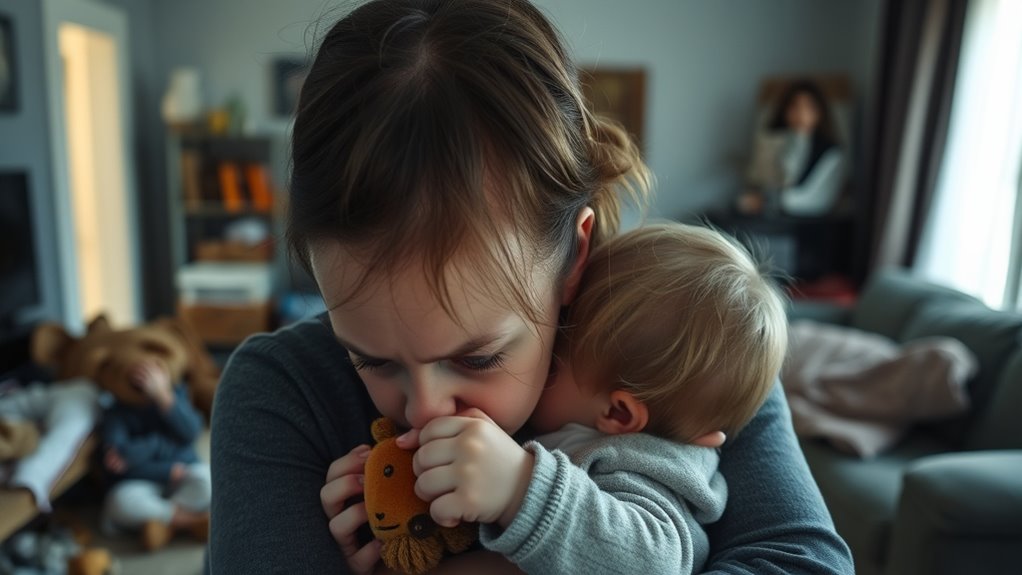
You might notice your child acting as your emotional support, often trying to comfort or soothe you instead of receiving care from you. This role reversal can blur boundaries, causing your child to feel responsible for your well-being. Such dynamics can disrupt the natural parent-child relationship and impact your child’s emotional development.
Child as Emotional Support
When mothers with BPD seek emotional support from their children, it often leads to role reversal, where the child takes on a caregiver or confidant role. You might notice your child acting as your emotional support, listening to your worries, or trying to soothe your distress. Recognizing this reversal is essential because it can impact your child’s development and well-being. Watch for these signs:
- Your child frequently comforts or consoles you.
- They hide their own feelings to protect you.
- They take on responsibilities beyond their age.
- They seek your approval or validation constantly.
This dynamic can cause emotional confusion for your child and hinder their ability to develop healthy boundaries and self-regulation. Addressing these signs early can help prevent long-term effects on your child’s emotional health.
Disrupted Parent-Child Roles
Role reversal occurs when children take on caregiving or emotional support roles typically intended for parents, often as a response to mothers with BPD seeking comfort from them. You might notice your child consoling you during emotional outbursts or managing household tasks beyond their age. This shift can cause your child to feel responsible for your well-being, blurring boundaries between parent and child. Over time, they may struggle with feelings of guilt, anxiety, or inadequacy, believing they must fix your emotional struggles. This role reversal can impair their emotional development and self-esteem, leading to future relationship issues. Recognizing these signs early is essential, as it highlights the need to restore appropriate boundaries and seek support to ensure your child’s healthy growth and emotional stability.
Understanding the Link Between BPD Symptoms and Parenting Self-Efficacy

Your BPD symptoms can directly affect how confident you feel in your parenting abilities. When symptoms are more severe, it’s common to experience lower self-efficacy, making you doubt your effectiveness as a parent. Recognizing how symptom severity influences your confidence is key to finding targeted support and improving your parenting experience.
BPD and Parenting Confidence
Mothers with Borderline Personality Disorder (BPD) often experience lower parenting self-efficacy, which refers to your confidence in effectively managing parenting tasks. When BPD symptoms are present, you might doubt your abilities to respond calmly, set boundaries, or meet your child’s needs. This can create feelings of inadequacy and frustration. Recognizing these challenges is the first step toward building confidence. Consider these factors that influence your parenting confidence:
- Inconsistent emotional responses
- Difficulty managing intense feelings
- Feelings of guilt or self-doubt
- Lack of social support or validation
Understanding how BPD symptoms affect your self-efficacy helps you identify areas for growth and seek targeted support. Improving your confidence is essential for healthier parent-child relationships and your overall well-being.
Symptom Severity’s Impact
The severity of BPD symptoms directly influences parenting self-efficacy, as more intense symptoms often undermine confidence in handling parenting tasks. When symptoms are severe, you may feel overwhelmed, emotionally unstable, or unable to respond consistently to your child’s needs. This can lead to self-doubt about your ability to parent effectively, reinforcing feelings of inadequacy. High symptom severity can cause emotional reactions that interfere with patience, discipline, and responsiveness. As a result, you might perceive yourself as less capable, which diminishes your belief in your parenting skills. This cycle can make it harder to engage positively with your child and develop a sense of mastery. Recognizing this link is vital for seeking targeted support and managing symptoms to improve your parenting confidence.
The Risks of Childhood Abuse and How to Seek Support

Childhood abuse poses significant risks for long-term emotional and behavioral difficulties, especially when it happens early in life. If you experienced abuse, you might face challenges like trust issues, emotional regulation problems, or relationship struggles. Recognizing these risks is essential for healing and breaking the cycle. Here are four ways to seek support:
- Reach out to mental health professionals for therapy tailored to trauma recovery.
- Join support groups where you can connect with others who understand your experience.
- Educate yourself on trauma and its effects to better understand your feelings.
- Build a strong support network of trusted friends or family members who can provide emotional safety.
Seeking help is a crucial step toward healing and creating a healthier environment for your children.
Navigating Emotional Socialization and Building Healthy Connections

Experiencing childhood abuse can shape how you connect with others and handle emotions, influencing your ability to model healthy emotional socialization for your children. You might struggle with consistency, sometimes reacting intensely or withdrawing, which can confuse your kids about their feelings. When your responses are neglectful or punishing, it hampers their emotional development and self-regulation. Building healthy connections requires awareness of your emotional patterns and efforts to respond calmly and supportively, even during challenging moments. Practice active listening and validation, showing your children that their emotions are safe and understood. Remember, progress takes time. Seeking support and developing coping strategies can help you foster more stable, nurturing relationships, ultimately strengthening your child’s emotional well-being and your bond.
Strategies and Support Systems to Improve Parenting Experiences
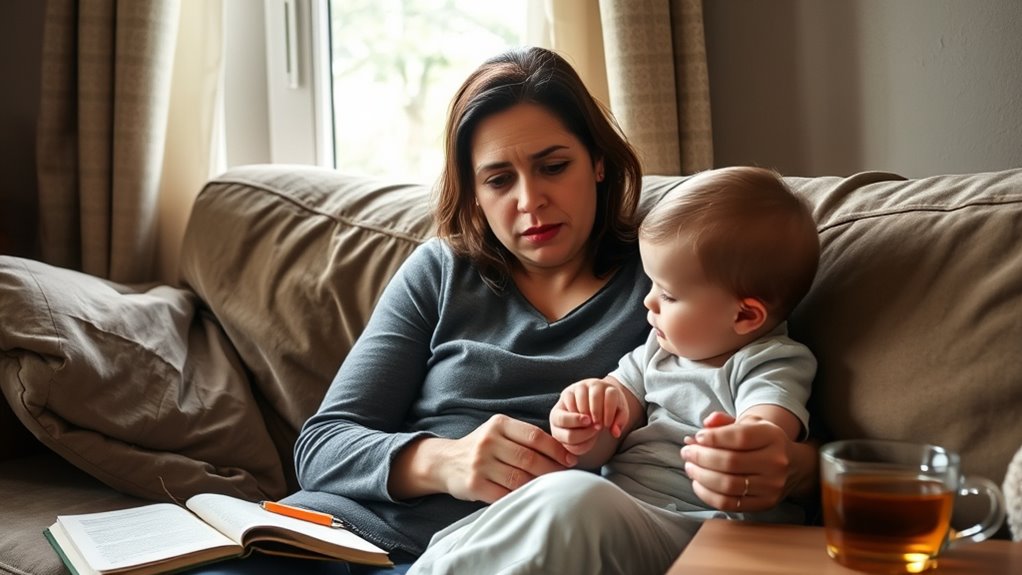
Implementing effective strategies and establishing strong support systems can considerably enhance your parenting experience. To start, consider these approaches:
- Seek professional help: Therapy and counseling can help manage BPD symptoms and improve emotional regulation.
- Build a support network: Connect with trusted family, friends, or support groups to share experiences and gain encouragement.
- Practice self-care: Prioritize activities that reduce stress and promote well-being, like mindfulness or exercise.
- Learn parenting skills: Attend parenting classes or workshops tailored for mothers with mental health challenges to boost confidence and competence.
These strategies can help you respond more consistently, manage stress better, and create a nurturing environment for your children, even amidst challenges.
Frequently Asked Questions
How Does BPD Impact a Mother’s Ability to Set Consistent Boundaries?
BPD can make it hard for you to set consistent boundaries because emotional instability causes rapid shifts in your reactions. You might over-respond one day and under-respond the next, confusing your child. This inconsistency stems from difficulty regulating emotions, leading to unpredictable responses. As a result, your child may struggle to understand limits, affecting their sense of security and emotional development. Developing awareness and coping strategies can help improve boundary-setting.
Can Therapy Improve Parenting Skills in Mothers With BPD?
Yes, therapy can dramatically improve your parenting skills, almost like flipping a switch. It helps you manage intense emotions, build confidence, and learn consistent strategies. With therapy, you’ll gain tools to break free from past patterns, create healthier bonds, and feel more capable every day. It’s like having a personal coach guiding you through the chaos, turning parenting challenges into opportunities for growth and connection.
What Are Effective Coping Strategies for Parenting Stress With BPD?
To cope with parenting stress with BPD, you should focus on building healthy routines, practicing mindfulness, and seeking support. Use grounding techniques during emotional episodes, communicate your needs openly, and take breaks when needed. Connecting with a therapist can help develop tailored strategies, and joining support groups can remind you you’re not alone. Remember, self-compassion is key; progress takes time, and small steps make a difference.
How Does Childhood Trauma Influence Current Parenting Challenges?
Childhood trauma acts like a shadow, following you into your parenting, making it harder to respond with consistency and patience. It can trigger emotional reactions, causing you to overreact or withdraw, which affects your child’s sense of security. Trauma may also lead to feelings of low self-worth, making parenting feel overwhelming. Recognizing these influences helps you seek support, break the cycle, and build a healthier environment for both you and your child.
Are There Specific Support Groups for Mothers With BPD?
Yes, there are specific support groups for mothers with BPD. You can find local or online communities where mothers share experiences, coping strategies, and emotional support. These groups provide a safe space to connect with others facing similar challenges, reducing feelings of isolation. Joining such groups can boost your confidence, help you learn new parenting techniques, and give you the encouragement needed to manage BPD symptoms while raising your children.
Conclusion
Understanding how BPD symptoms influence your parenting is essential. Emotional regulation struggles can lead to inconsistent discipline, impacting your child’s development. Did you know that children of parents with BPD are twice as likely to experience emotional difficulties? By recognizing these challenges and seeking support, you can build healthier connections and foster resilience in your kids. Remember, improving your emotional socialization benefits both you and your children, creating a stronger, more stable family environment.