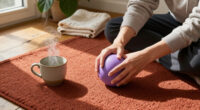
When shopping for relaxation and stress relief gifts, the real choice is often between arranging time with a professional and giving someone supplies for a quieter moment at home. A massage or spa gift can make rest feel like an event, with skilled care and a change of surroundings. An at-home kit—perhaps a soft robe, calming tea, bath products, or a simple heat wrap—offers more control and can be used on the recipient’s own schedule.

Give the gift of listening to someone who needs a break
- Choose a 1-, 3-, 6- or 12-month membership
- They pick the audiobooks they love
- Easy to send by email

UpNature Calm Essential Oil Roll-On
- ✔ Format: Roll-on
- ✔ Blend: Essential oils blended with MCT oil
- ✔ Ingredient claim: 100% pure, non-GMO essential oils

Body Restore Lavender Aromatherapy Shower Steamers, 15 Pack
- ✔ Format: Shower steamer tablets
- ✔ Quantity: 15 tablets
- ✔ Scent: Lavender

100 Daily Mindfulness and Meditation Cards
- ✔ Format: Mindfulness and meditation card deck
- ✔ Card count: 100
- ✔ Categories: 7
The spa experience is the stronger pick for someone who enjoys appointments, touch, and getting out of the house. A home kit is often easier to personalize and more practical for someone with a packed calendar, limited mobility, or a preference for familiar surroundings. The main tradeoff is guided, scheduled pampering versus flexible, repeatable comfort.
At a Glance
| Criteria | Massage or spa gift experiences | At-home relaxation gift kits | Winner |
|---|---|---|---|
| Type of relaxation | Professional, hands-on treatment in a spa or massage setting | Self-directed comfort using items at home | Depends |
| Convenience and scheduling | Requires booking and travel; appointment times may be limited | Available whenever the recipient chooses; no appointment needed | B |
| Personalization | Can be tailored through treatment and location, but preferences need checking | Easy to match to tastes, routines, and sensitivities | B |
| Repeat use | Usually one visit or a small number of sessions | Most items can be used repeatedly | B |
| Accessibility and comfort | Depends on travel, facility access, and comfort with touch | Works at home, though products must suit sensitivities and abilities | B |
| Gift impact | Feels like a planned outing and dedicated time for care | Can feel thoughtful when curated around the recipient | A |
| Value | Higher cost can be justified by expert service and a memorable experience | Often lower cost and longer-lasting, though quality varies | B |
UpNature Calm Essential Oil Roll-On
For a gift meant to offer a small pause amid a busy day, UpNature Calm Essential Oil Roll-On is the most convenient choice in this group. Its pre-diluted blend of essential oils and MCT oil is designed for direct application to pulse points, so the recipient does not need a diffuser, water, or a separate preparation step. The compact format also makes it easier to keep nearby at work or while traveling than the shower steamers or the mindfulness deck.That convenience makes it our overall pick, but the benefit is specific: this is a topical, scent-based ritual, not a complete relaxation routine. Compared with Body Restore’s lavender tablets, it can be used away from home, but it requires skin contact and may irritate some people. Compared with the meditation cards, it takes less time and asks for less focus, yet offers no prompts or structured exercise. The supplied details describe non-GMO essential oils blended with MCT oil, but do not identify the individual oils, so scent-sensitive recipients may want more ingredient detail before using it.This makes the most sense for someone who already enjoys essential oil scents and would appreciate a pocket-sized reminder to pause. The brand recommends a patch test, and recipients should follow the product’s directions. Skip it for anyone with a known sensitivity to topical oils, someone who prefers diffuser use, or a person who wants a guided method for settling their thoughts. Its strength is accessibility in the moment; its limitation is that both the format and the experience are narrow.
Pros:
- Pre-diluted with MCT oil for direct pulse-point application
- Compact format suits a pocket, work bag, or travel kit
- Uses a blend described as 100% pure, non-GMO essential oils
- Requires little setup compared with steamers or a card-based practice
Cons:
- Topical use may cause skin irritation; a patch test is recommended
- The supplied description does not list the specific essential oils
- Limited to topical use and does not provide a guided exercise
Best for: Someone who likes essential oil scents and wants a compact, ready-to-apply option for work or travel.
Not ideal for: People with sensitive skin, fragrance sensitivities, or a preference for diffuser-based aromatherapy or guided relaxation.
Bottom line: Choose the UpNature roll-on when portability and a quick scent-based pause matter more than a structured practice or a whole-room aromatherapy experience.
“Choose the UpNature roll-on when portability and a quick scent-based pause matter more than a structured practice or a whole-room aromatherapy experience.”
Body Restore Lavender Aromatherapy Shower Steamers, 15 Pack
Body Restore’s steamers are the clearest choice for a recipient whose shower is already part of their daily routine. Place a tablet on the shower floor away from the direct stream, and it releases a lavender aroma as it dissolves. That gives the gift a defined setting and a simple cue to slow down, without asking the recipient to learn an exercise or apply a product to their skin.Compared with the UpNature roll-on, these tablets are less portable and less useful for an unexpected pause during a workday, but they create a more immersive moment at home. Compared with the mindfulness deck, they require less active attention: the recipient can continue their shower instead of following a prompt. The tradeoff is that the product is shower-specific. It is not meant for soaking baths, and placement matters because a tablet exposed to direct water may dissolve differently than intended. The description says the tablets are designed to dissolve slowly and avoid residue, but the exact experience will depend on the shower setup.The 15-tablet pack can suit someone who enjoys lavender and wants a repeatable sensory cue for winding down. It is less suitable for people without a shower, anyone who dislikes scented products, or a recipient looking for an active mindfulness tool. Where the roll-on wins on portability and the cards win on variety, these steamers occupy a narrower but appealing middle ground: an easy ritual built around an existing routine.
Pros:
- Lavender scent provides a clear sensory focus for a shower routine
- Fifteen tablets support repeated use
- Designed to dissolve slowly when placed away from the direct stream
- Does not require topical application or a guided exercise
Cons:
- Designed for showers rather than soaking baths
- Placement away from direct water affects how it dissolves
- Scent may not suit recipients who prefer unscented relaxation aids
Best for: Someone who enjoys lavender and would welcome an easy aromatherapy ritual during a regular shower.
Not ideal for: Bath-focused recipients, people without a suitable shower, or anyone who avoids scented products.
Bottom line: Give the steamers to someone who wants a low-effort, lavender-scented wind-down at home and has a shower routine to use them in.
“Give the steamers to someone who wants a low-effort, lavender-scented wind-down at home and has a shower routine to use them in.”
100 Daily Mindfulness and Meditation Cards
This deck is the most active option in the roundup: rather than relying on scent, it gives the recipient 100 prompts and exercises across seven categories. The topics include breathing techniques, mindful living, loving-kindness, Stoicism, and Zen, with day-and-night cards intended to fit different parts of a routine. For someone who wants ideas to guide a short practice, that variety offers more direction than either the roll-on or the shower steamers.It ranks third overall because its usefulness depends on the recipient choosing to engage. The UpNature roll-on takes seconds to apply, and Body Restore can be added to an existing shower; this deck asks someone to select a card and spend time with its exercise. That makes it a stronger fit for a person curious about mindfulness than for someone who simply wants a passive sensory cue. Its range is also a point of difference: a recipient who does not connect with one topic can try another, whereas the other two gifts center on aromatherapy.The product description says the cards are portable and suitable for display and includes a bag, but it does not specify card dimensions or materials. Buyers who care about paper stock, durability, or exact portability should account for that missing information. This pick suits a curious beginner or an established practitioner who welcomes variety. It may disappoint someone seeking a quick, low-effort gift or anyone uncomfortable with meditation-style prompts. In this lineup, the deck offers the greatest breadth, with follow-through as its main requirement.
Pros:
- One hundred exercises span seven topic categories
- Day-and-night cards support flexible practice timing
- Offers structured guidance that the aromatherapy picks do not
- Includes a bag and is described as portable and suitable for display
Cons:
- Requires the recipient to choose a card and actively do an exercise
- Card dimensions and materials are not specified in the description
- Some prompts or themes may not suit every recipient
Best for: A mindfulness-curious recipient who likes prompts and is willing to make time for short guided exercises.
Not ideal for: Someone who wants a passive, near-instant relaxation cue or needs detailed information about card size and materials before buying.
Bottom line: Choose the deck for someone who values variety and guidance and is more likely to use exercises than a scent-based relaxation gift.
“Choose the deck for someone who values variety and guidance and is more likely to use exercises than a scent-based relaxation gift.”
As an Amazon Associate we earn from qualifying purchases.
Key Differences
The most meaningful difference is how the gift fits into the recipient’s life. A spa appointment reserves a specific block of time and offers a professional service; that structure can help someone who rarely makes time for themselves. It also creates friction: the recipient needs to choose a provider, book a slot, travel, and feel comfortable with the treatment. Check that the voucher has usable locations and terms before buying.
An at-home kit puts timing and choice in the recipient’s hands. A few well-selected items can support an existing routine, and many can be used more than once. That flexibility makes a kit a safer fit when you do not know someone’s schedule or comfort with massage. Its weakness is that generic or mismatched products may sit unused, so practical, personal selections matter more than sheer quantity.
For value, compare the service and access in a spa gift with the quality and likely use of the items in a kit. Paying more for a spa experience makes sense when the recipient wants expert care and will use the appointment. For broad usefulness, a thoughtful home kit usually stretches the budget further. Neither kind of gift replaces professional help for ongoing or severe stress; they are gestures of comfort, not treatment.
Detailed Comparison
Type of relaxation (major difference)
A spa or massage gift offers guided, hands-on care in a dedicated setting. That can feel more immersive than using products at home, especially for someone who enjoys touch and prefers a professional to lead the experience. An at-home kit supports self-directed relaxation, which suits people who want quiet without an appointment. There is no universal winner: comfort with the format decides it.
Convenience and scheduling (At-home relaxation gift kits wins — moderate)
The home kit wins by a moderate margin for convenience: the recipient can use it when there is a spare moment, with no travel or booking. A spa voucher asks them to coordinate calendars and get to a venue. That appointment can be a welcome nudge to set aside time, but it can also become another obligation for a busy person.
Personalization (At-home relaxation gift kits wins — moderate)
At-home kits have a moderate edge because you can choose items to fit known preferences, such as unscented bath products, a favorite tea, or a comfortable sleep mask. A spa gift can be personalized by choosing a treatment or location, but those choices depend on availability and whether the recipient likes the service. For either gift, check sensitivities and preferences first.
Repeat use (At-home relaxation gift kits wins — major)
A kit usually wins by a major margin on repeat use. A robe, heat wrap, or reusable bath accessory may serve the recipient many times, while a single spa booking is generally enjoyed once. The experience may be more memorable, and multi-session vouchers can narrow the gap, but check expiry dates and booking conditions.
Accessibility and comfort (At-home relaxation gift kits wins — moderate)
The home kit generally wins by a moderate margin because it avoids a trip and lets the recipient choose the setting. But it is not automatically accessible: bath products may not suit every home, and some items may be difficult to use. Spa accessibility and comfort vary by venue and treatment. Ask discreetly about mobility needs and preferences before choosing either.
Gift impact (Massage or spa gift experiences wins — moderate)
A spa or massage experience has a moderate edge when the goal is to give someone a distinct occasion. A booked treatment can communicate that their time and wellbeing matter, especially if the practical details are easy to manage. A home kit can feel just as personal when thoughtfully assembled, but a generic assortment may come across as less considered.
Value (At-home relaxation gift kits wins — moderate)
A home kit is usually better value for repeated use and lower upfront spend, a moderate advantage for shoppers on a budget. A spa gift costs more in many cases, but that premium buys skilled service, facilities, and an event rather than a bundle of goods. Pay more for the spa option when the recipient wants that experience and can conveniently use it.
Massage or spa gift experiences: Pros and Cons
Pros:
- Provides professional, hands-on care
- Feels like a dedicated outing and occasion
- Can be a motivating prompt to reserve time for rest
Cons:
- Requires booking and usually travel
- May not suit people uncomfortable with touch or unfamiliar settings
- Voucher value depends on location, availability, and expiry terms
At-home relaxation gift kits: Pros and Cons
Pros:
- Can be used on the recipient’s schedule
- Often supports repeated use
- Easy to tailor to preferences and budget
Cons:
- Quality and usefulness vary by item
- May feel generic if selected without thought
- Some products may not suit sensitivities, routines, or accessibility needs
Who Should Choose What
Choose Massage or spa gift experiences if:
- The recipient enjoys massage, spa settings, or professional treatments.
- They would value an outing and have a convenient provider nearby.
- You want to give a scheduled experience rather than more belongings.
Choose At-home relaxation gift kits if:
- Their schedule is unpredictable or travel is inconvenient.
- They prefer privacy, familiar surroundings, or choosing their own pace.
- You know their tastes and want a practical gift they can use repeatedly.
Skip both if: Skip both if you do not know whether they enjoy treatments or use relaxation products; a flexible gift card or a direct offer of practical help may fit better.
Value for Money
An at-home kit is usually the better value when you want flexibility and repeated use. Focus on a few comfortable, good-quality items the recipient is likely to use rather than a large assortment of scented products. A massage or spa gift costs more in many cases, and the extra spend is worth it for someone who values expert care, facilities, and the feeling of a planned break. Pay the premium only when the recipient can reach the provider, likes the treatment, and has enough booking flexibility to use the voucher.
Final Verdict
Choose an at-home relaxation kit for the safer all-purpose gift: it is easier to schedule, easier to tailor, and often useful more than once. Choose a massage or spa experience when you know the recipient enjoys professional treatments and will appreciate having a reason to take a dedicated break. The deciding factor is whether they would rather be cared for at a venue or relax on their own terms at home.
Frequently Asked Questions
Are spa gift vouchers a good choice for someone with a busy schedule?
They can be, if the recipient welcomes a planned break and the voucher has convenient locations and flexible booking. Check the expiry date and any restrictions; a narrow booking window can turn a kind gift into a scheduling burden.
What should I put in an at-home relaxation kit?
Choose a few useful items that match the recipient: a soft robe, herbal tea, a heat wrap, a sleep mask, or bath products they already enjoy. Favor fragrance-free options if you are unsure about sensitivities, and avoid adding items just to make the package larger.
Which gift is better for someone who dislikes massage?
An at-home kit is the better fit, provided the recipient likes the products and activities you choose. If they also prefer not to receive wellness items, pick a flexible alternative that respects their preferences.
Is a more expensive spa gift worth the extra cost?
It is worth paying more when the recipient wants professional care, can get to the venue, and will use the appointment. If schedule, travel, or treatment comfort is uncertain, a personalized home kit usually offers more dependable value.