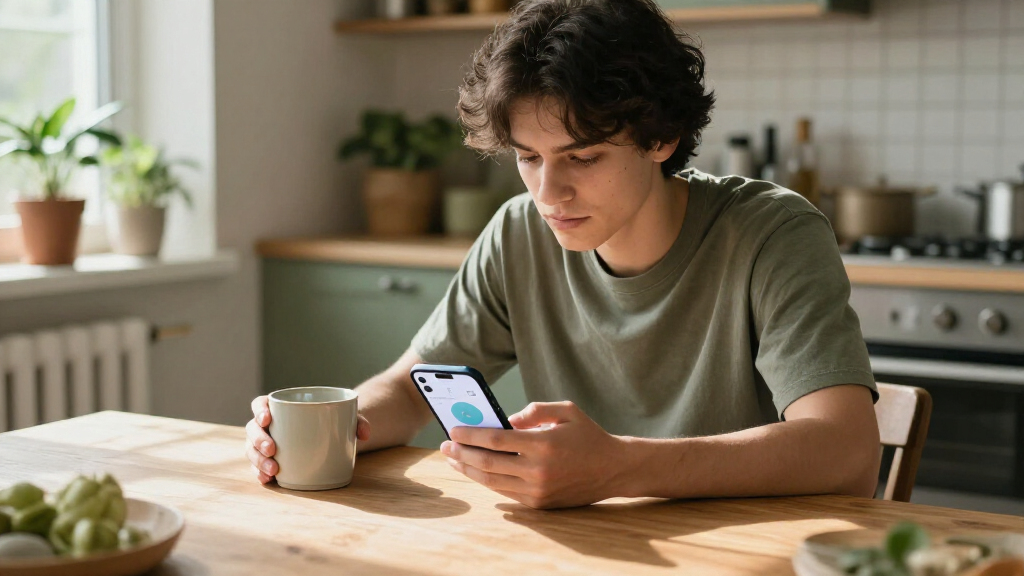

Use this guide to choose and start using a mental health app for anxiety. It is for people who want self-guided support, such as breathing exercises, mood tracking, or cognitive behavioral therapy (CBT) activities, and are comfortable using a smartphone. You will compare a few options, check their privacy and cost, set one up, and decide whether it helps. Allow 30-45 minutes to choose and set up an app, then 5-15 minutes a day for an initial trial. Apps can support coping skills, but they do not replace professional care or emergency help.

Turn your wind-down time into listening time
- Thousands of audiobooks, podcasts and originals
- Listen on your phone, tablet or Echo — also offline
- Cancel anytime

Calming Anxiety Relief
- ✔ Product type: Mental health product; exact format unspecified
- ✔ Stated purpose: Calming effects and anxiety symptom relief
- ✔ Anxiety-specific positioning: Yes, according to the supplied description

Mental Health Evaluator
- ✔ Product type: Mental health evaluator; exact format unspecified
- ✔ Stated purpose: Not detailed in the supplied information
- ✔ Assessment scope: Not specified

Mental Health Evaluator
- ✔ Product type: Mental health assessment tool; exact format unspecified
- ✔ Stated purpose: Assessing mental health status
- ✔ Assessment method: Not specified
Difficulty: Beginner | Time: 30-45 minutes to compare and set up; 5-15 minutes per day to use
What You’ll Need
Tools & Materials:
- A smartphone or tablet with internet access
- An app store account
- A few minutes to review app privacy and subscription details
Knowledge:
- Basic ability to install an app and adjust phone settings
- A general sense of what you want help with, such as panic symptoms, worry, sleep, or tracking patterns
Decide whether you want self-guided exercises, contact with a therapist, or help finding local care. If anxiety is seriously affecting daily life, arrange support from a qualified health professional alongside any app. If you may harm yourself or someone else, contact your local emergency service or crisis line now rather than relying on an app.
Calming Anxiety Relief
Among these three listings, Calming Anxiety Relief gives us the most direct match for an anxiety search: its stated purpose is to promote calm and relieve anxiety symptoms. That makes it easier to place than either Mental Health Evaluator, whose available descriptions center on assessment rather than relief. For someone looking for an anxiety-oriented tool, that distinction matters because the intended use is at least apparent from the product name and description.Still, the listing leaves major questions unanswered. It does not explain what produces the calming effect, what activities or resources are included, or how and when we should use it. Without those details, we cannot judge whether it offers structured coping strategies, a simple prompt, or something else entirely. The evaluators may be a better conceptual fit for reflection, but neither has enough information to compare their assessment approach. This is the clearest anxiety match, not a verified treatment option; we should review the full listing before relying on it, especially if we need guided, evidence-informed support.
Pros:
- Explicitly describes anxiety relief as its purpose
- Promotes a calming effect
- More directly aligned with anxiety searches than the evaluator listings
Cons:
- No specific calming mechanism or ingredients are described
- No dosage or usage instructions are provided
- Available details do not establish clinical evidence or professional oversight
Best for: People who want to explore a tool explicitly described as anxiety-focused and calming.
Not ideal for: People who need clear instructions, transparent methods, clinical guidance, or documented features before choosing.
Bottom line: We rank it first for its direct anxiety focus, while its sparse details make verification essential.
“We rank it first for its direct anxiety focus, while its sparse details make verification essential.”
Mental Health Evaluator
The first Mental Health Evaluator may appeal to people who want to assess how they are doing rather than reach immediately for a calming exercise. That gives it a different potential role from Calming Anxiety Relief: an evaluator suggests a check-in, while the anxiety-focused product claims a relief-oriented purpose. For anxiety, assessment can be useful as a starting point for noticing concerns, but the supplied listing does not say what it evaluates or whether anxiety is specifically covered.That lack of detail limits how confidently we can recommend it. We have no description of the questions, scoring, interpretation, privacy safeguards, or next steps, so we cannot tell whether this is a reflective questionnaire or a more structured tool. Compared with the other evaluator in this roundup, there is no supplied feature information that establishes a meaningful advantage. Choose it only if general self-assessment is your priority and the full listing answers the questions that matter to you. If we need actionable anxiety coping support, the more explicitly focused first pick is easier to understand, though it too needs verification.
Pros:
- Its title indicates an assessment-oriented purpose
- Could suit buyers seeking a general check-in
- Offers a distinct potential role from the calming-focused first pick
Cons:
- No product description or feature list is provided
- Anxiety-specific coverage is not established
- No information is available about interpretation, privacy, or follow-up
Best for: People seeking a general mental health check-in who are willing to confirm the tool’s scope and limitations.
Not ideal for: People looking specifically for guided anxiety exercises, a clear screening method, or professional interpretation.
Bottom line: We place it second as a possible general check-in, with too little information to confirm its anxiety usefulness.
“We place it second as a possible general check-in, with too little information to confirm its anxiety usefulness.”
Mental Health Evaluator
This second Mental Health Evaluator is described as a tool for assessing mental health status, so its stated role is somewhat clearer than the other evaluator’s blank description. That makes it a plausible option for someone interested in assessment or self-reflection. It still ranks behind Calming Anxiety Relief for this particular roundup because it does not claim to address anxiety specifically, and it does not describe any coping support that follows an assessment.We cannot distinguish it confidently from the first evaluator on actual capabilities. The available information gives no technical specifications, assessment topics, format, or instructions, and it does not explain whether results are educational or reviewed by a professional. The modest extra context is enough to identify a general assessment purpose, but not enough to show that this listing is more useful than its similarly named counterpart. It may suit exploratory self-assessment, provided we verify the complete product details and avoid treating an unclear result as a diagnosis. For anxiety relief in particular, this is a less direct fit than the explicitly anxiety-oriented first pick.
Pros:
- Described as a tool for mental health assessment
- Its general purpose is clearer than the other evaluator listing
- Could be relevant to buyers seeking self-reflection rather than calming exercises
Cons:
- No detailed feature description is available
- No technical specifications or assessment method are provided
- The listing does not establish anxiety-specific guidance or clinical interpretation
Best for: People who want to explore a mental health assessment tool and can verify its format and scope before use.
Not ideal for: People who need anxiety-specific treatment guidance, clear technical details, or a defined next step after assessment.
Bottom line: We rank it third because its general assessment purpose is stated, but its fit for anxiety remains unsubstantiated.
“We rank it third because its general assessment purpose is stated, but its fit for anxiety remains unsubstantiated.”
As an Amazon Associate we earn from qualifying purchases.
Before You Start
Apps vary in quality, evidence, privacy practices, and price. A polished design or high download count does not prove that an app is effective. Look for a clear explanation of who created its content, what approach it uses, and what its limits are. Do not enter sensitive details until you have checked what data the app collects and how it handles them. App features, prices, and availability can change, so review the current listing and terms before signing up.
Step-by-Step Instructions
Step 1: Choose the support you want
Write down one or two goals for using an app. Make them specific, such as “practice a calming exercise before meetings,” “notice what triggers evening worry,” or “learn a CBT technique for anxious thoughts.” Decide whether you need guided exercises only or access to a qualified therapist. Keep the goal manageable; an app is easier to evaluate when you know what job you want it to do.
Tip:If anxiety has made it hard to work, sleep, study, or manage daily responsibilities, include a health professional in your support plan.
Check: You can describe what you want the app to help you do in one sentence.
Step 2: Compare a small number of apps
Search your phone’s official app store for anxiety support, mindfulness, or CBT apps. Shortlist two or three that match your goal. Read the description and check the developer, the date of recent updates, available languages, accessibility features, and whether the app identifies the approach behind its exercises. Prefer apps that explain their limitations and direct users to human support when needed. Treat ratings as one source of information, not proof of clinical quality.
Tip:Be wary of promises to cure anxiety, diagnose you without a clinician, or replace treatment. A useful app describes what it offers without guaranteeing a result.
Check: You have a short list of apps that offer the kind of support you want and explain who provides their content.
Step 3: Review privacy, cost, and access
Open each app’s privacy information and read what it collects, why it collects it, whether it shares data, and how you can delete your account or information. Check whether entries are stored in an account or synced across devices. Review the full price, free-trial length, renewal date, and cancellation steps before entering payment details. Check whether core exercises work offline if you may use them without internet access.
Tip:Do not assume a free download means the full service is free. Set a calendar reminder before a trial renews if you are unsure you want to pay.
Check: You understand the app’s main data practices and know whether it is free, paid, or set to renew.
Step 4: Install one app and set it up
Install the app that best fits your goal. Create an account only if needed, and use a strong, unique password. Skip optional personal details that are not needed for the features you plan to use. Set notifications to a time you can manage, or turn them off if reminders increase stress. Review permissions and deny access to contacts, location, microphone, or other phone features unless a specific feature needs them and you want to use it.
Tip:Use a nickname or broad labels in tracking notes if you prefer not to enter identifying details. Avoid recording information that would put you at risk if someone else saw your device.
Check: The app opens, the feature you chose is available, and its permissions and reminders match your preferences.
Step 5: Try one short activity
Choose one brief exercise, such as a guided breathing practice, a grounding activity, or a CBT thought record. Follow the instructions once without trying to do it perfectly. Notice how you feel before and after, and whether the directions are clear and comfortable. Stop if an exercise makes you feel worse or unsafe; choose another activity or talk with a qualified professional.
Tip:Some breathing exercises can feel uncomfortable for people who are panicking or sensitive to bodily sensations. You can keep your breathing natural and try a grounding exercise instead.
Check: You completed or stopped the exercise safely and can tell whether it felt understandable and suitable for you.
Step 6: Set a realistic trial routine
Choose a small schedule for the next one or two weeks, such as using one exercise for five minutes on three days each week. Link it to an existing routine, like a break after lunch. Record only what helps you learn whether the app is useful: whether you used it, what feature you tried, and whether it helped with your goal. Do not treat a missed session as failure; resume at the next planned time.
Tip:Keep the routine brief enough to fit a difficult day. A tool that is easy to return to is more practical than a demanding daily plan.
Check: You have a specific trial period and a schedule that feels manageable.
Step 7: Review whether the app is helping
At the end of your trial, compare your notes with the goal you set. Ask whether the app was clear, comfortable, private enough for you, and useful in daily life. Decide to continue, change features, try another app, or stop. If anxiety remains difficult to manage or is getting worse, use this review as a prompt to contact a health professional rather than increasing app use on your own.
Tip:Progress may mean learning a skill or noticing a pattern; it does not have to mean that anxiety disappears.
Check: You can name what helped, what did not, and the next action you will take.
Common Mistakes to Avoid
- Choosing an app based only on popularity or attractive design. — Check the developer, the approach behind its content, privacy details, and whether it fits your goal before committing.
- Starting several apps or tracking many symptoms at once. — Try one app and one feature first. Add another tool only if you can explain what extra support you need.
- Treating app use as a replacement for professional care when anxiety is disrupting daily life. — Use the app as a support tool and contact a qualified health professional for assessment and treatment options.
- Entering sensitive details without checking storage and sharing practices. — Review the privacy policy, limit optional entries, and check account deletion controls before logging personal information.
Troubleshooting
Problem: The app asks for payment before you can try its main feature.
Solution: Check the price, renewal terms, and cancellation instructions. Look for a free sample or another app with a comparable feature before subscribing.
Problem: Reminders feel intrusive or increase worry.
Solution: Turn off notifications or choose one quiet time. You can open the app when it suits you instead of responding to alerts.
Problem: An exercise makes you feel more anxious.
Solution: Stop the activity, orient yourself to your surroundings, and use a different exercise only if it feels comfortable. Contact a clinician if symptoms persist or feel severe.
Problem: You stop using the app after a few days.
Solution: Reduce the routine to a shorter activity or fewer days, and link it to an existing habit. If the app is confusing or unpleasant, try a better-fitting option rather than blaming yourself.
What Success Looks Like
You have selected an app that matches a specific goal, reviewed its privacy and payment terms, adjusted permissions and reminders, and tried at least one activity safely. You have a realistic plan for evaluating it and know how to seek professional or emergency support if app-based self-help is not enough.
Next Steps
Keep using only the features that serve your goal, and review your routine every one or two weeks. Cancel a trial before its renewal date if you decide not to continue, and use the app’s account controls to delete data or close the account when appropriate. If anxiety worsens, interferes with everyday life, or does not improve, contact a qualified health professional to discuss care. In an immediate crisis, contact local emergency services or a crisis line.
Frequently Asked Questions
Can an anxiety app treat an anxiety disorder?
An app may help you practice coping skills or track patterns, but it cannot determine on its own what care you need. A qualified clinician can assess symptoms and discuss treatment options. Use an app as support, especially if anxiety is affecting daily activities.
How long should I try an app before deciding?
Try a manageable routine for one or two weeks, unless the app feels unsafe, distressing, or unsuitable; stop sooner in that case. Review whether you used it, understood the exercises, and found them helpful for your stated goal.
Are free anxiety apps safe to use?
Free apps still may collect data, include paid features, or share information. Read the privacy information and payment terms, and avoid entering sensitive details unless you are comfortable with how they are handled.
What should I do if anxiety gets worse while using an app?
Stop the activity that is making you feel worse and choose a grounding action that feels safe. Contact a health professional if symptoms continue or interfere with daily life. If you are in immediate danger or may harm yourself or someone else, contact local emergency services or a crisis line.