
TL;DR

Get self-care and calm essentials delivered free — and shop member deals
- Fast, free delivery on millions of items
- Access to Prime Big Deal Days deals on October 6–7
- Prime Video, Amazon Music and more included
The Nobel Assembly at Karolinska Institutet awarded the 2026 Nobel Prize in Physiology or Medicine jointly to Karl Deisseroth, Peter Hegemann and Georg Nagel for discoveries behind optogenetics. The method uses light-sensitive proteins to activate nerve cells, allowing researchers to investigate how brain circuits relate to memories, feelings and behaviour.
The 2026 Nobel Prize in Physiology or Medicine has been awarded jointly to Karl Deisseroth, Peter Hegemann and Georg Nagel for discoveries concerning light-gated ion channels and optogenetics. The work made it possible for researchers to use light to control nerve-cell activity, creating a tool for investigating brain circuits in living animals.
The Nobel Assembly at Karolinska Institutet announced the award on October 5. It said Hegemann and Nagel discovered channelrhodopsin, a light-sensitive protein found in a single-celled alga, while Deisseroth showed how the protein could be used as a switch in nerve cells. The prize of 12 million Swedish kronor will be divided equally among the three laureates.
Hegemann’s research began with a question about how the alga Chlamydomonas swims toward light. In the early 2000s, he and Nagel identified channelrhodopsin. When exposed to blue light, the protein opens a channel through which charged ions flow, producing an electrical response. The researchers found that cells carrying the protein could respond to light.
Deisseroth introduced the gene for channelrhodopsin into rat nerve cells and used blue light to trigger nerve signals. He published that result in 2005; in 2007, he demonstrated light-based control of nerve cells in the brains of living mice. The approach became known as optogenetics, combining optical control with the study of genes and cells.
How Light Opens New Brain Experiments
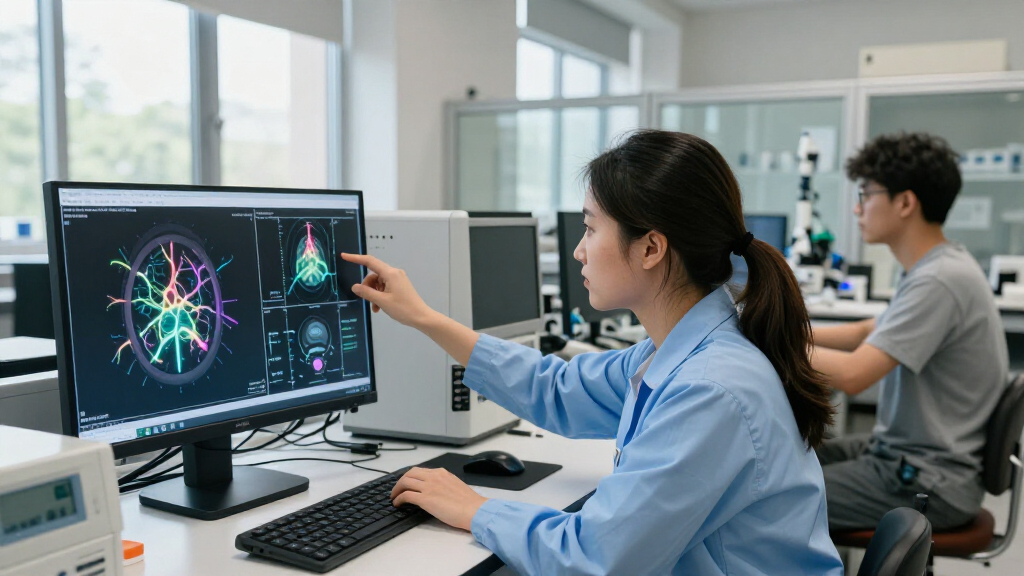
Optogenetics gives researchers a way to test whether particular groups of nerve cells contribute to a behaviour or brain process, rather than relying only on observations of which brain regions are active at the same time. By stimulating selected cells with light, scientists can investigate cause and effect in neural circuits and study their roles in memory, feelings and behaviour.
The Nobel Assembly says the technique has been used to reveal circuits relevant to neurological and psychiatric disorders. That research may help refine scientific understanding of brain function, but the prize announcement does not claim that optogenetics is itself an established treatment for those conditions. Researchers are also exploring possible clinical uses, including attempts to restore sight for people with visual impairment; the status and outcomes of those efforts are not detailed in the release.
As an affiliate, we earn on qualifying purchases.
From Algal Protein to Neural Control
Before optogenetics, researchers had made progress in linking different brain areas to particular functions. But, according to the Nobel Assembly, available methods often could not establish whether activity in a specific set of cells directly caused a response. The resulting picture of brain function was incomplete, with many relationships still uncertain.
The award recognizes a sequence of discoveries: Hegemann and Nagel’s work identifying a light-sensitive algal protein, followed by Deisseroth’s use of its gene to make nerve cells responsive to light. The Nobel Assembly describes optogenetics as a method for studying the living brain and says it has had a rapid global impact. Its announcement also names the researchers’ institutional affiliations: Deisseroth is at Stanford University and the Howard Hughes Medical Institute; Hegemann is at Humboldt University of Berlin; and Nagel is at the University of Würzburg.
“Optogenetics provides opportunities for mapping the brain in a way that we could once only dream of.”
— Per Svenningsson, chair of the Nobel Committee for Physiology or Medicine
Clinical Uses Remain Under Study
The prize announcement describes optogenetics as a research method and says scientists are using it in attempts to restore sight in people with visual impairment. It provides no details about the stage, results, participant numbers or expected timeline of that work. The announcement also does not specify how soon other research findings might lead to clinical applications.
The release explains the discoveries and their significance but does not report new experimental results or identify particular studies behind its statements about brain circuits. The extent to which findings from animal research will translate into human medicine remains a separate question.
Prize Details and Research Ahead
The three laureates will share the 12 million Swedish kronor award equally. The Nobel announcement directs readers to its popular science and scientific background documents for further information about the discoveries. The release does not provide a date for a prize ceremony or set out a timetable for future optogenetics research.
For now, the next developments will come from researchers continuing to use and refine the method, including work on brain circuits and investigations of possible clinical applications. Any claims about medical benefits will depend on results from those studies, which are not reported in the announcement.
Key Questions
Who won the 2026 Nobel Prize in Physiology or Medicine?
Karl Deisseroth, Peter Hegemann and Georg Nagel were awarded the prize jointly on October 5, 2026.
Why did they receive the prize?
The Nobel Assembly cited their discoveries concerning light-gated ion channels and optogenetics, including the discovery of channelrhodopsin and its use to control nerve-cell activity with light.
What is optogenetics?
Optogenetics is a method that uses light-sensitive proteins to influence the activity of selected cells. In neuroscience, it lets researchers stimulate nerve cells with light and investigate the role of particular brain circuits.
Is optogenetics an established treatment for blindness or psychiatric disorders?
The Nobel announcement describes research into circuits relevant to neurological and psychiatric disorders and says scientists are attempting to restore sight in people with visual impairment. It does not say optogenetics is an established treatment or provide clinical trial results.
How much prize money will the laureates receive?
The prize totals 12 million Swedish kronor, to be shared equally among the three laureates.
Source: hn
Halloween Picks
halloween
As an affiliate, we earn on qualifying purchases.