For most strategy lovers, Wingspan is my best overall pick: it rewards planning and adapting without relying on direct attacks. Azul stands out for sharp tactical choices in a compact playtime, while Catan adds negotiation and resource management for groups that enjoy table talk. The main tradeoffs are how much complexity your players want, whether they prefer head-to-head conflict or shared-table competition, and how long a game can hold the group’s attention. Read on for the full breakdown, including lighter two-player options and games built around bluffing, area control, or tile placement.

Turn your wind-down time into listening time
- Thousands of audiobooks, podcasts and originals
- Listen on your phone, tablet or Echo — also offline
- Cancel anytime
Key Takeaways
- Wingspan earns the strongest all-around fit by pairing long-term engine planning with flexible turns, while avoiding the direct conflict found in Risk or Stratego.
- Azul and Splendor offer strategic decisions in shorter, approachable formats; Azul emphasizes tactical placement, while Splendor rewards building an efficient resource engine.
- Catan and Carcassonne both work well for groups, but their interaction feels different: Catan relies on trading and negotiation, while Carcassonne makes the shared map the center of competition.
- Boop, Othello, and Stratego suit two players who want direct contests, but they vary in what drives the challenge: spatial tactics, flipping control, or hidden information.
- The lineup’s biggest tradeoff is not simply complexity: games such as Secret Hitler and Sequence depend on group dynamics, while Wingspan, Azul, and Splendor reward strategic play even without constant conversation.
| Catan Board Game (6th Edition) |  | Best Overall for Trading and Expansion | Players: 3–4 | Estimated playing time: 60 minutes | Minimum age: 10+ | VIEW ON AMAZON | See Our Full Breakdown |
| Risk Board Game for 2-5 Players – Strategy War Game for Teens, Adults, and Family |  | Best for Long-Game Conquest | Players: 2–5 | Estimated playing time: 120 minutes | Age range: 10+ years | VIEW ON AMAZON | See Our Full Breakdown |
| Wingspan by Elizabeth Hargrave |  | Best for Engine-Building Strategy | Players: 1–5 | Estimated playing time: 60–90 minutes | Bird cards: 170 unique cards | VIEW ON AMAZON | See Our Full Breakdown |
| Boop 2-Player Cat Strategy Board Game |  | Best Compact Two-Player Strategy | Players: 2 | Estimated playing time: 20–30 minutes | Age range: 10+ | VIEW ON AMAZON | See Our Full Breakdown |
| Plunder: A Pirate’s Life – Family Strategy Board Game |  | Best for Flexible Family Groups | Players: 2–6 | Estimated playing time: 20 minutes | Minimum age: 10 years | VIEW ON AMAZON | See Our Full Breakdown |
| Sequence Game with Folding Board, Cards, and Chips by Jax |  | Best for Large, Mixed-Age Groups | Players: 2–12 | Age range: 7+ | Game mechanics: Area control, hand management, team-based gameplay | VIEW ON AMAZON | See Our Full Breakdown |
| Ravensburger Othello – Classic Strategy Board Game for 2 Players |  | Best for Quick Two-Player Tactics | Players: 2 | Age range: 8+ | Estimated playing time: 20 minutes | VIEW ON AMAZON | See Our Full Breakdown |
| Secret Hitler | 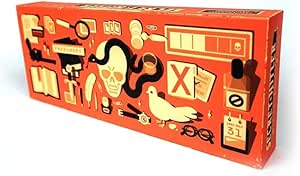 | Best for Deception and Group Reads | Players: 5–10 | Age range: 17+ | Genre: Hidden identity, social deduction | VIEW ON AMAZON | See Our Full Breakdown |
| Jumbo Stratego – Original Strategy Board Game for 2 Players, Ages 8+ |  | Best for Hidden-Information Planning | Players: 2 | Age range: 8+ | Estimated playing time: 45 minutes | VIEW ON AMAZON | See Our Full Breakdown |
| Azul Mosaic Tile-Placement Strategy Board Game, 2-4 Players, 30-45 Min |  | Best for Tactical Drafting | Players: 2–4 | Play time: 30–45 minutes | Age range: 8+ | VIEW ON AMAZON | See Our Full Breakdown |
| Asmodee Splendor Gem Trading Strategy Board Game, 2-4 Players |  | Best for Quick Engine-Building Strategy | Players: 2–4 | Recommended age: 10 years and up | Typical playtime: About 30 minutes | VIEW ON AMAZON | See Our Full Breakdown |
| Carcassonne Tile Placement Strategy Board Game, 2-5 Players, 35 Min |  | Best for Shared-Map Tactical Play | Players: 2–5 | Recommended age: 7+ | Estimated playtime: 35 minutes | VIEW ON AMAZON | See Our Full Breakdown |
| board games for strategy lover | Players | Included components | Estimated playing time | Age range |
|---|---|---|---|---|
| Catan Board Game | 3–4 | — | 60 minutes | — |
| Risk Board Game for 2-5 Player | 2–5 | Gameboard, 5 armies, 56 Risk cards, card box, 5 dice, 5 cardboard war crates, and game guide | 120 minutes | 10+ years |
| Wingspan by Elizabeth Hargrave | 1–5 | Goal mat and tiles, food tokens, egg miniatures, custom dice, birdfeeder dice tower, cards, player mats, action cubes, rulebooks, scorepad, and organizing tray | 60–90 minutes | — |
| Boop 2-Player Cat Strategy Boa | 2 | 32 wooden kitten and cat pieces, quilted bed board | 20–30 minutes | 10+ |
| Plunder: A Pirate’s Life | 2–6 | — | 20 minutes | — |
| Sequence Game with Folding Boa | 2–12 | Folding game board, 2 decks of cards, 135 chips, instructions | — | 7+ |
| Ravensburger Othello | 2 | Instruction sheet, playing board, 64 reversible disks | 20 minutes | 8+ |
| Secret Hitler | 5–10 | — | — | 17+ |
| Jumbo Stratego | 2 | Game board, pieces, screen, sorting trays | 45 minutes | 8+ |
| Azul Mosaic Tile-Placement Str | 2–4 | — | — | 8+ |
| Asmodee Splendor Gem Trading S | 2–4 | 40 plastic tokens, 90 development cards, 10 noble tiles, 1 rulebook | — | — |
| Carcassonne Tile Placement Str | 2–5 | 1 game, including mini-expansions | — | — |
More Details on Our Top Picks
Catan Board Game (6th Edition)
Catan is my strongest all-around pick for strategy fans who want a mix of planning, negotiation, and adaptation. Players build roads and settlements while managing resources, so each turn asks you to weigh immediate needs against long-term access to the island. Its modular hex board changes the map from game to game, giving repeat plays different starting pressures and expansion routes.
Compared with Wingspan, Catan puts more emphasis on direct negotiation and competition for shared spaces; Wingspan focuses on building a personal engine. That interaction is part of Catan’s appeal, but resource rolls add luck, and the robber can stall a player’s plans. The base game supports only 3–4 players, and first-time setup and rules may take longer than its roughly 60-minute playtime suggests. I’d choose it for a group that enjoys bargaining, not one seeking fully controlled outcomes.
Pros:- Modular board creates varied maps and replayable settlement choices
- Trading and shared building spaces create meaningful player interaction
- Resource management rewards planning around changing needs
- Accessible family play with strategic decisions that remain engaging for hobbyists
Cons:- Dice results can restrict access to needed resources
- The robber can interrupt a player’s progress
- Base game is limited to 3–4 players, and setup can slow down newcomers
Best for: Groups of 3–4 family members or hobby players who enjoy trading, blocking routes, and adapting plans as resources change.
Not ideal for: Players who want a two-player game, dislike dice-driven setbacks, or prefer strategy with little negotiation.
- Players:3–4
- Estimated playing time:60 minutes
- Minimum age:10+
- Genre:Strategy
- Edition:6th Edition
- Language:English
- Model number:CN3081
Our verdict“Choose Catan if your group wants an approachable strategy game built around trading and contested expansion, and can accept some luck in resource collection.”
Risk Board Game for 2-5 Players – Strategy War Game for Teens, Adults, and Family
Risk is the choice here for players who want a broad map, shifting alliances, and high-stakes battles. Territory control makes the central question easy to grasp: where should I commit forces, and where can I afford to leave a weakness? Secret missions and multiple play modes can change the objectives, while armies, cards, and dice give the group plenty to manage.
Unlike Catan, where resource trading and settlement growth shape a more compact contest, Risk centers on direct military conflict and can stretch to about 120 minutes. That longer arc gives plans time to develop, but it can also mean downtime as other players resolve battles. Its listed range begins at two, though the description notes that the full experience needs multiple players; this is a better fit for a committed group than a quick family filler. Setup and the large spread of pieces also ask for more table time than Boop.
Pros:- Territory control gives players clear long-range strategic goals
- Secret missions and multiple play modes add variety
- Includes armies, cards, dice, and storage crates for organizing components
- Supports up to five players
Cons:- Estimated playtime of about two hours can be a commitment
- Dice-based battles introduce substantial uncertainty into plans
- Setup and other players’ turns may create downtime
Best for: Players with a regular group who enjoy territorial planning, dice-based battles, and longer sessions with shifting alliances.
Not ideal for: People seeking a short, low-conflict strategy game or groups that dislike extended turns and lengthy setup.
- Players:2–5
- Estimated playing time:120 minutes
- Age range:10+ years
- Edition:Standard Edition
- Included components:Gameboard, 5 armies, 56 Risk cards, card box, 5 dice, 5 cardboard war crates, and game guide
- Brand:Hasbro Gaming
- Model number:B7404
Our verdict“Pick Risk for a group ready to spend a longer session on territorial conflict, rather than for players seeking the tighter pace of Catan or Boop.”
Wingspan by Elizabeth Hargrave
Wingspan rewards players who like building a plan piece by piece. Its bird cards form combinations across player mats, turning choices about which birds to attract into a growing engine for later turns. With 170 unique bird cards, varied goals, and a solo mode supported by Automa cards, it offers a different puzzle across repeated sessions without relying on direct attacks.
Compared with Catan, Wingspan is more focused on developing your own tableau than negotiating over shared resources and routes. That quieter competition suits players who prefer efficiency and card synergies, though it offers less direct player interaction. The stated play range is 1–5 players and sessions run about 60–90 minutes, so it is also more flexible than two-player-only Boop. The tradeoff is a larger set of components and rules that can take new players time to absorb; its strategy is easier to appreciate over repeated plays.
Pros:- Large set of unique bird cards supports varied strategies
- Engine-building makes early choices shape later actions
- Solo mode and a 1–5 player range accommodate different groups
- Distinct bird illustrations give the theme a strong presence
Cons:- Rules and setup may be demanding for younger or first-time players
- Strategy can take multiple plays to fully appreciate
- Less direct confrontation than Risk or Catan
Best for: Solo players and groups who enjoy card combinations, gradual engine growth, and strategic choices without aggressive conflict.
Not ideal for: Players who want fast turns, simple rules for very young children, or frequent direct clashes with opponents.
- Players:1–5
- Estimated playing time:60–90 minutes
- Bird cards:170 unique cards
- Included components:Goal mat and tiles, food tokens, egg miniatures, custom dice, birdfeeder dice tower, cards, player mats, action cubes, rulebooks, scorepad, and organizing tray
- Item type:Board game
- Model name:Wingspan (Base Game)
- Model year:2021
Our verdict“Choose Wingspan if you want a replayable, low-conflict strategy puzzle built around card synergies, and are comfortable learning its systems over several plays.”
Boop 2-Player Cat Strategy Board Game
Boop turns a small board into a sharp tactical puzzle. Each player places kittens on the bed, and the pieces can push others out of position, so even a simple placement can change several future options. The goal of lining up three kittens or cats is easy to explain, but the shifting board state gives each move consequences beyond the space it occupies. A 20–30 minute session makes it much easier to bring out than longer options such as Risk.
Its focus is the opposite of Wingspan: there is no engine to build or solo mode listed, only a direct contest between two players. That makes Boop a strong fit for pairs who want tactical interaction without a long rules teach, but a poor choice for larger groups. The wooden pieces and quilted bed board add character, while the limited player count and strategic depth that can take time to master may leave players seeking broader, multiplayer strategy wanting more.
Pros:- Piece-pushing creates tactical consequences from each placement
- Quick 20–30 minute playtime suits short sessions
- Wooden kitten and cat pieces add a tactile component
- Compact rules objective is approachable while tactics offer room to learn
Cons:- Designed exclusively for two players
- Limited scope compared with broader games such as Catan or Wingspan
- Strategic patterns may take repeated plays to master
Best for: Two-player households seeking a quick, head-to-head abstract game with positional tactics and straightforward setup.
Not ideal for: Families or game groups that need support for more than two players, or strategy fans seeking a long-term engine-building game.
- Players:2
- Estimated playing time:20–30 minutes
- Age range:10+
- Included components:32 wooden kitten and cat pieces, quilted bed board
- Brand:Smirk & Dagger
- Model number:SND1009
- UPC:894769000254
Our verdict“Pick Boop for a fast, two-player tactical contest, but choose Wingspan or Catan if you need flexible player counts or broader strategic systems.”
Plunder: A Pirate’s Life – Family Strategy Board Game
Plunder is my pick for families who want a shared-map strategy game with room for a larger group. Players conquer islands, upgrade ships, and wage war, while the modular map changes the setting between plays. That shifting layout helps keep routes and expansion choices from feeling fixed, and the rules are described as easy to learn, making it a gentler introduction to conflict than Risk.
Its listed range of 2–6 players gives it broader group flexibility than Catan, which supports only 3–4 in its base game. The tradeoff is that Plunder’s estimated 20-minute playtime is shorter than Risk’s 120 minutes, so players wanting a lengthy campaign of territorial conquest may find the session too brief. Modular maps also require setup, and the description’s short playtime should not be mistaken for a small physical package: the listed box weighs 6.3 pounds. I’d favor it for accessible family competition over intricate strategy.
Pros:- Supports groups of up to six players
- Modular map changes routes and island choices between plays
- Ship upgrades add planning beyond simply conquering territory
- Easy-to-learn rules suit mixed-experience family groups
Cons:- Estimated 20-minute playtime may feel brief for fans of extended strategy
- Modular board requires setup before play
- Less suited to players seeking the longer conflict of Risk
Best for: Families and casual groups of 2–6 who want accessible territory competition and variable maps without committing to a long session.
Not ideal for: Strategy enthusiasts seeking a long, highly detailed war game or players who want a game with no modular-board setup.
- Players:2–6
- Estimated playing time:20 minutes
- Minimum age:10 years
- Game type:Strategy, Family
- Language:English
- Theme:Pirate
- Item dimensions:12.8 x 12.8 x 4.2 inches
- Item weight:6.3 pounds
- Manufacturer:Lost Boy Entertainment
Our verdict“Choose Plunder when group flexibility and approachable pirate-themed competition matter more than the extended strategic arc of Risk.”
Sequence Game with Folding Board, Cards, and Chips by Jax
Sequence makes strategic play social: players manage cards, claim spaces, and work toward five in a row, with luck adding uncertainty to each plan. Its 2–12 player range gives it a broader group fit than Othello or Stratego, both designed for two, while the team option can bring younger and older players into the same game. The card-and-chip system is approachable, but choices still matter when players block a rival or save a useful card. Compared with Azul, Sequence offers less focused tile-drafting strategy and more direct, sometimes luck-driven interaction. The folding board makes storage easier, though the many small chips call for care around young children, and younger players may need help weighing their options.
Pros:- Accommodates 2–12 players, making it more group-friendly than the two-player Othello and Stratego.
- Card choices and board blocking create accessible tactical decisions.
- Team play can pair younger players with more experienced strategists.
- Folding board and included components support compact storage.
Cons:- Card luck can disrupt plans, so strategic control is less consistent than in Azul.
- Small chips pose a choking hazard for young children.
- Younger players may find it harder to plan ahead and manage their cards.
Best for: Families or groups who want a team-friendly strategy game that can accommodate up to 12 players across a wide age range.
Not ideal for: Players seeking a tightly controlled, low-luck strategy challenge, or households with young children who may put small chips in their mouths.
- Players:2–12
- Age range:7+
- Game mechanics:Area control, hand management, team-based gameplay
- Included components:Folding game board, 2 decks of cards, 135 chips, instructions
- Dimensions:10.3 x 8.1 x 2.31 inches
- Weight:7.04 ounces
- Material:Paper
Our verdict“Choose Sequence for flexible, team-based strategy with a large group, but pick Azul if you want more deliberate control over each decision.”
Ravensburger Othello – Classic Strategy Board Game for 2 Players
Othello is the quickest route to head-to-head strategy in this group: the rules are simple, but every disk placement can change control of the board. At a listed 20-minute playtime, it is easier to fit into a short session than Stratego, which is listed at 45 minutes, and it asks less of new players up front. Its 64 reversible disks keep the focus on reading the board and anticipating a rival rather than managing cards or several kinds of resources. That clarity is also its limit: compared with the broader group play of Sequence, Othello is strictly for two, and players seeking layers of hidden information or a longer strategic arc may want more complexity. The slide-out storage drawers make it convenient to carry, but portability cannot make it a group-game substitute.
Pros:- Simple rules get new players into tactical decisions quickly.
- Board control and reversible disks reward attention to changing positions.
- Listed 20-minute playtime suits short matches.
- Slide-out storage drawers help keep the disks with the board.
Cons:- Designed for exactly two players, unlike Sequence.
- Its focused rule set may feel limited to players seeking the layered planning of Stratego.
- Short matches offer less scope for a long strategic build-up.
Best for: Two-player households, travel companions, or families who want a compact game with quick rules and tactical rematches.
Not ideal for: Groups larger than two or experienced strategy players who want extensive rules, varied systems, or long-term planning beyond the board.
- Players:2
- Age range:8+
- Estimated playing time:20 minutes
- Included components:Instruction sheet, playing board, 64 reversible disks
- Brand:Ravensburger
- Model name:Othello
- Model year:2025
Our verdict“Pick Othello for portable, direct two-player tactics, but choose Stratego if you want hidden information and a longer contest.”
Secret Hitler
Secret Hitler turns strategy into a test of judgment between players: hidden roles make persuasion, suspicion, and team decisions as important as the visible game state. Its 5–10 player range makes it a better fit for a lively group than Othello or Stratego, which are built for two, and its social deduction angle differs sharply from Azul’s open tile drafting. That means the central challenge is reading people and managing trust, not calculating a perfect move from public information. Wooden components and foil-inlay boards give the set a more substantial presentation than the paper-and-chip setup of Sequence. The tradeoffs are real: the listed 17+ age guidance rules out younger family groups, and hidden roles plus its rules may take patience to teach. It also depends on having enough players to reach its minimum of five.
Pros:- Hidden roles make social judgment and persuasion central strategic skills.
- Supports groups of 5–10, beyond the player range of two-player games such as Othello.
- Wooden components and foil-inlay boards offer a distinctive physical presentation.
- Different roles can make player interaction central to each session.
Cons:- Requires at least five players, limiting its use with small groups.
- Listed for ages 17 and up, so it is not a fit for younger family play.
- Rules may take time to teach, especially to players new to hidden-role games.
Best for: Adult groups of five to ten who enjoy bluffing, discussion, and making strategic choices with incomplete information.
Not ideal for: Families with children under 17, two- or three-player households, or players who prefer quiet, fully visible tactical planning.
- Players:5–10
- Age range:17+
- Genre:Hidden identity, social deduction
- Material type:Wood
- Language:English
- Item dimensions:6.5 x 4.33 x 0.71 inches
- Item weight:1.07 kg
Our verdict“Choose Secret Hitler for adult groups that want strategic deception and discussion, not for small gatherings or open-board tactical play.”
Jumbo Stratego – Original Strategy Board Game for 2 Players, Ages 8+
Stratego rewards plans built around uncertainty: each player positions a force, protects a hidden flag, and tries to infer what the opponent’s pieces can do. That gives it a different kind of two-player challenge from Othello, where disks and board control are visible; Stratego asks players to remember encounters and choose when to risk an attack. Its listed 45-minute playing time leaves more room for a drawn-out contest than Othello’s 20-minute match, while the screen and sorting trays help organize setup and keep each side’s information private. The cost of that depth is a longer, more involved session, and the two-player limit makes it less flexible than Sequence. The cardboard pieces are easy to handle, but they may not stand up as well to repeated wear as sturdier materials.
Pros:- Hidden piece identities reward memory, deduction, and deliberate risk-taking.
- Screen helps keep each player’s setup private.
- Sorting trays support organized setup and storage.
- A listed 45-minute playtime allows for a more extended strategic contest than Othello.
Cons:- Limited to two players, so it cannot serve as a group game like Sequence.
- At 45 minutes, it asks for more session time than Othello.
- Cardboard pieces may be less durable than plastic alternatives.
Best for: Two-player rivals aged 8+ who enjoy memory, bluffing, and planning around information their opponent cannot see.
Not ideal for: Groups, players wanting a short match, or buyers who prioritize components made from more durable materials than cardboard.
- Players:2
- Age range:8+
- Estimated playing time:45 minutes
- Pieces:40
- Included components:Game board, pieces, screen, sorting trays
- Material type:Cardboard
- Dimensions:10.51 x 2.95 x 10.51 inches
Our verdict“Choose Stratego for a longer two-player battle of deduction and concealed plans, but choose Othello for faster, fully visible tactics.”
Azul Mosaic Tile-Placement Strategy Board Game, 2-4 Players, 30-45 Min
Azul is the strongest fit here for players who want layered decisions without a long rulebook. Drafting tiles is easy to grasp, but each choice shapes your own wall and affects which tiles remain for opponents. That shared supply gives the strategy a more interactive feel than the mostly head-to-head board control of Othello, while its 2–4 player range makes it more adaptable than Stratego. The 30–45 minute session also keeps the planning compact: players can weigh patterns, timing, and scoring without committing to a long game. The tradeoff is that poor tile choices can create waste penalties, which may frustrate new players, and the 2–4 player limit will not suit larger gatherings like Sequence. Azul is a better match for players who enjoy careful drafting than those who want bluffing or hidden roles.
Pros:- Tile drafting creates strategic choices while keeping the core rules approachable.
- Players can affect rivals by taking tiles from a shared supply.
- Supports 2–4 players, making it more flexible than the two-player Othello and Stratego.
- Listed 30–45 minute playtime suits a focused session without a lengthy commitment.
Cons:- Tile-waste penalties can feel punishing while new players learn how to plan.
- The 2–4 player limit is less suited to large gatherings than Sequence.
- Its open drafting does not offer the bluffing and hidden roles found in Secret Hitler.
Best for: Families and strategy fans aged 8+ who want a learnable tile-drafting game with meaningful choices for two to four players.
Not ideal for: Large groups, players who dislike penalties for inefficient choices, or those seeking hidden information and bluffing like Secret Hitler.
- Players:2–4
- Play time:30–45 minutes
- Age range:8+
- Components:100 resin tiles, 4 player boards, 9 factory displays, 4 scoring markers, 1 starting player marker, 1 linen bag
- Brand:Azul
- Units per box:1
- Tile material:Resin
Our verdict“Pick Azul for compact, interactive drafting with room to improve, but choose Sequence if your priority is accommodating a larger group.”
Asmodee Splendor Gem Trading Strategy Board Game, 2-4 Players
Splendor is my pick for players who want strategic choices without a long rules briefing or extended session. Collecting gem tokens and buying development cards builds an engine: later purchases become easier, while noble tiles create another goal to race toward. Compared with Carcassonne, where tile placement continually reshapes a shared map, Splendor keeps its focus on efficient resource planning and timing purchases from an open selection. That makes its decisions easy to follow, though interaction is mostly indirect: players compete for cards and nobles rather than disrupting each other’s plans. The roughly 30-minute playtime suits family or adult game nights, but repeated sessions can feel familiar, and the cards and tokens need table space. Choose it for concise, low-barrier strategy, not extensive player conflict or a complex rules system.
Pros:- Simple rules make it approachable for new strategy-game players.
- Resource choices and purchase timing create a satisfying engine-building arc.
- Around 30 minutes fits comfortably into shorter game nights.
- Card and noble combinations give players varied paths to pursue.
Cons:- Open information and competition for cards provide limited direct interaction.
- The core pattern can feel repetitive after many sessions.
- Tokens and cards require room on the table.
Best for: Families and casual strategy groups who want a quick, approachable engine-building game with meaningful resource choices.
Not ideal for: Players seeking direct conflict, intricate rules, or a changing board to explore; interaction is limited and repeated plays may feel familiar.
- Players:2–4
- Recommended age:10 years and up
- Typical playtime:About 30 minutes
- Included components:40 plastic tokens, 90 development cards, 10 noble tiles, 1 rulebook
- Game type:Renaissance-themed gem trading and engine building
- Material:Cardstock
- Edition:Splendor
- Manufacturer:Asmodee
Our verdict“Choose Splendor for quick, accessible engine-building decisions; pick Carcassonne instead if you prefer shaping a shared landscape.”
Carcassonne Tile Placement Strategy Board Game, 2-5 Players, 35 Min
Carcassonne earns its place for strategy lovers who enjoy making a plan while adapting to an evolving board. Each tile changes the medieval landscape, and placing a meeple on a city, road, or farm commits it to a scoring opportunity. The central tension is whether to grow your own feature, claim a promising one, or place a tile that affects an opponent’s plans. Compared with Splendor, Carcassonne offers more visible interaction through the shared map, while Splendor is more focused on building a personal engine from resources and cards. Random tile draws keep layouts varied, and the included mini-expansions add options, but the tactical system is lighter than games built around more complex rules. Its roughly 35-minute playtime may also feel brief to players seeking a longer strategic contest.
Pros:- Shared tile placement makes the board and opponents’ plans matter throughout play.
- Randomized layouts help sessions feel different from one another.
- Meeple placement creates clear choices about where to pursue points.
- Mini-expansions add variety beyond the core tile-laying experience.
Cons:- The rules and strategic depth may feel light to advanced gamers.
- Random tile draws can limit the ability to execute a precise plan.
- A roughly 35-minute session may be short for groups wanting a longer game.
Best for: Families and strategy newcomers who want a replayable shared-map game with tactical placement and manageable rules.
Not ideal for: Experienced players seeking heavy strategic complexity or a long, involved session; tile draws add uncertainty and play is relatively brief.
- Players:2–5
- Recommended age:7+
- Estimated playtime:35 minutes
- Edition:Classic Edition
- Genre:Strategy
- Language:English
- Included components:1 game, including mini-expansions
- Manufacturer:Asmodee
Our verdict“Choose Carcassonne for accessible tactical play on a shared, changing map; choose Splendor for a tighter focus on resource efficiency and engine building.”

How We Picked
I compared these 12 games by the decisions they ask players to make: planning ahead, managing resources, reading opponents, controlling space, and adapting when the board changes. I also weighed how clearly each game teaches its core ideas, how well its player count fits a typical group, and whether its strategic challenge suits repeated play. A game can be clever without being the right fit for every table, so I treated direct conflict, hidden roles, and social negotiation as distinct styles rather than interchangeable strengths.
The ranking favors games that combine meaningful choices with broad usability for strategy-minded groups. Wingspan leads for its blend of planning, flexibility, and approachable play; Azul and Catan follow as strong options for different group preferences. Focused two-player games, highly social experiences, and lighter or more familiar classics rank lower as all-purpose picks, not because they lack strategic value, but because their appeal depends more on a specific group, player count, or preferred style.
Factors to Consider When Choosing Board Games For Strategy Lovers
The right strategy game is the one whose decisions your group wants to revisit—not necessarily the one with the most rules. I recommend matching the game’s interaction style, pace, and player count to your regular table before choosing based on theme or apparent complexity.
Choose the Kind of Strategic Interaction Your Group Enjoys
Strategy games can ask players to compete over a shared board, trade resources, bluff, or build plans mostly in parallel. Those formats create very different table moods: direct attacks can be exciting for one group and uncomfortable for another, while negotiation works best when players enjoy talking through deals. Hidden-role games depend on social deduction and a group willing to bluff; they may feel flat with players who prefer decisions to rest on the board. Before buying, ask whether your group likes to confront opponents directly or prefers quieter competition. A game’s strategic depth matters less if its central interaction makes the table reluctant to play.
Match the Player Count You Actually Have
Check the game’s listed range against the number of people who usually sit down, not the largest gathering you might host once a year. Some games feel focused with two players but gain negotiation or unpredictability with a larger group; others depend on a crowd to make their social mechanics work. A broad player-count range does not automatically mean the experience stays equally strong at every count. If your group size changes often, look for a game whose central choices still work across those configurations. For a regular two-person table, a dedicated head-to-head design may be a better fit than adapting a group game.
Look Beyond the Rulebook to the Learning Curve
A game’s strategic demands and its rules difficulty are separate questions. A simple ruleset can still create tough choices, while a game with many steps may ask players to remember procedures before they can focus on strategy. Consider who will teach the game and how often the group is likely to play; a one-time gathering benefits from a different learning curve than a regular game night. New players often have more fun when the first session leaves room to understand the consequences of their choices. Avoid choosing complexity as a proxy for depth: a compact game can provide plenty to think about without a long explanation.
Set a Realistic Limit for Playtime and Attention
Listed playtime is only part of the commitment: teaching rules, resolving questions, and making decisions can extend a first session. Longer games can reward sustained planning, but they also ask the group to stay engaged through more turns and changing fortunes. Shorter games are easier to schedule and replay, which can make it easier to see how a strategy works over several sessions. Think about whether your group wants one substantial game or several quicker rounds in an evening. A common buying mistake is choosing for the depth players hope to enjoy rather than the time and attention they regularly have.
Decide How Much Player Conflict Is Welcome
Direct conflict changes more than the theme: it can make a player’s choices feel personal and can sharply shift who is ahead. Some groups enjoy attacks, alliances, and contested territory; others prefer competition where everyone develops a plan without frequent setbacks from opponents. Also ask how much randomness your table accepts, since unpredictable turns can make conflict more dramatic but can limit control over a long-term plan. If players are new to the hobby or prefer lower-pressure sessions, consider games where interaction comes through shared opportunities or tactical placement. The best fit is not the game with the most confrontation, but the one whose level of friction keeps your group engaged.
Pay for Replayability Your Group Will Use
A game can offer varied setups or strategies, but that variety only matters if your group wants to bring it back to the table. Look for different paths to success, changing decisions from game to game, or a format that works for repeat sessions with the same players. At the same time, avoid paying for complexity or extra mechanisms that would go unused by a casual group. Theme can help a game reach the table, but it should support rather than replace satisfying decisions. When choosing between a highly focused design and a more flexible one, prioritize the option that fits your group’s actual habits.
Frequently Asked Questions
Which game in this roundup is the best starting point for strategy beginners?
I would start with Azul if your group wants clear rules paired with choices that still reward attention, or Splendor if they prefer building an engine over competing for tile placement. The better fit depends on whether players enjoy reacting to a shared pool or growing their own resources. Neither requires choosing a long, complex game just to get meaningful decisions. For a relaxed first session, make sure the group is comfortable with competition before choosing a more confrontational option.
Which options work best when I usually play with just one other person?
Boop, Othello, and Stratego are designed around two-player competition, so they make the most sense for a regular head-to-head table. They offer different kinds of thinking: spatial tactics, changing control of the board, and hidden information. Choose based on whether both players prefer visible consequences or enjoy keeping plans concealed. If you want a game that can also serve a group, compare these with options such as Azul or Splendor and check how their decisions feel at your usual player count.
Should I choose a direct-conflict game or one with indirect competition?
Choose direct conflict if your group enjoys attacking, blocking, bluffing, or fighting over territory and can take setbacks in stride. Indirect competition is a safer fit when players want to focus on improving their own position without being targeted as often. The distinction affects the whole evening: a game about hidden roles or military control can produce lively table talk, while engine-building and tile placement tend to make each player’s plan the focus. If you are unsure, start with a game where interaction comes through contested choices rather than elimination or sustained attacks.
Are shorter strategy games a good choice for experienced players?
Yes. A shorter game can concentrate decisions into a small number of turns, making every placement or resource choice matter. Azul and Splendor offer a different kind of challenge from a longer game: players must spot opportunities quickly rather than manage an extended plan. Experienced players may also appreciate a format that leaves time for another round and a rematch. Choose a longer option only when your group wants the added arc of planning, not because a shorter playtime signals less strategic value.
What should I prioritize if my group’s size changes from game night to game night?
Start with the player counts you can reliably gather, then check whether the game’s interaction still works at both the smallest and largest group sizes you expect. A design built around negotiation or hidden roles may feel different with fewer players, while a quieter tactical game may keep its core appeal across a wider range. Consider how easy the game is to teach to occasional guests, too, since changing attendance often brings new players. If your group regularly shifts between two players and a larger gathering, owning one dedicated two-player game and one group-friendly option may be more satisfying than asking a single box to cover every occasion.
Conclusion
For the broadest mix of planning and adaptability, I recommend Wingspan as the best overall. Azul is my best value-style pick for focused, approachable strategy, while Wingspan is also the best premium-style choice for players who want a richer engine-building experience; these labels describe fit, not price. For beginners, I would start with Azul or Splendor, choosing tile tactics or resource-building according to the group’s taste. Catan suits players who want trading and negotiation, while Carcassonne is a strong match for shared-map competition. For two-player specialists, choose Boop for spatial play, Othello for an accessible board contest, or Stratego for hidden-information tactics; pick Secret Hitler only when the group actively wants bluffing and social deduction.
Halloween Picks

12.5-Foot Lighted Halloween Inflatable Archway

Haunted Hill Farm 2-Ft. Zombie Raccoon Halloween Animatronic

JOYIN 5-Foot Halloween Animatronic Drinking Skeleton
As an affiliate, we earn on qualifying purchases.