
TL;DR
A Fit&Well writer reports adding child’s pose and a standing forward fold to the end of daily walks after noticing stiffness following walks in a hilly area. Physiotherapist Helen O’Leary says the poses stretch soft tissues in the lower back, but the report does not establish that they work for everyone or prevent pain.
A Fit&Well writer says they now do child’s pose and a standing forward fold after daily walks, after noticing stiffness in their hips, legs and back since moving to a hilly area. Physiotherapist Helen O’Leary told the outlet that the positions stretch soft tissues in the lower back and may alleviate discomfort, though the report describes the writer’s experience rather than evidence that the routine works for everyone.

Turn your wind-down time into listening time
- Thousands of audiobooks, podcasts and originals
- Listen on your phone, tablet or Echo — also offline
- Cancel anytime
The writer describes walking for up to an hour as their only daily form of exercise. They had assumed that a low-impact walk that did not leave them sweaty required no recovery routine, but reported feeling stiff after walking in hillier terrain. In response, they began holding each of the two stretches for about one minute, saying the routine takes only a few minutes and leaves them feeling less stiff for the rest of the day.
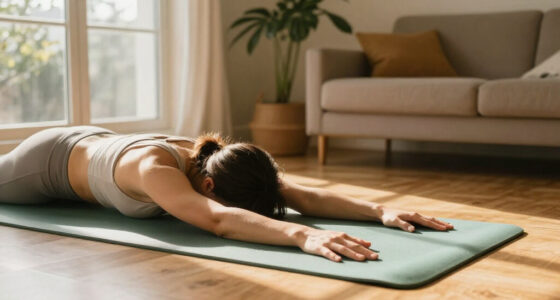
For child’s pose, the report instructs readers to kneel with their knees wider than hip-width apart, reach their arms forward and sit their hips back toward their heels. For a standing forward fold, it advises standing with feet hip-width apart and lowering the arms toward the feet while keeping the knees bent. The writer says to stop when a stretch is felt in the hamstrings and hold the position.
O’Leary, identified as a physiotherapist at Complete Pilates, says these poses put the spine into flexion and stretch soft tissues in the lower back. The report also suggests a side bend in child’s pose: walk the hands to one side while sitting back into the opposite hip, then repeat on the other side. These are instructions and explanations reported by Fit&Well, not a clinical assessment of the writer or a treatment plan for readers.
A Short Routine After Walking
The account highlights that walking can still be followed by stiffness, particularly when routes or terrain change. The writer’s experience is a reminder that low-impact activity can feel different from one person or setting to another; it does not show that all walkers need to stretch or that these two movements prevent injury.
For readers seeking a brief post-walk routine, the report offers two positions that can be done without equipment and describes how to modify child’s pose with a side bend. The physiotherapist’s comments provide a possible explanation for why the movements may feel helpful, but the article gives no study results or comparative evidence showing how much relief they provide, how long it lasts, or whether the routine is suitable for everyone.
Products Worth Considering

Garmin Forerunner 55 GPS Running Smartwatch, Black

Withings BPM Vision Blood Pressure Monitor

Levoit Vital 100S-P Air Purifier for Home and Pets
As an affiliate, we earn on qualifying purchases.
How the Writer Added Stretching
The writer says the change followed a move to a hilly area, where they began noticing stiffness in the legs, hips and back after walks. Before that, they had not thought a walk of less than an hour required the kind of recovery they associated with other workouts. The new routine links stretching to an existing daily activity, an approach the report calls habit stacking.
The stretches were chosen because, in the writer’s account, they target the hips and legs while moving the back, which they describe as their stiffest area. O’Leary’s explanation focuses on the lower back: she says standing can leave the lower back neutral or slightly extended, loading small joints, while flexion in the two poses changes that position and stretches surrounding soft tissues. That explanation is attributed to the physiotherapist; it is not presented in the source as a guarantee of relief.
“It is quite common to feel a bit stiff or achy after walking, particularly following a long walk, and certain stretches can alleviate that discomfort.”
— Helen O’Leary, physiotherapist at Complete Pilates, as quoted by Fit&Well
Limits of the Personal Account
The source does not provide a publication date in the supplied material, nor does it report a study testing these stretches after walking. It is not clear how often the writer experienced stiffness, how long the effects of the stretches lasted beyond their own account, or whether the routine was reviewed for people with existing injuries or pain conditions.
The article also does not establish that stiffness is caused by walking, or that stretching will relieve persistent or severe symptoms. O’Leary’s statements describe possible benefits, while the reported improvement is the writer’s own experience. Anyone with ongoing pain or concerns about whether a movement is appropriate for them should seek advice from a qualified health professional.
A Routine the Writer Continues
The report says the writer has attached the two stretches to their daily walk and holds each position for about one minute. It does not identify a forthcoming study, clinical guidance update or other next milestone. The account’s immediate takeaway is the writer’s personal routine, alongside O’Leary’s suggestion to repeat a side bend on both sides if adding that variation.
Key Questions
Which two stretches does the report describe?
The Fit&Well writer describes child’s pose and a standing forward fold after daily walks.
How long does the writer hold each stretch?
The writer says they hold each position for about one minute. This is their routine, not a duration shown in the report to work for everyone.
What does the physiotherapist say the stretches may do?
Helen O’Leary says the positions put the spine into flexion and stretch soft tissues in the lower back, and that certain stretches can alleviate post-walk discomfort. These are attributed comments, not guaranteed results.
Can child’s pose be adjusted to stretch one side more?
O’Leary suggests walking the hands to one side while sitting back into the opposite hip, then repeating on the other side. The report presents this as an optional variation.
Does the report prove these stretches relieve tight hips or tired legs?
No. It is a first-person account with a physiotherapist’s explanation, not a controlled study. The writer reports feeling less stiff, but the source does not establish how reliably the stretches help other people.
Source: rss